
Power of Kindness Meditation: A Practical Secular Guide
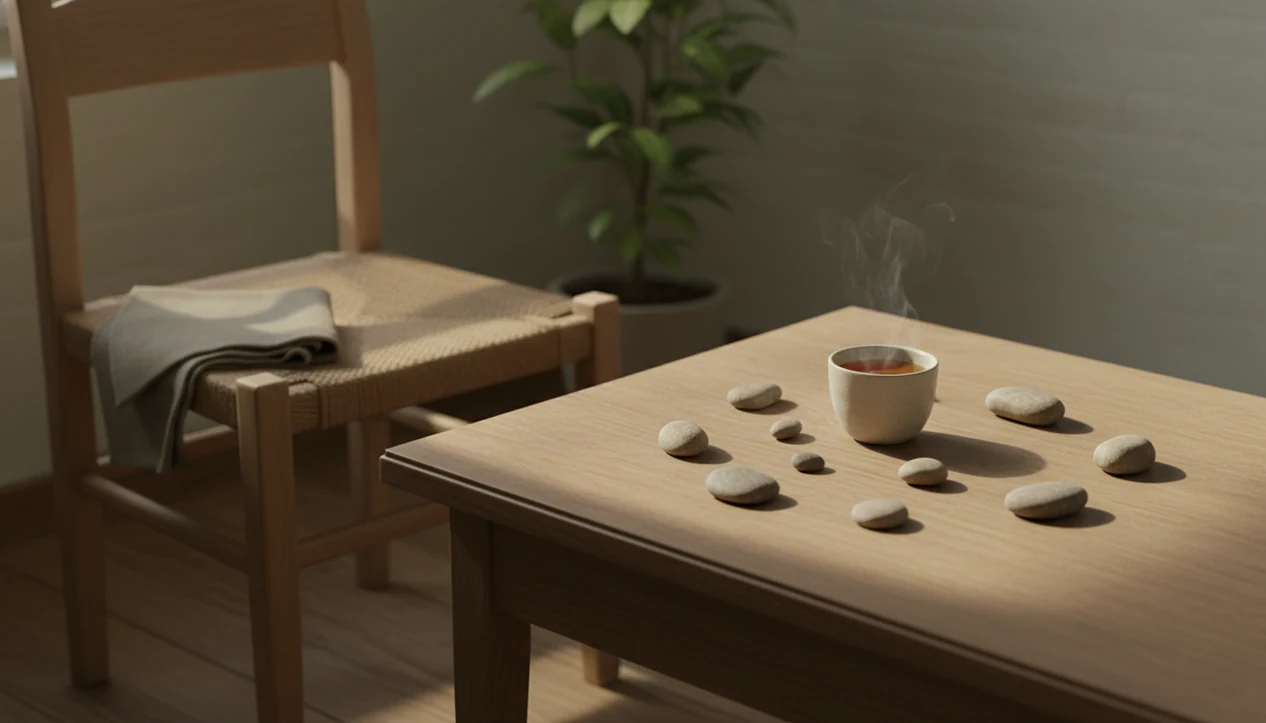
Power of kindness meditation is a simple practice of silently offering phrases of goodwill to yourself and others so the mind can rehearse warmth, patience, and connection. It is often called loving-kindness or metta meditation, and it works best as a short, repeated practice rather than a one-time mood fix.
> Definition: Power of kindness meditation is a secular mindfulness technique that uses repeated kind phrases, breath awareness, and progressive attention toward self, loved ones, neutral people, difficult people, and wider life.
TL;DR
- Use short phrases such as “may I be safe” or “may you be at ease” while staying aware of breath and body sensations.
- The usual sequence moves from yourself to a benefactor, loved one, neutral person, difficult person, and all beings.
- Research on loving-kindness and compassion meditation is promising, especially for positive emotions, self-compassion, and social connection, but effects vary and are not a replacement for care.
Power of Kindness Meditation Definition and Core Purpose
Power of kindness meditation is a structured attention practice, also known as loving-kindness or metta meditation, that trains goodwill through repeated phrases. The purpose is not to empty the mind. It is to practice friendliness, compassion, and patience toward yourself and others.
A beginner might sit on a kitchen chair, feel socked feet under the seat, and repeat, “may I be safe” or “may I be at ease.” Later, the wording shifts toward another person: “may you be safe,” “may you be at ease.”
The practice can be completely secular. It has Buddhist roots, but you do not need religious commitment, prayer, or belief in anything supernatural. One simple way to try it is to treat each phrase as an attention cue. When the mind wanders to a grocery list, notice and return.
Ordinary enough.
For a broader place to compare styles, our meditation techniques guide explains how kindness practice differs from breath, body, and awareness-based methods.
Five Power of Kindness Meditation Facts Beginners Should Know
- Power of kindness meditation uses structured phrases of goodwill. Common phrases include “may I be safe,” “may I be healthy,” and “may you live with ease.”
- The circle of attention widens gradually. Most sessions move from self to benefactor, loved one, neutral person, difficult person, and wider life.
- Repetition matters more than emotional intensity. For beginners, steady practice is usually more useful than trying to feel warm on command.
- Resistance can be normal. Numbness, irritation, awkwardness, or the thought “I don’t mean this” can appear during practice.
- The evidence is supportive, not absolute. Research links loving-kindness and compassion meditation with positive emotions, social connectedness, mindfulness, self-compassion, and reduced distress, but it is not curative.
The most useful beginner frame is simple: repeat the phrase, feel the body, and return without grading the session.
How Power of Kindness Meditation Works in the Mind and Body
Power of kindness meditation works as mental rehearsal for goodwill and emotional flexibility. Breath awareness anchors attention, while kind phrases give the mind a specific emotional direction to practice.
In plain language, the breath is the place you come back to, and the phrase is the attitude you rehearse. You might notice cool air at the nostrils, soften the face, relax the shoulders, or place a hand on the chest. These embodied cues can keep the practice from becoming only words in the head.
The sequence is graded on purpose. You usually begin with yourself, then a benefactor or easy person, then a loved one, a neutral person, a mildly difficult person, and all beings. That order lets the nervous system practice kindness where it feels more available before moving toward harder territory.
For beginners, kindness phrases usually work best when paired with body awareness because the body gives immediate feedback when the mind drifts or tightens.
It does not change the outside problem by itself. The email, bill, conflict, or loss may still be there.
How to Use Power of Kindness Meditation Step by Step
Use this 10 to 20 minute method when you want a clear beginner session. If that feels long, set a phone timer for five minutes and keep the same order.
- Set a timer for 10 to 20 minutes and choose a quiet posture, seated or lying down.
- Settle attention on breath and body sensations, including contact with the chair, floor, or cushion.
- Offer phrases to yourself in plain language, such as “may I be safe” or “may I live with ease.”
- Bring to mind an easy person, such as a benefactor, loved one, kind teacher, or supportive friend.
- Widen attention to a neutral person and, if appropriate, a mildly difficult person who does not feel overwhelming.
- Close broadly by offering goodwill to many people, then notice the body before moving.
If you prefer audio support, a tool that can guide 10-minute meditation can help you stay with the sequence without watching the clock.
Power of Kindness Meditation Phrases and Script Options
What phrases should you use for power of kindness meditation? Use words that are kind, plain, and repeatable without feeling like you are lying to yourself.
Short power of kindness meditation script
Sit comfortably. Feel the breath for a few cycles. Say silently:
“May I be safe. May I be healthy. May I be peaceful. May I live with ease.”
Then bring to mind someone easy to care about:
“May you be safe. May you be healthy. May you be peaceful. May you live with ease.”
Finally, widen the phrase:
“May we be safe. May we be steady. May we meet this day with patience.”
Plain-language phrase substitutions
If traditional phrases feel too polished, try neutral wording: “I hope I can be steady,” “I hope you have support,” or “May this moment soften a little.” Phrases should be sincere enough to repeat, not artificially positive.
A useful phrase is one you can still say on a bad Tuesday without flinching; if it sounds syrupy, make it plainer.
Power of Kindness Meditation Benefits and Research Evidence
The strongest research signal for power of kindness meditation is linked to positive emotions, social connection, mindfulness, self-compassion, and distress reduction. The evidence is encouraging, but it varies by protocol, population, and follow-up length.
A 2008 randomized controlled trial of 139 adults found that six weekly 60-minute loving-kindness meditation sessions increased daily positive emotions such as joy, gratitude, and love. Those emotions were associated with gains in life satisfaction and social support. Source: Fredrickson et al., Journal of Personality and Social Psychology, 2008: A0013262
A 2011 clinical review found that loving-kindness and compassion meditation studies reported improvements in mindfulness, self-compassion, positive affect, and distress, while noting that methods and samples varied widely (Hofmann et al., 2011: PubMed research). In a 2010 randomized study of 142 university students, one brief loving-kindness session increased social connection and positivity toward strangers compared with a control condition (Hutcherson et al., 2010: A0013237).
A systematic review and meta-analysis of kindness-based meditation trials reported benefits for well-being and psychological distress, but also emphasized heterogeneity and study-quality limits (Galante et al., 2014: A0037249). Clinicians typically recommend meditation as a possible support skill, not as a replacement for therapy, medication, crisis care, or diagnosis.
Power of Kindness Meditation Best For and Not For
Power of kindness meditation is best for people who want a gentle attention practice that includes emotion and relationship patterns. It is not ideal as a standalone response to trauma, crisis, abuse, or severe distress.
| best for | why it helps | use caution when |
|---|---|---|
| Beginners who want a gentle mindfulness practice | The phrases give the mind something clear to do | Silence or inward attention feels unsafe |
| People working with self-criticism | The practice rehearses a less harsh inner tone | Self-directed kindness triggers shame or disbelief |
| People facing impatience or disconnection | It trains brief moments of goodwill before reacting | The practice turns into forced forgiveness |
| Daily relationship friction | A short pause can soften speech before a reply | There is abuse, coercion, or fear |
| Stressful communication | It can be used before calls, meetings, or family talks | Rumination increases after difficult-person practice |
Tools like Mindful.net can support gentle beginner practice, but no app is required. A timer, a chair, and honest pacing are enough.
Power of Kindness Meditation Tips for Daily Life
Power of kindness meditation becomes easier when you practice it in small daily moments, not only during formal sitting. A 60-second pause before a difficult email, meeting, commute, or family conversation can be enough.
- The doorway pause: Before entering a room, breathe once and think, “may I listen well.”
- The phone cue: After unlocking your phone, silently offer one phrase before opening the next app.
- The line practice: While waiting in line, try “may we all get through this with patience.”
- The work reset: Before a tense message, exhale slowly and offer goodwill without approving of bad behavior.
- The evening handoff: Before speaking at home, pause long enough to notice your jaw, shoulders, and tone.
Consistency matters more than intensity. If the practice feels fake, numb, or irritating, shorten it. Use fewer words. Try one phrase while taking mindful steps on a stairwell landing.
Apps such as Mindful.net, Calm, and Headspace can offer guided structure, while the Mindfulness Practices App format may help people who prefer saved lessons. For a deeper comparison of support styles, the guided vs silent meditation guide can help you choose.
Image caption: A quiet moment of kindness practice before daily conversation
Image caption idea: A person pausing before conversation, using power of kindness meditation to practice one simple phrase and one steady breath.
Common Mistakes in Power of Kindness Meditation
The most common mistake is trying to manufacture warmth instead of letting the phrases do quiet work. Kindness practice is not a test of sincerity, forgiveness, or emotional performance.
- Repeat the phrase gently even if no special feeling appears. Let “may I be safe” be a cue, not a demand.
- Choose an easy person first and delay the difficult person until your body feels steady. Starting with someone charged can turn practice into rumination.
- Use plainer words when polished phrases feel false or unsafe. “I hope I can get through this” may be more honest than “may I be peaceful.”
- Separate goodwill from approval. You can wish for less suffering without excusing harm, resuming contact, or forgiving before you are ready.
- Stop when you feel flooded rather than grounded. Open your eyes, look around the room, feel your feet, and return another day with a shorter session.
A useful session leaves you a little more oriented, not pressured to feel kind on command.
Limitations
Power of kindness meditation has real limits. It can support attention, self-compassion, and relational steadiness, but it cannot solve every kind of suffering.
- Benefits are not instant and usually depend on repeated practice over weeks or months.
- Evidence is promising but limited by small samples, short follow-ups, and varied protocols.
- Kindness meditation does not remove external stressors such as discrimination, workload, poverty, conflict, or unsafe relationships.
- Self-directed kindness can feel unsafe, triggering, or inaccessible for some people with unresolved trauma.
If a session leaves you flooded rather than steadier, stop and orient to the room. Tile under the feet. A real wall nearby. Start there.
Three Situations Where This Helps
A myth worth dropping: kindness meditation is not only for people who already feel warm and generous. It may be most useful when there is enough steadiness to repeat a phrase, but not enough patience to think clearly about a difficult person, a demanding child, or a tense rehearsal. A short session with a steady breath and one clear anchor can give the mind a simpler script than blame, self-criticism, or replaying the same conversation.
Where Researchers Still Disagree
- Some teachers emphasize self-kindness first, while others begin with a neutral or easy person; both can be reasonable because different people find different starting points less awkward.
- Research discussions can sound inconsistent because studies often use different phrase sets, session lengths, populations, and comparison practices, including grounding or breath awareness.
- Kindness meditation is sometimes described as calming, but that does not mean every session feels pleasant; for some people, warmth arrives later than attention.
- Compared with grounding, kindness practice usually asks for more emotional imagination; grounding may be a better first step when someone needs immediate orientation to the room.
- Decision support matters here: the best choice is often not the most impressive technique, but the one that fits the person’s current capacity and context.
Before You Try This
- If repeating goodwill phrases feels fake or irritating, try a steadier anchor first, such as breathing or sound, and return to kindness practice later.
- If you are highly activated, disoriented, or flooded, grounding may be more practical than generating warm phrases because it keeps attention close to present sensory cues.
- If the target person is connected to fresh conflict, start with yourself, a pet, a mentor, or a neutral person rather than forcing forgiveness.
- If you have only one minute before a demanding meeting, a Meeting Reset from Mindful.net may fit better than a full metta sequence.
- If you keep judging the phrase, simplify it; one honest line often works better than a polished script you do not believe.
A Quick Technique Map
| Technique | Best for | Minutes |
|---|---|---|
| Kindness phrases for self | softening harsh self-talk after a mistake, performance review, or parenting strain | 3-8 min |
| Kindness phrases for an easy person | building warmth when self-directed phrases feel unnatural or forced | 5-12 min |
| Grounding through sound or breath | settling attention before kindness practice when the mind feels scattered or overstimulated | 2-6 min |
From Our Editorial Review
A field note from practice: We often see people assume kindness meditation should create a warm feeling on demand. In editorial review, it seems more realistic to treat the phrases as rehearsal, not proof that you feel kind. We usually suggest keeping the first round plain, brief, and anchored to a steady breath, especially for beginners who tend to evaluate every phrase.
Kindness practice works best as a repeatable rehearsal, not a test of whether you feel kind today.
Why Mindful.net fits this specific need
Mindful.net can help readers choose between kindness practice, grounding, breath awareness, and short workplace resets without treating one method as universally best. The Practice Decision Support guide at /discover-best-mindfulness-practice and the Meeting Reset guide at /work-mindfulness/mindfulness-before-meetings are useful companions when the question is what to practice next, not whether meditation is good in general.
FAQ
What is kindness meditation?
Kindness meditation is a practice of silently repeating goodwill phrases toward yourself and others. It is also called loving-kindness or metta meditation.
How do I practice metta?
Start with the breath, repeat kind phrases for yourself, then widen attention to an easy person, a neutral person, and eventually broader groups. Keep the practice brief if you are new.
What phrases should I use?
Common phrases include “may I be safe,” “may I be healthy,” “may I be peaceful,” and “may I live with ease.” You can change “I” to “you” or “we” as attention widens.
Can beginners do kindness meditation?
Yes, beginners can practice kindness meditation in short, secular sessions. Five to ten minutes is enough to start.
How long should I meditate?
Many beginners start with 5 to 10 minutes and build toward 10 to 20 minutes. Regular short practice is usually more useful than rare long sessions.
Why does kindness meditation feel fake?
It can feel fake when the phrases do not match your current mood, history, or stress level. Try softer wording, shorter sessions, or return to grounding before continuing.
Is loving-kindness meditation religious?
Loving-kindness meditation has Buddhist roots, but it can be practiced as a secular attention exercise. No religious belief is required.
Does kindness meditation reduce stress?
Research suggests loving-kindness and compassion practices may reduce distress for some people, but results vary. It should not be treated as a guaranteed stress treatment.
Who should avoid kindness meditation?
People in crisis, severe distress, unsafe relationships, or trauma activation may need to modify or pause the practice. Professional support, grounding, or another meditation style may be safer first.