
Running Meditation: How to Practice on an Easy Run


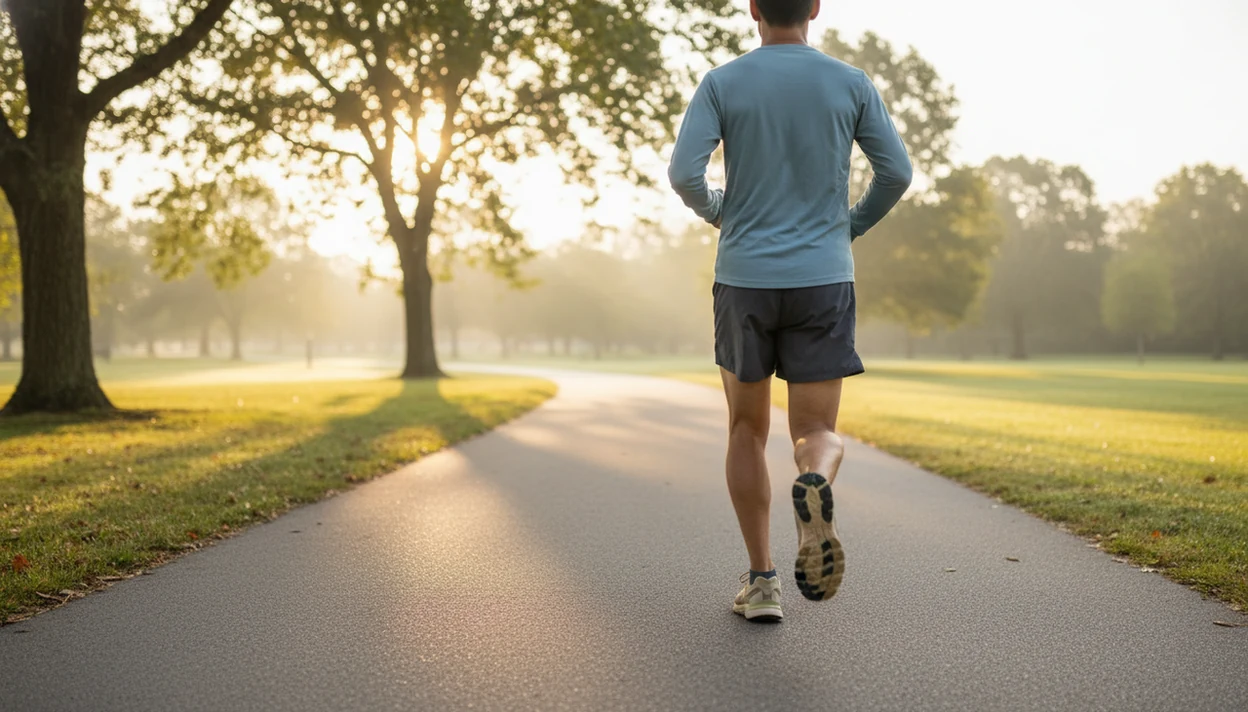
Running meditation is a secular mindfulness practice that uses breath, footfalls, body sensations, and surroundings as anchors for attention during a jog or run. You do not need to run fast or clear your mind. The task is to notice when attention wanders, return to one anchor, and remain aware of the route and other people.
Start at an easy, conversational pace, with five mindful minutes inside a familiar run or run-walk session. Choose one anchor rather than trying to track everything at once. When thoughts about work, pace, or errands take over, briefly acknowledge them and return. Traffic, uneven ground, pain, and exertion always take priority over keeping your focus on an anchor.
Definition: Running meditation is a secular moving meditation practice that brings present-moment awareness to the body, breath, rhythm, and environment during a run.
The essentials
- Use an easy, conversational pace so you can notice breath, posture, footfalls, and surroundings without forcing the run.
- Choose one anchor at a time, such as breathing, cadence, body sensations, sounds, or a short phrase.
- Treat mind-wandering as part of the practice: notice it, name it lightly, and return attention without self-criticism.
Running meditation basics for beginners
Running meditation is meditation in motion, not a running performance trick or a trance state. The practice is simple: run, notice what is happening now, and return attention when the mind drifts.
Beginners can start with slow jogging, run-walk intervals, or just five mindful minutes inside a normal route. You might notice ribs widening under a sweater, shoes touching pavement, or the mind jumping to a grocery list. That jump is not failure. It is the practice showing up.
If seated practice feels hard, running meditation can make mindfulness more concrete. A beginner might also compare it with basic meditation techniques before choosing a style. Tools like Mindful.net can support that learning with secular explanations, but the run itself stays low-tech: body, breath, route, return.
Five running meditation facts worth knowing
- Running meditation uses attention anchors such as breath, footfalls, body sensations, sound, and sight. The anchor gives the mind one place to return while the body keeps moving.
- The goal is returning attention, not emptying the mind. Thoughts will come up, including plans, worries, songs, and random errands.
- Safety awareness is part of the practice. A mindful run includes traffic, cyclists, dogs, roots, curbs, weather, and other people.
- Evidence is strongest for related areas, including mindfulness-based interventions, aerobic exercise, and mindful movement. Direct research on running meditation as a named intervention is still limited.
- Running and mindfulness may support mood, stress awareness, and rumination reduction for some people, but they should not replace medical care, therapy, injury assessment, or crisis support.
A practical takeaway: Running meditation usually works best at an easy pace because the runner can observe breath, rhythm, and surroundings without fighting for air.
How running meditation works in the body and attention
Running meditation works by pairing repetitive movement with a simple attention loop. Breath, cadence, arm swing, and bodily sensation create a steady rhythm, which gives attention somewhere to land again and again.
The loop is notice, label, return, and continue moving. You notice the mind has wandered, label it lightly, such as “planning” or “worrying,” then return to the chosen anchor. No drama. The legs keep going.
This differs from race visualization, motivational self-talk, or performance optimization. Those can be useful for athletes, but non-striving mindfulness is about clear contact with present experience. For beginners, the aim of mindfulness practice is steadier attention and practical self-awareness, not a guaranteed faster mile or a cure for distress.
Evidence is cautious here. Related research on mindfulness-based interventions, aerobic exercise, and mindful walking suggests possible benefits for stress and mood, but running meditation itself has not been studied as deeply.
How to use running meditation during a run
Use this running meditation guide on an easy day, not during a hard workout. A quiet loop, a familiar path, or a short out-and-back route works well.
- Set one intention before you start, such as staying present for the first 10 minutes.
- Choose a safe route with low traffic, good visibility, and predictable terrain.
- Begin at conversational pace or use run-walk intervals if that helps you stay aware.
- Pick one anchor such as breath, footfall rhythm, posture, sounds, or a short phrase.
- Return gently when attention wanders to pace, work, messages, or yesterday’s argument.
- Close with reflection during your cool-down by naming one sensation, one mood, and one thing you noticed.
A phone timer set for 5 or 10 minutes is enough. If breath is your anchor, breath awareness meditation can make the same skill easier to recognize before you take it outside.
Best running meditation anchors for different runners
Different anchors fit different runners, routes, and moods. Choose one on purpose, then stay with it for several minutes before switching.
- Breath: Useful when you want a calmer run or a gentle warm-up. Notice inhale, exhale, and whether the pace still allows easy breathing.
- Footfalls: Useful for rhythm. Count steps for a few cycles, then feel the pattern without forcing cadence.
- Body scan: Useful for tension awareness in shoulders, jaw, hips, or hands. If pain or injury sensations become intense, stop scanning and assess what your body needs.
- Soundscape: Useful on roads and shared paths because it keeps awareness open. Hear cars, birds, voices, wind, and your own steps. A 5 senses mindfulness exercise can help you practice noticing your surroundings before heading out for a run.
- Mantra or phrase: Useful when attention scatters. Try “here” on the inhale and “now” on the exhale.
For runners who tense up easily, a light body scan meditation practice can help separate neutral sensation from strain.
Running meditation safety tips for roads, trails, and headphones
Is running meditation safe on roads, trails, or with headphones? It can be, but only when mindfulness includes open awareness of the environment instead of narrowing attention inward.
Start with routes that have predictable surfaces, daylight or strong visibility, and fewer intersections. Keep scanning for traffic, cyclists, dogs, roots, curbs, puddles, loose gravel, and sudden weather changes. On a trail, the anchor may need to be sound and sight more than breath.
Headphones deserve extra care. If you use guided running meditation, choose low volume, one-ear audio, or bone-conduction audio where legal and safe. Some routes make audio a bad idea. The pocket check is real.
Pacing matters too. Stay easy enough to observe breath and body cues. If you are gasping, chasing a split, or dodging commuters, use brief mindful check-ins instead of a full meditative run.
Common running meditation mistakes and fixes
Most running meditation problems come from trying too hard, narrowing attention too much, or confusing discomfort with wisdom. The fix is to make the practice smaller, safer, and more responsive to the body.
- Start with a short window instead of making the whole run meditative. Try five minutes in the warm-up, then run normally if that feels like enough.
- Use breath focus only when effort is easy. On hills, intervals, or windy stretches, shift to footfalls, sounds, or an open scan so you are not fighting your breathing.
- Widen your attention whenever the route gets busy. Notice cars, curbs, cyclists, dogs, trail roots, and the person stepping off the curb, not just the sensations inside your chest.
- Treat wandering as the repetition. When the mind leaves for work, pace, or dinner, name it lightly and return. That return is the mindfulness rep. You can also practice letting go meditation to release distracting thoughts without forcing them away.
- Respond to pain signals instead of meditating through them. Sharp pain, dizziness, chest symptoms, or a changed gait means slow down, walk, stop, or get help.
Mindfulness should make the run more honest, not more stubborn.
Running meditation benefits and evidence limits
Running meditation may support stress awareness, mood, presence, body awareness, and reduced rumination, but direct large trials on running meditation as a named practice are limited. The strongest evidence comes from nearby fields.
For context, CDC National Health Statistics data reported that 24.2% of U.S. adults met both aerobic and muscle-strengthening activity guidelines in 2020 CDC guidance. A JAMA Internal Medicine meta-analysis found small-to-moderate reductions in anxiety and depression symptoms from mindfulness-based interventions across clinical conditions JAMA study. A JAMA Psychiatry pooled analysis also linked regular aerobic exercise with lower odds of depression in adults JAMA study.
Among adults with elevated stress, trials of mindfulness-based stress reduction have reported reductions in perceived stress. Controlled mindful walking research has also found mood improvements and reduced tension after structured practice PubMed research. Those findings are encouraging, but they are not a promise.
For many runners, running meditation is often easier than seated meditation because movement gives attention a clear rhythm and a familiar task. For a gentle mental reset before your run, try meditation for energy to refresh attention.
Can mindfulness help you keep exercising?
A 2020 pilot randomized trial assigned 50 physically underactive adults to exercise with a mindfulness recording or with a heart-rate monitor. At one-week follow-up, the mindfulness group reported 67.16 more minutes of moderate-to-vigorous activity than the comparison group. Accelerometer measurements showed a smaller difference of 35.48 minutes. These results concern exercise with mindfulness guidance, not running meditation specifically.
The trial mainly assessed feasibility and acceptability, so it cannot establish that audio guidance creates a lasting exercise habit. A 2019 systematic review of mindfulness and physical activity also found that intervention effects varied. Programs explicitly focused on physical activity were more successful than generic mindfulness training. For a runner, guidance is an option to try, not a reason to expect more mileage or replace an appropriate training plan.
When to choose a mindful run or another practice
Running meditation fits some situations better than others. Use the table to compare your options before making it part of a routine.
| Fit | Best for | Not ideal for |
|---|---|---|
| Beginner mindfulness | People who want everyday mindfulness without sitting still | People who feel worse when focusing on body sensations |
| Running mindset | Runners who overthink pace, comparison, or future workouts | Races, intervals, or sessions needing full tactical focus |
| Gentle routine | Warm-ups, cool-downs, recovery runs, and run-walk days | Acute injuries, dizziness, chest symptoms, or unsafe conditions |
| Alternative practice | People who like movement-based attention practice | Technical trails, heavy traffic, low visibility, or unfamiliar routes |
When running is not appropriate, walking meditation or seated practice may fit better. Open monitoring meditation can also help if you want broader awareness without using the body as the main focus.
Guided running meditation options without app overwhelm
Guided running meditation can help beginners remember the anchor, pace, and return cue. The key is choosing guidance that leaves enough attention for traffic, terrain, and body cues.
| Option | How it works | Good use |
|---|---|---|
| Silent practice | You choose one anchor and run without audio | Familiar routes and experienced runners |
| Short audio prompts | A voice cue appears every few minutes | 5 to 10 mindful minutes during an easy run |
| Podcasts | Longer talk-style guidance or reflections | Treadmills, parks, or low-risk routes |
| App-based guided runs | Structured sessions with timing and cues | Beginners who want a repeatable format |
Guided meditation apps such as Calm and Headspace can help you compare audio styles without guessing. If you use Mindful.net as a Mindfulness Practices App, treat it as support for learning cues rather than the safest guide; the route in front of you comes first.
Running Meditation Limits
- Direct randomized trials are limited, and benefits are not guaranteed because evidence mostly comes from related practices.
- Running meditation cannot replace medical care, mental health treatment, physical therapy, or injury assessment, and is not a diagnostic tool.
- Acute injuries, heart problems, dizziness, mobility limitations, or unsafe running conditions may require alternatives.
- Seek qualified care for chest pain, faintness, injury, severe anxiety, depression symptoms, or any medically urgent concern.
Running meditation questions
How do I start meditating while running?
Choose a familiar, safe route and begin at an easy pace. For five minutes, notice one anchor, such as foot contact or natural breathing. When your mind drifts, acknowledge the thought and return. Keep checking your surroundings, and let traffic, terrain, and body cues take priority.
What pace should I use for running meditation?
Use a conversational pace that leaves enough attention for your body and surroundings. Slow jogging or run-walk intervals are suitable starting points. Save sustained inward focus for easy sessions rather than races or hard intervals. If breathing becomes demanding, shift attention to footfalls or the route.
Should I match my breathing to my steps?
You do not need to impose a breathing pattern or match every breath to a fixed number of steps. Notice breathing as it happens naturally. If breath focus makes the run feel forced, use footfalls, sounds, or an open scan of your surroundings instead.
Can I listen to music or guided meditation while running?
Audio is optional, not a requirement for running meditation. If you use it, keep the volume low and preserve awareness of traffic, cyclists, and other people. One-ear audio or bone-conduction headphones still require care. Choose silence when audio competes with attention to the route.
Should I close my eyes during running meditation?
No. Keep your eyes open while running so you can respond to uneven surfaces, traffic, animals, and other people. Mindfulness includes seeing what is around you. If you want a practice with fewer outside demands, stop safely and choose a stationary meditation instead.
Does running meditation help with anxiety?
It may help you notice worry and return attention to the present, but direct evidence for running meditation is limited. Research on mindfulness and exercise supports possible mental health benefits without proving that their combination is better. It should not replace mental health treatment when that is needed.
Is it better to meditate during or after a run?
Neither option is established as better for everyone. During an easy run, movement provides concrete anchors such as footfalls and body sensations. Afterward, a stationary practice removes the need to monitor a moving route. Choose the setting that lets you pay attention comfortably and safely.