
Mindful Hiking: A Five-Minute Practice for the Trail


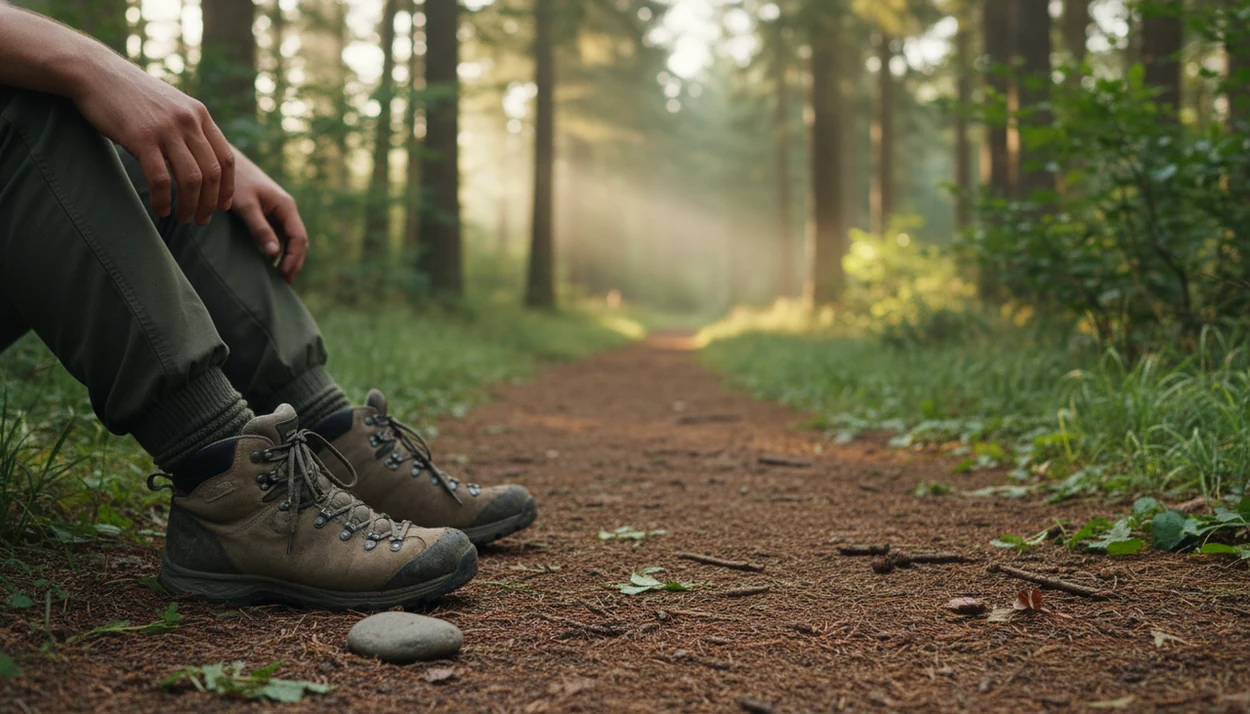
Mindful hiking is walking in nature with deliberate attention to your breath, body, senses, and surroundings rather than moving on autopilot. This secular moving-meditation practice uses the trail as an anchor for present-moment awareness. You can start on a short local route: notice your footsteps or one sound, then gently return to it when your mind wanders.
You do not need to walk unusually slowly or feel peaceful for the practice to count. Choose an easy route, put away distractions while keeping your map available, and try a few minutes of noticing. Keep your eyes open and watch your footing. Nature exposure and mindfulness may support stress reduction, but mindful hiking is neither a medical treatment nor a guarantee of calm.
The essentials
- Mindful hiking is not about walking perfectly slowly; it is about noticing the present moment while you move safely.
- The simplest practice is to choose an easy route, put away distractions, use breath or footsteps as an anchor, and check in with your senses.
- Nature exposure and mindfulness may support stress reduction, but mindful hiking is not a medical treatment or a guarantee of calm.
What makes a hike mindful
Mindful hiking is a secular moving-meditation practice that uses walking in nature as an anchor for present-moment awareness. In plain language, it means walking in nature with deliberate attention to your breath, body, and surroundings.
Ordinary hiking often has a destination, pace, workout goal, or view in mind. Mindful hiking can include all of that, but the main practice is noticing. You might feel your boots on packed dirt, pause to look at the edge of a leaf, listen to wind moving through branches, then return attention after thinking about dinner. When a trail encounter feels personal, practice how to take nothing personally while staying aware of your surroundings.
The mind wanders. That is part of it.
You do not need spiritual language, advanced hiking skill, or a silent retreat setting. A beginner can try mindful hiking on a flat park loop, a shaded greenway, or a familiar trail where safety demands are low.
Five Mindful Hiking Facts Before You Start
A common beginner mistake is trying to make the hike feel peaceful right away. Mindful hiking is an attention practice first and a hiking style second: you walk, notice, drift, and return. These five facts keep the practice simple, safe, and realistic.
- Fact 1: Mindful hiking is intentional attention, not slow hiking for its own sake. You can walk at a normal safe pace and still notice each step.
- Fact 2: The senses are the main tool. Seeing, hearing, smelling, touch, and body sensation give the mind something immediate to meet.
- Fact 3: Breath and footsteps can work as anchors. Breath awareness is also used in breath awareness meditation, but here the anchor moves with you.
- Fact 4: Headphones, constant phone checking, and multitasking weaken the practice. A quick map check is different from scrolling at every overlook.
- Fact 5: Short intervals on easy trails are enough for beginners. Five minutes of steady attention is real practice.
Hiking is common, too. In the 2022 National Survey on Recreation and the Environment, 55.6% of U.S. adults reported hiking, climbing, or mountain walking at least once in the prior year 66410.
Mindful Hiking Effects on the Body and Attention
Mindful hiking works as a gentle loop: choose an anchor, get distracted, and return. You might feel your breath, count a few steps, notice cold hands on the trail, or listen for one sound beneath the wind.
This is attention regulation in ordinary language. The trail gives repeated cues, such as gravel underfoot, changing light, birdsong, damp bark, or chest movement beneath a shirt. Those cues make returning easier than sitting still for some beginners. Movement gives restless energy somewhere to go.
For beginners who struggle with seated practice, mindful hiking can be a practical bridge into other meditation techniques. It may feel less like “trying to meditate” and more like walking with less mental noise.
Evidence should be read carefully. A 2023 BMC Public Health systematic review found that nature-based interventions were associated with significant reductions in depression and anxiety in many included studies S12889 023 16551 5. A 2019 Environmental Research meta-analysis also found that natural environments were associated with lower cortisol concentrations S001393511930332X. That does not mean mindful hiking cures stress, anxiety, or depression.
A five-step practice for your next trail walk
How to use a mindful hiking guide on the trail is simple: choose safety first, then practice in short intervals. Beginners can use 5 to 10 minutes rather than trying to make the whole hike mindful.
- Start with a familiar trail you can manage safely. Check that the footing, weather, route, and remaining daylight suit your plans.
- Set a short intention and a realistic time window. Try, “For the next five minutes, I’ll notice walking and sound.”
- Put your phone on silent and avoid headphones when safe. Keep your map available, but do not turn the hike into a message-checking loop.
- Anchor attention in breath, footsteps, or body sensation. You might feel heel, sole, toe, then the next step.
- Return gently when distracted. If your mind runs to a grocery list, notice it and come back to the trail. If a passing comment distracts you, learning how to stop taking things personally can help you respond calmly and return to walking.
Choose a short trail segment instead of measuring the practice by minutes: from this bend to the next trail marker, or from the creek crossing to the wide oak. Let that be your clean beginning and ending. At the end, notice one ordinary detail before you continue: mud on a shoe edge, pine smell, a warm strap across your shoulder, a wet umbrella tucked near the trailhead, or traffic fading behind the trees. After your walk, gratitude journal prompts can help you appreciate ordinary details without forcing yourself to feel positive.
Mindful Hiking Tips for Breath, Senses, and Pauses
These mindful hiking tips give your attention something specific to do. Rotate one exercise at a time, especially on a quiet trail where you can still watch your footing.
- Three-breath check: Notice three natural breaths without forcing them. Feel the inhale, the exhale, and the small pause after breathing out.
- Five-senses scan: Name one thing you see, hear, smell, and feel. For taste, notice the taste already in your mouth; do not taste plants or trail water.
- Sound map: Listen for near sounds, far sounds, and the silence between sounds. Rain tapping during a walking practice can become the anchor.
- Walking body scan: Move attention through feet, calves, shoulders, jaw, and hands. If your shoulders lift toward your ears, soften them.
- Safe pause practice: Stop off the trail edge if appropriate, look around, name three details, then continue.
A walking body scan is related to body scan meditation, but it stays tied to movement and terrain.
Choose a route that leaves room for attention
The best mindful hiking route is easy, familiar, safe, and low-distraction. Route choice is part of the mindfulness practice because it reduces avoidable strain before you begin.
| Situation | Good fit for mindful hiking | Better approach |
|---|---|---|
| Easy loop trail | Yes | Use breath, footsteps, and senses for 5 to 10 minutes. |
| Familiar park path | Yes | Practice short pauses and sound mapping. |
| Quiet nature path | Yes | Walk slowly enough to notice details without blocking others. |
| Short neighborhood greenway | Yes | Use everyday mindfulness between road crossings. |
| Gentle overlook | Yes | Pause, look, breathe, then move on safely. |
| Exposed ridgeline | No | Focus on footing, wind, weather, and fall risk. |
| Icy trail | No | Prioritize traction and route decisions. |
| High-navigation route | No | Keep attention on map, landmarks, and timing. |
| Heavy traffic or crowded technical terrain | No | Stay alert to people, vehicles, bikes, and obstacles. |
| Severe weather or wildlife risk | No | Turn back, shelter, or follow local safety guidance. |
Mindful hiking does not mean ignoring footing, weather, wildlife, or physical limits. Safety gets the first vote.
Mindful Hiking Benefits and Evidence Caveats
Mindful hiking may support sharper attention, richer sensory awareness, a calmer pace, and an easier transition into meditation. It can also make familiar surroundings feel more vivid, like noticing the grain of a wooden bridge you usually cross without seeing.
The strongest evidence is for nature exposure and mindfulness broadly, not always for mindful hiking as a standalone practice. The 2023 BMC Public Health review found significant reductions in depression and anxiety in many nature-based intervention studies. The 2019 Environmental Research meta-analysis found that time in natural environments was associated with lower cortisol concentrations, a marker related to stress S001393511930332X.
For people who dislike sitting still, mindful hiking is often easier than seated meditation because the body already has a steady task. However, it is still practice, not scenery doing all the work.
Practicing attention gives you a skill to return to during a walk, not a promise that every outing will feel peaceful.
If you want a short indoor rehearsal before the trail, Mindful.net’s Mindfulness Practices App can help you practice breath, body, and sound anchors without needing to look at your phone outside.
Try short, repeated outings rather than one long hike
A 2026 systematic review of nature exposure and mental health reported positive effects from shorter, repeated exposure, with possible benefits from visits as brief as 10 minutes, including in urban nature. The findings concern nature exposure, not proof that a particular mindful hiking exercise works. They also do not establish a replacement for clinical care.
To apply that finding cautiously, choose a nearby green setting you can return to and spend 10 to 30 minutes walking or sitting. Notice visual details, ambient sounds, and contact with the ground. At the end, record mood, tension, and energy on a 0 to 10 scale. This is a practical adaptation, not a validated treatment protocol; use the notes to compare how different outings feel.
Common Mindful Hiking Mistakes on Real Trails
Most mindful hiking mistakes come from trying too hard or forgetting basic trail sense. The correction is usually shorter practice, safer route choice, or a kinder return to the anchor. After noticing a recurring practice obstacle, use journal prompts for self sabotage to reflect on what keeps the pattern going.
- Mistake: trying to stay perfectly present for the entire hike. Correct it by practicing for 5 to 10 minutes, then hiking normally.
- Mistake: confusing mindful hiking with zoning out. Correct it by keeping eyes open, watching footing, and checking surroundings.
- A demanding route can leave little attention for the practice. Begin with a familiar loop before adding elevation, distance, or route-finding demands.
- Mistake: overusing the phone for photos, maps, messages, or music. Correct it with planned map checks and fewer photos.
- Mistake: turning the hike into a performance. Correct it by treating each distraction as the next repetition. If turning practice into a performance keeps you from starting, explore how to stop self sabotage with small, realistic changes.
The pocket check is real.
If you want a guided practice before trying silence outside, the guided vs silent meditation comparison can help you choose a starting point.
Mindful Hiking Limits
- Seek qualified support for intense, persistent, or dangerous symptoms, since mindful hiking cannot replace medical or mental health care.
- Quiet attention may feel harder rather than calming during stress, fear, pain, grief, or intrusive thoughts.
- Stop the attention exercise when weather, traffic, wildlife, steep drops, ice, or navigation require your full focus.
- Mobility, location, daylight, transportation, trail availability, and weather can limit whether hiking is realistic.
Mindful hiking questions
How is mindful hiking different from regular hiking?
The difference is where you deliberately place your attention. A regular hike may focus on distance, pace, or reaching a view. During mindful hiking, you also notice footsteps, breathing, sounds, and surroundings, then return when distracted. You can still have a destination or fitness goal.
How do I start mindful hiking as a beginner?
Choose an easy, familiar route and set aside five minutes of the walk. Keep your eyes open, watch your footing, and notice either your steps or nearby sounds. When thoughts pull you away, return to that anchor. You do not need to make the whole hike a meditation.
Do I need to walk slowly to hike mindfully?
No. Walk at a pace that suits the terrain and lets you stay aware of your surroundings. Attention matters more than slowness. If you want to study a leaf or listen closely to a sound, pause somewhere safe without blocking the path, then continue.
Should I focus on my breathing while hiking uphill?
Breathing can be an anchor, but you do not need to control it. Notice natural breaths without forcing a rhythm. When the climb or footing demands more attention, leave the exercise aside. You can return to breath, footsteps, or sounds on an easier stretch.
Can I use headphones during a mindful hike?
Headphones are not necessary and can make it harder to hear your surroundings. The practice can use trail sounds instead of recorded guidance. Keep your map available, and avoid audio when traffic, other trail users, wildlife, or difficult terrain require your attention.
Does mindful hiking help with anxiety or stress?
It may help, but feeling calm is not guaranteed. Research supports potential benefits of nature exposure and mindfulness more broadly; evidence for mindful hiking as a distinct practice is less clear. If quiet attention increases distress, shorten the exercise or stop. Persistent or intense symptoms need qualified support.
Can I practice mindful hiking in a park instead of the wilderness?
Yes. A familiar park path, short greenway, or easy local loop can provide sounds, visual details, and body sensations to notice. A remote or demanding route is not required. Choose a setting where access, footing, weather, and distractions allow you to practice while staying alert.