
Mindfulness Retreat at Home: Plan a Half or Full Day


A mindfulness retreat at home is a self-guided, secular block of meditation, mindful movement, slow meals, and quiet reflection in your own space. A full retreat day usually means protecting 4 to 8 hours from routine demands. A shorter half day can be a more manageable starting point, with brief guided practices, food prepared ahead, and clear boundaries around your phone and household interruptions.
The aim is structured awareness practice, not perfect silence or an entire day of sitting still. Alternate meditation with walking, stretching, eating, and rest. Choose a schedule you can realistically protect, and give yourself permission to shorten it. Intensive solo practice is not a substitute for mental health care or trauma support.
Definition: A home mindfulness day retreat is a self-guided, secular day of structured awareness practice using meditation, movement, mindful eating, and quiet reflection without leaving home.
The essentials
- Plan a realistic 4-8 hour schedule, not a perfect silent retreat.
- Alternate 20-30 minute sitting practices with walking, stretching, meals, journaling, and rest.
- Do not use an intensive solo retreat as a substitute for mental health care or trauma support.
What counts as a home mindfulness retreat
A mindfulness day retreat at home is a planned period of practice where ordinary home life becomes the retreat setting. You use breath, body awareness, movement, compassion, eating, and quiet reflection as the structure.
People often choose home retreats because travel, cost, childcare, or schedule limits make a retreat center unrealistic. A 4-8 hour day is common, but a 2-4 hour half-day can be plenty for a first try. The point is not to copy a monastery. It is to reduce input and practice noticing what is already here.
Socked feet under a chair count.
A secular retreat can include breath awareness meditation, a short body scan, slow walking, light stretching, and one written reflection. A short guided recording can offer gentle structure if silence feels too open-ended. For written guidance, use short guided meditation scripts that you can read slowly during your sitting sessions.
Five things to arrange before your first retreat
- Protect the time first. A home retreat works better when you tell others you are unavailable and choose a clear start and finish.
- Prepare before the bell. Set out food, water, a printed schedule, simple clothing, a cushion, and a phone plan before practice begins.
- Use repeated short sessions. For beginners, 15-30 minute practices are usually easier than one long sit because attention tires.
- Include ordinary activities. Showering, eating, cleaning, and resting can become mindfulness practice when you slow down and feel the details.
- Meditation is now mainstream. Per the CDC, 14.2% of U.S. adults reported practicing meditation in 2017, up from 4.1% in 2012: CDC guidance
Mindfulness and meditation train attention through repeated practice; they do not promise instant calm or the disappearance of stress.
How sitting, movement, and reflection work together
A home retreat works by alternating focused attention, open awareness, movement, and reflection so the mind gets repeated chances to settle and restart. The mechanism is simple: reduce choices, practice returning, and carry awareness into more than one posture.
A prewritten schedule lowers decision fatigue. You are not asking, “What now?” every twenty minutes. You sit, walk, stretch, eat, write, and rest in a deliberate order. During sitting practice, attention may return to breath, body, sound, or the feeling of palms tingling in the lap. During walking and meals, continuity matters. You keep practicing while moving.
Research on mindfulness-based programs suggests benefits for stress and well-being, especially when practice repeats over time. A 2014 JAMA Internal Medicine meta-analysis found moderate reductions in anxiety and depression symptoms in structured meditation programs, but that does not mean one self-guided day treats a condition: JAMA study
For beginners, alternating stillness and movement is often more sustainable than long silent sitting because the body has several ways to stay engaged.
Seven steps to plan your retreat day
How to use a mindfulness day retreat at home:
- Set the length. Choose a 2-hour reset, 4-hour half day, school-day block, or 6-8 hour full day.
- Choose your base. Pick one quiet room or corner and one simple walking route, indoors or outside.
- Prepare supplies. Lay out meals, tea, water, journal, cushion, blanket, tissues, and loose clothing.
- Silence the phone. Turn off notifications and name one emergency-only contact plan.
- Alternate practices. Move between sitting, walking, stretching, mindful eating, journaling, and rest.
- Use guidance sparingly. Choose recordings before you begin, especially if you are comparing guided vs silent meditation.
- Close slowly. Write one integration note before checking messages or returning to chores.
Phone on airplane mode helps.
One practical next step is to set a five-minute timer the night before and test your first sitting practice. A five minute meditation break offers a simple way to rehearse pausing before your longer retreat day.
Choose a 2-hour, half-day, or full-day schedule
Choose the shortest schedule that you can protect without resentment. A steady 2-hour retreat is better than a full day spent negotiating interruptions.
| Format | Best fit | Formal practice blocks | Includes |
|---|---|---|---|
| 2-hour reset | First-timers, caregivers, small homes | 15-20 minutes | Sitting, walking, tea, short journaling |
| Half-day retreat | Beginners with a free morning | 20-30 minutes | Sitting, movement, meal, rest, reflection |
| Full-day retreat | Regular meditators | 30-45 minutes | Multiple sits, walking, meals, rest, closing notes |
Beginner Half-Day Retreat Schedule
Try sitting, walking, stretching, tea, body scan meditation, mindful lunch, rest, and a final written note. Meal and rest periods are practice, not breaks from practice.
Full-Day Home Retreat Schedule
Regular meditators can lengthen formal periods and include open monitoring meditation. If caregiving or shared housing limits quiet, use clear windows and accept a smaller retreat.
Prepare your room, meals, and phone boundaries
A good setup removes avoidable decisions while allowing normal home sounds to remain part of practice. You do not need a special room, but one uncluttered corner helps.
The room: Choose a chair, cushion, or mat with enough space for standing and gentle movement. Put away visible work papers if you can.
The schedule: Print or write the timetable. Checking a phone for the next block easily becomes checking everything else.
The food: Prepare plain meals, snacks, water, and tea before the retreat. Tea steam before bedtime can be a later mindful cue, but during the retreat keep choices simple.
The household plan: Leave a sign or send a message that says when you are available again. If a dog barks or a neighbor starts tools, make sound the object for a few breaths. If steady background sound helps, try pink noise meditation at a comfortable volume during one short practice session.
Suggested Image Caption
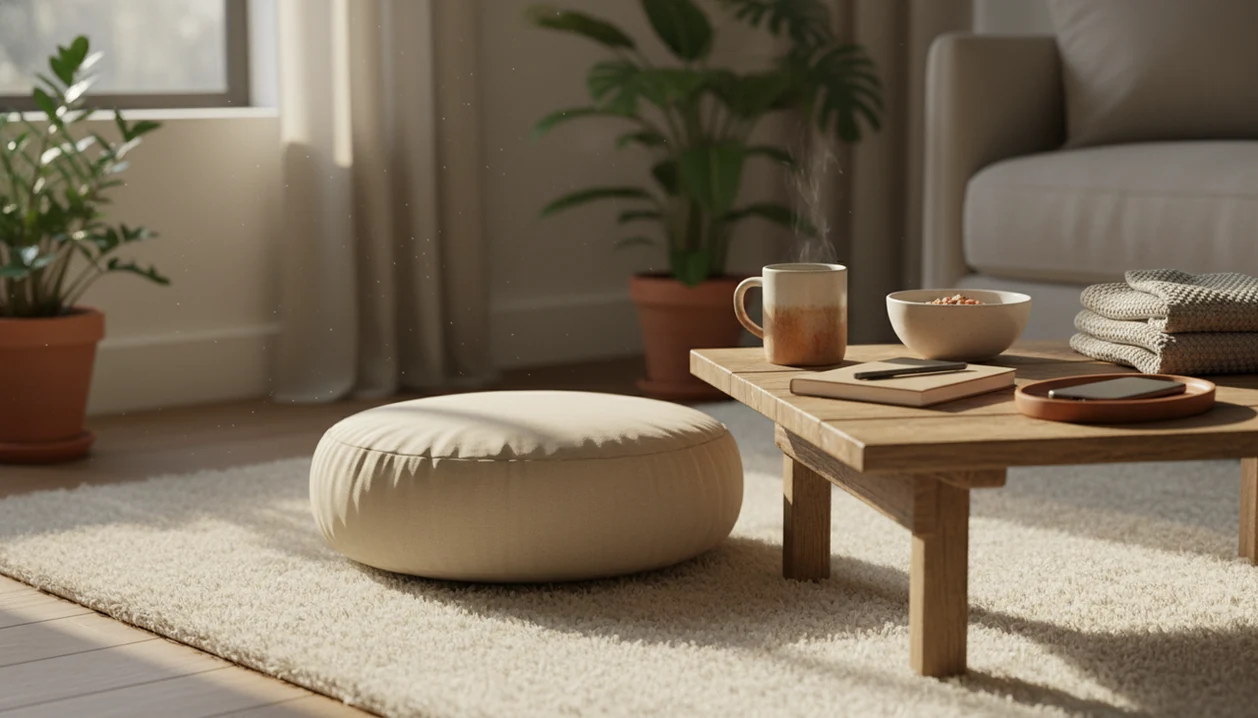
A simple chair, cushion, journal, and cup of tea set up for a mindfulness day retreat at home.
Avoid an overlong or overly strict retreat
An overlong schedule, rigid rules, and frequent phone checks can each make a home retreat harder to sustain. A good home retreat should feel structured enough to hold you, not so rigid that ordinary human needs become problems.
Use this troubleshooting pass before you begin:
- Start smaller. Try a 20-60 minute practice block before attempting a full day, especially if sitting still is new.
- Separate timing from scrolling. Use a kitchen timer, watch, or preloaded audio so checking the bell does not become checking messages.
- Treat interruptions as material. Noise, drowsiness, and wandering thoughts are not proof that you failed; they are moments to notice and restart.
- Include the body. Eat simple meals, drink water, stretch, walk, and rest instead of turning the day into a test of endurance.
- Pause intense silence. If fear, dissociation, panic, or intrusive memories show up, open your eyes, orient to the room, contact support, or end the retreat.
Less heroic usually works better. The retreat is a container for awareness, not a contest.
Who a self-guided retreat suits, and when to get support
A home retreat is best for people who can protect several quiet hours and want a reset without travel. It can also fit regular meditators who want a deeper practice day without joining a residential retreat.
| Fit | Best for | Not ideal for |
|---|---|---|
| Beginner reset | Short sits, movement, clear schedule | Expecting total silence or instant calm |
| Deeper practice | Regular meditators with stable routines | Pushing through distress alone |
| Home-friendly option | People with travel, cost, or access limits | Caregiving duties that cannot pause |
This format is not ideal during acute mental health crisis, severe depression, psychosis, active substance dependence, or unresolved trauma without support. Long silence can bring up more than expected. If intensive practice raises fear, dissociation, or intrusive memories, pause and seek a qualified clinician or experienced meditation teacher.
Clinicians typically recommend professional support when symptoms are acute, impairing, or unsafe, rather than relying on self-guided mindfulness alone.
What safety research can tell you about a solo retreat
A 2020 systematic review of meditation-related adverse events estimated that 8.3% of participants experienced adverse events across 83 studies. Reports included anxiety, depression, and changes in cognition. This is not an estimate of the risk from a single home retreat: the review combined different practices and study designs, and estimates varied substantially between experimental and observational studies.
Safety figures also depend on what researchers ask participants to report. A 2021 prospective study of mindfulness-program participants distinguished unusual experiences, unpleasant experiences, and experiences that impaired functioning. Its results are not directly comparable with the review. For a home retreat, the practical distinction is between ordinary distraction or discomfort and symptoms that worsen or interfere with daily life. More practice time is not automatically better.
Carry one retreat practice into your workweek
How do you keep a mindfulness day retreat at home from becoming a one-day event? Write down three observations before ending, then choose one small practice for the next workweek.
Keep it ordinary. You might take three breaths before opening email, feel your feet planted under the desk before a meeting, or pause on a bus seat instead of reaching for your phone. One mindful meal or tea break the next day gives the retreat a place to land. A 5-10 minute daily practice for the following week is enough to maintain contact.
Guided-practice apps such as Calm and Headspace can support short sessions if they reduce decision fatigue. Still, no app or single retreat permanently changes stress or mood. Ongoing practice matters.
During sitting blocks: keep timing separate from messages
A home retreat needs clear session endings without repeated trips into messages or news. The free online meditation timer can time sitting blocks, while the Mindful.net app offers short guided meditations when instructions help. Keep your schedule on paper and silence notifications before starting. A kitchen timer is a better choice when having a screen nearby makes it harder to leave other tasks alone.
Home Retreat Limits
- Familiar triggers and interruptions from noise, caregiving, pets, chores, or shared housing can make home retreats less removed.
- Self-guided practice can be difficult if you need teacher feedback or external structure.
- Long silent periods can increase distress for some people with trauma histories or acute symptoms.
- If a full day feels too intense, try shorter practice with a tool that can guide 10-minute meditation and build gradually.
Home mindfulness retreat questions
How long should my first mindfulness retreat at home be?
Start with a protected 2-hour block or a half day rather than committing to 8 hours. Include short sitting sessions, walking, and a break. If even 2 hours feels ambitious, try a 20 to 60 minute practice block first. Choose the length you can manage without pushing through distress or neglecting responsibilities.
Can a beginner do a self-guided mindfulness retreat?
Yes, with a modest schedule and clear instructions. Begin with 10 to 15 minutes of attention to breathing, then walk or stretch before another session. Select guided recordings beforehand if they help. Avoid abruptly attempting many hours of intensive practice, especially if you have a history of panic, dissociation, or serious mental health symptoms.
Do I need complete silence for a home retreat?
No. Reduce avoidable input, such as television, messages, and unnecessary conversation, but ordinary household sounds do not invalidate the practice. Notice a sound and return to your chosen focus. Agree on boundaries with anyone sharing your space, and choose a shorter retreat if caregiving or other duties cannot pause.
What should I eat during a mindfulness retreat at home?
Prepare simple meals, snacks, water, and tea before starting so cooking does not take over the schedule. During a meal, slow down and notice taste, texture, and the movements of eating. The retreat does not require special food. Keep meals and hydration in the plan rather than treating them as interruptions.
Can I use guided meditations without breaking the retreat?
Yes. A self-guided retreat can include recorded instructions, particularly when you are learning or need help returning to practice. Choose recordings before the day begins and turn off notifications. Alternate guided sessions with walking, meals, and quiet reflection rather than spending the whole retreat selecting or listening to audio.
Should I turn my phone off during a home retreat?
Turn off notifications and decide in advance how an urgent message will reach you. You can switch the phone off if your responsibilities allow it. If you need it for guidance or timing, keep a written schedule nearby and separate those uses from checking messages. A kitchen timer can remove the need for a screen.
When should I stop a home meditation retreat?
Stop or shorten practice if you develop escalating panic, a sense that things are unreal, marked agitation, intrusive traumatic material, or difficulty sleeping. Do not treat these symptoms as something to push through. Seek qualified clinical help if symptoms persist or feel unsafe. Intensive solo practice is unsuitable during an acute mental health crisis.
How do I finish a mindfulness retreat and return to daily life?
Leave time for a quiet closing rather than moving straight from meditation into messages or work. Write down three observations, then choose one small practice for the following week. That might be a mindful meal, three breaths before email, or 5 to 10 minutes of daily meditation. You do not need to preserve the retreat's entire schedule.