
Group Meditation for Emotions: A Short Practice with Clear Safety Limits


Group meditation for emotions is a secular mindfulness practice in which a facilitator guides people to notice, name, and allow feelings while returning to a steady anchor, such as breath, sound, or body sensation. The aim is to stay connected to the present moment, not to suppress sadness, anger, anxiety, or other difficult feelings. Participants can practice together without explaining their emotions to the group.
Start with a manageable emotion, not the most overwhelming experience in your life. A safe session includes clear expectations, permission to change position or stop, and time to settle afterward. Mindfulness can support emotional awareness, but a group session is not therapy and cannot replace crisis care or mental health treatment.
The essentials
- Start with moderate emotions, not the most overwhelming feeling in your life.
- A safe group practice includes clear expectations, permission to modify, and time to settle afterward.
- Mindfulness can support emotional awareness, but it is not a substitute for crisis care or mental health treatment.
Noticing feelings together without having to explain them
Group meditation for emotions is a secular mindfulness practice in which a facilitator guides several people to observe, name, and allow emotions while staying connected to the present moment.
In everyday terms, the practice gives you a shared place to notice stress, sadness, anxiety, anger, or overwhelm without rushing to fix it. You may hear a few gentle prompts, sense a warm coffee mug in your palms afterward, or notice that an emotion has a shape, temperature, or pull in the body before it changes.
Secular versions usually stay simple: name the feeling, notice where it lands in the body, follow a few natural breaths, and reconnect with the room. If you already know basic meditation techniques, this is the same notice-and-return skill with more attention on emotional weather.
Not emptying the mind. Not forcing calm.
How group meditation for emotions works
Group meditation for emotions works by shifting attention from the storyline around a feeling to direct present-moment experience. Instead of replaying “why am I like this,” the group is guided toward breath, posture, sound, and body sensations.
One mechanism is affect labeling, which means naming an emotion in simple language. “Anger is here” or “sadness is present” can create a little space between the person and the feeling. Another mechanism is co-regulation in ordinary terms: shared pacing, shared silence, and the sense that you are not the only one sitting with something hard.
Research is encouraging, but not absolute. A 2022 review found small-to-moderate reductions in anxiety symptoms for mindfulness-based interventions compared with control conditions S00702 022 02548 6. A 2014 JAMA meta-analysis also found moderate evidence for improved anxiety and depression symptoms in mindfulness meditation programs JAMA study.
For most beginners, structured mindfulness practice is easier to use than unstructured emotional reflection because it gives attention a place to return.
Five things to know before your first session
- Awareness is the aim. Group meditation for emotions is about noticing feelings, not suppressing them.
- The common sequence is simple. Name the emotion, feel it in the body, breathe, and return to a steady anchor.
- Moderate is wiser than maximum. Beginners should choose a manageable feeling, not the hardest event in memory.
- The group matters. Practicing with others can reduce the feeling of handling hard emotions alone.
- It has limits. These group meditation for emotions tips describe a mindfulness skill, not a replacement for clinical support.
A small detail helps: keep the emotion ordinary at first. Irritation from a meeting is enough. The grocery line with a clenched basket is enough.
A five-step practice for a 5- to 12-minute session
Use this short structure for a 5- to 12-minute practice. A facilitator can simply keep track of the time, or the group can agree on an approximate length beforehand. No special room is required; even a museum-quiet corner or an unused classroom can work. For a timed option, try a ten minute meditation for stress with gentle prompts and a steady anchor.
- Set expectations. Name the duration, privacy agreement, and opt-out permission before the practice begins.
- Choose a moderate emotion. Pick something present but tolerable, rather than the most intense issue in your life.
- Name the emotion. Say it silently or use simple words such as “worry,” “grief,” “heat,” or “tightness.” A feelings wheel for stress can help participants find words for emotions they struggle to name.
- Notice body sensations. Feel breath, posture, pressure, impulses, and the belly rising against a waistband without needing to act.
- Return to an anchor. Come back to the breath, room sounds, open eyes, or contact with the chair.
Close with a brief pause. People can journal, stretch, or share one sentence only if they choose. For breath-based groups, breath awareness meditation gives a useful foundation.
Allow the feeling, then choose what to do
Allowing an emotion does not mean approving of what caused it or accepting mistreatment. In emotion-regulation research, acceptance means letting an internal experience be present without trying to suppress, avoid, control, or judge it. You can acknowledge anger while deciding not to send an insulting message. You can notice fear and still seek protection, set a boundary, or ask for help.
At the end of the group practice, privately ask what the situation needs next. That might be rest, a practical solution, a conversation, or professional support. No one needs to announce their answer. Meditation should not become a reason to postpone necessary action: naming and allowing a feeling can be followed by a deliberate response, rather than more time spent sitting with it.
Suitable settings and reasons to pause
Group meditation for emotions fits ordinary emotional awareness practice, but it is not right for every moment. The setting should feel steady enough that people can choose how deeply to participate.
| Best for | Not ideal for |
|---|---|
| Everyday stress after work | Active crisis or feeling unsafe |
| Mild sadness or heaviness | Severe panic or severe depression symptoms |
| Irritability and tension | Trauma processing without qualified support |
| Learning to name emotions | Groups that pressure disclosure |
| Beginner mindfulness circles | No privacy, no consent, or rushed endings |
Some people do better with eyes open, slow movement, a grounding object, or a shorter practice. A body-based group can borrow from body scan meditation, but facilitators should always offer alternatives.
The aim of beginner mindfulness practice is steadier attention and more choice about how to respond, not instant control over emotions.
Facilitator guidance: consent, anchors, and intensity
Safe facilitation begins with scope. This is mindfulness practice, not therapy, confession, or forced emotional disclosure.
- Clear frame: Say what the practice is, how long it lasts, and that participants can pause or stop.
- Normal responses: Silence, distraction, tears, restlessness, and opting out can all belong in the room.
- Invitation language: Use “if it feels okay” and “you might notice,” rather than commands.
- Multiple anchors: Offer breath, feet, hands, sound, eyes open, or contact with the chair.
- Intensity limits: Do not push people toward intense memories, catharsis, or public sharing.
Three breaths before unmuting can change the whole tone of an online group.
Evidence behind group meditation for emotions
Emotional distress is common, which is one reason mindfulness groups attract interest. The WHO estimated that 4.0% of the global population had an anxiety disorder in 2019 WHO report. It also estimates that 280 million people were living with depression worldwide in 2019 WHO report.
The evidence is stronger for structured mindfulness-based programs than for one informal group session. The 2022 review noted small-to-moderate anxiety symptom reductions for mindfulness-based interventions. The 2014 JAMA meta-analysis found moderate evidence for improved anxiety and depression symptoms, especially in comparisons with no treatment.
That does not mean every group will help every person. Facilitator training, group safety, pacing, and participant choice matter. Clinicians typically recommend professional evaluation when distress is severe, persistent, risky, or interfering with basic functioning.
A good safety rule is simple: if someone feels at risk of harming themselves, unable to function, or unable to calm down after the practice, stop meditating and contact urgent or professional support. The group should not try to process trauma, diagnose symptoms, or replace a clinician.
If a group leans toward warmth and compassion, loving-kindness meditation may be a gentler next step.
Progress does not always feel like immediate calm
A 2024 meta-analysis of mindfulness-based emotion-regulation strategies examined 110 studies involving 8,105 participants. It found a small average effect, with substantial variation across studies. Monitoring emotions alone was less effective than broader approaches that also included equanimity or nonjudgmental acceptance. These findings concern mindfulness strategies generally, not proof that practicing in a group has a distinct effect on difficult emotions.
Immediate relief is also an incomplete measure of the practice. A review of affect-labeling research reports that putting feelings into words can reduce or stabilize physiological and neural reactivity while self-reported distress decreases, stays unchanged, or increases. After a session, consider whether you can name the feeling more clearly and choose a next step. Feeling calmer is one possible outcome, not a requirement or a reason to push through escalating distress.
A short script with permission to pause
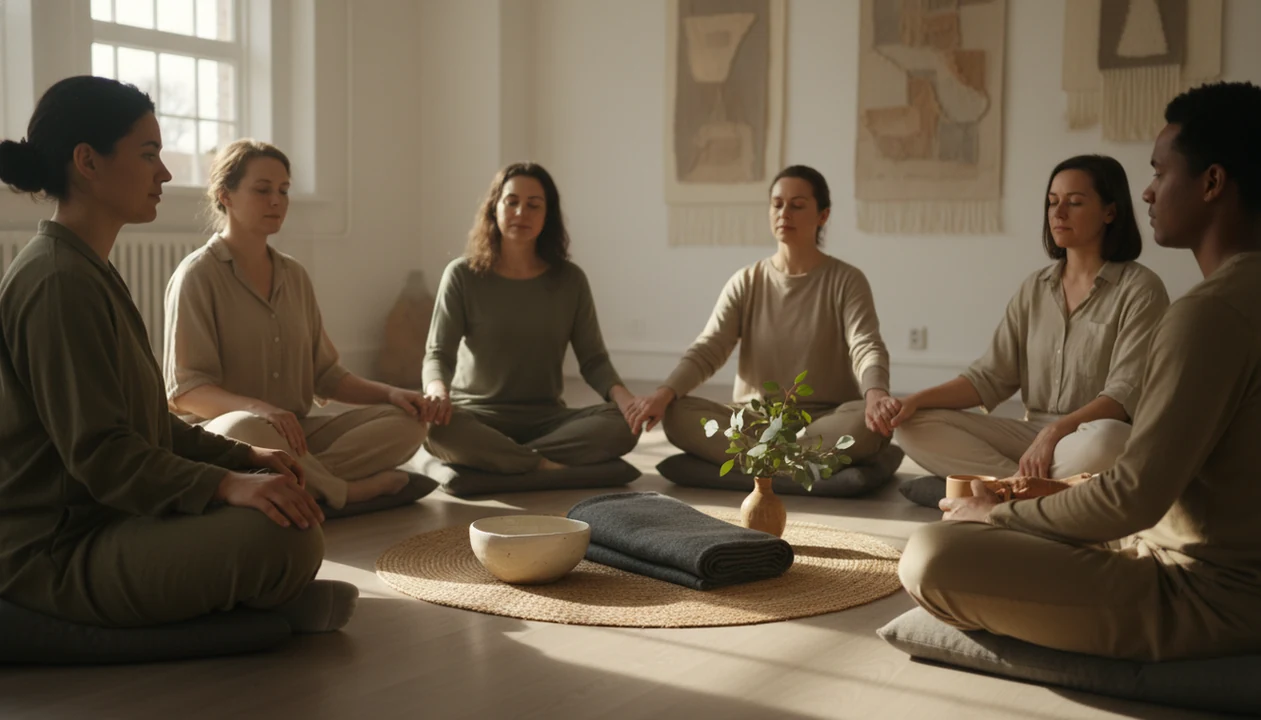
Caption: People sitting in a circle practice group meditation for emotions by naming feelings, breathing steadily, and returning attention to the present moment.
Short script excerpt:
“Let your eyes close, or keep them open with a soft gaze.” “Notice one emotion that is present, choosing something manageable.” “Name it quietly: worry, sadness, anger, numbness, or something else.” “Sense the support underneath you, the air around you, and the room holding the group.” “If this becomes too much, pause the practice and return attention to the space.”
A notebook open after practice can help people land before talking. Mindful.net, also listed as a Mindfulness Practices App, can be useful when a group wants a secular prompt to adapt.
Background sound for a shared practice
During a group session, some participants may prefer background sound to prolonged silence. The free white noise and ambient sound player offers an optional sound anchor, provided the group agrees to it. The Mindful.net app also has short guided meditations for individual practice between meetings. Neither replaces a facilitator who can explain choices, respect boundaries, and respond when someone becomes distressed.
Group Meditation Limits
- Group meditation for emotions is not a quick fix and does not guarantee relief.
- Focusing on emotions can temporarily intensify discomfort, and benefits depend on facilitator skill, group safety, pacing, and participant choice.
- People with trauma, severe anxiety, panic, severe depression, or active distress may need professional support.
- If you feel unsafe or at risk of harm, seek urgent support rather than meditation.
Group emotion meditation questions
How long should a group meditation for emotions last?
The practice outlined here lasts 5 to 12 minutes, with the duration agreed before it begins. Beginners can spend only a brief part of that time noticing an emotion, then return to an anchor. Leave time afterward to settle, rather than ending immediately after focusing on a difficult feeling.
Do I have to share my feelings with the group?
No. You can name an emotion silently and keep its details private. A facilitator should explain any sharing arrangements before the session and make participation optional. A group that pressures people to disclose painful experiences is not a suitable setting for this kind of mindfulness practice.
What should I do if I cry during group meditation?
Tears can occur during practice and do not automatically mean something has gone wrong. You do not have to explain them or continue meditating. Open your eyes, notice the room or the support of the chair, and pause if needed. If distress keeps increasing, stop and seek appropriate support.
Can group meditation help with anxiety?
Research supports mindfulness-based interventions for anxiety symptoms, but the evidence is stronger for structured programs than for one informal group session. Group practice may offer shared practice and reduce isolation. It is not a substitute for treatment, and severe anxiety or panic may require professional support rather than more inward attention.
Is group meditation for emotions the same as group therapy?
No. This practice teaches noticing feelings and returning attention to the present. It should not involve forced disclosure, trauma processing, or promises of treatment. A mindfulness facilitator is not necessarily a mental health professional. If you need help with persistent symptoms or traumatic experiences, seek qualified clinical support.
Which emotion should I choose for my first group session?
Choose something present and manageable, such as mild worry, irritation, or sadness. Avoid starting with your most painful memory or an overwhelming feeling. You can name the emotion quietly, notice a tolerable sensation, and return to your anchor. Choosing a less intense feeling is a sensible limit, not avoidance of the practice.