
Three Minute Breathing Space Meditation: Notice, Breathe, Expand


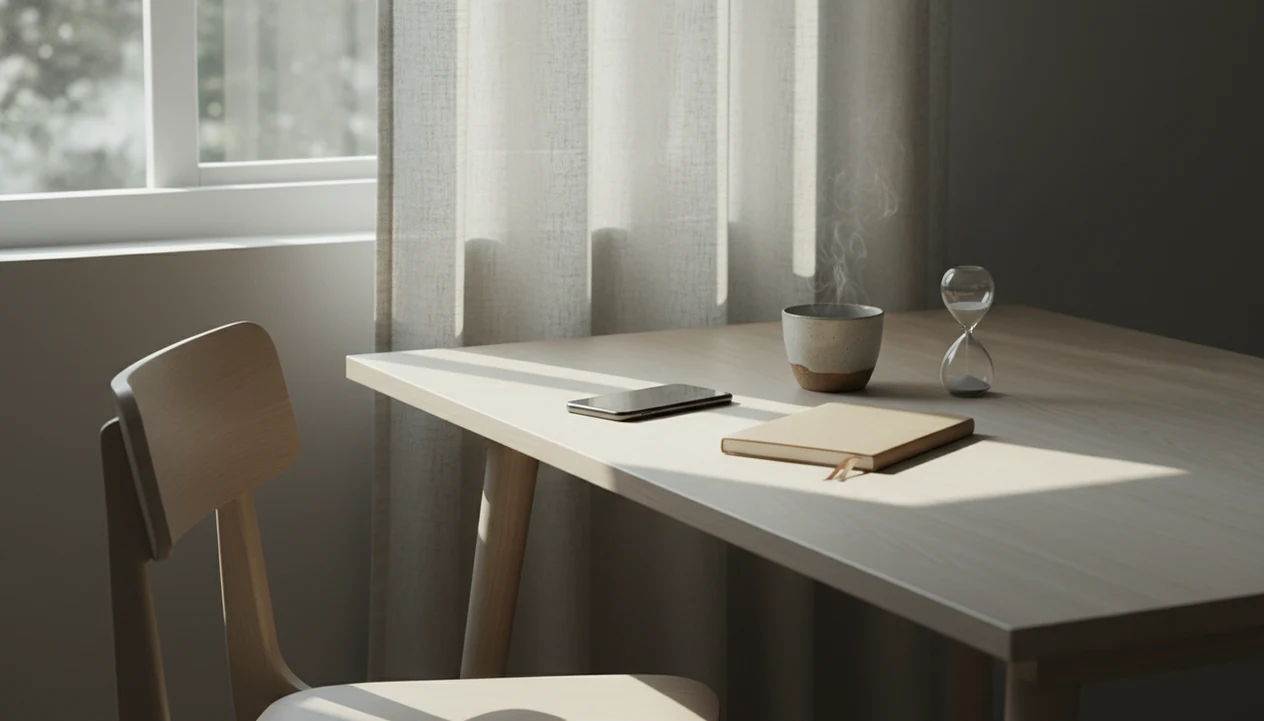
Three minute breathing space meditation is a brief, secular mindfulness practice: notice what is happening, focus on your natural breath, then widen attention to your body and surroundings. The classic format allows about one minute for each stage. It creates a pause before reacting, rather than asking you to force calm or take deeper breaths.
Try it between tasks, after a tense message, or when the same worry keeps repeating. First acknowledge thoughts, feelings, and physical sensations without trying to fix them. Then follow a few ordinary breaths. Finally, include your posture, sounds, and surroundings before choosing your next action. You can finish with stress still present; the purpose is to interrupt autopilot, not make discomfort disappear.
The essentials
- The classic version takes about 3 minutes: one minute to notice, one minute to follow the breath, and one minute to expand awareness.
- It is not a deep-breathing technique; the breath is an anchor for attention, not a performance goal.
- Use it during transitions, emotional spikes, worry loops, or anytime you notice yourself moving on autopilot. When time is especially limited, two minute mindfulness exercises offer another way to pause during everyday transitions.
The three stages: notice, breathe, expand
Breathing space meditation is usually short, portable, secular, and beginner-friendly. It asks you to move through three simple phases: notice what is here, breathe with ordinary awareness, then expand attention to the body and surroundings.
The point is not to force calm. It creates a pause, which can be enough to stop a sharp reply, a worry spiral, or the next rushed click. You can practice on a kitchen chair, at a desk, in a bus seat, or while standing in an office stairwell.
No special room required.
Unlike longer meditation techniques, this practice fits into the messy middle of a day. A phone timer set for 3 minutes is plenty, though you can also do it without timing.
What this pause asks of you, and what it does not
- It is commonly taught as a 3-minute exercise. The classic format gives about one minute each to noticing, breathing, and expanding awareness.
- The three stages are noticing, breath focus, and expanded awareness. That sequence gives the practice its simple shape.
- It interrupts automatic pilot and reactive habits. You catch the moment before the usual response takes over.
- The breath is an attention anchor, not a breathing target. You are not trying to breathe beautifully, slowly, or deeply.
- It offers modest support, not mental health treatment. For severe, persistent, or worsening symptoms, qualified care matters.
One practical takeaway: breathing space meditation usually works best as a brief attention reset, while longer practice fits people who want deeper training over time. If you want more time for steady practice, a 15 minute meditation routine offers a longer structure for your attention.
How labeling, breath focus, and wider awareness shift attention
Breathing space meditation works by changing attention in stages. It starts with automatic pilot, which means reacting from habit with little conscious choice.
First, you label what is happening: “thinking,” “tightness,” “irritation,” or “planning.” That small label can create a gap between the message you just received and the reply you are about to send. Pause before answering a message. The whole thing can change there.
Second, breath attention narrows the field. You feel one inhale, one exhale, perhaps tracked lightly with fingertips on the ribs. This does not guarantee calm, but it gives attention one place to rest.
Third, widening awareness brings context back. You notice posture, sounds, the chair, the room, and the next action. For beginners, this is often easier than trying to empty the mind, because the instruction is simply notice and return.
Choose a safe place and a comfortable gaze
Before you start breathing space meditation, set up the pause so it is safe, simple, and not another task to perform. The practice works best when you can let attention turn inward without creating risk or pressure.
- Choose a place where reduced attention to the outside world is appropriate. A chair, parked car, quiet corner, or standing spot can work; driving, cycling, cooking over heat, or supervising a child near danger should wait.
- Decide whether eyes open or closed fits the moment. Closed eyes may feel restful in private, while a soft open gaze can feel steadier at work, in public, or when you want to stay oriented.
- Use a timer only if it helps. If watching the clock makes the practice feel like a test, skip the timer and take three slow rounds through the steps instead.
- Keep the aim modest. You are practicing noticing and returning, not forcing calm, clearing the mind, or proving that meditation is working.
A three-minute breathing space script
Use this breathing space meditation guide when you have a few minutes and do not want a complicated setup. Before you start, choose a safe pause: do not make this your main focus while driving, cycling, operating equipment, or supervising a child near water or traffic.
- Set a 3-minute timer, or choose a natural pause before the next task.
- Notice thoughts, emotions, and body sensations without fixing them. “Grocery list” counts.
- Focus on natural breathing, feeling one inhale and one exhale at a time.
- Expand awareness to your whole body, posture, sounds, and surroundings.
- Return gently to the next action, such as opening the door, writing the reply, or standing up.
If breath focus feels confusing, a fuller breath awareness meditation practice can help you learn the anchor more slowly. Repeatable cues for attention, rather than instant emotional control, are the purpose of beginner mindfulness practices and everyday meditation techniques.
Five everyday cues for a breathing space
Task transitions. Use the practice before opening a laptop, after finishing lunch, or between two errands.
Emotional spikes. Irritation, worry, and overwhelm are good signals to pause before reacting.
Thought loops. When the same argument, fear, or plan keeps replaying, the three steps give your attention a different route.
Work messages. Try it before a difficult meeting, after a tense message, or when a calendar alert lands after a long meeting.
Commutes and thresholds. A bus seat, parked car, hallway, or door handle can become the cue.
The practice fits these moments because it is short and portable. You are not leaving life to meditate. You are inserting a small amount of awareness into it.
Breathing Space Meditation vs Deep Breathing Exercises
Breathing space meditation is primarily mindfulness, not breath manipulation. Deep breathing exercises often change the breath on purpose, such as lengthening the exhale or slowing the pace.
Neither approach is automatically better. They serve different purposes, and some people use both. Wandering is normal in breathing space meditation; the practice is the return, not the absence of distraction.
| Practice | Purpose | Method | Common beginner mistake |
|---|---|---|---|
| Breathing space meditation | Create a mindful pause before reacting | Notice experience, follow natural breath, widen awareness | Trying to make the mind blank |
| Deep breathing exercise | Shift breathing pattern intentionally | Slow, count, deepen, or lengthen breaths | Forcing the breath until it feels strained |
If you like comparing anchors, the body scan vs breath meditation distinction can make the choice clearer.
Make the pause part of an existing routine
Pair the practice with cues you already have. Try a three-minute breathing pause before opening a laptop, after washing your face, or when you finish lunch. For an earlier start, try a five minute morning meditation before moving into the rest of your day.
Use ordinary breathing. If the breath feels shallow, let it be shallow and notice that too. Gentle labels can help: “thinking,” “tension,” “planning,” “hearing.” Keep them light, like sticky notes, not diagnoses.
Repeat the practice more than you judge it. One distracted session is not failure; it is the material. Feet on carpet or tile can become a grounding cue when the breath feels too subtle.
Tools like Mindful.net can support beginners with simple secular mindfulness practices, alongside resources from mindful.org, Calm, and Headspace. If you want a longer option later, a tool that can guide 10-minute meditation may fit better. For a longer practice without a complex setup, try ten minute mindfulness exercises that build on simple attention cues.
Avoid forcing the breath or chasing a quiet mind
Trying to achieve a perfect breath, a quiet mind, or a dramatic result can turn breathing space meditation into a performance. You do not need a perfect breath, a quiet mind, or a dramatic result for the practice to count.
- Let the breath be ordinary instead of pushing it deeper. If it is tight, shallow, or uneven, that is what you notice.
- Treat mind wandering as part of the method. The useful moment is not staying focused forever; it is realizing you drifted and coming back.
- Practice on ordinary days, not only when distress is already at its loudest. Repetition during low-stakes moments makes the steps easier to find later.
- Expect a pause, not a cure. Three minutes may soften reactivity, but persistent anxiety, burnout, panic, or depression often needs broader support.
- Stop or switch anchors if breath focus feels destabilizing. Open your eyes, feel your feet, name objects in the room, or seek qualified help if the discomfort keeps returning.
A small reset is still small. That is not a flaw; it is the reason it fits into real life.
What the evidence can say about a three-minute pause
The classic breathing space practice is commonly taught as a 3-minute exercise, with about one minute for each stage, according to Mindful.org’s practice guide The Three Minute Breathing Space Practice. That supports the format, not a promise that three minutes will fix stress.
The UK Office for National Statistics reported that 37.4% of adults in Great Britain had high anxiety during the early pandemic period, compared with 21.8% in the final quarter of 2019 3April2020To10May2020. That statistic helps explain why brief stress tools became popular, but it does not prove this exact exercise works for anxiety.
The stronger evidence is for structured mindfulness programs. A 2017 meta-analysis of mindfulness-based stress reduction reported standardized mean differences of 0.55 for anxiety and 0.54 for depression outcomes in adults NIH research. Clinicians typically recommend mindfulness as a possible support skill, not as a replacement for assessment or treatment when symptoms are significant.
Brief mindfulness research is not proof of this exact exercise
A 2019 systematic review of brief mindfulness interventions included 85 studies, 84 of them randomized controlled trials. It reported improvement in at least one health-related outcome in 79 studies, with benefits reported for practices as short as five minutes. That supports studying short practices, but it does not establish that this specific three-minute sequence reliably reduces stress.
The best duration is also unsettled. A 2025 review of mindfulness practice dose found that the minimum effective dose for broader, lasting outcomes remains unclear, and comparisons of session length and frequency have produced inconsistent results. Treat three minutes as a manageable practice format, not a proven threshold. A pause can help you notice your next choice without producing immediate calm.
A reminder for your three-minute pause
Between finishing one task and starting another, a reminder can help you remember the three stages. The free mindfulness bell offers a cue to pause, while the Mindful.net app's meditation timer can mark your practice time. Neither requires you to change your breathing. When inward attention increases distress, external grounding or qualified support is a better choice than continuing with a timer.
Breathing Space Limits
- Stop breathing practice if it repeatedly intensifies panic, trauma memories, dizziness, or dissociation, and use grounding or seek qualified support.
- Breathing space cannot replace therapy, medication decisions, or structured mental health care.
- Seek medical care when symptoms are severe, persistent, or worsening, rather than relying on breathing space.
- Mindful.net and its app offer educational support, but cannot diagnose, prescribe, or provide crisis care.
Three-minute breathing space questions
What are the three steps of breathing space meditation?
Start by noticing your thoughts, emotions, and body sensations. Next, gather attention around natural breathing, feeling one inhale and exhale at a time. Finally, expand awareness to your whole body and surroundings. Allow roughly one minute per stage, then choose your next action deliberately.
Do I need to breathe deeply during a three-minute breathing space?
No. The breath is an anchor for attention, not something you need to improve. Notice breathing as it is, even when it feels shallow or uneven. Deep breathing exercises deliberately change the breath; breathing space meditation mainly changes where you place your attention.
Can I do a breathing space with my eyes open?
Yes. A soft, open gaze may suit a workplace, public setting, or any moment when closing your eyes feels uncomfortable. Choose a safe place to pause. Do not make the exercise your main focus while driving, cycling, operating equipment, or supervising a child near danger.
What should I do when my mind wanders during the practice?
Notice that attention has moved, use a light label such as 'planning' or 'thinking' if helpful, and return to the breath. You do not need to restart the timer. Recognizing distraction and returning is part of the practice, not evidence that you have done it incorrectly.
Can a three-minute breathing space help with anxiety?
It may help you pause during a worry loop and notice thoughts, sensations, and surroundings before reacting. It does not guarantee relief, and research on brief mindfulness generally is not proof of this exact exercise. Severe, persistent, or worsening anxiety needs qualified support rather than a short practice alone.
What if focusing on my breathing makes me feel worse?
Stop focusing on the breath if it intensifies panic, trauma memories, dizziness, or a sense of disconnection. Try an external grounding cue, such as noticing surrounding sounds or the contact of your feet with the floor. Seek qualified support if distress persists or repeatedly returns during practice.
How often should I practice a three-minute breathing space?
Start with one pause attached to a familiar event, such as finishing lunch or opening your first message. Practice on ordinary days, not only during intense stress. Once that routine is stable, you can add another pause. Research does not establish one optimal schedule for everyone.
What if I still feel stressed after the three minutes?
You have not necessarily done anything wrong. The aim is to notice what is happening and create room for a more deliberate response, not to erase stress. After expanding awareness, choose the next practical action. Stop or seek support if the exercise consistently makes distress worse.