
Ambient Sounds for Focus: Choose Audio That Supports Your Task


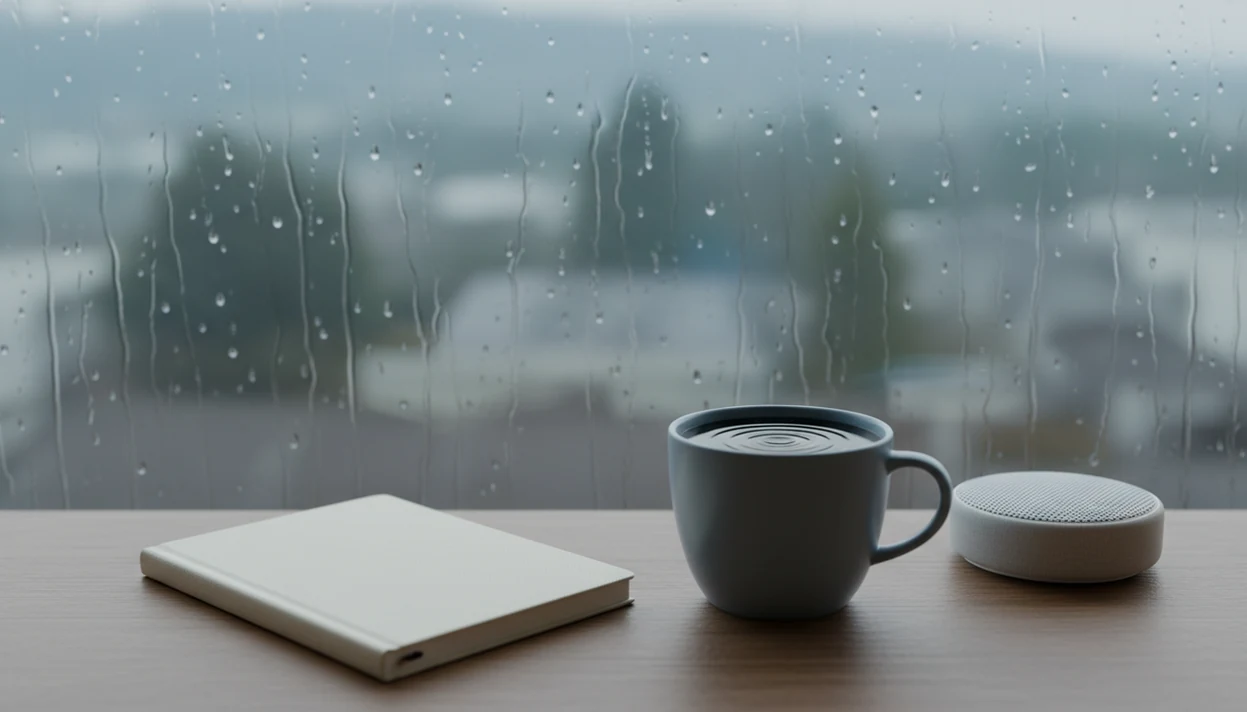
Ambient sounds for focus are steady background sounds, such as rain, fan noise, white noise, or ocean audio, used as an attention anchor during work, study, or meditation. They can make irregular noise less distracting and give you a simple cue to return to the task. That does not mean they guarantee better concentration or productivity.
Start with one sound at a low volume and one clearly defined task. The useful question is not which soundtrack promises the strongest focus, but which makes it easier to begin and return after distraction. Silence is also a valid choice. Keep the audio only if it supports attention without becoming something else to monitor.
What matters most
- Use ambient audio as an attention cue, not a productivity shortcut.
- Choose sounds based on task, environment, and personal preference rather than assuming white noise is always best.
- Keep volume low enough that the sound supports awareness instead of becoming the main object of attention.
Ambient Sound Works Best When It Gives Attention One Simple Place to Land
Ambient sounds for focus give attention a steady place to land during meditation, reading, paperwork, or one-task work. The myth is that the right sound creates perfect concentration. More often, it simply makes distraction easier to notice so you can return without making a big event of it.
Useful options include rain, fan hum, white noise, ocean wash, forest ambience, and soft room tone. A retiree might play low rain while folding laundry, feel a cotton sleeve brush the wrist, and realize attention has jumped to an old parking ticket stub on the counter. That moment of realizing is not failure; it is the practice starting to work.
In this context, ambient audio is just one support for attention practice, like breath awareness or feeling socked feet under a chair.
Mindfulness practice trains you to notice distraction and return to what you are doing; it does not guarantee continuous calm or productive work.
Two uses for steady sound: masking noise and cueing attention
Ambient sounds for focus work mainly through masking and cueing. Masking means a steady sound can make sudden chatter, traffic, hallway noise, or room clicks feel less attention-grabbing.
The second mechanism is mindfulness cueing. The sound becomes an object you can recognize again and again. During hospital rounds, for example, a steady hallway hum may be the cue that reveals a racing heartbeat or tingling fingers. You hear it, recognize that attention drifted, and come back to the next useful step.
This does not mean ambient audio fixes every focus problem. If the real issue is fatigue, a vague task, or low motivation, background sounds for concentration may not help much. A three-minute breathing pause before opening a laptop may clarify the next step better than another playlist. Students can pair a short breathing pause with study meditation for students to reset attention before returning to coursework.
Ambient audio does not make people smarter or guarantee better performance. It changes the sound environment and gives attention something steady to meet.
Five Facts About Background Sounds for Concentration
Background sounds for concentration are useful when they reduce distraction without becoming the main event. The evidence is mixed, so the safest claims are modest and practical.
- Ambient sounds can act as an attention anchor. A steady sound gives the mind one repeatable place to return during work, study, or meditation.
- White noise and nature sounds are different categories. White noise is uniform, while rain, ocean, and forest audio have more variation.
- Ambient audio may help most when the problem is irregular environmental noise. Chatter, traffic, and office clatter often pull attention harder than a steady hum. Veterans seeking a broader practice can explore mindfulness for military veterans rather than relying on sound alone.
- The best sound is personal and task-dependent. For reading, some people need near-silence; for sorting files, soft rain may be fine.
- Benefits are modest and not guaranteed. Natural-sound research is encouraging but indirect for work focus; a 2021 PNAS review and meta-analysis found natural sounds were associated with improved health and positive affect, but it did not prove that a specific ambient track improves concentration for everyone (Pnas.2013097118).
For work focus, that review is useful but indirect. It does not prove that any one sound improves everyday concentration for everyone.
Feeling focused is not the same as performing better
A calmer session can feel more productive without showing that attention has improved. A systematic review of randomized mindfulness programs and cognitive outcomes examined objective measures and emphasized that results differ by task and cognitive domain. Those findings concern mindfulness programs, not proof that rain audio or white noise improves work performance.
Keep the distinction practical: sound may reduce interruptions, while a clearer task may make work easier to complete. Neither necessarily means your general attention capacity has changed. Alongside the existing seven-day check, note a task outcome, such as finishing the planned reading section or completing the chosen piece of paperwork. Treat comfort and completed work as separate observations.
Choosing rain, fan hum, white noise, or nature audio
A useful ambient meditation sound for work depends on the task, the room, and your own tolerance for audio. Nature sounds may feel more pleasant to some listeners, while white noise is more uniform.
| Sound type | Best for | Watch out for |
|---|---|---|
| White noise | Masking steady background chatter | Can feel harsh or tiring |
| Fan hum | Simple office or home masking | May become irritating if loud |
| Rain | Reading-light tasks and calm focus practice | Drips or thunder may pull attention |
| Ocean | Slow-paced work or mindful pauses | Wave changes may become too interesting |
| Forest | Gentle ambience and everyday mindfulness | Birds can feel sharp or distracting |
| Quiet instrumental ambience | Repetitive tasks without much language | Melody can compete with verbal work |
Lyrical music is often more attention-grabbing than simple ambient audio. If you want a deeper contrast, the white noise vs meditation guide explains why masking sound and meditation practice are not the same thing.
For verbal work, simple and boring often wins.
Set the task, speaker position, and volume
Set up ambient sounds for focus by deciding what the session is for before you choose the track. The sound should make beginning and returning easier, not become another thing to monitor.
- Choose one container first. Decide on one work task, one reading section, or one meditation period before pressing play. “Ten minutes with this draft” is clearer than “try to focus for a while.”
- Use headphones only if they soften the room. If earbuds make rain, fan hum, or white noise feel too close or intense, use a speaker or skip audio.
- Set the volume below speech level. Keep it low enough that you can still notice breathing, posture, tension, or the urge to pause.
- Remove competing interruptions. Avoid lyrics, alerts, autoplay, thunder cracks, dramatic swells, or tracks that change suddenly.
- Pick one marker to watch. Track something simple, such as easier starting, fewer jolts from outside noise, or faster returning after distraction. Athletes can explore mindfulness for athletes for ways to practice steady attention when performance pressure rises.
This small setup makes the later practice less fussy and easier to repeat.
A short practice for noticing distraction and returning
Use ambient sounds for focus meditation as a single-tasking support, not as background decoration for multitasking. One simple way to try it is short, repeatable, and deliberately plain.
- Set a clear single task or meditation period. Choose one document, one reading section, or five minutes of sitting.
- Choose one steady sound. Pick rain, fan hum, white noise, ocean audio, or soft room tone.
- Lower the volume until it sits in the background. You should be able to ignore it without straining.
- Notice the sound, the task, and mind wandering. Let the sound remind you when attention has slipped.
- Return gently when attention drifts. Come back to the breath, the sentence, or the next small action.
A practical next step is to pair the audio with basic attention training, such as how to practice mindfulness. Keep the cue modest: hear the sound, notice where attention went, and return to the meditation or task.
When background audio helps, and when silence is better
Focus sound meditation helps some people, but it is not the right tool for every mind or task. It works best when the sound solves a real sound problem.
Best for:
- People distracted by irregular environmental noise. Steady audio can soften the jolt of doors, voices, or traffic.
- Beginners who want a simple meditation anchor. The sound gives attention somewhere obvious to land.
- Repetitive or reading-light tasks. Soft background audio may not compete with sorting, formatting, or basic admin work.
Not ideal for:
- People who find any sound distracting. Silence may be cleaner for them.
- Tasks requiring precise verbal processing. Audio with words or complex music can compete with language.
- Fatigue, burnout, anxiety, ADHD, or poor planning. Ambient sound may support a session, but it does not solve those conditions. For campus stress, mindfulness for college students offers practices that address more than the surrounding sound environment.
Avoid loud playback and constant track switching
Background audio stops serving its purpose when choosing, adjusting, or listening to it takes attention away from the task. Ambient audio should support awareness, not become another tab to manage.
Playing it too loud is the first problem. If rain sounds cover your own exhale in a quiet room, lower them. Switching sounds every few minutes is another trap, because the search for the right track replaces the practice of returning attention.
Dramatic music, lyrics, and big binaural claims can also pull the session away from simple anchoring. Some people enjoy them, but they are not required for focus sound meditation.
Another small failure point is avoiding the task itself. If the next action is unclear, no ocean loop will decide it for you. Write the next line, open the one file, or set the timer. For difficult tasks, how to do hard things offers practical ways to start when motivation is low.
Temporary calm is useful, but it is not proof of guaranteed performance improvement.
Seven-Day Focus Sound Meditation Check
A seven-day focus sound meditation check helps you test whether ambient audio is actually useful for you. Keep the sound, volume, and time of day as similar as possible.
Try the same sound for six sessions, then compare it with one silent session. Practice where life already asks for attention: beside a laundry basket, at a reading table, or while sorting a recipe card collection. Track three simple markers: easier to begin, fewer startles from outside noise, and a smoother return after distraction.
Do not score the session by whether the mind wandered. It will. A better question is whether you caught the drift a little sooner and came back with less argument.
Image caption guidance for this page: a simple desk setup with headphones, timer, and one open task document, showing ambient sounds for focus used as a single-tasking cue.
If your test points toward evening use instead, a nature sounds bedtime routine may fit better than work audio.
Try one background sound before starting work
When nearby chatter or room noise keeps interrupting a reading or work session, Mindful.net’s free white noise and ambient sound player offers a way to try steady background audio. Choose one sound, keep it quiet, and leave it alone during the task. Silence or a quieter workspace is better when added audio competes with what you need to read or think through.
Limits of Ambient Audio
- Ambient sounds cannot guarantee better focus or performance, and some people find them distracting or prefer silence.
- Ambient audio may be less helpful when fatigue, anxiety, burnout, poor planning, or lack of sleep is the main issue.
- Focus evidence is often indirect, and uncertain music therapy findings warrant caution when extrapolating to focus audio (Full).
- If sleep is your main concern, compare sleep soundscapes meditation rather than assuming focus audio will transfer.
Ambient focus sound questions
Do ambient sounds actually help you focus?
They can help when unpredictable noise is the main distraction, or when a steady sound gives you a useful reminder to return to your task. They do not guarantee better concentration or productivity. Compare similar sessions with and without audio, paying attention to interruptions and the work you complete.
Is white noise or rain better for studying?
Neither is best for everyone. White noise is more uniform, while rain recordings can include changing drips or thunder that attract attention. Try a quiet, steady recording with one reading section. Choose silence instead if either sound competes with understanding or remembering the material.
How loud should ambient sounds be for focus?
Keep the sound below speech level so it remains in the background rather than demanding attention. In a quiet room, lower it if it covers your own exhale. Turning it up is not a reliable way to improve focus; a quieter setting may be more useful.
Should I use headphones or a speaker for focus sounds?
Use headphones only when they make the surrounding noise less distracting without making the audio feel too close or intense. A speaker may suit you better at home. Keep either option quiet, and skip audio when wearing headphones or hearing background sound creates another distraction.
How do I meditate with ambient sounds?
Choose one steady sound and begin with five minutes of sitting. Notice the sound without trying to hold attention perfectly still. When thoughts pull you away, briefly recognize the distraction and return. The practice is noticing and returning, not achieving a session with no mind-wandering.
Do binaural beats work better than ordinary background sounds?
There is no strong basis for claiming that a particular frequency or binaural beat reliably produces deep concentration. You do not need them for a sound-based attention practice. Choose audio for its practical effect on distraction, not a promise of special cognitive benefits.
Can ambient sounds help with ADHD?
Ambient audio may be useful when it reduces an environmental distraction, but it is not an ADHD treatment. Sound and mindfulness should not replace assessment or established care. NICE guidance supports medication when indicated and structured psychological support; practical changes to the work environment can also matter.