
Ocean Sounds for Sleep: A Quiet Bedtime Meditation


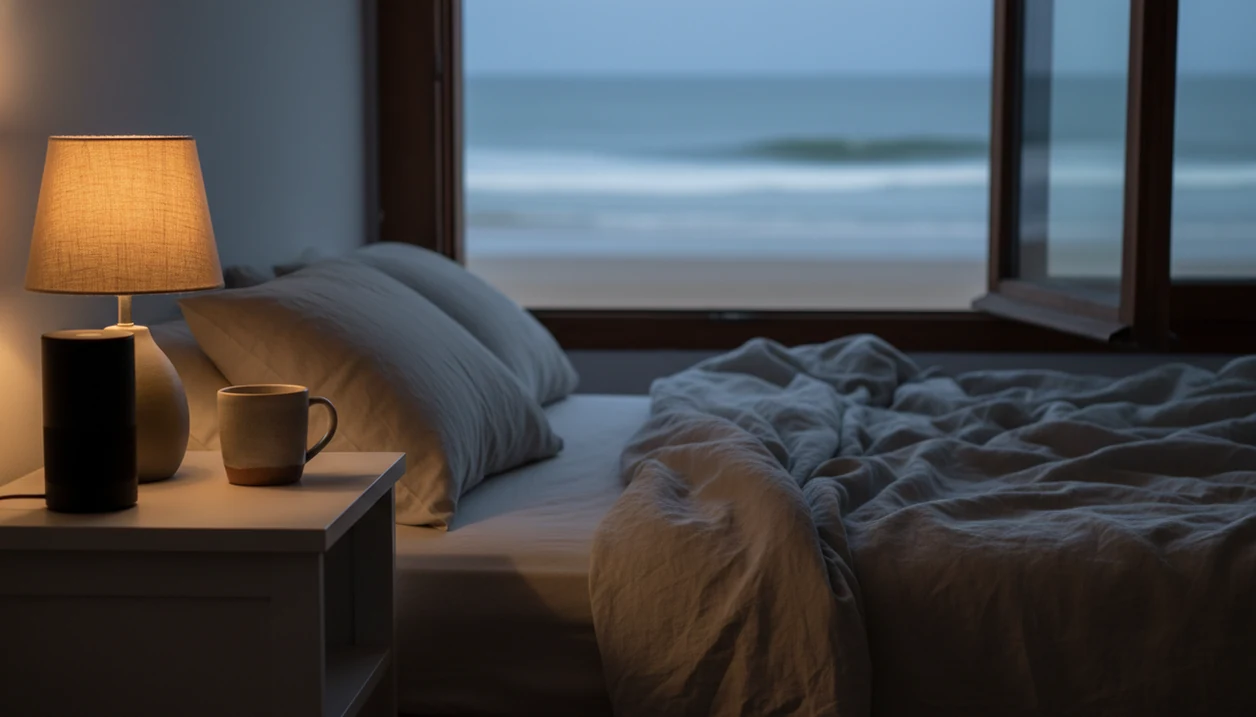
Ocean sounds for sleep are recorded or live wave sounds used as an attention anchor during a short, secular bedtime meditation. Keep the volume soft, listen to the swell and fade, and return to the next wave when thoughts pull you away. The useful question is not “Did I fall asleep immediately?” but “Did this give my attention somewhere steadier to rest?”
Choose a consistent track without dramatic crashes, ads, or abrupt restarts, and begin with a 10-30 minute timer. Gentle audio may make winding down easier for some people, but it is not a cure for insomnia or a promise of deeper sleep. Adjust or stop if sound sensitivity, tinnitus, interruptions, or reliance on playback make bedtime harder.
The essentials
- Use ocean sounds as an attention cue, not as a sleep-performance tool.
- Keep the volume low, choose a steady non-dramatic track, and try a 10-30 minute timer.
- Avoid or adjust the practice if sound sensitivity, tinnitus, ads, notifications, or dependence make bedtime harder.
Use the next wave as an attention anchor
Quick answer: ocean sounds for sleep are recorded or live wave and water sounds used as a gentle background anchor during your wind-down. Listen for the swell and fade, feel one easy breath, notice when attention wanders, and return to the next wave without trying to make sleep happen.
That “without forcing” part is the decision point. If your mind starts sorting tomorrow’s customer support queue or replaying the airport line in sharp detail, the practice is not to debate every thought. Notice the pull, let the body loosen where it can, and come back to the water sound. We usually suggest starting with one short track or a simple playlist setting rather than turning the setup into another problem to solve.
Quiet, not heroic.
Mindful.net’s Mindfulness Practices App can be useful if you want a guided timer, beginner cue, or short bedtime practice, but the app is not the treatment. The repeatable skill is noticing the wave, softening effort, and returning without trying to force sleep.
How steady waves may mask sudden bedroom noise
Ocean sounds may help bedtime because predictable background sound gives the brain fewer sharp changes to track. Steady waves can also mask sudden noises, such as a hallway door or passing car, so attention has a softer place to land.
A 2017 natural sounds study found that water and birdsong were associated with increased parasympathetic activity and decreased sympathetic activity, suggesting a measurable relaxation response NIH research. In plain language, the body may shift slightly toward “rest and digest” rather than “scan for threat.” Sleep-medicine research on white noise suggests stable background sound can reduce awakenings from intermittent noise, although the best level varies by person and room conditions PubMed research.
The evidence is stronger for relaxing audio, natural sounds, and steady noise than for ocean sounds specifically. For beginners, bedtime ocean sounds usually work best when they are predictable and quiet, while dramatic surf tracks fit people who want atmosphere more than sleep support.
Separate relaxation from evidence of better sleep
Feeling calmer while listening does not establish that ocean sounds improve sleep duration or depth. A 2022 systematic review of 34 adult studies found conflicting results and no consistent improvement in standard sleep measures. It included several kinds of auditory stimulation, so its findings do not prove a sleep benefit from ocean recordings specifically.
The bedroom itself matters. Continuous sound may reduce the contrast between background quiet and sudden traffic or household noise. A review describing noise masking in noisy settings supports this explanation, but not a universal sleep-inducing effect. In an already quiet room, adding waves may offer little benefit or become another source of disturbance.
To separate the sound from the meditation, compare several nights with sound alone, meditation alone, both together, and silence. Note roughly how long falling asleep takes, how often you wake, and how alert you feel in the morning. This is a practical comparison, not a diagnostic test or validated treatment protocol. Keep the setup that helps without adding discomfort or bedtime pressure.
A 10-30 minute ocean-sound bedtime practice
Use ocean sounds as a short wind-down practice before sleep, not as a test you have to pass. A 10-30 minute routine is a practical beginner range, especially if you are also improving basic sleep hygiene.
- Choose a steady track with soft waves, no crashing surprises, no voice ads, and no sudden musical swells.
- Set the volume low enough that it sits behind your breathing, then use a 10-30 minute sleep timer.
- Lie down with the screen off, airplane mode on, and autoplay disabled so the device does not keep interrupting.
- Rest attention on the wave rhythm and the breath, maybe feeling the belly rising against a waistband.
- Return to the next wave whenever thoughts wander, without judging the wandering or trying to make sleep arrive.
For many people, a short routine is easier to repeat than a long one. The useful part is the return.
Five Facts About Bedtime Ocean Sounds
- Steady ocean noise can mask some sudden sounds. This is the same basic principle behind white noise and other stable soundscapes.
- The meditation benefit is attention anchoring, not sleep control. You are practicing “notice and return,” not commanding the body to sleep. Understanding meditation versus sleep can help you treat this practice as relaxation rather than a replacement for rest.
- Relaxing audio can support bedtime routines for some people. In a randomized trial, relaxing classical music at bedtime improved subjective sleep quality compared with an audiobook or no intervention PubMed research.
- Louder is not better. High volume can feel stimulating, strain hearing, or make every restart more noticeable.
- Some people should shorten, lower, or skip the practice. Tinnitus, hyperacusis, sound sensitivity, and light sleeping can make constant audio irritating. If background audio feels irritating, consider sleep meditation for light sleepers for a gentler bedtime approach.
A 2013 clinical study found that white noise reduced the effect of environmental noise on sleep in a coronary care unit PubMed research. That supports steady sound masking, but it does not prove that every ocean track improves sleep.
Choose steady waves without ads or abrupt restarts
The best beginner track is steady, low, and boring in a helpful way because the nervous system does not have to chase changes. Avoid dramatic crashing waves, sudden volume jumps, subliminal claims, and ad-heavy videos that break the wind-down.
On platforms such as YouTube, Spotify, Apple Music, Calm, or Insight Timer, check for mid-roll ads, abrupt loop restarts, and autoplay before using a track in bed.
| Track type | Best for | Not for | Practical tip |
|---|---|---|---|
| Pure waves | People who want a simple sound anchor | Anyone who feels lonely or alert in silence-like audio | Pick a flat, even recording with no seagulls or thunder |
| Gentle guided ocean meditation | Beginners who want cues | People who find voices distracting at night | Choose a short guide with long quiet gaps |
| Waves with soft music | People who prefer warmth and mood | Light sleepers bothered by melodies | Keep music softer than the wave layer |
| Timer-based soundscapes | People avoiding all-night playback | Anyone who wakes at track endings | Test the fade-out before bedtime |
If ocean sleep meditation feels too busy, compare it with rain sounds for sleep meditation or plain fan noise.
Mindfulness With Ocean Sounds During Racing Thoughts
Mindfulness with ocean sounds means using the waves as a place to return when thoughts speed up. The goal is not to suppress thinking; it is to label what happened and come back gently.
Try simple labels: “thinking,” “planning,” “remembering,” then return to the sound. Notice the beginning of one wave, the fuller middle, and the fading edge. If you lose three minutes in a work worry, that still counts as practice when you notice it. Teacher’s cue to notice wandering. Back again.
A short waves sounds meditation script
Let the next wave arrive. Feel one breath move in the body. When a thought appears, name it softly: thinking. Listen for the middle of the next wave. Let the sound fade without following it. Return to breathing, one wave at a time.
For racing thoughts, waves sounds meditation is often easier than silence because the attention has a clear external rhythm to rejoin.
Who may prefer ocean sounds, and who may prefer quiet
Bedtime ocean sounds are best for people who enjoy natural sound, want a gentle focus point, or are trying to replace screen-based wind-down habits. They are not for everyone, and forcing them can make bedtime feel more loaded. For bedtime practices tailored to women, try mindfulness for women's sleep while keeping expectations gentle and realistic.
Best for
- ✓ People who find natural water sounds calming.
- ✓ Beginners who want an easy attention anchor.
- ✓ Anyone reducing late-night scrolling or TV audio.
- ✓ People building a short nature sounds bedtime routine.
Not ideal for
- ✕ People whose tinnitus, hyperacusis, or sound sensitivity worsens with constant audio.
- ✕ Light sleepers who wake when a loop restarts.
- ✕ Anyone who starts feeling dependent on one exact track.
Persistent sleep problems should be discussed with an appropriate clinician. Alternatives include breath counting, a body scan, fan noise, silence, or shorter sessions.
When to Seek Professional Help for Sleep Problems
Seek professional help when sleep problems last for weeks, keep returning, or start affecting daytime functioning despite reasonable routine changes. Ocean sounds can support a calmer wind-down, but they do not diagnose, treat, or rule out a sleep disorder.
A clinician or sleep specialist is especially important if insomnia continues after basic sleep hygiene changes, or if nights are marked by loud snoring, choking, gasping, or pauses in breathing that could suggest sleep apnea. It is also worth getting help when sleep worsens alongside anxiety, depression, panic, trauma symptoms, or a new medication or dose change.
A simple next step:
- Track sleep timing, wake-ups, naps, caffeine, alcohol, medications, and symptoms for one to two weeks.
- Notice red flags such as breathing pauses, morning headaches, severe daytime sleepiness, or worsening mood.
- Bring the pattern to a primary care clinician, therapist, psychiatrist, or sleep specialist.
- Use ocean sounds only as a supportive cue while you follow medical guidance.
If sleep loss is making work, driving, caregiving, or emotional regulation harder, do not keep trying to solve it with audio alone.
Looping Tips for Bedtime Ocean Sounds
Loop ocean sounds only if the loop is smooth, quiet, and free from interruptions. A bad restart can undo the whole setup, especially if the speaker suddenly jumps from soft surf to a loud ad.
Download tracks when possible rather than streaming in bed. Turn off notifications, disable autoplay, and test the final 20 seconds before you use it at night. A sleep timer is a better starting point than all-night playback for most beginners, because it reduces device dependence and late-night audio surprises.
If you notice reliance building, phase it down slowly. Lower the volume for a few nights, shorten the timer, or alternate ocean audio with breath practice. For a wider comparison of steady audio options, the sleep soundscapes meditation guide can help you compare your options.
Suggested image caption
A phone playing ocean sounds for sleep beside a dim bedside lamp, with the screen ready to turn off before meditation.
Keep the speaker away from your pillow
Place the sound source away from your head rather than directly beside the pillow. Start quietly and avoid levels that make conversation difficult. A 2024 review of continuous white-noise exposure recommends limiting intensity and duration. Although that research concerns white noise rather than ocean recordings specifically, it supports caution with continuous bedtime audio.
Reduce or stop playback if you notice worsening tinnitus, muffled hearing, headaches, morning grogginess, or more awakenings. Turning up the waves to cover every outside sound is not necessarily safer or more effective. Try a quieter setting or a shorter timer, and choose silence when the audio itself becomes the disturbance.
Fix loud waves, device interruptions, and pressure to sleep
Dramatic waves, device interruptions, and pressure to fall asleep can turn a quiet sound anchor into another bedtime distraction. Ocean sounds work better as a quiet attention anchor than as bedtime pressure.
A simple troubleshooting pass can save a failed session:
- Choose soft, even surf instead of booming waves, thunder, gulls, or cinematic swells that keep the body listening for the next event.
- Set the volume behind the breath, not above it; if the sound feels impressive, it is probably too loud for sleep.
- Disable autoplay, notifications, and ad-supported streams before bed so a calm loop does not turn into a midnight surprise.
- Use the waves to return attention after thinking, not to force sleep or measure whether the practice is “working.”
- Stop or shorten the session if tinnitus, hyperacusis, ear fullness, agitation, or sound sensitivity gets worse.
- Prepare a backup cue, such as breath counting or a body scan, so one exact track does not become the only way you believe you can rest.
How can I try a sound anchor before bed?
For a bedtime wind-down interrupted by household noise, the free white noise and ambient sound player offers a way to try background sound. The Mindful.net app also has sleep audio and short guided meditations when spoken guidance is helpful. Silence is better when added sound keeps you alert, and persistent sleep problems need clinical advice rather than another recording.
Ocean Sounds for Sleep Limits
- Evidence specifically on ocean sounds for sleep is limited, with most claims extrapolated from research on other sounds.
- Seek professional help for insomnia, sleep apnea, anxiety, depression, or serious sleep disorders, rather than relying on ocean sounds.
- Sound sensitivity, tinnitus, hyperacusis, or light sleeping can make constant wave audio irritating instead of calming.
- If wave audio worsens bedtime, try silence, breath counting, or white noise vs meditation comparisons instead.
Ocean sounds at bedtime: common questions
Do ocean sounds actually help you sleep?
They may help some people relax or mask sudden environmental noise, but evidence specifically on ocean sounds is limited. Reviews of broader sound interventions have found conflicting sleep results. Treat waves as an optional attention anchor, not a treatment for insomnia or a guarantee of better sleep.
How loud should ocean sounds be at bedtime?
Start with a soft level that stays in the background. For noise masking, use the lowest level that reduces the contrast with disruptive sounds. Keep the speaker away from your head and avoid volume that makes conversation difficult. Reduce or stop playback if it causes discomfort or worsens tinnitus.
Should I leave ocean sounds playing all night?
All-night playback is not necessary for a bedtime meditation. Start with a 10-30 minute timer, especially when you only want help winding down. Longer playback may suit ongoing environmental noise, but continuous sound has uncertain benefits. Compare awakenings and morning alertness rather than assuming longer is better.
Can ocean sounds make tinnitus worse?
Low-level wave sounds may distract some people from tinnitus, but responses differ. Constant audio can also feel irritating or make symptoms worse. Keep playback gentle and stop or reduce it if tinnitus increases. Persistent or worsening symptoms call for advice from a clinician or audiology service.
Are ocean sounds better than white noise for sleep?
The available evidence does not establish that ocean sounds are better. Sound preference and the noise in your bedroom may matter more than the label. Choose a steady recording without startling changes, then compare it with quiet or another sound using awakenings, time to fall asleep, and morning alertness.
How do I meditate with ocean sounds when my thoughts race?
Listen to one wave swell and fade, then notice an easy breath. When a thought takes over, briefly label it “thinking” or “planning” and return to the next wave. You do not need to stop thoughts. Noticing that attention wandered and returning is the practice, even when it happens repeatedly.
Do ocean sounds increase deep sleep?
That has not been established. Research on auditory stimulation has reported some changes in slow-wave activity, but reviews have not found consistent improvements in standard sleep measures. A recording can feel soothing without increasing deep sleep. Avoid treating relaxation, or a track's marketing claims, as proof of a sleep-stage benefit.