
Best Soundscapes for Deep Sleep Meditation: What to Choose


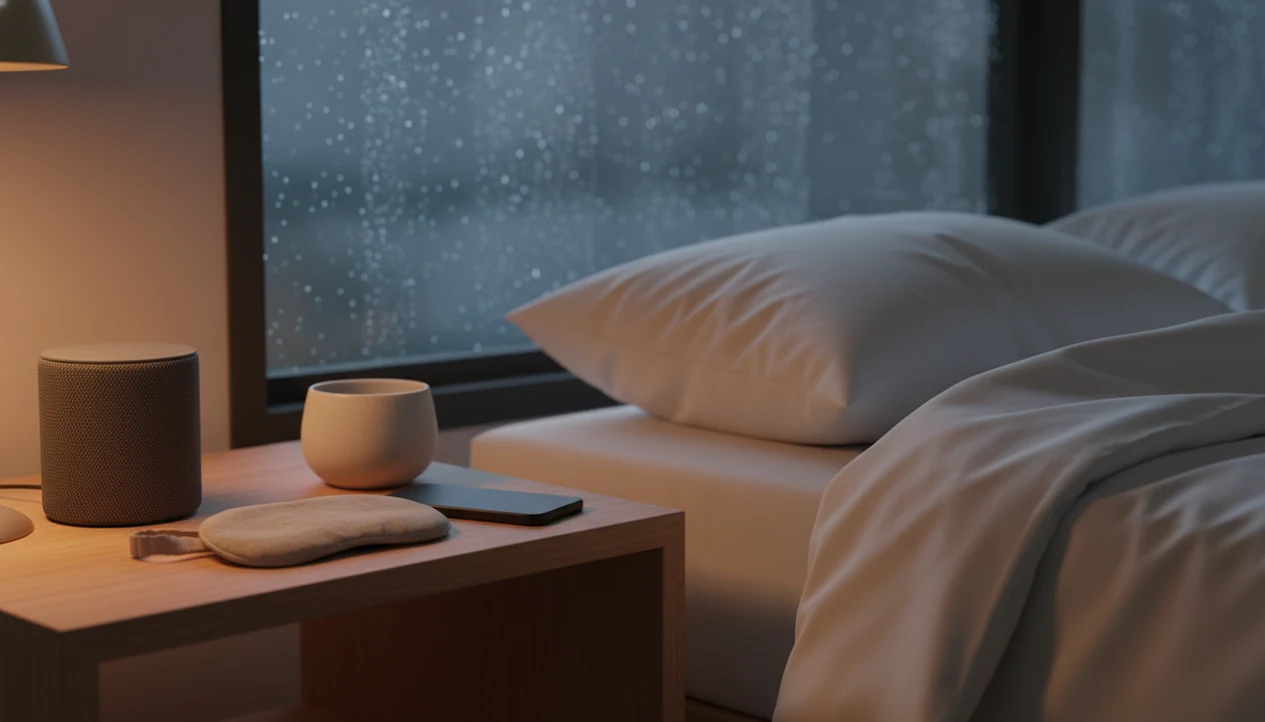
The best soundscapes for deep sleep meditation are steady, low-volume sounds such as soft rain, gentle ocean waves, pink or brown noise, and slow ambient music, chosen for comfort rather than a promise of deeper sleep. A sleep soundscape is a continuous audio backdrop that gives bedtime meditation a calm, predictable listening environment. It can mask disruptive noise and support relaxation, but it does not guarantee deep sleep or treat insomnia.
Start by checking what interrupts your rest: outside noise, an attention-grabbing track, or the sound itself. Compare recordings by track length, volume consistency, vocals, and how easily they fit a simple breathing or body scan practice. Avoid sudden swells, thunder, lyrics, and complex melodies. In an already quiet bedroom, silence may be the better choice.
What matters most
- Choose steady, non-jarring sounds over dramatic tracks with sudden volume changes, lyrics, or complex melodies.
- Compare soundscapes by sound type, track length, volume consistency, vocals, and whether they work with a simple meditation practice.
- Use sleep soundscapes as a relaxation support, not as a cure for insomnia, sleep apnea, or other sleep disorders.
Best deep sleep soundscapes at a glance
There is no universal best soundscape for every sleeper. The better question is which steady, low-volume sound helps your body settle without pulling your attention back to the speaker.
| Soundscape type | Best for | Not ideal for | What to check |
|---|---|---|---|
| Soft rain | Cozy, familiar bedtime sound | People who dislike water sounds | Even rainfall, no thunder surprises |
| Ocean waves | Slow breathing and body scans | Anyone distracted by wave peaks | Gentle rhythm, no crashing surf |
| White noise | Masking sharp background noise | Listeners who find hiss harsh | Stable volume, low setting |
| Pink or brown noise | Softer masking of low rumble | People who prefer natural scenes | No pulsing or frequency jumps |
| Ambient music | Relaxing with gentle harmony | Beginners distracted by melody | No lyrics, slow changes |
| Nature soundscapes | Spacious, outdoor feeling | Light sleepers startled by animals | Minimal birds, insects, or sudden calls |
A 6 to 10 hour track, a soft volume, and no sudden changes matter more than a dramatic title like “deep sleep.”
How sleep soundscapes work during bedtime meditation
Sleep soundscapes work by masking irregular noise and giving attention a predictable anchor during bedtime meditation. They support relaxation; they do not force the brain into deep sleep stages.
Masking means one steady sound partially covers other sounds, such as traffic, neighbors, a humming refrigerator, or hallway footsteps. Predictable audio can also become an attention anchor. You notice the rain, feel the breath, and return when the mind wanders to tomorrow’s grocery list.
That return is the practice.
In a hospital study, continuous white noise was linked with longer sleep duration and fewer awakenings in a noisy clinical setting, according to PubMed-indexed research on hospitalized adults PubMed research. That does not mean white noise works for everyone at home. It suggests a practical mechanism: steady sound may reduce the impact of unpredictable noise.
During bedtime meditation, noticing a distraction and returning to the breath is a repeatable practice, not a guaranteed switch for instant sleep.
Sleep soundscape comparison criteria for beginners
Beginners should compare sleep soundscapes by listening conditions, not by popularity. A viral track can still be too bright, too short, or too interesting for bedtime.
- Sound type: Rain, waves, neutral noise, ambient music, and nature sounds each create a different mood and level of stimulation.
- Steadiness: Effective sleep meditation sounds usually avoid thunder, bird calls, loud swells, or sudden instrument changes.
- Volume consistency: Set the track low enough that it blends into the room, especially if you already feel alert.
- Vocals and melody: Spoken words, lyrics, and changing melodies can give the mind something to follow when you want it to soften.
- Loop and duration: Choose 6 to 10+ hour tracks, or a timer that fades gently instead of stopping sharply.
Test one soundscape for several nights before switching. One restless night may be about stress, room temperature, or late caffeine, not the track.
For a broader setup guide, the sleep soundscapes meditation page covers basic listening styles and practice options.
Who Should Choose Each Sleep Soundscape
Choose the soundscape that makes your body feel least on guard. The right pick is usually the one that stays boring, steady, and easy to forget once the practice begins. During pregnancy, pair a comfortable listening setup with pregnancy sleep meditation tailored to your bedtime needs.
- Choose rain if familiar water sounds make bedtime feel safer or cozier. A soft, even shower can be especially useful when the room feels too quiet.
- Choose waves if rhythm helps you pace breathing or move through a body scan. Let the swell and retreat guide the exhale without forcing a pattern.
- For low background rumble from traffic, elevators, or a neighbor’s bass, choose pink or brown noise as an option to try. These sounds are less scenic, but they can be practical.
- Choose ambient music only if melody relaxes you without giving the mind a tune to follow. If you start waiting for the next chord, switch to something plainer.
- Avoid wildlife-heavy nature tracks if sudden birds, insects, frogs, or animal calls wake you or make you flinch.
The best choice may feel unremarkable. That is a good sign for sleep meditation.
Best sounds for sleep meditation by use case
Choose bedtime meditation sounds by what you need the sound to do. Some people need masking. Others need rhythm, warmth, or a neutral place to rest attention.
- Soft rain: Good for people who want a cozy, steady sound with little variation. If rain feels familiar, it can make bedtime less stark.
- Ocean waves: Useful for rhythmic breathing and slow body scan practice. Match the exhale to the receding wave if that feels natural.
- Pink or brown noise: Often better for low background hums, distant traffic, or a neighbor’s bass through the wall.
- Slow ambient music: Helpful for people who relax with harmony, as long as there are no lyrics or dramatic builds.
- Quiet forest or night sounds: Works for listeners who like spaciousness, but sudden animal sounds can be too alerting.
Best for racing thoughts
Try soft rain or slow ambient music. Keep the volume low and count ten breaths before deciding whether to change tracks.
Best for noisy apartments
Pink noise, brown noise, or steady rain often masks background thumps better than sparse nature recordings.
Best for guided bedtime meditation
Use a simple, steady bed of sound under the voice.
How to use bedtime meditation sounds safely
Use bedtime meditation sounds as a quiet support for attention, not as the main event. The sound should sit behind the breath, the body, and the room.
- Set the volume low so the sound blends into the room rather than dominating attention.
- Place a speaker nearby when possible, such as on a dresser or nightstand, instead of wearing earbuds all night.
- Choose a long track or gentle timer that fades out and avoids abrupt endings.
- Pair the sound with breath counting by counting each exhale from one to ten, then starting again.
- Try a slow body scan from the face to the feet, noticing contact with the mattress.
- Review after several nights before changing the soundscape, especially if one bad night makes you want to restart everything.
Socked feet under the blanket, phone timer set for 30 minutes, volume barely there. That is enough. If rain is your preferred backdrop, compare track styles in our guide to rain sounds for sleep meditation.
Deep sleep soundscapes, music, and research evidence
The evidence for relaxing bedtime audio is more cautious than many track titles suggest. It supports relaxation and subjective sleep quality more than guaranteed deep sleep.
- Sleep problems are common: About 30% of adults report short-term sleep problems, and roughly 10% to 15% report chronic insomnia symptoms, according to the National Heart, Lung, and Blood Institute Sleep Deprivation.
- White noise may help in noisy settings: Clinical research in hospitalized adults found improved sleep duration and fewer awakenings with continuous white noise PubMed research.
- Music can improve perceived sleep quality: A randomized crossover trial found classical music at bedtime improved sleep quality scores compared with an audiobook or no intervention PubMed research.
- Reviews are cautiously positive: A Cochrane review of music for insomnia reported possible sleep-quality improvements, while noting limits in study quality and certainty PubMed research.
- Deep sleep is not guaranteed: Audio can make bedtime feel calmer, but it does not reliably control sleep architecture.
For most beginners, steady sound plus a simple routine is often easier than chasing a frequency claim because the routine reduces decisions at bedtime. Combine steady audio with sleep hygiene and mindfulness to support consistent bedtime habits without expecting sound to solve everything.
Best sleep soundscape setup for a mindfulness routine
How do you combine a sleep soundscape with mindfulness? Start with a short routine: dim the lights, start the soundscape, settle into bed, and give attention one simple place to land. For younger listeners, teen sleep meditation offers a short bedtime routine that keeps the practice simple.
Begin with three slow breaths. Then notice the sound in the room without trying to analyze it. If you prefer breath counting, count each exhale from one to ten. If the body feels tense, move through a body scan: forehead, jaw, shoulders, chest, belly, legs, feet.
When thoughts arise, return to sound or breath. No scolding. The mind will plan, remember, compare, and drift. That is normal at 11:40 p.m. with tomorrow’s email already forming.
Mindful.net teaches mindfulness practices and meditation techniques for beginners and everyday life, including short practices that fit bedtime routines. The same principle also applies to a nature sounds bedtime routine: choose one cue, repeat it gently, and keep the setup simple.
Compare sound, meditation, and silence over separate nights
Before settling on a nightly recording, compare meditation alone, sound alone, both together, and silence over separate nights. Note how long falling asleep seemed to take, how often you woke, and how alert you felt in the morning. This is a practical personal comparison, not a validated sleep test. A 2022 review of 34 adult studies found conflicting results and no consistent overall improvement in standard sleep measures.
Pay particular attention to nights with traffic, neighbors, or other intermittent noise. Sound may help by reducing the contrast between a quiet room and a sudden disturbance, rather than by directly inducing sleep. A review describing noise masking research reports benefits in a small study of 10 adults in a noisy living environment. That finding supports selective use, not a recommendation to add sound to every bedroom.
Before bed: time a short meditation with sound
A short bedtime meditation lets you try a soundscape without committing to all-night playback. The free online meditation timer can time that practice; the Mindful.net app also includes a meditation timer and sleep audio. Silence is a better option when sound keeps you alert, and persistent sleep problems need more than a timer or recording.
Sleep Soundscape Limits
- Soundscapes support relaxation but do not diagnose, treat, or cure insomnia, sleep apnea, or other health conditions.
- Research on specific frequencies, binaural beats, delta tracks, and noise colors remains limited and mixed.
- Continuous sound can provoke anxiety or overstimulation, while high volume may be unsafe for hearing, especially with overnight earbuds or headphones.
- Seek professional evaluation for persistent insomnia, loud snoring, breathing pauses, severe daytime sleepiness, or sleep disruption related to mood.
Sleep soundscape questions
What is the best soundscape for deep sleep?
No soundscape is proven best for everyone or guaranteed to increase deep sleep. Try steady, quiet rain, gentle waves, neutral noise, or slow ambient music without sudden changes. Choose the sound that masks a real disturbance without attracting your attention. In a quiet room, silence may work better.
Is pink or brown noise better than white noise for sleeping?
There is no reliable overall winner. Research findings vary, and studies differ enough that apparent advantages should not be treated as proof of superiority. Try pink or brown noise if white noise feels harsh, but judge it by your awakenings and morning alertness, not by claims about deeper sleep.
Are rain and ocean sounds good for bedtime meditation?
Rain and ocean recordings can provide a predictable place to rest attention during breathing or a body scan. Choose even rainfall without thunder or gentle waves without crashing peaks. Direct evidence that these sounds reliably improve deep sleep is limited, so use them for comfort rather than a promised sleep effect.
Should sleep sounds play all night or stop on a timer?
Match playback to the problem. A timer is reasonable when noise mainly interferes with falling asleep. Continuous sound may be useful when disturbances continue overnight, but it is not automatically better. Keep the volume low and reduce or stop playback if you wake more often or feel groggy in the morning.
How loud should a sleep soundscape be?
Use the lowest level that masks the disruptive noise, rather than trying to cover every sound. Keep the speaker away from your head and avoid a level that makes conversation difficult. Reduce or stop playback if you notice tinnitus, muffled hearing, headaches, or more awakenings.
Is it safe to sleep with earbuds playing soundscapes?
A speaker away from your head is a more cautious starting point than wearing earbuds all night. Volume and exposure duration both matter, and louder sound is not necessarily more helpful. Keep playback quiet and stop if it causes discomfort, tinnitus, muffled hearing, headaches, or disrupted sleep.
Can sleep soundscapes treat insomnia?
Soundscapes are relaxation and noise-masking supports, not treatments for insomnia, sleep apnea, or other sleep disorders. Research does not establish a consistent sleep benefit across adults. Persistent sleep problems deserve medical assessment rather than repeated changes of recording, especially when audio is not helping or makes sleep worse.