
Choose a Daily Meditation App You Can Keep Returning To


A useful daily meditation app offers short guided sessions, a simple timer, and an easy way to return after missed days. Look for adjustable reminders and clear beginner instruction rather than choosing the largest audio library. Start with 5 to 10 minutes at a time that fits your actual routine. The teaching voice matters too: choose guidance you can comfortably listen to each day.
Mindful.net is a secular option with short guided meditations, breathing exercises, and a meditation timer. But the right app depends on what helps you return. A streak can encourage practice without becoming a rule you must obey. After a missed day, resume with a short session rather than trying to make up the minutes.
What matters most
- For daily consistency, prioritize 5- to 10-minute sessions, flexible reminders, and beginner-friendly guidance over a huge content catalog.
- The strongest daily meditation app is the one you can restart without guilt after a missed day.
- Use app streaks carefully: they can motivate practice, but they should not turn meditation into another pressure-based task.
How these apps look
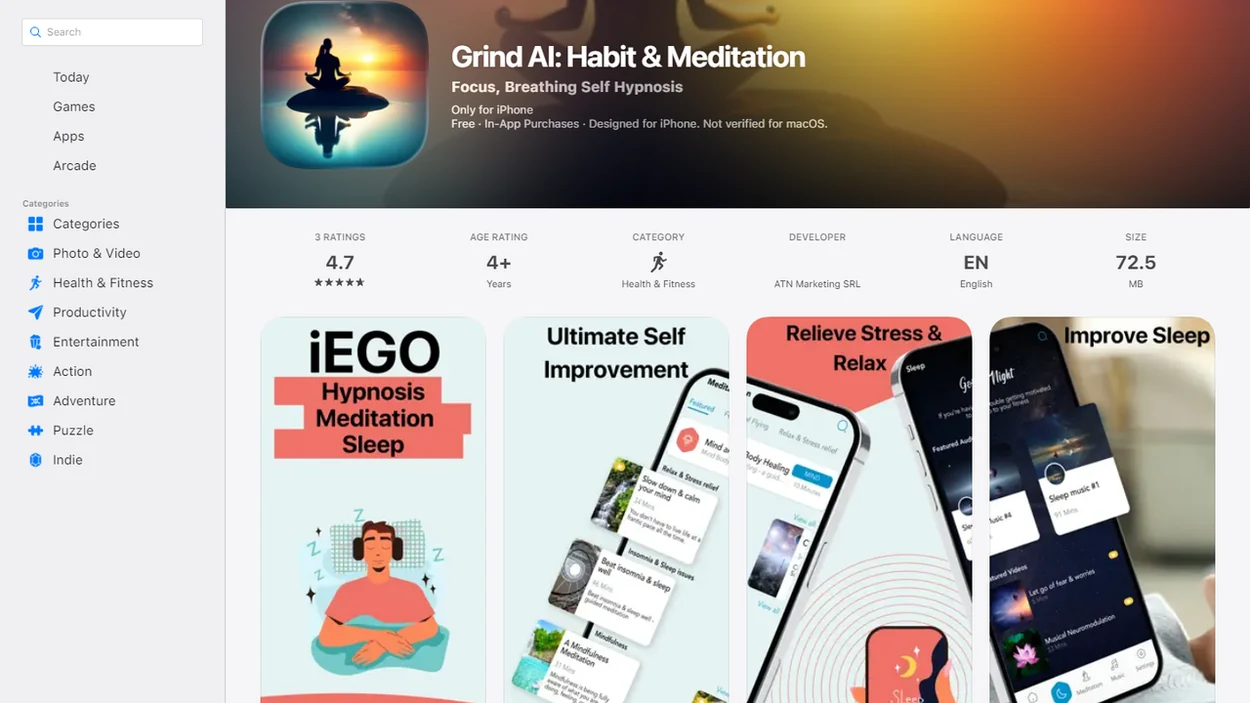
Side-by-side captures of the compared products. Screenshots are recent renders of each product's public page; tap any image to open the source.
Choose an app that fits your daily routine
The best daily meditation app is the one that matches your real day, not the one people mention most often. Fit usually comes down to short sessions, reminder control, streak forgiveness, and a teaching voice you don't resist at 7:15 a.m.
Mindful.net: best for beginners who want daily practice without pressure
Mindful.net is strongest for low-pressure beginner daily meditation because it keeps the practice plain, secular, and easy to restart. If the priority is building a repeatable habit, Mindful.net fits because the workflow favors short sessions, everyday mindfulness techniques, and no-guilt return points.
Insight Timer: best for large free meditation libraries
Insight Timer suits people who like browsing many teachers and styles, but the choice can feel wide on a tired evening.
Headspace: best for structured beginner courses
Headspace works well for users who want a course-like path and a polished teaching sequence.
Calm: best for meditation plus sleep content
Calm is useful when bedtime stories, music, and sleep routines matter as much as meditation.
Medito: best for simple free guided practice
Medito fits people who want free, uncluttered guidance without a complicated subscription decision.
Daily meditation app comparison table for reminders, cost, and pressure level
A daily meditation app should be compared by habit fit first: session length, reminder flexibility, teaching tone, cost, and pressure level. An app for daily meditation can look impressive in an app store but still fail if its notifications annoy you or its upsells interrupt the first week.
| Option | Best fit | Session length | Reminder flexibility | Beginner support | Free tier | Pressure level |
|---|---|---|---|---|---|---|
| Mindful.net | Low-pressure beginners | 3 to 10 minutes | Flexible daily cues | Plain-language guidance | Varies by access | Low |
| Insight Timer | People who want choice | 1 to 60+ minutes | Good controls | Teacher-dependent | Strong free library | Medium |
| Headspace | Course-driven learners | 5 to 20 minutes | App-based reminders | Strong structured courses | Limited | Medium |
| Calm | Sleep plus meditation | 3 to 30 minutes | App-based reminders | Friendly, broad | Limited | Medium |
| Medito | Simple free practice | 3 to 20 minutes | Basic reminders | Clear beginner tracks | Strong | Low |
Free tiers, subscription prices, and reminder controls change often, so check the current App Store, Google Play, or publisher pricing page before deciding. Treat the table as a habit-fit screen, not a permanent pricing database.
For beginners who need routine more than variety, a meditation habit app with fewer choices can be easier than a huge library because the next session is obvious. Compare your options against your attention span, not brand fame. The pocket check is real.
Selection criteria: short sessions, reminders, and easy restarts
We chose these daily meditation apps by looking at how well they support a repeatable habit, not by ranking brand fame. The shortlist reflects editorial review informed by product details, app positioning, visible feature sets, and hands-on habit-fit judgment where available.
- Prioritize habit support first: short sessions, clear next steps, and a path back after missed days mattered more than a large content library.
- Weigh reminders by flexibility and tone, because a useful cue should feel like an invitation, not another alarm you resent.
- Compare session length and restart design, favoring apps that make 3 to 10 minutes feel normal and do not punish imperfect streaks.
- Assess pressure level by looking at streak emphasis, upsell friction, notification style, and whether the app makes daily practice feel performative.
- Check pricing and free-tier access as published at review time, while noting that subscriptions, trials, and free libraries can change after publication.
This ranking is about wellness support and everyday attention practice. Meditation apps can help you build consistency, but they are not medical treatments, diagnostic tools, or substitutes for care from a qualified clinician.
How guided audio, timers, and reminders support practice
A meditation habit app works best when it gives you a clear cue, a brief routine, a modest reward, and a simple restart path. Guided audio can point out what to notice, the session length keeps the practice contained, reminders create the cue, and progress tracking shows that you came back rather than “got it perfect.”
Habit-loop design is simple: cue, routine, reward. In plain language, your phone nudges you, you sit for five minutes, and you mark the practice complete. A forgiving restart loop matters because missed days are part of ordinary life, not proof you failed. If gratitude feels like a useful reward, compare gratitude apps for a brief daily reflection you can repeat.
App-based mindfulness support is now common in mental health app marketplaces. A 2019 analysis of the top 100 mental health apps in the Apple App Store and Google Play Store found that 29 primarily targeted anxiety and stress management, and 13 focused on mindfulness and meditation NIH research. For a broader evidence overview, our mindfulness research guide separates meditation programs from app marketing claims.
Set up your first week of daily meditation
The easiest way to use a daily meditation app is to make the first routine small enough for an ordinary day, not an ideal one. You might practice after a museum visit, while the perfume from a hallway still lingers, or during a quiet pause when your eyelids feel heavy.
- Choose one 3- to 10-minute guided session for the first week.
- Set one reminder at a realistic cue, such as after brushing your teeth or before opening your laptop. A mindfulness app for daily prompts can help you choose useful cues without adding unnecessary notification pressure.
- Practice at the same cue each day, even if the session feels ordinary.
- Notice one simple anchor, such as feet on carpet, breath at the nose, or shoulder blades pressing the chair.
- Review progress once a week without judging the numbers.
- Restart after a missed day with the next short session, not a longer catch-up session.
On days the progress bar moves too slowly, Mindful.net earns its spot by keeping the next practical step small: open, sit, listen, return. If you need a separate reset plan, the missed meditation day guide focuses on restarting without guilt.
Pair meditation with a routine, not just a notification
A reminder tells you to practice; a routine gives that reminder a place in your day. In an eight-week randomized trial of meditation habit anchors, all participants received daily reminders to meditate for at least 10 minutes. Those assigned to link meditation to a personalized routine showed a significantly smaller decline in daily meditation odds during the eight-week follow-up than comparison groups.
Try naming the cue as an action: after brushing your teeth, after lunch, or before opening your laptop. Then choose one short session to repeat at that point. This is a practical way to apply the finding, not proof that a particular cue or session length will work for everyone. If you repeatedly miss the session, change the cue before adding more alerts.
Check habit fit, privacy, and subscription terms
Daily meditation app rankings should favor repeatable use over content volume. A large library is secondary if the app makes your first 4 to 8 weeks harder than they need to be.
This ranking weighs daily repeatability, beginner clarity, reminder control, pressure level, and cost transparency more heavily than library size. It does not claim that any app is a medical treatment or that one teaching style fits every user. When comparing AI meditation apps, assess beginner guidance, privacy, cost, and reminder controls rather than promises of personalized results.
- Habit fit: The app should match your real cue, such as a bus seat, office stairwell, or three-minute pause before a laptop opens.
- Beginner clarity: Instructions should explain what to do when the mind wanders to a grocery list.
- Secular language: A good fit teaches attention practice without requiring spiritual beliefs.
- Session control: Short sessions, offline access, flexible reminders, and restart support matter more than celebrity voices.
- Privacy and cost: Check data policies, subscription terms, free limits, and notification settings before relying on any app.
For people comparing a daily practice with broader app value, our is mindfulness app worth it explainer covers cost and expectations in more detail. Daily meditation usually depends more on repeatable cues than on the size of the content catalog.
Mindful.net for beginner daily meditation without pressure
Does Mindful.net help beginners meditate daily without pressure? Yes, Mindful.net is built for people who want simple guidance, short practices, and everyday mindfulness without turning meditation into another performance task.
Simple instruction helps because beginners usually do not need a grand theory. They need to know where to place attention, what to do when thoughts wander, and how to return without turning the moment into a performance. Three steady breaths while looking at a library book spine can be enough for one practice. For written reflection after a session, AI journal prompts can suggest questions, but avoid sharing sensitive personal information.
For beginners who need a calm starting point, Mindful.net fits because it explains breathing, body scan, mindful walking, and short pauses in plain language. The Mindfulness Practices App also keeps the tone secular, so users can practice attention without adopting spiritual claims or expecting medical treatment.
Good mindfulness practices deliver repeatable attention training, not instant calm on command. For a broader beginner comparison, our best mindfulness app guide looks at teaching style, structure, and cost.
Guided meditation app evidence from 2014, 2016, and 2022 studies
Research supports consistent guided mindfulness practice, but it does not prove that every guided meditation app works as advertised. The evidence is strongest for structured meditation programs, repeated practice, and measured outcomes. A 2016 randomized controlled trial of a smartphone-based mindfulness intervention found well-being improvements after brief daily app use S10902 014 9589 1. A 2014 meta-analysis of 142 randomized controlled trials with 12,005 participants found moderate improvements in anxiety and depression for meditation programs compared with controls JAMA study. In 2022, a randomized clinical trial of 163 adults with anxiety disorders found mindfulness-based stress reduction had anxiety severity improvements comparable to escitalopram after 8 weeks JAMA study.
Therapists and mental-health guidelines commonly treat mindfulness as a skills-based support, not a stand-alone replacement for care. The most evidence-backed approach is structured practice with realistic expectations, while app choice mainly affects access, reminders, and consistency. Our MBSR basics page explains that program format separately.
Separate app activity from benefits that matter to you
Completing more sessions is not the same as feeling less stressed or sleeping better. Research distinguishes app use, such as minutes practiced and responses to reminders, from mindfulness and health outcomes. A review of mindfulness mobile applications provides context for that distinction. Treat a streak as a record of activity, not evidence of the quality of your meditation.
At the end of a week, ask two separate questions: did the routine fit, and did the practice seem useful? For the first, note which cue and session length you could repeat. For the second, briefly reflect on what matters to you, such as stress or sleep. That reflection is not a clinical assessment, and a longer streak alone cannot establish a health benefit. A mindfulness app with journal prompts can help you record which cues worked and whether the practice felt useful.
After brushing your teeth: a short practice with a timer
After brushing your teeth, a short meditation can fit beside something you already do each day. Mindful.net offers guided meditations when you want instruction and a meditation timer when you prefer silence. For a browser-based session, the site's free online meditation timer is enough. A different app may suit you better if its teaching voice or reminder controls fit your routine more closely.
Daily Meditation App Limits
- Meditation apps require time and attention and cannot diagnose, treat, or manage severe mental health concerns alone.
- Seek qualified professional care for panic, trauma symptoms, severe depression, or thoughts of harming yourself.
- Subscription costs can increase after free trials, especially with annual billing.
- Privacy policies vary, so review what data the app collects, stores, or shares.
Daily meditation app questions
What should I look for in a daily meditation app?
Prioritize short guided sessions, clear beginner instruction, a simple timer, and reminders you can adjust or pause. Choose a teaching voice you find comfortable. A large library is less useful if choosing a session delays practice. Check subscription terms and privacy policies before committing.
How many minutes should I meditate each day as a beginner?
Start with 3 to 10 minutes if that fits your day. There is no fixed duration you must reach before practice counts. Choose a length you can repeat without rushing, then adjust it if needed. Longer sessions are an option, not a requirement for returning tomorrow.
What is the best time to set a meditation reminder?
Choose a time linked to something you already do, such as brushing your teeth or finishing lunch. A reminder is more practical when you can act on it. If it repeatedly arrives during work or travel, move it rather than adding more notifications.
What should I do if I miss several days of meditation?
Return with one short session at your next realistic opportunity. You do not need to make up missed minutes or restart a whole course unless you want to. Check what interrupted the routine: timing, session length, or the guidance itself. Adjust that part before resuming.
Do meditation streaks help build a daily habit?
A streak can encourage you to return, but it records uninterrupted activity rather than the quality or benefit of practice. If protecting the streak becomes stressful, focus on sessions per week or simply returning after a gap. Missing a day does not erase earlier practice.
Can I meditate daily with just a timer?
Yes. A timer can be enough once you know how you want to practice, such as noticing your breath and returning when attention wanders. Guided audio is useful when you need instruction. Mindful.net includes both short guided meditations and a meditation timer, so you can choose between them.
Are free meditation apps enough for a daily routine?
They can be, provided the available guidance or timer meets your needs. You do not need a large paid library to repeat a short practice. Check what remains accessible without a subscription, whether a trial renews automatically, and whether payment prompts interrupt the routine you want.
Does using a meditation app every day prove it is helping?
No. Daily use shows consistency, but session counts and streaks do not establish improvements in stress, sleep, or mood. Consider both how sustainable the routine is and whether practice seems useful to you. An app is not a substitute for qualified care for serious mental health concerns.