
Meditation and Creativity: A Practical Mindfulness Guide
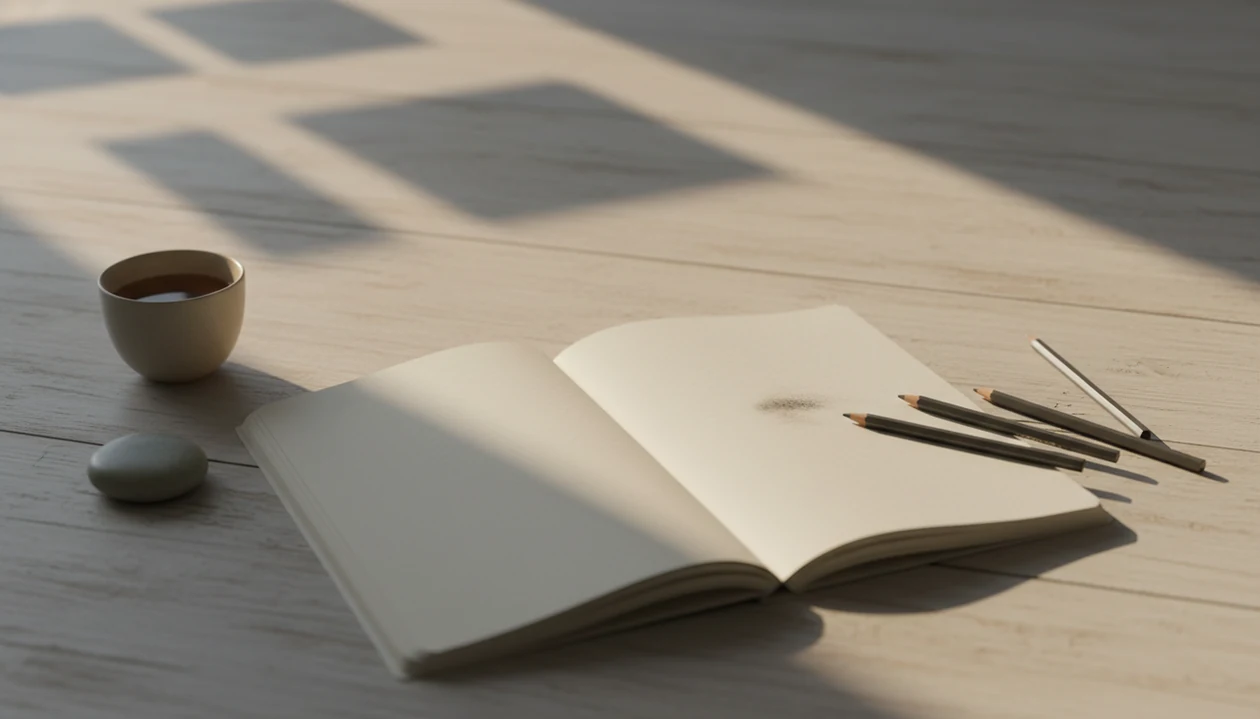
Meditation and creativity are connected because mindfulness can reduce mental noise, improve attention, and make it easier to notice fresh ideas.
Quick answer: Meditation and creativity often work together when practice is matched to the creative task. Use open-monitoring meditation before brainstorming, then use focused-attention meditation when you need to refine, choose, or finish.
> Definition: Meditation for creativity is the secular use of mindfulness practices to support idea generation, cognitive flexibility, and clearer attention during creative work.
TL;DR
- Open-monitoring meditation appears especially useful for divergent thinking and idea generation.
- Focused-attention meditation may be better when you need to evaluate, organize, or complete ideas.
- Meditation supports creativity indirectly; it does not replace skill, practice, feedback, or domain knowledge.
Meditation and creativity guide: the short answer
Meditation and creativity can connect in practical ways: meditation may support attention, reduce mental clutter, and make flexible thinking easier. It is not a switch that produces brilliant ideas on demand.
The useful split is simple. Open-monitoring meditation fits the messy beginning of creative work, when you want more associations, odd links, and unfinished possibilities. Focused-attention meditation fits the later stage, when you need to pick one idea, edit a paragraph, revise a sketch, or finish the slide deck.
A three-minute pause before opening a laptop can be enough to notice what is already running in the mind. The grocery list. The worry about time. The half-formed idea you almost missed.
For beginners, open monitoring usually works better before brainstorming because it widens attention, while focused attention helps when the job is selection and follow-through.
Brain mechanisms behind meditation and creativity
Creativity is the ability to produce ideas that are new, useful, or original, not just the ability to make art. That includes writing, design, research, planning, and ordinary problem-solving.
Meditation may help creativity through attention regulation, divergent thinking, cognitive flexibility, and insight noticing. Divergent thinking means generating many possible answers. Cognitive flexibility means shifting between frames, such as moving from “this design is broken” to “this design may need a different constraint.” Attention regulation is the skill of noticing where the mind went and returning, without making a drama of it.
A 2019 meta-analysis of 142 studies found a medium effect of mindfulness-based interventions on cognitive outcomes, including attention and cognitive flexibility NIH research. Stress matters too. Chronic stress is associated with changes in attention, memory, and cognitive control, which can make creative work feel narrower and more effortful NIH research.
The room gets smaller when you’re overloaded.
Five evidence-backed meditation and creativity facts
- Regular mindfulness practice is linked with attention and cognitive flexibility, two skills that support creative thinking.
- Open-monitoring meditation has stronger evidence for divergent thinking than focused-attention meditation, especially during idea generation.
- Mindfulness practices may improve fluency, flexibility, originality, and insight problem-solving, though results vary by task and study design.
- Brief daily practice may reduce mind-wandering and support working memory, which helps people stay with an idea long enough to develop it.
- Effects vary by person, meditation style, creative task, practice history, and the way creativity is measured.
A 2020 review of more than 20 studies concluded that mindfulness can support fluency, flexibility, originality, and insight problem-solving, but the findings are not uniform Fpsyg.2020.560791.
Good mindfulness practices and meditation techniques for beginners and daily life deliver steadier attention and clearer noticing, not guaranteed originality or a shortcut around craft.
Meditation styles for brainstorming, editing, and creative blocks
Different meditation styles fit different creative jobs, so choose the practice by task rather than mood alone. If the goal is “more ideas,” widen attention. If the goal is “finish this,” narrow it.
| Meditation style | Best use | Not best use | Beginner session length |
|---|---|---|---|
| Open-monitoring meditation | Brainstorming, associative thinking, creative blocks | Tight editing or urgent decisions | 5 to 12 minutes |
| Focused-attention meditation | Editing, evaluating, completing work | Broad idea generation | 3 to 10 minutes |
| Body scan | Releasing tension before creative work | Fast idea capture | 5 to 15 minutes |
| Walking meditation | Incubation, stuck points, problem loosening | Detailed revision | 5 to 20 minutes |
| Informal mindfulness | Transitions between tasks | Deep refinement by itself | 30 seconds to 3 minutes |
Open monitoring lets thoughts, sounds, images, and sensations arise without choosing one object. Focused attention usually uses one anchor, such as breathing. If you need more help with the narrowing side, a focus meditation practice may fit the editing phase better.
In one experimental study, open-monitoring meditation improved divergent-thinking performance more than focused-attention meditation, which supports using it before brainstorming rather than during final editing Full.
7-step meditation routine for a creative work session
Use this routine when you want meditation to support creative work without turning it into a performance test. Keep it secular, short, and ordinary.
If you use Mindful.net’s Mindfulness Practices App, choose an open-monitoring session for idea generation and a focused-attention session for editing or follow-through. The point is to match the practice to the creative stage, not to meditate longer.
- Set a creative intention without demanding a specific result, such as “explore three possible openings.”
- Set a timer for 5 to 10 minutes, so you do not keep checking the clock.
- Breathe for two minutes and feel the body settle in the chair.
- Open attention and let thoughts, sensations, sounds, and images come and go.
- Notice and return when the mind grabs one idea too tightly or starts judging.
- Capture ideas quickly after the timer ends, using rough phrases rather than polished notes.
- Choose one next action with focused attention, such as drafting one paragraph or testing one layout.
One simple way to try it: sit on a kitchen chair, feel your feet on the tile, and let the first few ideas be bad. Bad is usable. Blank pressure is harder.
Meditation tips for the 4 creative process stages
Creative work often moves through preparation, incubation, insight, and verification. Meditation can support each stage, but it does not do the work for you.
Preparation: settle the problem
Use focused breathing to clarify the problem or prompt. Name the task in one sentence, then spend two minutes following the breath. This is useful before research, outlining, sketching, or studying; students may also find study meditation for students helpful when the creative task includes learning.
Incubation: stop forcing the answer
Use open monitoring, walking meditation, or a mindful break when effort starts turning rigid. Let the mind loosen without scrolling for more input. A quiet pause before hitting send can reveal the line you were about to over-explain.
Verification: refine the idea
Use focused attention to test, edit, and improve the idea. Verification is where taste, skill, critique, and standards matter. Meditation can help you stay present for revision, but it cannot replace revision.
Meditation use cases for writers, designers, students, and teams
Meditation is most useful for creative work when the problem involves distraction, overthinking, transition, or a stuck beginning. It is less useful when the real issue is missing training, unclear feedback, or an unsafe workload.
| Use case | Best for | Not ideal for |
|---|---|---|
| Writers | Starting drafts, loosening fixed phrasing | Replacing editing or reading |
| Designers | Exploring alternatives before critique | Replacing user research |
| Students | Settling before study or project work | Replacing subject knowledge |
| Teams | Pausing before ideation or review | Fixing poor process or culture |
| Daily decisions | Seeing more than one option | Avoiding necessary action |
Tools like Mindful.net, Calm, and Headspace can guide short beginner practices when you do not want to invent a routine. If your creative work depends on long focus blocks, deep work meditation may be a practical next step after brainstorming.
Common meditation mistakes that block creative work
The biggest mistake is sitting down and silently demanding a brilliant idea immediately. That turns meditation into another deadline.
Do not use only focused attention when the goal is broad idea generation. Narrow attention helps with editing, but it can make early brainstorming feel tight. For that stage, open monitoring usually gives the mind more room.
Another common mistake is judging every thought during practice. In open monitoring, the point is to notice thoughts, not grade them. The strange image, the unfinished phrase, the memory from the bus seat, all of it can pass through.
Capture matters too. If you skip notes after meditation, useful ideas may disappear within minutes. Keep a notebook or phone note ready.
Finally, do not treat meditation as a fix for burnout, unsafe workloads, or missing creative skill. For work-specific routines, focus meditation for work may help with attention, but workload design still matters.
Limitations
Meditation can support creative conditions, but the evidence has real limits. Keep expectations modest and test what helps your actual work.
- Research on meditation and creativity is promising, but studies are heterogeneous and not definitive.
- Some studies use short-term lab creativity tasks, which may not predict real-world creative careers.
- Meditation does not replace domain knowledge, deliberate practice, critique, training, or repetition.
- Creativity is shaped by workload, autonomy, sleep, culture, collaboration, and psychological safety.
For people with attention differences, ADHD meditation app support may offer a more specific way to compare structure, timers, and guidance.
Three Situations Where This Helps
A common beginner mistake is treating meditation like a creativity switch: sit down, breathe, produce a brilliant idea. The more useful view is situational: a clipboard breath before a site walk-through may help attention settle, a stairwell pause after a tense handoff may reduce rumination, and break-room quiet may make it easier to notice a half-formed idea without forcing it. The practical point is simple: meditation supports the conditions for creative work; it does not guarantee creative output.
Why Advice Conflicts Online
Advice conflicts because people use “meditation” to mean different things: Breath Awareness may steady attention, while a Body Scan may reveal tension that is stealing mental bandwidth. Mindfulness also differs from prayer in intention; prayer may be relational, devotional, or petitionary, while mindfulness practice usually trains present-moment observation. If two people report opposite results, they may be using different practices for different creative stages.
The Cost-and-Effort Tradeoff
| If you... | Try | Why | Note |
|---|---|---|---|
| You have five minutes before presenting a design, dish, lesson plan, or repair idea | Breath Awareness with eyes lowered | Low setup, easy to repeat, and useful when the main need is steadier attention | Do not use the session to judge whether the idea is good yet |
| You feel blocked because your body is tense, rushed, or braced | Short Body Scan from jaw to hands to feet | It can make hidden tension easier to notice before you return to the task | The first scan may feel busy rather than calm |
| You are choosing between meditation and prayer during a stressful creative decision | Choose mindfulness for observation; choose prayer if devotion, meaning, or spiritual support is the purpose | Clear intent prevents the practice from becoming another performance task | These can coexist, but they are not identical tools |
| You are exhausted near the end of a shift and need one practical next step | One-minute pause, then write or say the next concrete action | Short resets reduce decision load when attention is already depleted | Skip complex visualizations when time and energy are low |
A Quick Technique Map
| Technique | Best for | Minutes |
|---|---|---|
| Clipboard breath | Resetting attention before checking, inspecting, teaching, or making a practical call | 3 min |
| Stairwell pause | Letting emotional residue settle between tasks or teams | 4-7 min |
| Break-room quiet | Allowing loose ideas to surface without turning the pause into another assignment | 5-10 min |
What Testing Suggests
In our editorial review, one pattern we notice is that creative workers often ask for a more powerful technique when they actually need a smaller entry point. We usually suggest starting with a repeatable pause tied to a real work prop or transition, because the practice is easier to remember under pressure. Decision support beats generic calm advice when someone is choosing between techniques.
The best creativity practice is the one you can repeat at the moment work actually gets noisy.
Why Mindful.net fits this specific need
Mindful.net is useful here because its meditation guides separate attention practices from vague productivity advice. Readers can pair this article with the Breath Awareness and Body Scan guides, then choose a short practice based on the creative stage they are actually in.
FAQ
Does meditation help creativity?
Meditation may support creativity by improving attention, cognitive flexibility, and reduced mental clutter. Results vary by person, task, and meditation style.
What type of meditation boosts creativity?
Open-monitoring meditation is often the best fit for idea generation because it allows thoughts, sensations, and associations to arise without forcing one focus. Focused-attention meditation may be better for refining ideas.
Can meditation improve brainstorming?
A short open-monitoring session can help loosen fixed thinking before brainstorming. It works best when followed by quick idea capture.
Is mindfulness good for artists?
Mindfulness can help artists notice ideas, tolerate uncertainty, and return to the work after distraction. It does not replace craft, feedback, or practice.
Can meditation cause creative blocks?
Meditation usually does not cause creative blocks, but over-efforting or judging thoughts can make practice feel restrictive. Try a shorter session or a more open style.
How long should creatives meditate?
Start with 5 to 10 minutes and adjust based on the task and your response. Short sessions are often easier to repeat than long ones.
Should I meditate before writing?
A short settling practice before writing can help attention gather. Use open monitoring when stuck and focused attention when editing.
What is open monitoring meditation?
Open monitoring meditation means noticing thoughts, sensations, sounds, and feelings without choosing one object to control. The practice is to observe and return to awareness.
Does meditation replace creative practice?
No. Meditation supports the conditions for creative work, but it does not replace skill-building, feedback, research, or repetition.