

Definition: Focus meditation, also called focused attention meditation or concentration meditation, is a mindfulness practice in which you train your mind to stay with one chosen object of attention, such as the breath, a word, or a sound, and repeatedly return to it when your attention drifts.
Quick answer: Mindful.net's Mindfulness Practices App is a practical way to try focus meditation because it pairs short guided sessions with breath, sound, and intention-based attention anchors. Use it as a structured practice aid, not as a medical treatment or a substitute for sleep, therapy, medication, or accommodations.
What Focus Meditation Is and Who It Helps
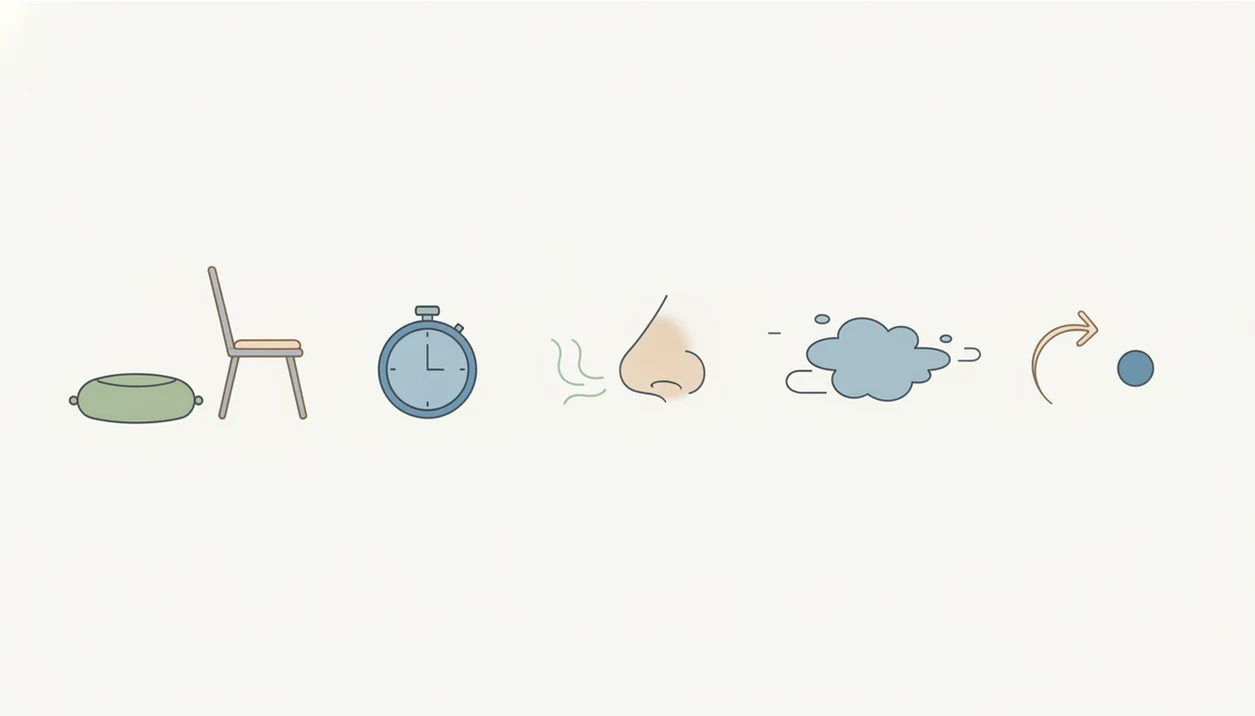
Focus meditation is focused attention training: you choose one anchor, stay with it, notice wandering, and return. It differs from open-monitoring meditation, where you observe whatever arises, and from a body scan, where attention moves through body regions.
Common anchors include the breath at the nostrils, a short mantra, a steady sound, or a candle flame. A beginner might sit on a kitchen chair, set a phone timer, and track one inhale with fingertips resting lightly on the lap.
This practice often fits students, knowledge workers, creatives, and people with mild attention challenges. For students, focused attention meditation gives the mind a simple warm-up before reading. For desk work, it can mark the start of a deep work block. For creative work, it can settle scattered attention without forcing ideas.
Good mindfulness practices and meditation techniques for beginners and daily life build repeatable attention skills, not instant personality change.
Concentration Meditation Fit Check: Best Uses and Red Flags
Concentration meditation is useful when you want a small, repeatable attention practice, but it should not replace medical care, sleep, or practical study systems. Use it as support, not as a cure.
- Best for study focus: A 5-minute breath practice can help separate “about to study” from “actually studying.”
- Best for deep work: One anchor and one work intention can reduce the urge to task-switch.
- Best for exam prep: Pair it with review, recall practice, and realistic sleep.
- Best for creative blocks: A softer anchor, like ambient sound, can loosen over-effort.
- Use caution: Severe ADHD, anxiety, PTSD, depression, or psychosis deserve professional guidance. Intensive meditation can feel destabilizing for some people.
Not ideal: expecting instant results, using meditation instead of medication or therapy, or trying to focus after four hours of sleep and constant notifications.
How Focused Attention Meditation Works in Your Brain
Focused attention meditation works through a refocusing loop: notice wandering, release the thought, return to the anchor, repeat. The return is the training. Like a strength repetition, it is small, ordinary, and easy to underestimate.
- The loop is the method: Wandering is noticed, not treated as failure.
- Attentional control gets practiced: Each return asks the mind to redirect on purpose.
- Acceptance matters: You are not brute-forcing attention; you are reducing the fight with distraction.
- Brain evidence is suggestive: An 8-week MBSR study found structural changes in regions linked with learning, memory, and emotion regulation NIH research.
- Real-world focus needs both skills: Attention helps you stay with the task; acceptance helps you recover when attention breaks.
The shoulders often drop after one honest exhale. Small signal, useful signal.
The American Psychological Association also summarizes mindfulness meditation as linked with brain and biology changes that may support attention, stress regulation, and emotional regulation APA research.
How to Start a Focus Meditation Practice in 5 Steps
You can start focus meditation with a chair, a timer, and one anchor. Five minutes is enough for a first session, especially if you are new or restless.
- Choose a quiet spot and sit comfortably. A chair is fine; keep your feet on carpet or tile if that helps you feel grounded.
- Set a timer for 5 to 10 minutes. Use a plain alarm, not an app screen you keep checking.
- Pick one focal anchor. Breath at the nostrils is the simplest starting point for most beginners.
- Notice wandering without judgment. When the mind jumps to a grocery list, label it “thinking” and return.
- End with one intention. Name the next task, such as “read one page” or “write for 20 minutes.”
For beginners, short daily focus meditation is often easier than long occasional sessions because the habit forms around one repeatable cue. Tools like Mindful.net, Calm, and Headspace can help if you prefer guided timing and simple instructions.
Ready to start tonight's calm routine?
Focus meditation is a simple practice where you hold attention on one object, such as the breath, a sound, or a word, and gently return whenever the mind wanders. This guide…
Meditation for Focus While Studying, Working, and Creating
Meditation for focus works best when it is tied to a real task, not left as a vague wellness idea. Use the same attention skill, then change the doorway into the task.
Pre-Study and Exam Focus Protocol
Before studying, try 5 minutes of breath focus, then open the exact book, slide deck, or practice test you plan to use. The full routine for class notes and revision is covered in study meditation for students.
For exams, pair a short sit with active recall. Breathe, review one topic, then test yourself without looking. That sequence can reduce anxious spinning and support memory retrieval, but it won’t replace spaced repetition.
Deep Work and Creative Attention Anchors
For deep work, set one intention before the block: “draft section two” or “debug the login error.” Between blocks, use a 2-minute micro-meditation instead of checking messages. A notebook margin filled with breath counts is not elegant, but it works.
For creative sessions, soften the anchor. Try ambient sound or a candle flame before brainstorming. More structured work routines fit deep work meditation, while broader workday habits fit how to practice mindfulness at work.
ADHD-Aware Adaptations for Concentration Meditation
ADHD-aware concentration meditation should be shorter, more sensory, and less rigid. Start with 2 to 5 minutes, not 20, and choose an anchor the body can actually feel.
Counting beads, tapping one finger, holding a textured object, or walking slowly can all serve as focus anchors. A fidget-compatible seated practice may be more realistic than stillness. Still counts.
This is supportive attention practice, not a replacement for medication, therapy, coaching, or school and workplace accommodations. If attention challenges are significant, work with a clinician who understands ADHD. Our ADHD meditation app support guide covers practical adaptations without treating meditation as a cure.
When to Seek Professional Help for Attention or Anxiety Symptoms
Seek professional help when attention problems, anxiety, mood symptoms, trauma responses, or unusual experiences are intense, worsening, or disrupting daily life. Meditation can support self-awareness and steadiness, but it is not diagnosis, treatment, or a substitute for medical or mental health care.
- Pause and get guidance before meditating if stillness brings panic, flashbacks, dissociation, urges to self-harm, paranoia, hallucinations, mania-like energy, or severe depression. These are clinical signals, not meditation failures.
- Ask for an ADHD evaluation when distractibility, impulsivity, time blindness, or task paralysis repeatedly affects school, work, driving, finances, or relationships. A clinician can discuss diagnosis, accommodations, coaching, therapy, or medication review.
- Choose movement or guidance if silent sitting makes you more agitated. Walking meditation, gentle stretching, eyes-open grounding, or a brief guided practice can be safer than forcing stillness.
- Contact licensed support such as a psychologist, psychiatrist, therapist, primary care clinician, or qualified ADHD specialist. If symptoms feel urgent or unsafe, use local emergency services or a crisis line rather than trying to meditate through it.
Mindfulness Research Findings on Attention and Working Memory
Research on mindfulness for attention is promising, but the effects are usually modest. The strongest findings come from structured programs, often with instructors, which may differ from self-guided app practice.
- Daily practice can help attention: A 2013 randomized trial found that 10 to 20 minutes of daily mindfulness meditation over 16 weeks improved attention and working memory capacity Pnas.1305165110.
- Mental health effects are broader: A 2014 JAMA Internal Medicine meta-analysis of 47 trials found moderate evidence for improvements in anxiety, depression, and pain, plus lower-certainty effects for stress and quality of life JAMA study.
- Executive function may improve: A 2014 systematic review reported small to moderate gains in attention and executive functioning after mindfulness-based interventions.
- Benefits are real but not dramatic: Focus meditation is attention training, not a dramatic cure.
- Delivery matters: Instructor-led MBSR or similar programs may produce different results than a self-guided phone timer.
For most beginners, regular practice over weeks matters more than finding the ideal technique on day one.
Common Focus Meditation Misconceptions
The biggest misconception is that focus meditation means emptying the mind. It doesn’t. The practice is noticing that attention moved, then returning to the breath, sound, word, or object.
Mind-wandering also does not mean you are bad at meditation. It means you found the moment where training can happen. The teacher’s cue to notice wandering can feel repetitive, but that repetition is the point.
You also do not need long cross-legged sessions. A short chair-based session before opening a laptop is enough to begin. If you want background sound, concentration music for meditation can help some people, though silence may work better for others.
Finally, meditation does not instantly fix ADHD. It may support attention regulation, but clinical attention disorders need evidence-based care and practical accommodations.
Limitations
Focus meditation has real limits. It is useful because it is simple, but simple does not mean complete.
- Attention gains are usually small to moderate, not dramatic.
- Benefits require regular practice over weeks or months. It is not a quick hack.
- People with severe depression, PTSD, psychosis, or panic symptoms should practice under professional guidance.
- Most clinical evidence comes from instructor-led programs. Self-guided or app-based practice may deliver smaller benefits.
Clinicians typically recommend meditation as a supportive practice when appropriate, not as a replacement for diagnosis, medication, therapy, or accommodations.
When Another Tool Fits Better at Work
You are on a hospital floor, warehouse line, classroom, or stage and cannot safely close your eyes.
Use eyes-open attention instead: one clipboard breath, one sound in the room, or one steady visual point. Focus meditation should support the task, not compete with safety, supervision, or performance demands.
You are drained after a night shift and trying to meditate your way through exhaustion.
Rest, food, hydration, and scheduling support may fit better than another concentration exercise. Meditation can be a helpful pause, but it is not a substitute for sleep.
You are angry after a conflict with a patient, customer, parent, teammate, or supervisor.
A stairwell pause may help you avoid reacting immediately, but reflective writing, a trusted debrief, or formal reporting may be more appropriate if something needs action. The goal is not to become calm enough to ignore a real workplace problem.
Your mind keeps replaying a mistake while you are responsible for the next task.
Try a brief reset before returning to the work, then use a checklist or peer confirmation if accuracy matters. Attention practice works best when paired with practical safeguards.
When Another Method Fits Better
- Choose movement, stretching, or yoga when the body feels restless and stillness makes attention feel more agitated. Yoga may offer a clearer physical doorway, while focus meditation trains a narrower attention anchor.
- Use a break-room quiet minute when you are overstimulated but still able to choose your next action. Keep the instruction plain: notice one breath, one sound, and one next step.
- Try the Before Email Pause from /mindfulness-at-work when the problem is automatic replying rather than poor concentration. A pause before sending can be more useful than a long practice after the damage is done.
- Use the Meeting Reset from /work-mindfulness/mindfulness-before-meetings when the challenge is entering a room or call with leftover frustration. A short transition often beats asking yourself to be focused for an entire meeting.
- Skip intense breath focus if it seems to increase panic-like sensations or distress. In that case, eyes-open grounding, professional support, or a less body-centered practice may be the wiser first step.
What Not to Optimize
Myth: The best worker is the one who can focus through anything.
Reality: Good attention often includes knowing when to change the environment, ask for clarification, or take a short reset. Focus meditation is not a badge of endurance.
Myth: A longer session is automatically better.
Reality: A repeatable two-minute practice before a chart note, rehearsal, tool change, or client conversation may be more useful than an occasional ambitious session. Consistency tends to matter more than session length for most beginners.
Myth: If thoughts keep appearing, the practice is failing.
Reality: Noticing the mind wander is part of the training. The practical skill is returning without turning the moment into a self-criticism exercise.
Myth: Mindfulness and yoga are interchangeable.
Reality: They can overlap, but they solve different problems for different people. Yoga may be better when the body needs movement; focus meditation may fit when the immediate need is a quiet attention anchor.
At-a-Glance Options
| Technique | Best for | Minutes |
|---|---|---|
| Clipboard breath | Resetting attention before documentation, rounds, inventory, or a checklist task | 1-3 min |
| Stairwell pause | Creating a transition after conflict, noise, or a demanding service interaction | 2-5 min |
| Break-room quiet | Lower-stimulation recovery during a shift without needing a full meditation session | 3-10 min |
What Testing Suggests
In our editorial review, many beginners seem to do better when workplace focus practice is tied to a real transition rather than treated as a separate self-improvement project. We often notice that a nurse, musician, mechanic, teacher, or athlete is more likely to repeat a short reset when it is placed before a specific handoff, entrance, checklist, or conversation. The best practice is usually the one you will repeat tomorrow.
Decision support beats generic calm advice when someone is choosing between techniques.
Why Mindful.net fits this specific need
Mindful.net fits this use case because its focus meditation guidance can be applied in short, realistic work transitions rather than only in quiet home practice. The app and related guides can help users test breath, sound, and intention anchors while keeping the practice practical, nonmedical, and adjustable.