
Mindful Movement for the Afternoon Slump: A Gentle Desk Reset


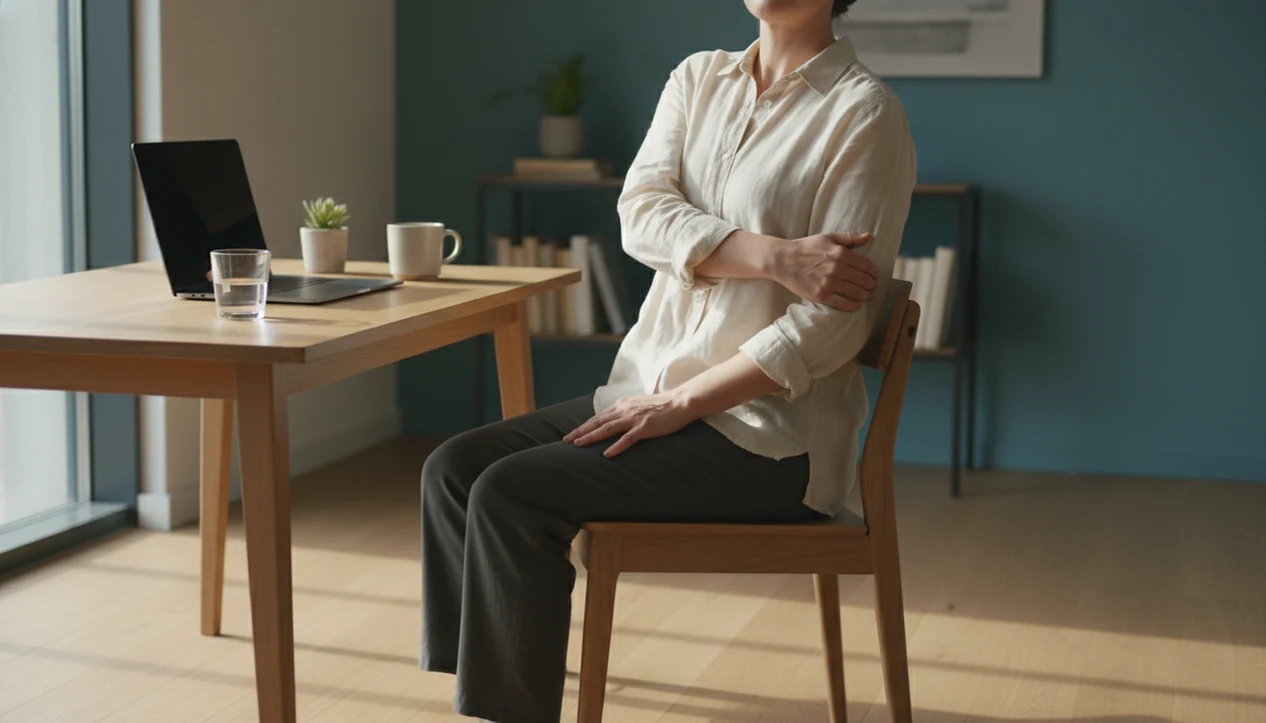
Mindful movement for the afternoon slump pairs 3-10 minutes of gentle movement with attention to your breath, posture, and body sensations. The aim is to feel a little more awake and less mentally foggy, not to force a burst of energy. Start by sitting or standing tall, moving your shoulders, spine, hips, and legs comfortably, then pausing before returning to work.
An afternoon dip in alertness is often part of your body's daily rhythm, not a personal failure. A short movement break can support energy and attention, but it cannot replace sleep. Keep it light and combine it with adequate rest, water, daylight, balanced meals, and breaks that actually take you away from the screen.
At a glance
- The afternoon slump is often a normal circadian dip, not a personal failure.
- Short bouts of light movement, even 4-10 minutes, can improve subjective energy and reduce fatigue.
- Mindful movement works best when paired with sleep, hydration, light exposure, balanced meals, and realistic breaks.
What makes a movement break mindful
Mindful movement for the afternoon slump means using gentle physical movement while paying attention to breath, posture, and body sensations. The aim is steady alertness, not a stimulant-like jolt.
You might roll your shoulders, lengthen your spine, pump your ankles, or stand for a few slow sit-to-stands. The key is noticing what is happening while you move. Feet on tile. Breath slowing. Lower back meeting the chair.
No gear, yoga background, or app is required. A phone timer set for five minutes is enough. Use mindfulness to practice returning attention to a clear cue, not to erase tiredness, stress, or an excessive workload.
How mindful movement works for the afternoon slump
Mindful movement works by giving your body and attention a small reset during a predictable low point. In plain terms, your internal clock can dip in the afternoon while sleep pressure, the body’s gradual push toward sleep, keeps rising.
Light movement changes the inputs your nervous system is receiving. Sitting tall shifts posture. Shoulder rolls, ankle pumps, or a few sit-to-stands support circulation and give the brain fresh sensory information from muscles, joints, and balance. Breath awareness adds the mindful part: it interrupts autopilot scrolling, screen fixation, and the vague urge to open another tab before you know why.
- Notice the slump as a body signal, not a character flaw.
- Change position with small, comfortable movements.
- Track one or two breaths so attention has somewhere simple to land.
- Return to work with a single next task instead of a scattered restart. For a longer focus block, learn how to get into flow state by matching a clear task to your current capacity.
The effect is usually subtle. It may feel like a little more steadiness, not like caffeine or a guaranteed productivity switch. It also works best when sleep, food, hydration, daylight, and real breaks are not being ignored.
How your body clock and sleep pressure affect afternoon alertness
The afternoon slump often comes from two normal processes: a mid-afternoon circadian alertness dip and rising sleep pressure. The CDC notes that wakefulness signals can dip in the afternoon as sleep pressure builds, even after decent sleep CDC guidance.
How it works: light movement increases circulation, changes posture, and adds fresh sensory input. That can help your nervous system shift out of the “stuck at the screen” state without turning the break into a workout. The cursor blinking on an unfinished email is often the first clue.
Mindful attention adds a second layer. Instead of autopilot scrolling or chasing a grocery-list thought, you notice the body and return. For afternoon focus, mindful movement usually works best when it is brief, repeatable, and tied to a real transition, while longer meditation fits people who can step away fully. If you can take a quieter pause, flow state meditation offers a way to practice focus without forcing alertness.
What light movement can and cannot do for energy
The afternoon slump is common and biologically influenced; it does not mean you are lazy or broken. Light to moderate activity can support alertness and positive mood compared with staying sedentary, especially during long sitting periods. Experimental studies suggest activity bouts as short as 4-10 minutes may improve subjective energy and reduce fatigue in adults. One useful benchmark: a 2017 experiment found that 10 minutes of low-intensity stair walking increased self-rated energy more than 50 mg of caffeine in sleep-deprived young women PubMed research. Mindfulness can support attention and fatigue, but it is not a cure-all or a substitute for sleep, food, movement, or care.
A practical next step is pairing this routine with focus meditation if your slump feels more scattered than sleepy.
Mindfulness training evidence is not proof of an instant energy boost
Research on workplace mindfulness gives useful context, but it does not establish that a seven-minute movement routine will restore alertness. A 2019 evidence map of mindfulness for workplace wellness reported modest reductions in fatigue and sleep problems in the largest included review of MBSR and MBCT trials. Study quality and intervention formats varied.
Those findings concern structured mindfulness programs, not this specific desk routine. Treat the break as a chance to change posture, move comfortably, and pay attention to how you feel afterward. If the fog remains, repeating the exercise is not necessarily the answer. More sleep, a different work schedule, or medical assessment may matter more.
A five-step movement break for post-lunch fog
Use this 3-10 minute routine at a desk, beside a chair, or in a small office corner. Move gently, keep breathing, and stop if anything feels sharp or wrong.
1. Notice your energy level
Ask, “Am I sleepy, tense, restless, or overloaded?” Name it once, then feel one breath move through the ribs.
2. Lengthen your posture
Sit or stand taller without stiffening. Let the belly rise against the waistband for three slow breaths.
3. Mobilize the upper body
Roll the shoulders, turn the head gently, and move the spine through small cat-cow motions. Keep the jaw loose.
4. Wake up the legs
Try ankle pumps, calf raises, marching in place, or slow sit-to-stands. Chair-based movement is fine.
5. Pause before returning
Stand or sit still for 20 seconds. Notice one sensation, then return to the next task instead of reopening five tabs.
A seven-minute desk routine for small spaces
Try the 7-minute reset when you cannot leave your desk but need a clear break.
- Seated spine waves: Move the chest forward and back for one minute, staying within a comfortable range.
- Shoulder rolls: Roll shoulders up, back, and down for one minute. Make it small in shared workspaces.
- Ankle pumps: Lift heels and toes for one minute, especially after long sitting.
- Sit-to-stands or slow squats: Use two minutes. Hold the chair if needed.
- Breath pause: Spend two minutes standing or sitting still, hearing the exhale in a quiet room.
Stop or modify any movement that causes pain, dizziness, or unusual symptoms. If attention is the bigger issue, focus meditation for work can pair well with this short reset.
Common mistakes with mindful movement for an afternoon slump
Keep the movement gentle: turning the break into a mini workout can distract from its purpose as an attention reset. The goal is modest support for energy and focus, not a guaranteed productivity surge.
A useful reset stays quiet, early, and body-aware. If you wait until you are fully fogged, the routine has to fight a bigger wave of sleepiness. If you scroll during the pause, you keep feeding the same scattered attention you are trying to settle. For sustained attention afterward, consider the conditions for flow state, including a clear goal, manageable challenge, and fewer interruptions.
- Keep the effort light enough that your breathing stays comfortable and you could speak a sentence.
- Start before the slump peaks, using a calendar reminder or the first signs of screen fatigue as your cue.
- Put the phone face down unless it is only serving as a timer.
- Stop if movement brings sharp pain, dizziness, chest discomfort, faintness, or symptoms that feel unusual for you.
- Expect a small shift: a clearer next step, a steadier posture, or a little more wakefulness.
That smaller expectation is not a failure. It is what makes the practice repeatable during a real workday. When the workday ends, try meditation after work for a five minute reset before moving into your evening.
Match the break to sleepiness, screen fatigue, or restlessness
Mindful movement is a good fit for ordinary post-lunch fog, screen fatigue, mild restlessness, and low mood during long sitting. It is not a replacement for sleep, medical care, pain management, or workload boundaries.
| Situation | Better fit | Why |
|---|---|---|
| Normal post-lunch fog | Mindful movement | Gentle movement can refresh posture and attention. |
| Screen fatigue | Movement plus eye break | Looking away changes visual load. |
| Mild restlessness | Standing or chair routine | Movement gives the body a job. |
| Chronic fatigue or medical symptoms | Professional guidance | A short routine may miss the real cause. |
| Mobility limits | Modified chair practice | Smaller movements can still build awareness. |
Schedule your movement break before the usual dip
For prevention, schedule mindful movement before your usual dip; if 2:45 p.m. is the danger zone, set a quiet 2:30 reminder. Coffee can still fit, but the movement break keeps caffeine from becoming the only reset.
Schedule the routine before your usual dip, not after you are fully fogged. If 2:45 p.m. is the danger zone, set a quiet reminder for 2:30. Pair it with water, a window or outdoor light, a balanced lunch, and a short screen break. The bus seat vibration under your thighs can even become a cue to sit taller and breathe before the next task.
Caffeine timing matters too. Some people do better with an earlier cup and a movement break later. For bigger focus blocks, deep work meditation may help you enter the next work session with less friction.
Show a movement break that fits an ordinary office
Use an image that shows a realistic office reset: a person doing a seated shoulder roll, a standing side stretch, or a gentle desk-side posture check. The visual should look secular, quiet, and possible in normal work clothes.
Avoid exaggerated fitness poses, medical imagery, incense, prayer hands, or dramatic “before and after” energy scenes. A good image should say, “You can do this beside your desk without making it weird.”
Caption: A short mindful movement reset can help you meet the afternoon slump with breath, posture, and gentle motion.
If the page later includes app support, the Mindfulness Practices App framing should remain secondary to the practice itself.
Afternoon Fatigue Limits
- Mindful movement cannot resolve chronic sleep deprivation, sleep apnea, anemia, major depression, or other medical conditions.
- Seek medical advice for sudden or severe sleepiness, dangerous sleepiness while driving, chest pain, faintness, shortness of breath, or new weakness.
- Pain, dizziness, pregnancy concerns, mobility limitations, or medical restrictions may require modifications or professional guidance.
- Do not expect guaranteed productivity gains; use Meditation for productivity without hype to keep expectations realistic.
Afternoon movement break questions
Why do I feel sleepy after lunch even when I slept well?
Alertness can dip naturally in the afternoon while sleep pressure continues to build. That dip can happen even after adequate sleep, so lunch is not necessarily the whole explanation. A gentle movement break may help ordinary fog, but frequent or overwhelming sleepiness deserves closer attention.
How long should a mindful movement break last?
Use 3-10 minutes for the routine on this page. Move comfortably, notice your breathing and muscle sensations, and finish with a brief pause. The duration is a practical guide, not a proven dose. You do not need to make the break longer or harder if it fails to clear the fog.
What movements can I do while sitting at my desk?
Try small shoulder rolls, gentle seated spine movements, and ankle pumps that lift your heels and toes. Keep your breathing comfortable and pay attention to the sensations rather than continuing to read your screen. Stay within a comfortable range and stop or modify anything that causes pain or dizziness.
Is stretching enough to help with an afternoon slump?
Gentle stretching can be part of an alertness break, especially when it interrupts prolonged sitting and screen use. It is not a reliable fix for every cause of fatigue. Walking or other comfortable movement is another option, while persistent sleepiness calls for attention to sleep, health, and work demands.
Can a movement break replace afternoon coffee?
It can give you another way to respond to ordinary afternoon fog, but it will not necessarily feel like caffeine or produce the same effect. Coffee can still fit your routine. Avoid relying on either coffee or movement to compensate for chronic sleep restriction, and consider how late caffeine affects your sleep.
Should I move before the slump starts or once I feel tired?
If your dip happens at a predictable time, schedule the break shortly beforehand. For example, try a 2:30 reminder if you usually feel foggy at 2:45. You can also pause when sleepiness starts. The point is to make room for a real break, not to push through worsening fatigue.
When should I stop or skip an afternoon movement routine?
Stop if movement causes pain or dizziness. Skip the routine and seek medical advice for sudden or severe sleepiness, faintness, chest pain, shortness of breath, or new weakness. Dangerous sleepiness while driving is not something to manage with stretches. Mobility limitations or pregnancy concerns may require an adapted routine.
When does afternoon tiredness need a medical check?
Arrange an assessment if fatigue lasts several weeks, worsens, remains unexplained, or substantially affects daily functioning. Loud snoring, witnessed breathing pauses, morning headaches, or unintended sleep episodes also warrant attention. A short movement break cannot diagnose or treat sleep apnea, anemia, thyroid disease, depression, or medication-related tiredness.