
Attention Anchor Meditation for Focus
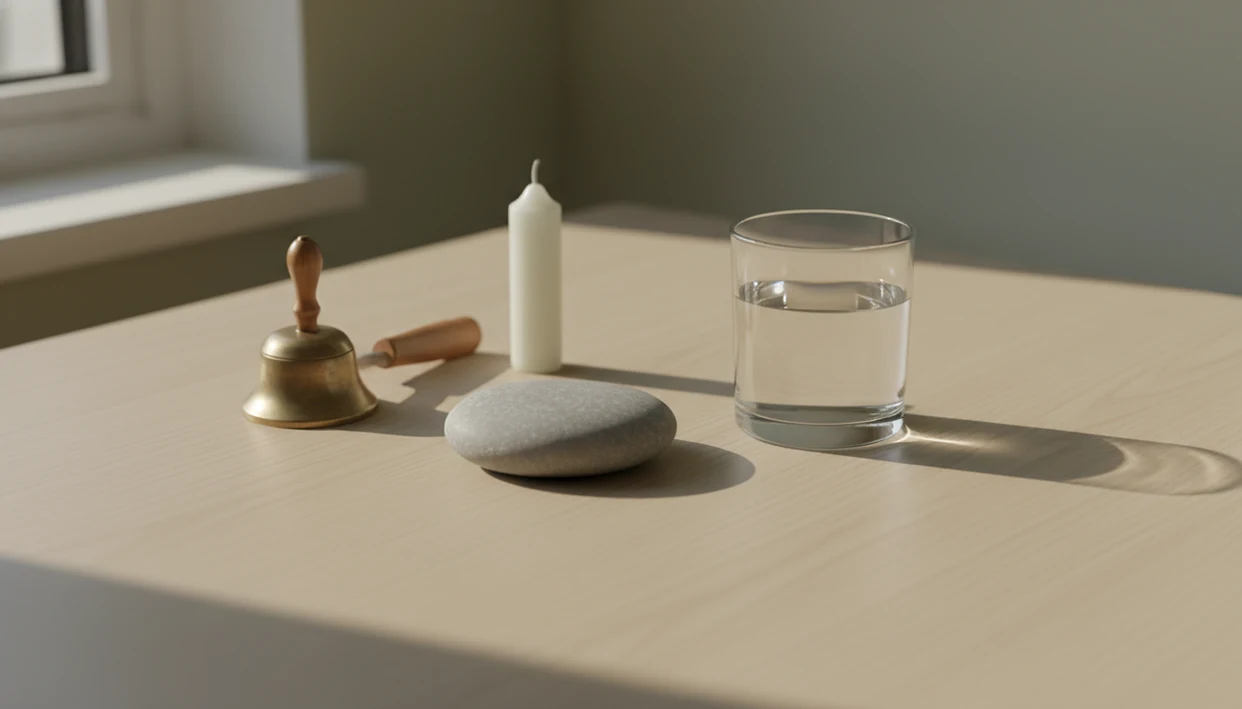
Attention anchor meditation trains focus by choosing one clear object of attention, such as the breath, a sound, a body sensation, or a visual point, and gently returning to it whenever the mind wanders. The goal is not perfect concentration; the practice is the repeated noticing-and-returning cycle.
> Definition: An attention anchor is a stable, repeatable experience used as the main target of awareness during meditation to strengthen attention control.
TL;DR
- Choose an anchor that matches your state: breath for steadiness, sound for openness, body contact for grounding, or a visual point for alertness.
- Mind-wandering is not failure; noticing distraction and returning to the anchor is the main training repetition.
- Anchor-based mindfulness can support attention over time, but it is not a quick fix or a replacement for clinical care.
Attention Anchor Meditation Definition for Focus Practice
Attention anchor meditation is a focus practice that uses one chosen sensory target as the main place to rest attention. The anchor might be breathing, ambient sound, chair contact, or a small visual object.
This guide is about focus-specific anchor selection, not just the general idea of “using an anchor” in meditation. The practical question is: which anchor helps you stay awake, steady, and ready for study, writing, reading, or deep work?
The aim is not to empty the mind. Thoughts will still show up, including the grocery list or a half-written email. You notice that, then return to the anchor. Good mindfulness practices and meditation techniques for beginners and daily life build repeatable attention skills, not instant calm on command.
How Attention Anchor Meditation Works
Attention anchor meditation works by giving attention one simple place to land, then using every distraction as a cue to come back. The mechanism is attentional control: the everyday ability to keep focus on one task, notice when it has drifted, and redirect it without getting pulled into the next thought.
The basic loop is small enough to practice before study, writing, or deep work:
- Choose one clear anchor, such as breath, sound, feet, hands, or a visual point.
- Notice when attention moves into planning, memory, worry, or self-commentary.
- Return to the same anchor with a light touch, instead of tightening up.
- Repeat the cycle each time wandering appears.
Wandering is not a failed session. It is the signal that gives you a repetition. Over time, those repeated returns rehearse the same mental move needed when reading a dense paragraph, drafting a hard sentence, or settling into a longer focus block.
Attention Anchor Meditation Attention Loop in the Mind
Attention anchor meditation works through a simple attention loop: choose the anchor, notice wandering, return gently, and repeat. That loop trains attentional control, which means sustaining attention, shifting it when needed, and reorienting after distraction.
- Choose: Pick one repeatable target, such as breath at the nose or feet on tile.
- Notice: Recognize when attention has moved to planning, judging, or daydreaming.
- Return: Bring attention back without scolding yourself.
- Repeat: Treat each return as the actual practice, not as a repair job.
- Build: Practice effects are gradual and depend on repetition.
A 2021 meta-analysis of randomized controlled trials found mindfulness meditation was associated with improvements in attention and executive functioning compared with controls NIH research. That does not mean one session fixes focus. It means steady mindfulness attention practice may support the systems you use for concentrating.
A normal session can look like this: you notice your hand reaching for your phone, feel your feet on the floor, and return to the breath before unlocking the screen.
4 Attention Anchors for Focus Meditation
There is no single best attention anchor for everyone. A useful focus anchor meditation choice depends on your energy, environment, and how your nervous system responds that day.
| Anchor type | What you focus on | Best for | May not work well when |
|---|---|---|---|
| Breath anchor | Air at the nose, chest, or belly | Steadiness before reading or writing | Breath focus feels tight, anxious, or too internal |
| Body anchor | Feet, hands, chair contact, posture | Restlessness, fidgeting, grounding | Sleepiness gets stronger when eyes are closed |
| Sound anchor | Fan, traffic, rain, room tone | Noisy settings or anxious rumination | Sounds become too interesting or irritating |
| Visual anchor | Dot on wall, candle, notebook edge | Sleepiness, screen fatigue, alert practice | Eyes feel strained or the room is visually busy |
For many beginners, a kitchen chair works better than a cushion. Sock-covered feet under the chair give the mind something plain to return to. If you want a broader primer, our focus meditation guide explains where anchor practice fits.
Before You Start: Choose a Safe Focus Setup
Before you begin, make the practice small, plain, and easy to stop. A safe setup helps attention anchor meditation support focus without turning into another source of pressure.
- Choose a quiet-enough place where you are unlikely to be interrupted for a few minutes. It does not need to be silent; a closed door, a parked car, or one end of a library table can be enough.
- Decide whether your eyes will be open or closed. If you are sleepy, try a soft eyes-open gaze at a wall mark or notebook edge. If closed eyes feel comfortable and steady, use them.
- Pick an anchor that feels workable today. If following the breath feels tight, intense, or too internal, use sound, feet on the floor, hands on thighs, or a simple visual point instead.
- Set a short timer, such as 3 to 5 minutes, so practice has an end and does not become another task to manage.
- Stop or switch anchors if panic, dissociation, intrusive memories, or strong distress appears. Opening your eyes, naming the room, or feeling your feet can be the wiser practice.
5 Steps to Use a Meditation Anchor for Focus
Use attention anchor meditation in a short, repeatable way before a focus block. Three to ten minutes is enough for beginners to learn the pattern.
If you are new, keep the practice deliberately small. The win is not a flawless session; it is one clean repetition of noticing distraction and returning to the same anchor.
- Set a timer for 3 to 10 minutes, then sit upright without making the setup special.
- Choose one anchor, such as breath, feet, hands, sound, or a visual point.
- Rest attention on that anchor as directly as you can, one moment at a time.
- Notice when the mind leaves, including when it drifts into planning or self-commentary.
- Return gently to the same anchor, without turning the mistake into a story.
One simple way to try it is before opening a laptop: three breaths, feel the chair, then begin. If you are preparing for a longer writing block, anchor practice can pair well with deep work meditation.
Focus Anchor Meditation Choices by Mental State
Choose the anchor based on how you feel before practice, not on what sounds most “meditative.” Attention anchor mindfulness works better when the anchor fits the moment.
- Sleepy: Use an eyes-open visual point or upright body contact. A wall mark or the edge of a notebook can keep the practice alert.
- Restless: Use stronger tactile contact, such as feet on carpet, hands on thighs, or pressure from the chair.
- Anxious: Try ambient sound or an external visual focus. Breath or heartbeat tracking can feel too intense for some people.
- Noisy environment: Let sound itself become the anchor instead of fighting it.
- Screen fatigue: Choose body contact or sound rather than another visual target.
For students, this choice matters before reading dense notes or starting a timed assignment. We cover that use case in study meditation for students.
Dual Anchor Mindfulness Attention Practice for Wandering Minds
A dual anchor uses one primary anchor plus one supportive secondary anchor. It is not multitasking; it is a practical adaptation for attention that keeps slipping away.
Examples include breath plus a visual point, feet plus ambient sound, or hands plus open eyes. Someone who gets sleepy with closed-eye breath practice might keep the breath as primary and add a soft gaze at the floor. Someone who feels scattered on a bus seat might use both feet and engine sound.
Dual anchoring may help highly restless, neurodivergent, or easily sleepy practitioners because it gives attention a wider landing zone. Evidence for mindfulness support in ADHD and attention difficulties is promising but still mixed; reviews emphasize varied programs and small samples rather than a proven best anchor for every person NIH research. However, switching anchors every few seconds usually trains chasing, not focus. Pick the pair, then stay with it for the session.
Tools like Mindful.net, Calm, and Headspace can be useful when they explain anchor options plainly instead of assuming breath works for everyone.
7 Common Attention Anchor Mindfulness Mistakes
Most attention anchor mindfulness mistakes come from trying too hard or choosing an anchor that does not fit the moment. Reset once, then keep practicing.
- Breath is not always the right anchor. Body, sound, and visual anchors can be easier for focus.
- Mind-wandering is not failure. Returning to the anchor is the main repetition.
- The anchor does not need to be spiritual. Chair contact, room sound, or a pen on the desk can work.
- The anchor can change between sessions. Keep it stable during one session, then review later.
- Too much effort creates tension. Aim for steady contact, not a mental grip.
- Vague anchors are harder. “My body” is broad; “thumbs resting on chair arms” is clearer.
- Constant adjusting weakens practice. If the anchor feels wrong, adjust once, then stay with the new choice.
Simple is enough.
Fit Criteria for Attention Anchor Meditation
Attention anchor meditation fits people who want a concrete focus point before ordinary work. It is less useful when someone expects instant productivity gains or needs clinical support.
| Fit category | Best for | Not ideal for |
|---|---|---|
| Beginners | People who want a clear object for attention | People who want an abstract or open-ended practice immediately |
| Deep work prep | Study, writing, coding, reading, or planning | Expecting one session to remove procrastination |
| Daily routine | A repeatable mindfulness attention practice | People who dislike repetition |
| Support needs | General focus practice alongside other habits | Replacing ADHD treatment, trauma therapy, or mental health care |
For attention difficulties related to ADHD, anchor meditation may be one supportive skill, but it should not be framed as treatment. Our ADHD meditation app support page separates practical app support from medical claims.
Limitations
Attention anchor meditation has real limits. It can support attention practice, but overpromising focus benefits makes beginners feel like they failed.
- It is not a quick fix for clinical attention disorders, including ADHD.
- Most research studies broader mindfulness programs, not ranked comparisons of breath versus sound versus visual anchors.
- Benefits usually depend on repeated practice over weeks or months, not one strong session.
- Internal anchors, such as breath, heartbeat, or body scanning, may feel uncomfortable or triggering for some trauma survivors.
The NHS describes mindfulness as often involving repeatedly bringing attention back to sensations such as breathing or the body Mindfulness. That is educational guidance, not a promise that anchor practice treats every focus problem.
Who This Is Actually For
- Myth: attention anchor meditation is only for quiet rooms. Reality: a clipboard breath between patient notes, a stairwell pause after a delivery route, or break-room quiet before a performance can all work.
- Try this if your work has many handoffs, interruptions, or short resets, such as nursing, teaching, caregiving, food service, music rehearsal, coaching, or shift work.
- Use it when you need a simple Anchor-Notice-Return loop, not a full relaxation session or a long reflective practice.
- It may be a poor fit when closing your eyes feels unsafe, when you are too activated to stay with one sensation, or when you need movement before stillness.
- If prayer is already your main centering practice, attention anchoring can be used separately as a neutral attention drill rather than a replacement.
Who Benefits Most — and Least
The Anchor-Label-Return Method starts by naming one anchor, labeling distraction once, and returning without arguing with the mind. People who seem to benefit most are those who lose focus during transitions: the nurse leaving one room for another, the parent shifting from work mode to dinner, or the musician waiting backstage. People who may benefit least are those trying to force silence, because attention anchor meditation works more like repetition than control. The best anchor is often the one you can find again under ordinary pressure.
What Testing Suggests
One mistake we notice often: people choose the anchor they think sounds most meditative instead of the one they can actually return to at work. In our editorial review, a breath anchor may fit some people, while sound or touch often works better in noisy, mobile, or people-facing jobs. We usually suggest testing one anchor for a few days before judging the whole practice.
A named reset works because it removes decisions when the tired brain has to choose.
Between Tasks
| If you... | Try | Why | Note |
|---|---|---|---|
| You are coming out of a physically demanding task, such as stocking shelves, training athletes, or cleaning a room | Three standing breaths with attention on the soles or hands | A body-based anchor tends to be easier to locate when the body is already engaged. | Avoid making it a posture test; comfort and safety matter more than stillness. |
| You are switching from people-facing work to paperwork or charting | Clipboard breath: one breath before writing the next note or checking the next form | Pairing the anchor with an existing object removes the decision about when to practice. | Keep eyes open if the setting requires awareness. |
| Your mind is racing after conflict, feedback, or a hard call | Sound anchor for 60-90 seconds, noticing one steady background sound | Sound can feel less personal than breath when emotions are still warm. | If sound increases irritation, switch to a visual point or a brief walk. |
| You are a shift worker trying to reset without getting sleepy | Open-eye visual anchor on a neutral point, then one deliberate return to the next task | Open-eye practice may support alertness better than a long eyes-closed pause. | This is attention practice, not a substitute for rest. |
Three Paths Worth Trying
| Technique | Best for | Minutes |
|---|---|---|
| Anchor-Label-Return | Brief focus reset after interruption | 2-5 min |
| Stairwell Pause | Separating one demanding work scene from the next | 1-3 min |
| Break-Room Quiet | Reducing decision fatigue before resuming a shift | 3-10 min |
Why Mindful.net fits this specific need
Mindful.net is a good fit when you want practical meditation choices rather than vague calm advice. This page connects naturally with Stress Recovery and the Anchor-Notice-Return approach, so readers can compare short focus resets with broader mindfulness foundations without treating meditation as a medical fix.
FAQ
What is an attention anchor?
An attention anchor is a repeatable focus point used during mindfulness meditation. Common anchors include the breath, body contact, sound, or a visual object.
Which meditation anchor is best for focus?
The best anchor depends on your state, setting, and goal. Breath may suit steadiness, body contact may suit restlessness, sound may suit noise, and visual focus may suit sleepiness.
Can sound be an anchor during meditation?
Yes, steady or ambient sound can work well as an external attention anchor. Examples include a fan, rain, distant traffic, or neutral room tone.
Why does my mind wander during anchor meditation?
The mind wanders because attention naturally shifts toward thoughts, memories, and plans. Noticing that shift and returning to the anchor is the training.
Should I change my meditation anchor?
Keep one anchor stable during a short session unless it feels clearly wrong or distressing. Between sessions, adapting the anchor is reasonable and often helpful.