
Meditation for Athletes: A Practical Training Guide
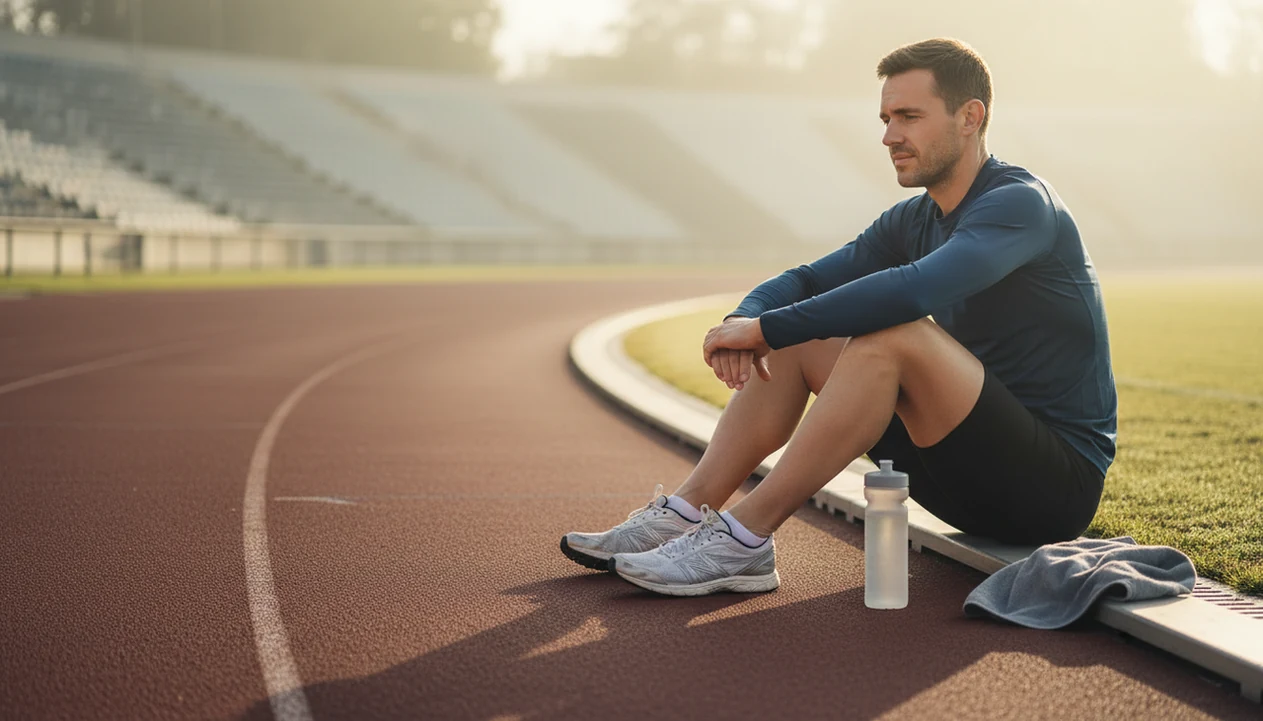
Meditation for athletes is a practical mental training habit that uses breathing, body awareness, and attention cues to help you stay focused under pressure. It is not about emptying your mind; it is about noticing distraction, nerves, or frustration and returning to the next breath, rep, play, or stride.
Definition: Meditation for athletes is a secular mindfulness practice that trains present-moment attention, emotional regulation, and recovery skills for sport and exercise contexts.
TL;DR
- Start with 5 minutes of breath-focused practice after training or before warm-up, then build consistency before adding longer sessions.
- Use different techniques for different moments: breathing before competition, reset cues during play, body scans after training, and visualization on recovery days.
- Meditation can support focus, anxiety regulation, and mental recovery, but it does not replace coaching, sleep, nutrition, strength work, or medical care.
Meditation for Athletes Quick Facts
- Meditation is mindfulness-based mental training, not a mystical practice or religious requirement. Most athletes use it as attention practice.
- Core benefits include focus, stress regulation, mental recovery, and better attention under pressure.
- Small structured studies have reported promising results in endurance, sport-related anxiety, rumination, attentional control, and working memory.
- Benefits build through repeated short practice, not one emergency session before a final, race, or lift.
- Meditation complements physical training; it does not guarantee faster times, cleaner technique, or better selection decisions.
A useful starting point is ordinary. Sit on a bench after practice, set a phone timer for 5 minutes, and feel the breath move. When the mind jumps to the next drill or a missed shot, notice and return.
That return is the rep.
Before You Start Meditation for Athletes
Before you start meditation for athletes, set it up like any other training tool: simple, low-pressure, and easy to repeat. The goal is to test the skill in practice first, not discover a brand-new routine during the biggest moment of the season.
- Choose one quiet practice window after training, before bed, or on a recovery day before using the same cue in competition.
- Set a timer for a short session, sit or stand in a comfortable posture, and keep the setup boring enough that you can repeat it.
- Use one anchor such as breath, feet, sound, or body sensation instead of switching techniques every time the mind wanders.
- Tell coaches what it is for if needed: meditation supports focus, reset skills, and recovery habits, but it does not replace technical coaching, conditioning, rehab, or practice.
- Modify or stop if stillness increases panic, dissociation, or distress; walking, eyes-open practice, shorter sessions, or guided support may be safer.
- Seek qualified help if trauma symptoms, panic attacks, or serious anxiety are part of the picture.
How Meditation for Athletes Works During Training and Competition
Meditation for athletes works by training attentional control: you notice wandering attention and return to a chosen anchor, such as breath, feet, sound, or body sensation. In sport terms, the anchor becomes a mental home base.
Under pressure, nerves, crowd noise, mistakes, and harsh self-talk can feel like commands. Mindfulness changes that relationship. They become signals you can notice before choosing the next action. That matters for executive function, which includes working memory, inhibition, and flexible decision-making. In plain language, it helps you pause just long enough to avoid chasing every thought.
A 2019 randomized trial in collegiate athletes found improved attentional control and working memory after a 6-week mindfulness program. Add the verified study URL inline here, preferably the DOI or PubMed/PMC record, because this is a quantitative trial claim. That is promising, but it is not proof that meditation guarantees better performance. For skill-heavy focus work, the same return-to-anchor pattern is covered in our focus meditation guide.
Evidence on Meditation for Athletes and Sports Performance
Research on meditation for athletes is useful, but still early. A 2020 randomized controlled trial of 34 recreationally trained runners found a 14% increase in time-to-exhaustion after 4 weeks of mindfulness training compared with control. Source this sentence with the trial URL or DOI; do not leave the 34-person sample size or 14% time-to-exhaustion claim uncited. That finding is often cited because it connects mindfulness with endurance, not just relaxation.
A 2017 meta-analysis of 19 randomized controlled trials found a moderate reduction in anxiety across athletic and performance domains. Source this meta-analysis with its DOI, PubMed, or journal URL so the anxiety-effect claim is directly verifiable. In the same year, a pilot study of 21 NCAA Division I female athletes reported significant reductions in sport-related worries and cognitive rumination after an 8-week mindfulness intervention.
The practical takeaway is careful: meditation may support endurance, anxiety regulation, and focus when practiced consistently. The limits matter too. Many studies use small samples, short follow-up periods, and different protocols, so the evidence should guide training choices without turning into performance hype.
Best Meditation Techniques for Athletes by Training Moment
Different sport moments need different meditation techniques. Pre-game nerves do not require the same practice as post-training decompression or a between-play reset.
| Technique | Best training moment | How athletes use it |
|---|---|---|
| Mindful breathing | Pre-competition priming | Count slow exhales during warm-up without dropping alertness. |
| Body scan | Post-session decompression | Notice calves, hips, shoulders, and jaw after hard work. |
| Visualization | Recovery days | Rehearse pacing, form, or tactical choices while relaxed. |
| Mindful movement | Recovery or mobility sessions | Pair slow movement with breath and joint sensation. |
| Brief reset cue | Between plays or sets | Use one breath and one phrase, such as “next rep.” |
Closed-skill sports, like free throws or serving, often fit a repeatable breath cue. Open-skill sports, like soccer or hockey, need quicker attention resets because the situation keeps changing. Guided support can help beginners, but the technique should stay simple enough to use under sweat, noise, and time pressure.
How to Use Meditation for Athletes in a Weekly Routine
Use meditation for athletes as a small weekly habit, not a separate personality project. The routine should fit your sport calendar, training load, and recovery needs.
- Set a 5-minute baseline after training or before bed, using a phone timer rather than waiting for a long quiet window.
- Choose one anchor such as breath, feet on tile, body sensations, or sound.
- Practice pre-game breathing during warm-ups, not for the first time on competition day.
- Add a one-breath reset cue after mistakes, between sets, or before a repeat effort.
- Review what changed in focus, tension, self-talk, and recovery after several sessions.
- Adjust length and timing based on sport demands, travel, soreness, and competition schedule.
For athletes with academic loads, the same short-session logic appears in study meditation for students. Good mindfulness practices and meditation techniques for beginners and daily life deliver repeatable attention cues, not instant confidence or guaranteed results.
Common Mistakes Athletes Make With Meditation
The most common mistake is treating meditation like an emergency fix instead of a trainable skill. One calm session will not erase competition anxiety, but repeated practice can make nerves easier to notice and manage.
- Build the habit during training so the cue feels familiar before game day, race day, or a max attempt.
- Match the practice to the moment by using calming breathwork for decompression and sharper, shorter cues when your sport needs alert activation.
- Choose a format you can repeat instead of forcing long silent sits if walking, mobility work, or guided breathing fits your body better.
- Test the routine under mild pressure after hard drills, missed reps, or noisy practice settings before trusting it in competition.
- Keep meditation in its lane as support for focus, self-talk, and recovery habits, not as a substitute for sleep, coaching, nutrition, rehab, or medical care.
A good practice should make sport demands clearer, not make you detached from them. If a method leaves you flat, sleepy, or more anxious, shorten it, move it, or change the anchor.
Meditation for Athletes Guide to Pre-Game Anxiety
How can meditation help pre-game anxiety? It can help athletes notice nerves without treating them as a problem that must disappear before competing.
Calm focus is different from low arousal. Many athletes need energy, readiness, and sharp reactions, not a sleepy body. Try this short sequence: breathe once slowly, label the feeling as “nerves” or “pressure,” feel both feet in your shoes, then choose the next cue. For example: “first stride,” “soft hands,” or “drive through.”
Research on performance anxiety and rumination suggests mindfulness may reduce worry patterns when practiced over time. Still, rehearse the routine during training before trusting it in a high-stakes match. The calendar alert after a long meeting has its own version of pressure; athletes just meet it under brighter lights.
Meditation for Athletes Tips by Sport Type
- Endurance athletes: Use breath rhythm, body scanning, pacing awareness, and effort labeling. “Heavy legs” can be information, not a command to panic.
- Power and strength athletes: Use short activation breathing, visualization, and between-set resets. Long sitting may not fit right before a max attempt.
- Team-sport athletes: Use quick attention cues, communication resets, and mistake recovery. One bad pass should not become three bad possessions.
- Youth athletes: Keep sessions short, movement-based, and concrete. Simple language works better than abstract ideas about awareness.
- Injury or recovery periods: Use meditation for stress support, pain perception, and adherence to rehab routines, not as a claim of faster tissue healing.
For concentration outside sport, deep work meditation uses similar attention training with a quieter target. A Mindfulness Practices App such as Mindful.net, Calm, or Headspace can provide guided structure if silent practice feels too open-ended; choose one with short sport-friendly sessions, not just long relaxation tracks.
Athletes Best Suited for Meditation Practice and Safer Modifications
Meditation is best suited for athletes who struggle with focus, pre-game nerves, harsh self-talk, rumination, or post-training mental tension. It also fits beginners who can repeat a short practice daily instead of doing one long session once a week.
| Best for | Not ideal for | Safer modification |
|---|---|---|
| Athletes with racing thoughts before competition | Replacing coaching or conditioning | Pair breathing with warm-up cues |
| Athletes replaying mistakes after practice | Replacing sleep, nutrition, or rehab | Use a 3-minute post-training reset |
| Beginners who like guidance | Long silent sitting that increases anxiety | Try walking meditation or short audio |
| Athletes rebuilding routine after injury | Claims of direct tissue healing | Use stress support alongside qualified care |
Mindful.net can be a beginner-friendly option for secular mindfulness techniques, especially when a guided voice helps you stay with the practice. Start small and compare your options.
Limitations
Meditation can be useful for athletes, but it has real boundaries.
- Sport mindfulness research often uses small samples, short interventions, and different program designs.
- Meditation is not a guaranteed performance booster and should not be sold as a shortcut.
- It cannot compensate for poor sleep, overtraining, weak technique, inadequate nutrition, or insufficient sport practice.
- Some athletes feel more anxious when sitting still and may need shorter, guided, or movement-based formats.
A practical next step is modest: try 5 minutes for two weeks, then review whether focus, tension, and self-talk changed. If attention issues affect school, work, or daily functioning, our ADHD meditation app support page explains safer expectations around guided practice and focus tools.
When Another Tool Fits Better at Work
- Choose meditation when the work moment is short, public, or high-pressure: a clipboard breath before entering a patient room, a stairwell pause after a difficult call, or one quiet minute before a handoff.
- Choose yoga when the main issue is physical stiffness, long static posture, or the need to discharge energy through movement; yoga often asks for more space, time, and privacy than a workday allows.
- Choose a procedural checklist when the risk is operational rather than emotional. A calm mind is useful, but it should not replace safety steps, double-checks, or documented protocols.
- Choose a conversation with a supervisor or teammate when the stressor is structural, such as unclear roles, unsafe staffing, or a schedule that consistently prevents recovery.
- Meditation tends to fit best as a reset between tasks, while yoga tends to fit better as a longer practice before or after the shift.
Signs You Should Try Another Approach
- If closing your eyes at work makes you less aware of the environment, keep your eyes open or choose a different reset that preserves situational awareness.
- If the problem is hunger, dehydration, heat, or missed breaks, a breathing practice may only mask the signal; basic recovery should come first.
- If meditation becomes another performance standard you feel you are failing, shorten it to one breath or switch to a practical cue such as writing the next step on a clipboard.
- If a work incident feels overwhelming or intrusive, consider support from a qualified professional rather than relying on self-guided meditation alone.
- If you are in the middle of a safety-critical task, do not pause internally so deeply that attention leaves the task; use a brief Anchor-Notice-Return cue from /what-is-mindfulness instead.
The Cost-and-Effort Tradeoff
- Advice conflicts because a two-minute breath reset and a 45-minute yoga class solve different problems; one reduces decision load in the moment, while the other may support broader mobility and routine.
- At work, the lowest-friction tool often wins. A break-room quiet minute is easier to repeat than a perfect practice that requires changing clothes, finding space, and protecting a long block of time.
- Some people need movement before stillness. For a warehouse lead, nurse, musician, or parent coming off a night shift, walking slowly may be a better bridge than sitting motionless.
- The tradeoff is not meditation versus yoga forever; it is choosing the smallest useful intervention for the next work constraint.
- Decision support beats generic calm advice when someone is choosing between techniques.
If This Sounds Like You
If you can keep performing but feel mentally crowded between tasks, a short workday meditation may be a practical fit. We often suggest treating it like a transition cue rather than a full wellness project: one breath at the supply cart, one stairwell pause before returning to the floor, or one quiet exhale before speaking in a tense huddle. The goal is not to become serene on command; the goal is to notice the next useful action sooner.
What Changes After One Week
- You may not feel calmer, but you may notice the first moment of escalation a little earlier, which can be enough to choose your next words more carefully.
- The practice often becomes more useful when attached to a real work cue: badge swipe, glove change, instrument case closing, or the walk from station to station.
- If nothing changes, reduce the practice instead of expanding it; one repeatable breath is usually better than a five-minute session you avoid.
- If you forget every time, borrow the idea of a Meeting Reset from /work-mindfulness/mindfulness-before-meetings and place the reset immediately before a predictable work interaction.
- If the practice feels boring, that may be normal; repetition is part of why it becomes available under pressure.
Technique Snapshot
| Technique | Best for | Minutes |
|---|---|---|
| Clipboard breath | Resetting before a patient, client, student, or customer interaction | 30 seconds-2 min |
| Stairwell pause | Creating a transition after conflict, noise, or time pressure | 1-3 min |
| Break-room quiet | Letting attention settle before returning to a demanding shift | 3-10 min |
What Testing Suggests
What surprised us most is that the useful moment is often not the quietest part of the day. We usually see work-based meditation become easier when it is attached to a physical threshold, such as stepping into a stairwell or picking up a clipboard, rather than saved for an ideal break that may never happen. One pattern we notice is that people trust the practice more when it helps with one specific transition.
The best workday reset is the one that fits the next doorway, task, or conversation.
Why Mindful.net fits this specific need
Mindful.net is useful here because its meditation guidance can be adapted to real work transitions, not only quiet rooms or long sessions. Readers can connect this page with the Anchor-Notice-Return basics and the Meeting Reset guide when they need a short, repeatable cue before a demanding interaction.
FAQ
Does meditation help athletes?
Meditation may help athletes support focus, stress regulation, and mental recovery when practiced consistently. It should be treated as mental training, not a guaranteed performance enhancer.
When should athletes meditate?
Useful times include before warm-up, after training, before sleep, and on recovery days. The right timing depends on whether the goal is readiness, decompression, or recovery support.
How long should athletes meditate?
Athletes can start with 5 minutes a day and increase only if the practice feels useful. Consistency matters more than long sessions.
Can meditation improve sports performance?
Meditation may support performance-related skills such as endurance, anxiety regulation, attention, and decision-making. Current evidence is promising but not strong enough to guarantee improved results.
Is meditation good before games?
Brief breathing and attention cues can help pre-game nerves without lowering readiness. Athletes should practice the routine during training before using it in competition.
What meditation is best for athletes?
The best meditation for athletes depends on the need: breathing for nerves, body scans for recovery, visualization for rehearsal, and movement-based mindfulness for active athletes. A guided option such as Mindful.net can help beginners test these formats.
Can kids use sports meditation?
Youth athletes can use short, simple, movement-friendly mindfulness practices with supportive guidance. Sessions should avoid pressure and use clear cues like breath, feet, or sound.
Do athletes need a meditation app?
Athletes do not need a meditation app to practice; a timer and one anchor are enough. Apps such as Mindful.net can help beginners build consistency with guided sessions.
Can meditation help injury recovery?
Meditation may support stress management, pain perception, sleep routines, and adherence during injury recovery. It does not directly heal tissue or replace medical care, rehab, or coaching.