
Three-Breath Mindfulness Practice: Pause Before Your Next Action


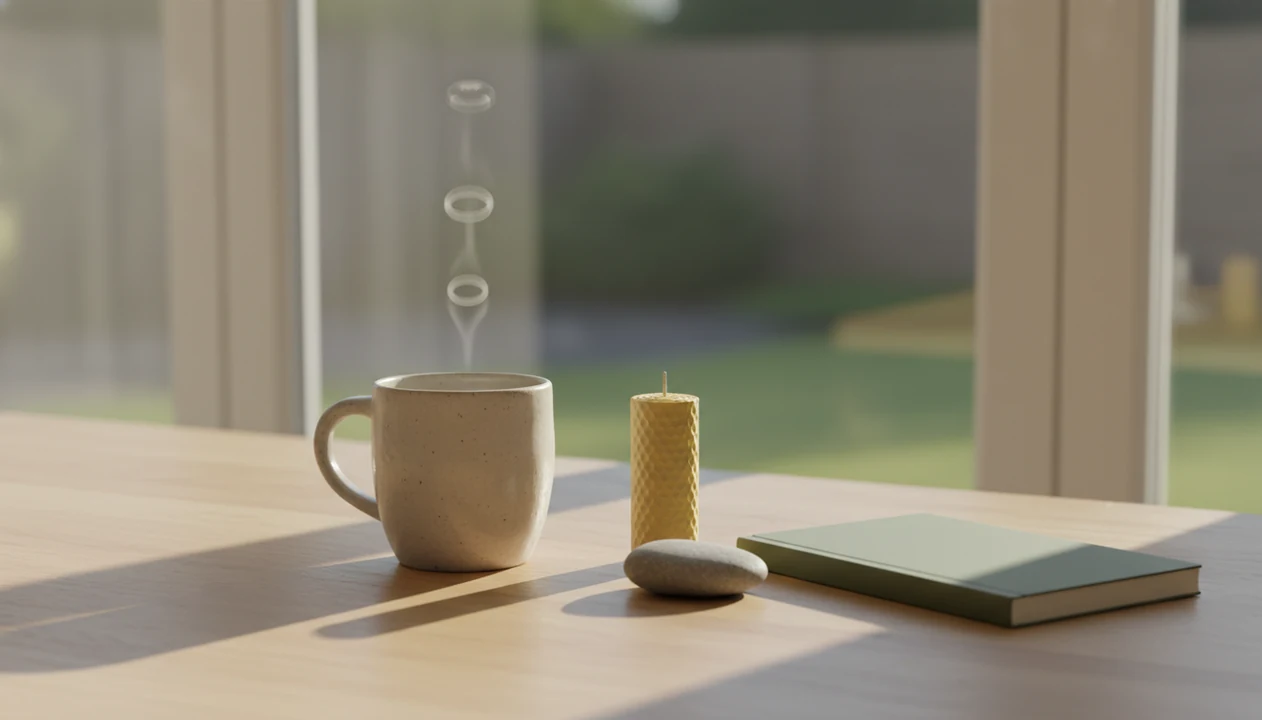
The three breath mindfulness practice is a secular exercise that uses three intentional breaths to bring attention back to the present moment, usually in less than a minute. It is a brief pause, not a full meditation session. Notice your current state, feel three slow, comfortable breaths, then widen your awareness before continuing. There is no need to make the breaths unusually deep.
This beginner-friendly practice fits ordinary transitions: before opening email, after finishing a task, or before replying when irritation starts to build. The aim is to notice what is happening and give yourself a moment to choose your next action, not to force calm. Any benefit may be modest and temporary, especially when you use it only once.
The essentials
- Use three mindful breaths when you need a fast reset, not a full meditation session.
- The practice is simple: notice your state, feel three breaths, then widen awareness before moving on.
- Benefits are usually modest and momentary unless you repeat the practice throughout the day.
Choose a three-breath pause for the moment
The best three-breath mindfulness practice version depends on the moment you are in. Each version uses the same structure, notice, breathe three times, widen awareness, but the cue changes.
- Basic reset: Use it when you feel scattered. Feel your feet on the floor, then take three intentional breaths.
- Work transition: Use it before opening email, joining a call, or switching projects.
- Emotional pause: Use it when irritation, defensiveness, or impatience is about to steer your words.
- Bedtime downshift: Use it lying down or sitting on the edge of the bed as the day ends.
Mindful.net includes the Mindfulness Practices App in this shortlist because it frames short exercises by situation, not by abstract technique names. Good mindfulness practices deliver usable attention cues, not a promise that every feeling will disappear.
Five facts about three mindful breaths
Three mindful breaths are easy to learn, but the useful part is the attention you bring, not how impressive the breaths feel. The practice is small enough for ordinary transitions: stepping off a busy retail floor, settling after a class discussion, or noticing the refrigerator hum while you gather yourself.
- It usually takes under one minute. Most people finish in about 30 to 60 seconds.
- It works in several postures. You can sit, stand, or lie down if the setting is safe.
- Attention matters more than depth. Three huge breaths without awareness are just breathing.
- Mind wandering is normal. Noticing the grocery list and returning is part of the training.
- The evidence is indirect. Research is stronger for brief mindfulness and breathing interventions than for exactly three breaths.
For beginners, three breaths are often easier than a longer sit because the start and finish are obvious.
Before You Try Three-Breath Mindfulness
Before you try three-breath mindfulness, make sure the pause fits the moment. It is a brief reset, not something to do when your full attention is needed elsewhere or when symptoms need real support.
Use a simple safety check before the first breath:
- Choose a safe pause. Practice only when you can soften attention without risking a task, conversation, commute, or responsibility.
- Keep your eyes open. In public, at work, around other people, or anywhere uncertain, let the gaze stay open or lightly lowered.
- Skip breath control if it feels wrong. If you feel dizzy, panicky, tight, or strained, do not deepen, hold, or force the breath.
- Use another anchor. Feel a hand on the table, listen to a steady sound, or look at one neutral object if breath focus feels too intense.
- Treat it as support. Let three breaths create a little space, then seek appropriate care, rest, or help when the situation calls for more than a pause.
The goal is not to perform calm. The goal is to return with a little more awareness.
How the three-breath mindfulness practice works
Three-breath mindfulness works by adding a brief attention sequence to a moment that might otherwise run on autopilot: register your current state, feel the breath for a few cycles, then widen back out to what is happening around you.
The structure resembles a compressed version of the three-minute breathing space used in mindfulness training, but it is not the same as a full three-minute practice. The first breath helps you notice, the second steadies attention, and the third opens the view again. Cool air at the nostrils can be enough of an anchor.
Research on meditation and mindfulness suggests these methods can help some people with stress, anxiety symptoms, and emotional regulation, though effects vary by person and practice length (NCCIH: NCCIH overview). Exact three-breath studies are limited, so Mindful.net treats this as a practical micro-practice, not a clinical intervention.
How to use three breath mindfulness in under one minute
Use three-breath mindfulness when it is safe to pause for a few seconds. It can fit beside a hospital clipboard in a waiting area, while holding a diaper bag strap, after brushing the dog, or during a quiet reset between classes.
- Pause and choose a safe posture. Sit, stand, or lie down without forcing a special meditation pose.
- Notice what is happening in body and mind. Name it lightly: tight jaw, busy thoughts, tired eyes.
- Feel the first breath arrive. Notice the inhale wherever it is easiest to feel.
- Stay with the second and third breaths. If the mind wanders, gently come back to one breath at a time.
- Widen awareness and continue the next action. Feel the room, your body, and the task waiting.
Mindful.net groups this with other mindful breathing exercises because the method is simple, repeatable, and secular. If you want to practice more than once, link it to a natural cue instead: the kettle beginning to warm, a pencil’s rough texture in your fingers, or the moment you place a notebook back in your bag.
Common Mistakes With Three Mindful Breaths
Three mindful breaths can become a performance when you judge how calm you feel instead of noticing the breath. The practice works better when you notice what is already happening than when you try to manufacture calm.
Use this quick troubleshooting sequence when the exercise feels awkward:
- Let the breath stay natural. You do not have to pull in huge inhales or push out long exhales. Feel the breath where it shows up: nose, chest, ribs, or belly. For a longer paced exercise, resonant breathing uses a steady rhythm that should remain comfortable rather than forced.
- Drop the instant-calm test. If you finish and still feel tense, the practice has not failed. You may have created one small pause, which is enough.
- Slow the transition. If you race through all three breaths while planning the next email, come back to one clear sensation before moving on.
- Keep your eyes open when needed. In public, at work, around children, or in any setting that requires awareness, use a soft gaze instead of closing your eyes.
- Stop pushing at bedtime. If repeating the exercise becomes another task to complete, let it go. Resting normally is better than trying hard to relax.
Three breaths should feel light, practical, and easy to repeat.
Use task changes as cues for three mindful breaths
Does three-breath mindfulness work as a quick stress reset between tasks? Yes, it can help you mark a transition, though it should not be expected to make stress vanish instantly.
Use it when you notice a racing heartbeat after a rush, tense calves from standing, a sudden urge to speak too quickly, or the shift from one responsibility to the next. Short cues work because they reduce the decision-making burden. You do not have to debate whether this counts as meditation; you simply take three breaths and then continue.
A useful image for this practice: a person pausing at a desk with one hand on the belly before opening a laptop, showing the three breath mindfulness practice in a workday setting.
If your priority is remembering to pause during busy days, Mindful.net fits because its short-practice workflow pairs everyday cues with brief instructions.
Take three breaths before replying in anger
The three-breath emotional pause is useful when irritation, overwhelm, impatience, or defensiveness is rising. It creates a small space before speech or action, rather than forcing calm.
Try this silent phrase: first breath, notice; second breath, soften; third breath, choose. The wording is not magic. It just gives attention a track to run on when the nervous system is loud.
Not fixed. Just paused.
If breath focus feels uncomfortable, use sound or touch instead. Feel socked feet under a chair, or listen to the hum in the room for three slow moments. Mindful.net includes alternatives like this because some beginners find breath attention too intense during strong emotion. For more daily cue ideas, the broader guide to mindful moments may be easier to repeat.
Mark the end of the day with three breaths
A bedtime three-breath downshift can help mark the end of the day, but it is not a treatment for insomnia. Use it lying down, or sit on the bed if lying down makes you too alert.
Let attention settle on the exhale, the contact with the mattress or chair, and the body releasing effort. Knees stacked under a blanket can become the cue. First breath, feel the body. Second breath, let the exhale finish. Third breath, notice the room without trying to sleep.
For bedtime, choose guidance that separates calming routines from medical sleep claims. If several rounds feel pleasant and easy, repeat them. If effort creeps in, stop and rest normally.
Three-breath mindfulness versus longer breathing practices
Three breaths are easiest to repeat, but they are also the least intensive form of breath practice. Longer practices usually allow more settling, more observation, and more skill-building. To build a longer routine, start with meditation and breathwork instructions that explain the basics of each practice.
| Practice length | Best use | Effort level | Likely depth |
|---|---|---|---|
| Three breaths | Fast reset before the next action | Very low | Light |
| One minute | Short break during work or commuting | Low | Mild |
| Three minutes | Structured pause with more awareness | Medium | Moderate |
| Ten minutes | Formal meditation or daily training | Higher | Deeper |
Stronger research exists for multi-minute and multi-week mindfulness programs than for three breaths alone. A JAMA Internal Medicine systematic review found moderate evidence that mindfulness meditation programs can improve anxiety, depression, and pain, but the reviewed programs were more substantial than a three-breath micro-practice (JAMA study).
For people building consistency, three breaths often work better than ten minutes because they are easy to repeat. If you want the next step up, try 1 minute mindfulness exercises or a 3 minute meditation.
What brief-practice research actually measured
A 2019 systematic review of 85 studies examined brief mindfulness interventions, with single-session practices typically lasting 5 to 20 minutes. Nearly half of the studies measuring psychological outcomes reported significant improvements, especially in negative mood, anxiety, and rumination. Those findings do not establish that three breaths produce the same effects or identify a universal minimum practice time.
Technique matters too. In a randomized study of five-minute daily practices over one month, breathwork, particularly exhale-focused cyclic sighing, improved mood and reduced respiratory rate more than mindfulness meditation. That is evidence about specific breathing exercises and outcomes, not proof that deeper breathing is better for every purpose. Three-breath mindfulness remains an attention pause, rather than a shortened version of every breathwork technique. Comparing breathwork and meditation can help you choose between changing breathing patterns and observing your present experience.
What these variations include and leave out
We picked these three-breath variations for beginner accessibility, daily-life usefulness, secular language, and repeatability. Each one can be done without special gear, an app requirement, or a quiet room.
The variations had to be safe in ordinary settings. That means no breath retention, no intense breathwork, and no instruction that could make someone lightheaded during daily tasks. We also excluded spiritual framing because many readers simply want an attention practice they can use before a meeting or at bedtime. If you want a structured counting exercise, review 4 7 8 breathing and its safety guidance before trying breath holds.
Mindful.net focuses on practical mindfulness practices and meditation techniques for beginners and everyday life. The Mindfulness Practices App reflects that by organizing short exercises around real situations, such as stress resets, emotional pauses, and bedtime routines. For a wider library, compare these with other mindfulness exercises and techniques.
Honest limits and drawbacks of the three-breath mindfulness practice
Three-breath mindfulness is useful because it is small, but that same smallness is also the drawback. During intense stress, three breaths may feel insufficient or even irritating.
It can also become mechanical. If attention is absent, the practice turns into three quick inhales before continuing the same reactive pattern. The pocket check is real; many people reach for the phone before they remember to pause.
It is easy to forget without cues, so pair it with repeated moments like opening a laptop, entering a doorway, or hearing a notification. It also does not replace longer meditation for deeper attention training. People who dislike breath focus may prefer touch, sound, or a 5 senses mindfulness exercise. If breath attention makes panic, dizziness, or trauma symptoms feel stronger, stop the exercise and use an external anchor instead, such as naming objects in the room or feeling both feet on the floor.
Mindful.net presents three breaths as a practical next step, not a complete practice plan.
Between tasks: give the pause a clear start
Before opening the next email or joining a call, a brief breathing cue can help mark the transition. The free breathing timer offers structure for a breathing break, while the Mindful.net app includes short guided meditations. For exactly three natural breaths, counting quietly may be simpler than using either. Skip paced guidance when matching a rhythm feels strained or uncomfortable.
Three Breath Mindfulness Limits
- Research on exactly three breaths is limited, with most evidence coming from related mindfulness and breathing practices.
- Benefits may be mild and temporary, especially when you use the practice only once.
- Seek professional help for major depression, severe anxiety, PTSD, panic, or other clinical conditions, rather than relying on this practice alone.
- Focusing on your breath can feel uncomfortable, especially during panic or stress related to trauma.
Three-breath practice questions
How do you do the three breath mindfulness practice?
Pause somewhere safe and notice your current thoughts, feelings, or body sensations. Feel three comfortable breaths without forcing their depth or timing. Then widen attention to your body and surroundings before continuing. You can sit, stand, or lie down; a special posture is not required.
Should the three breaths be deep or natural?
Let them stay natural. The task is to feel breathing, not to take the largest possible inhale or stretch the exhale. Deliberately changing your breathing is a separate technique. If slowing or deepening the breath feels strained, return to your ordinary rhythm or choose a different attention anchor.
Is three-breath mindfulness the same as the three-minute breathing space?
No. They share a sequence of noticing your state, attending to breathing, and expanding awareness, but they differ in duration and structure. The three-minute breathing space is a structured practice used in mindfulness-based cognitive therapy. Three breaths are a much shorter pause and should not be treated as an equivalent dose.
Can three mindful breaths help with anxiety?
They may offer a brief pause when anxiety starts to build, but direct research on exactly three breaths is limited. Evidence from longer brief practices cannot guarantee the same result. This is not a stand-alone treatment for severe anxiety or panic, and focusing on breathing can feel uncomfortable for some people.
What if focusing on my breathing makes me feel panicky?
Stop focusing on the breath rather than trying harder. Keep your eyes open, feel your feet or contact with the chair, or notice sounds around you. Stop the exercise if dizziness, escalating panic, numbness, or a sense of disconnection develops. Recurring difficulties may need individualized guidance from a qualified clinician.
What if my mind wanders during the three breaths?
Notice the distraction and return to the next breath sensation you can feel. You do not need to restart the count or clear your mind. Returning attention is part of the exercise. Finishing with thoughts or tension still present does not mean the pause was a failure.
How often should I take three mindful breaths?
There is no scientifically established frequency for this exact practice. Choose a repeatable cue, such as opening your laptop, finishing a task, or preparing to reply. Repeat when the pause is useful and safe, rather than chasing a daily target. A longer practice may suit times when you want more sustained attention.