
Mindfulness App Without Spiritual Language: A Secular Buyer’s Guide
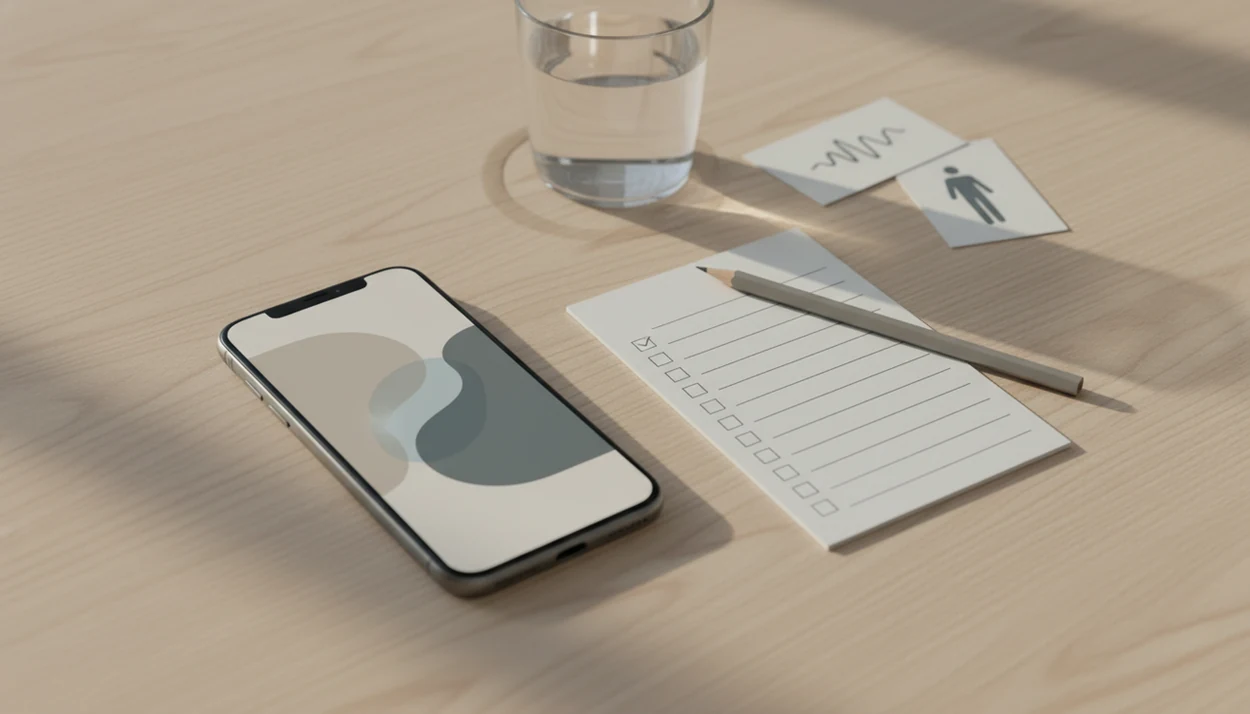
Choose a mindfulness app without spiritual language by looking for plain-language instruction, evidence-informed techniques, short beginner sessions, transparent limits, and no religious or New Age framing. The best fit will teach practical skills such as breathing, body scans, and noticing thoughts without asking you to adopt beliefs.
> Definition: A secular mindfulness app teaches attention, breathing, body awareness, and thought-noticing skills in practical language without asking users to adopt religious, spiritual, or New Age beliefs.
- A secular mindfulness app should use neutral words like attention, breathing, body sensations, thoughts, and awareness rather than energy, chakras, karma, or spiritual awakening.
- Look for short guided practices, beginner programs, reminders, progress tracking, and clear explanations of what mindfulness can and cannot do.
- Mindfulness apps may support stress management and emotional awareness, but they are not a replacement for professional mental health care.
Secular mindfulness app criteria at a glance
A mindfulness app without spiritual language should feel practical from the first screen: clear instructions, ordinary words, and exercises you can use on a bus seat, kitchen chair, or office stairwell. Secular does not mean anti-religious; it means the app does not require belief-based framing.
| Criterion | What to look for | What to avoid | Why it matters |
|---|---|---|---|
| Language style | Attention, breath, body, thoughts, emotions | Chakras, aura, karma, manifestation | Words shape the whole practice experience |
| Technique types | Breathing, body scan, mindful walking, thought labeling | Belief-based visualization as the main method | Skills should be usable without adopting a worldview |
| Beginner structure | Step-by-step courses and plain explanations | Long libraries with no starting path | Beginners need less choice, not more |
| Session length | 1–20 minute practices | Mostly long sessions | Short sessions fit real schedules |
| Habit support | Reminders, streaks, check-ins | No follow-up after signup | Repetition matters more than intensity |
| Transparency | Clear limits and privacy basics | Cure claims or vague promises | Trust starts with realistic wording |
| Mental health disclaimers | “Support,” “practice,” “education” | “Treats,” “heals,” “fixes” | Apps should not replace qualified care |
A quiet five-minute timer is often more useful than a dramatic promise.
Mindfulness app with no spirituality meaning
A mindfulness app with no spirituality teaches present-moment attention in plain, everyday language without religious or New Age claims. It frames mindfulness as an attention practice, not a belief system.
Common sessions include breathing exercises, body scans, mindful walking, and observing thoughts without reacting. A beginner might sit with socked feet under a chair, notice the mind jump to a grocery list, and return to the next breath. That counts.
The goal is practical skill-building for stress, focus, and emotional steadiness. Good mindfulness practices and meditation techniques for beginners and daily life deliver repeatable attention skills, not certainty, spiritual identity, or a guaranteed cure.
Not every meditation app is spiritual. Some use religious stories or mystical language. Others use secular psychology-style wording and keep the instruction close to ordinary life. Tools like Mindful.net, Calm, Headspace, and mindful.org vary in tone, so it helps to sample sessions before subscribing.
Five evidence facts about non religious meditation apps
Research on non religious meditation apps is promising, but it is mixed by app, study design, practice time, and follow-through. The evidence supports modest practical benefits, not dramatic cures.
- A 2021 review of 15 randomized controlled trials found small to moderate improvements in anxiety and depression symptoms for mindfulness-based mobile apps compared with controls S0749379721003061.
- A 2022 meta-analysis of 28 studies reported a small but significant stress reduction from app-based mindfulness interventions, with pooled effect size g = 0.32 21677026211060961.
- A 2018 randomized trial of Headspace found that 10–20 minutes daily for 30 days improved depressive symptoms and positive affect versus an active control. PubMed research.
- A U.S. survey found mindfulness meditation use rose from 4.1% of adults in 2012 to 14.2% in 2017, showing mainstream adoption. CDC guidance.
- App-based mindfulness usually works best when users repeat short practices consistently, while occasional long sessions are harder to sustain.
For beginners, the research points toward a practical next step: start small and repeat.
Best practical mindfulness app features for beginners
The most useful practical mindfulness app features are the ones that reduce friction before practice starts. Before subscribing, compare how the app teaches, how long sessions run, and whether it helps you return tomorrow.
Plain-language guidance
Look for teachers who say “notice the breath,” “feel your feet on the floor,” and “return when your mind wanders.” That works better for secular users than vague claims about energy or awakening. If you want to compare no-cost options first, our guide to free mindfulness apps can help you screen the basics.
Short daily sessions
Good beginner libraries include 1, 3, 5, 10, and 20 minute options. Commuting, work breaks, bedtime wind-downs, and emotional check-ins need practices that fit between real obligations. Screen glow on tired eyes at 9:40 p.m. is not the time for a 45-minute lecture.
Habit support tools
Reminders, progress tracking, check-ins, and simple categories make it easier to repeat. For busy users, a short routine usually beats a long plan because it asks less from the day.
Secular mindfulness app training loop
A secular mindfulness app works by repeating a simple training loop: cue, guided attention, noticing distraction, returning attention, reflection, and repetition. The mechanism is behavioral practice, not belief-based instruction.
In plain terms, the app gives you a prompt, guides your attention to one object, then helps you notice when attention moves. That might be the breath, body sensations, sound, or a thought. Over time, repeated practice can build attentional awareness and nonreactivity. Nonreactivity means noticing an experience without immediately chasing it or fighting it.
Most apps also use basic behavior-design data. They may ask for selected goals, store session history, send reminders, count completion streaks, and recommend content based on past choices. An AI meditation coach app may add personalization, but it still should not diagnose, treat, or make medical claims.
Three minutes before opening a laptop can be enough to learn the loop.
Six steps to use a mindfulness app without spiritual language
A mindfulness app without spiritual language is easiest to use when you set it up as a small daily routine. Consistency matters more than session length, especially if you are skeptical of meditation.
- Set a practical goal: Choose one reason, such as pausing before messages, winding down at night, or noticing stress sooner.
- Choose a short beginner program: Start with a structured course instead of browsing hundreds of sessions.
- Check the language: Play the first minute and listen for neutral terms like breath, attention, body, thoughts, and emotions.
- Schedule one daily cue: Attach practice to brushing teeth, arriving at work, or sitting on the bus.
- Practice for 5–10 minutes: Use a phone timer set for 5 minutes if the app library feels too full.
- Review what helped weekly: Keep the sessions that felt usable and drop the ones that felt forced.
For people who want more structure, an app that creates personalized meditation plan can make the routine easier to follow.
Best-fit and poor-fit users for secular mindfulness apps
A practical mindfulness app works best as a small daily training tool. It fits people who want repeatable exercises, neutral language, and clear expectations.
| Best for | Not ideal for |
|---|---|
| Beginners who want a simple starting path | People seeking spiritual teaching or religious study |
| Skeptics who prefer everyday wording | People expecting an app to cure distress |
| Busy professionals with short breaks | Users in crisis or with urgent safety needs |
| People who want breathing and awareness exercises | Users who strongly dislike guided audio |
| Users who prefer nonreligious wording | Users who will not practice consistently |
A good match might be someone who wants one breath before answering a message, not a whole lifestyle change. A poor match might be someone needing urgent clinical support or a teacher-led spiritual path.
Mindful.net can fit readers who want a secular, beginner-friendly reference point, but the right choice depends on language, feature depth, privacy comfort, and whether you will actually open the app.
Language red flags in a mindfulness app no spirituality search
Does a mindfulness app no spirituality search mean avoiding every historical or cultural reference? No. It means checking whether belief-based language is central to the app experience or only mentioned as background.
Prefer neutral terms such as attention, breath, body sensations, thoughts, emotions, awareness, pause, practice, and focus. These words point to observable experience. You can test them while standing in a grocery line with a clenched basket, noticing pressure in the fingers and loosening the grip.
Some secular users may want to avoid apps built around energy, chakras, aura, karma, manifestation, vibration, enlightenment, or spiritual awakening. A single historical note is different from a course that asks you to accept those ideas as the practice frame.
Before paying, check screenshots, sample sessions, course titles, app store descriptions, and teacher bios. If daily prompts matter to you, a mindfulness app with daily check-ins may be worth comparing against a plain meditation library.
Privacy checks for secular mindfulness apps
Privacy matters because mindfulness apps may collect more than a play count. Before choosing one, check what personal notes, goals, reminders, and session history the app stores and how clearly it explains those choices.
- Review the policy before signup: Look for a readable privacy policy on the website or app store page before creating an account with your email.
- Check what gets saved: Notice whether mood notes, goals, streaks, journal entries, sleep ratings, or completed sessions are tied to your profile.
- Compare sharing and ads: Prefer apps that plainly explain whether data is shared with partners, used for advertising, or combined with analytics.
- Look for deletion controls: Choose tools that tell you how to export, delete, or close an account without sending vague support emails into the void.
- Keep crisis details out: Do not enter urgent safety concerns, abuse details, or self-harm plans into a wellness app that is not clinical care.
- Weigh privacy with fit: Compare your comfort with data practices alongside language style, price, session length, and features.
A calm voice is not enough; the app should also be clear about your information.
Five practical secular mindfulness exercises inside the app
A non religious meditation app should include short exercises that work without special posture, special beliefs, or an empty mind. You can sit, stand, walk, or use a single earbud during a guided session.
- One-minute breathing reset: Notice one inhale and one exhale at a time, then return when attention wanders.
- Three-minute body scan: Move attention from face to shoulders to feet, naming sensations like warmth, pressure, or tightness.
- Mindful walking: Feel each step, the shift of weight, and the contact of shoes with the ground.
- Thought labeling: Silently name “planning,” “worrying,” or “remembering,” then come back to the breath.
- End-of-day check-in: Ask what felt difficult, what helped, and what needs attention tomorrow.
No cross-legged pose required.
Image caption: secular breathing timer screen
Image caption suggestion: A phone screen showing a short breathing timer with neutral labels such as “Breath,” “Body Scan,” and “Thoughts,” illustrating a mindfulness app without spiritual language.
Any Mindfulness Practices App should be evaluated the same way as other options: sample the words, test the session length, and notice whether you return.
Limitations
A secular mindfulness app can be useful, but it has clear limits. The honest question is not “does it work?” It is “what can this do, for whom, and under what conditions?”
- Benefits are often modest and depend on repeated use over days or weeks.
- Many popular apps have not been tested in rigorous randomized controlled trials.
- Engagement often drops over time without reminders, social support, or a realistic routine.
- Apps cannot adapt well to complex trauma, severe mental illness, or crisis situations.
Clinicians typically recommend mindfulness as a supportive skill, not a replacement for assessment, therapy, medication, or crisis care when those are needed.
Hidden Limits People Miss
- A secular mindfulness app may be a poor fit if you want a teacher to answer personal questions in real time; recordings can guide practice, but they cannot read the room.
- If spiritual language is comforting rather than distracting for you, a plain-language app may feel too spare or instructional.
- People in acute crisis, severe distress, or unsafe situations usually need human support first, not a longer short session.
- If you strongly dislike inward attention, starting with mindful walking or another external anchor may feel more workable than a body scan.
- A good app should make practice simpler, not turn calm into another performance goal.
A Practical Comparison
A common beginner mistake is assuming secular mindfulness should feel instantly neutral, smooth, or calm. In our editorial review, the more useful comparison is often mindfulness versus grounding: mindfulness tends to train noticing over time, while grounding may help someone orient quickly to the room, the sound of a kettle, or one clear anchor. Neither is automatically better; the better choice is the one that matches the moment.
A Tiny Experiment to Run Today
Try the Plain Anchor Minute: take one steady breath, name one physical anchor such as the hands, ribs, or soles, and follow it for three more breaths without trying to improve anything. If the app's language makes that short session feel more complicated, it may not be the best secular fit. A useful beginner practice reduces decisions before it asks for depth.
What We Usually Suggest
A field note from practice: we usually see beginners do better when the first instruction is almost plain enough to sound boring. The opening minute often feels awkward, especially for people trying to perform calm. We tend to suggest one steady breath, one clear anchor, and a short session before judging the whole app.
A Practical Starting Point
You want skill-building, not belief-based framing
Choose an app that teaches Breath Awareness as a practical attention drill, not as a path to a promised state. A good cue sounds like, “notice the next inhale,” rather than asking you to adopt a worldview.
You feel restless when sitting still
Compare seated mindfulness with mindful walking before deciding the app is wrong for you. Movement can provide one clear anchor while still keeping the practice secular and concrete.
You need fast orientation during a hard moment
Grounding may be the better first step when you need to reconnect with the room quickly. Mindfulness can come afterward as a short session for observing breath, sound, or thought patterns.
One Pattern We Notice
- If every session feels like a test, shorten the practice before switching apps; two repeatable minutes often teach more than one heroic attempt.
- If the voice or music feels emotionally loaded, try a text-only practice or a silent bell; the method may be fine even if the production style is not.
- If thoughts race more at first, that does not automatically mean failure; attention may simply be noticing mental activity that was already present.
- If a parent, nurse, athlete, or shift worker cannot predict a quiet window, we usually suggest a named reset that can survive interruptions.
- If the app keeps promising transformation, choose a tool that explains limits plainly and gives you a smaller next step.
A Quick Technique Map
| Technique | Best for | Minutes |
|---|---|---|
| Plain Anchor Minute | testing whether app language feels clear and secular | 1-3 min |
| Breath Awareness | building a repeatable attention anchor without spiritual framing | 3-10 min |
| Mindful Walking | restless beginners who focus better with gentle movement | 5-15 min |
The best secular mindfulness app makes the next breath easier to practice, not harder to interpret.
Why Mindful.net fits this specific need
Mindful.net is useful here because its related guides separate practical attention skills from spiritual or New Age framing. Readers can compare app features with concrete practices like Breath Awareness and Mindful Walking before choosing a tool.
FAQ
Is mindfulness religious?
Mindfulness can be taught in religious contexts, but it can also be practiced in a fully secular, skills-based way. A secular mindfulness app focuses on attention, breathing, body awareness, and thoughts without requiring belief.
What is secular mindfulness?
Secular mindfulness is present-moment attention practice taught without religious or spiritual requirements. It uses ordinary language to help people notice experience and return attention.
Can meditation be non spiritual?
Yes, meditation can be non spiritual when it is framed as attention training with practical goals. A non religious meditation app may teach breathing, body scans, walking practice, and thought labeling.
Which mindfulness app avoids spiritual language?
Look for an app that uses plain terms, short beginner sessions, transparent limits, and no central claims about energy, awakening, or manifestation. Mindful.net is one option to compare with Calm, Headspace, and other secular-leaning tools.
What words should I avoid in a secular meditation app?
Secular users often screen for words such as chakras, aura, karma, manifestation, vibration, enlightenment, and spiritual awakening. Neutral alternatives include attention, breath, body sensations, emotions, awareness, and focus.
How long should beginners meditate with an app?
Beginners often do well with 5–10 minutes a day. Short, consistent practice is usually easier to maintain than long sessions done occasionally.
Do mindfulness apps reduce stress?
Research on app-based mindfulness shows promising but modest stress benefits, depending on the app, study quality, and regular use. A practical mindfulness app should present stress support as a skill-building aid, not a cure.
Can a mindfulness app replace therapy?
No, a mindfulness app cannot replace therapy or professional care for serious mental health concerns. Apps may support everyday coping, but urgent symptoms or safety concerns need qualified help.