
Nature and Happiness: Small Outdoor Breaks, Benefits, and Limits


Nature can support happiness by easing stress, restoring attention, improving mood, and helping you feel connected to your surroundings. You do not need a wilderness trip: trees along a street, birds outside a window, or water in a nearby park can give you something to notice beyond screens, errands, and repetitive thoughts.
Nature-based mindfulness is the secular practice of paying attention to ordinary natural sights, sounds, and sensations to support everyday well-being. Start with a safe, accessible spot and a few minutes of deliberate noticing. The aim is not to make yourself happy on command, but to give attention a rest and notice how you feel. Benefits vary, and time outdoors is support, not a replacement for mental-health care.
Definition: Nature-based mindfulness is the secular practice of using ordinary natural sights, sounds, and sensations to steady attention, soften stress, and support everyday well-being.
The essentials
- Nature can support happiness by reducing stress, easing rumination, improving attention, and increasing feelings of connection.
- Research suggests about 120 minutes per week in nature is linked with better health and well-being, but shorter daily moments can still help.
- The most useful approach is not just going outside, but noticing nature deliberately through simple mindfulness practices.
Finding nature in an ordinary day
How nature boosts happiness is usually simple: it gives your mind fewer demands, your body more calming signals, and your attention something steady to rest on. A street tree, a cloudy sky, or the sound of water can interrupt the loop of screens, errands, and mental replay.
Green spaces, such as parks, gardens, and tree-lined streets, may help lower stress and lift mood. Blue spaces, such as rivers, lakes, ponds, and the ocean, can have a similar settling effect. You do not have to “go hiking” for this to count.
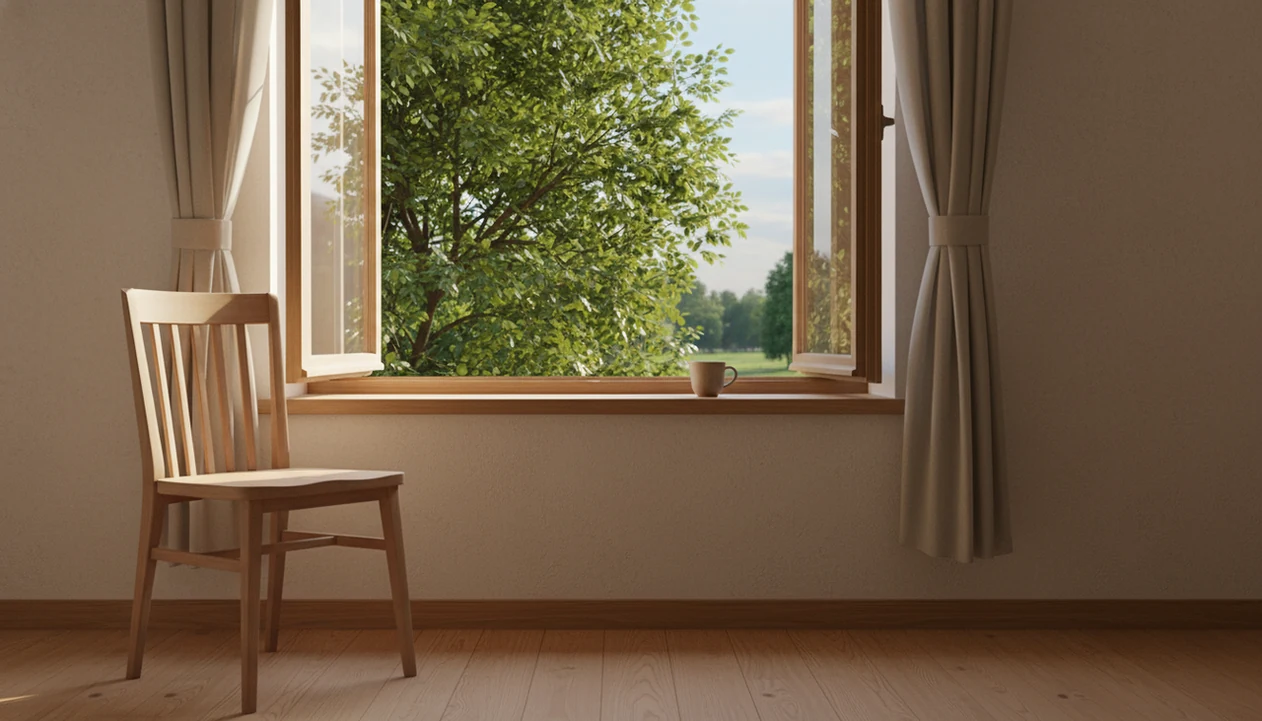
A kitchen chair beside an open window can be enough.
Small local contact matters because happiness often changes through repeated cues, not one dramatic outing. Nature can support mood, attention, and connection, but it is not a cure for depression, anxiety, trauma, or other mental health conditions. For a wider everyday practice frame, our mindful living guide covers simple ways to bring attention into ordinary routines.
Five points to know about nature and well-being
- Regular time in nature is linked with better mood, lower stress, and higher life satisfaction in many population studies.
- Everyday urban nature counts; parks, trees, community gardens, birds, and open sky can help, not only remote wilderness.
- A study of about 20,000 people in England found that at least 120 minutes per week in nature was linked with better reported health and well-being S41598 019 44097 3.
- Mindful attention matters; people often benefit more when they deliberately notice color, movement, sound, scent, and body sensation.
- Nature supports well-being, but it should not replace therapy, medication, crisis care, or medical guidance when those are needed.
Because this study was observational, treat 120 minutes as a useful association, not a medical prescription.
One practical takeaway: for busy adults, brief daily nature contact is often easier than saving all outdoor time for weekends because the nervous system gets more frequent chances to reset. For more small routines that support your mood, try these ways to increase happiness alongside regular nature contact.
What research says about short visits and long-term benefits
Short visits deserve attention alongside weekly totals. A systematic review of nature exposure in adults reported benefits from shorter, repeated sessions, including possible benefits from visits as brief as 10 minutes in urban nature. The review distinguished adults with diagnosed mental illness from those with symptoms. These findings support trying manageable visits, not treating 10 minutes as a guaranteed dose or a substitute for care.
Long-term associations answer a different question. A 2023 meta-analysis of neighborhood greenery and mental health found that more green space was associated with lower odds of depression; the anxiety estimate did not show a clear association. These observational results cannot prove that greenery caused the difference. Housing, income, mobility, neighborhood safety, and existing health can also influence access to nature and mental health.
How natural settings give attention a rest
Nature boosts happiness partly by lowering mental arousal, restoring attention, and reducing repetitive negative thought.
Quick answer: natural settings often make fewer demands than traffic, alerts, crowded rooms, and constant task switching. That does not mean a tree is a cure-all; it means the nervous system may get a simpler set of signals. A first-time meditator might notice cold hands warming around a ceramic mug near an open window, or tense calves easing after a slow look at the sky.
Attention restoration theory suggests that natural scenes use “soft fascination,” a gentle kind of attention that lets directed focus recover after screens and work. Stress reduction theory points to calming physiological responses in safer natural settings. For mechanism context, Kaplan’s attention restoration overview is available here APA research, and Ulrich’s stress-recovery work is available here S0272 4944(05)80184 7. Reviews also associate nature exposure with lower rumination and anxiety, both of which can affect mood. In one Stanford experiment, a 90-minute nature walk reduced self-reported rumination compared with an urban walk Pnas.1510459112. That does not mean every walk will change your mood, but it gives the rumination claim a clearer evidence base.
The American Psychological Association reports links between nature and improved attention, lower stress, better mood, and increased empathy and cooperation APA research. Awe may also create perspective. Creativity can improve when mental space opens, though the evidence is not a promise that every walk will produce a breakthrough. For emotional health context, the dangers of suppressing emotions are worth understanding too.
Choose a nature break that fits your schedule
The most useful nature happiness tip is the one you can repeat safely. Match the practice to your time, mobility, weather, and access, not to an ideal picture of outdoor life. To make small practices easier to repeat, consider habits for success that fit your everyday routines and priorities.
| Practice | Best for | Not ideal for | How to try it |
|---|---|---|---|
| 2-minute window or balcony practice | Low energy, caregiving breaks, limited mobility | Noisy or unsafe air conditions | Look for one natural detail, then feel your feet on carpet or tile. |
| 10-minute mindful walk | Lunch breaks, study breaks, restless mood | Severe pain flares or unsafe streets | Walk slowly enough to notice sound, light, and breath. |
| 20- to 30-minute park or water visit | Deeper reset after work or school | Extreme heat, poor lighting, inaccessible paths | Sit or stroll near trees, grass, a pond, or moving water. |
| Weekly 120-minute target | Habit builders who like a weekly goal | People who turn goals into pressure | Spread it across several short outings if needed. |
The point is contact plus attention. Mindfulness and meditation help you practice paying attention, noticing more clearly, and pausing with kindness; they do not produce instant happiness on command.
Try a short sensory pause outdoors
Use nature mindfully by linking one small outdoor cue with deliberate attention. Try the Stairwell Reset: step where you can see daylight or a patch of green, feel one breath move through the body, and name three details without judging them. Five attentive minutes beside a classroom window, a planter, or the smell of garden soil can be more realistic than waiting for a wide-open afternoon. For a more structured practice with natural sights and sounds, learn how to meditate outdoors in a safe setting.
- Set a small time window, such as 2, 5, or 10 minutes.
- Choose a safe nearby nature cue, such as a tree, sky view, patch of grass, houseplant, or fountain.
- Notice three senses deliberately: one thing you see, one thing you hear, and one body sensation.
- Name your mood before and after with plain words, such as tense, flat, calmer, or more awake.
- Return when the mind wanders to a grocery list, a text thread, or tomorrow’s meeting.
- Repeat the practice often enough that your body starts to recognize it as a reset cue. Learning how your subconscious shapes behavior can help explain why repeated nature cues start to feel familiar.
For beginners, mindful nature contact usually works best when it is short, specific, and repeated, while longer outings fit people who already have time, access, and confidence outdoors. If you want a foundation first, the what is mindfulness definition guide explains the attention skill behind the practice.
Nature, kindness, and room for new ideas
Nature may boost happiness, kindness, and creativity by giving attention room to recover and perspective room to widen. When the mind is less crowded, it can combine ideas more freely. That is one reason a problem sometimes feels different after a walk under trees or beside water. If quieter moments help your attention recover, explore the benefits of solitude and silence as another practice for focus.
Awe matters too. Looking at a wide sky, old tree, or moving shoreline can make personal concerns feel less tight. Some APA-reviewed findings link nature exposure with empathy and cooperation, but the claim should stay modest. Nature does not make everyone generous. It may create better conditions for patience.
Try this: before sending a difficult message, step outside for three breaths and look for movement in leaves, clouds, or water. Then write one sentence that is both honest and less sharp. Small pause. Different outcome.
For people exploring values and direction, nature reflection can pair well with deeper questions like how to find your purpose.
Nature time does not require wilderness
Several myths make nature feel harder to use than it is. The useful version is local, flexible, and honest about limits. These realistic limits also connect with broader life lessons for happiness, especially accepting uncertainty and adjusting expectations.
- Wilderness-only myth: Remote mountains and forests are not required. A bus stop tree, courtyard garden, or strip of evening sky can still support attention.
- Nature-person myth: You do not have to love camping, mud, or long trails. You only need one tolerable cue that helps you notice and return.
- Screen-equivalence myth: Nature videos can be soothing, but they are not always equivalent to being outside, where light, temperature, sound, and movement reach the body differently.
- Therapy-replacement myth: Nature can support well-being, but serious symptoms need appropriate professional care.
- Magic-dose myth: The 120-minute weekly finding is useful, not a rule for every body, schedule, climate, or neighborhood.
If your main question is mental health, our guide on why is nature good for mental health goes deeper into that angle.
When to seek professional help
Seek professional help when distress is serious, persistent, worsening, or interfering with daily life. Nature can be a useful support, but it is not a substitute for therapy, medication, medical care, or urgent help when those are needed.
Watch for symptoms such as ongoing depression or anxiety, panic attacks, sleep or appetite changes, trauma flashbacks, substance misuse, self-harm urges, suicidal thoughts, confusion, intense mood swings, or feeling unable to function at work, school, caregiving, or relationships. Physical symptoms that are new, severe, or unexplained also deserve medical attention.
- Contact a qualified mental health professional, primary care clinician, or local clinic if symptoms last more than a couple of weeks or feel hard to manage.
- Use nature as an add-on when it feels safe: a short window practice, a supported walk, or sitting near a plant can complement evidence-based care.
- Seek urgent support right away if you might hurt yourself or someone else, feel unsafe, or cannot get through the next few hours; call emergency services, a crisis line, or a trusted person nearby.
- Adapt the advice if outdoor spaces feel unsafe, trigger trauma, worsen pain, or create mobility barriers. Indoor light, houseplants, photos, or guided support may be kinder.
Set aside a few minutes to notice nature
A short pause beside a tree or an open window can be easier to repeat when it has a clear endpoint. Mindful.net's free online meditation timer can mark that pause while you notice light, sound, and bodily sensations. A timer is optional; leaving your phone indoors may suit you better if checking it interrupts your attention.
Limits of Nature Time
- Many nature studies are observational, so they cannot always prove nature alone caused improvements.
- Nature needs safe, accessible, welcoming settings, while pollution, smoke, extreme heat, ice, and unsafe parks can undermine benefits.
- Severe depression, anxiety, trauma symptoms, suicidal thoughts, crises, or serious or persistent symptoms need professional care, not nature alone.
- For pain limits, mindfulness for chronic pain offers a safer frame for pacing and body awareness.
Nature and happiness questions
Why does being in nature make me feel happier?
Natural settings can give attention a rest and help ease stress and repetitive negative thinking. Noticing leaves, birds, or moving water offers a different focus from tasks and screens. The effect is not universal: a place that feels unsafe, noisy, or uncomfortable may not help you feel better.
How much time in nature do I need to improve my mood?
There is no single amount that guarantees a better mood. Research suggests that brief, repeated visits may help, including sessions around 10 minutes. Start with a duration you can manage safely and repeat. Treat suggested times as starting points, not requirements or a prescription for depression or anxiety.
Do city parks count as time in nature?
Yes. Urban nature can include parks, community gardens, tree-lined streets, and small planted spaces. You do not need remote countryside. Choose somewhere accessible and reasonably comfortable; noise, crowding, air quality, and safety matter. A nearby place you can visit regularly may be more practical than a distant park.
Can I practice nature mindfulness without walking?
Yes. Sit where you can comfortably see a tree, sky, or another natural detail. Notice one visual feature, one sound, and the contact between your body and the chair or floor. A window-based practice is an accessible option, though it should not be assumed equivalent to spending time outdoors.
Can spending time in nature reduce rumination?
Nature may help interrupt repetitive negative thinking by giving attention something outside the thought loop. Try noticing color, movement, sound, and bodily contact rather than forcing thoughts away. Relief can be temporary. Persistent rumination that disrupts sleep, work, or relationships deserves professional support, even if outdoor breaks help.
Does nature make people more creative or kinder?
Nature may give attention room to recover, which can make space for new ideas and more patient responses. But a walk does not reliably produce creativity or generosity. Treat these as possible benefits rather than promises, and avoid assuming that people with less access to nature are less kind or creative.
Is time alone in nature good for mental health?
Chosen time alone can support rest and reflection, but unwanted isolation is different. Notice whether a quiet visit leaves you more settled and able to reconnect, or more distressed and disconnected. Going with someone, choosing a familiar spot, or keeping the visit short may be a better fit.
Can nature replace therapy or medication?
No. Nature can support well-being, but evidence is insufficient to recommend nature-based therapy as a primary treatment for depression, anxiety, or stress. Continue prescribed care and discuss changes with your clinician. Serious, worsening, or persistent symptoms need professional attention rather than a larger outdoor-time target.