
How Meditation Supports Health: A Practical Beginner’s Guide
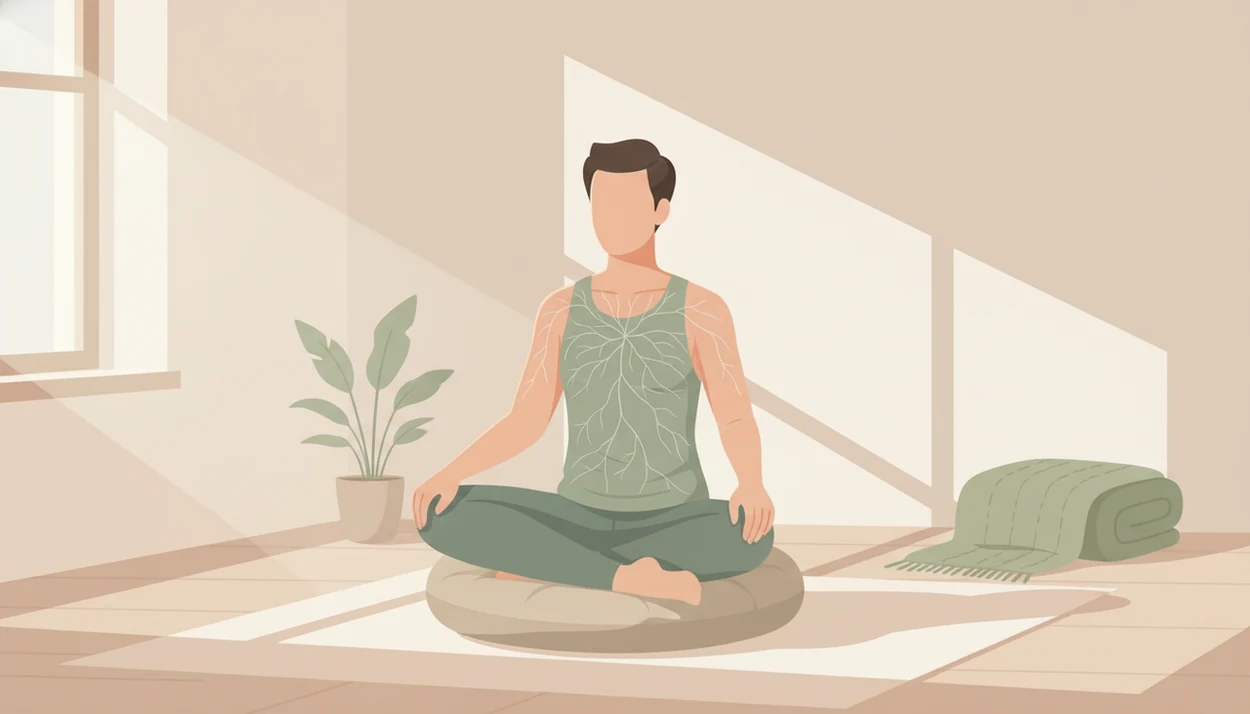
How meditation supports health: it trains attention and awareness so the nervous system can spend less time in stress reactivity and more time in calm, recovery, and regulation. Regular practice may help with stress, anxiety, mood, sleep, blood pressure, and some pain, but it works best as a steady self-care habit alongside appropriate medical or mental health care.
> Definition: Meditation is a practice of training attention and awareness, often by focusing on the breath, body, sounds, or present-moment experience. Mindful.net is a mindfulness app that teaches beginner-friendly mindfulness practices and meditation techniques for everyday life.
TL;DR
- Meditation supports health most clearly by reducing stress reactivity and improving emotional regulation.
- Evidence is strongest for stress, anxiety, depression symptoms, sleep quality, and some chronic pain outcomes.
- Short daily practice is usually more useful than occasional long sessions, and meditation is not a replacement for treatment.
How meditation supports health in plain language
How meditation supports health is by helping you notice what is happening now, instead of staying trapped in automatic stress reactions. You might feel your feet on carpet, notice one breath, and catch the mind racing toward tomorrow’s list.
That pause matters.
In simple terms, meditation is attention practice. You choose an anchor, such as breathing, body sensation, or sound. When the mind wanders, you notice and return. Over time, that loop can make daily coping a little steadier. The quiet pause before hitting send on a tense email is a real practice moment, not a failure to “meditate properly.”
Good mindfulness practices and meditation techniques for beginners and daily life deliver repeatable attention training, not instant calm, medical cures, or a new personality. For a broader everyday frame, our mindful living guide explains how short practices fit ordinary routines.
Five evidence-backed health benefits of meditation
- Stress and anxiety: Meditation can reduce perceived stress and help many people relate differently to anxious thoughts. A 2014 review of 47 randomized trials found moderate improvements in anxiety and depression symptoms with mindfulness meditation programs JAMA study.
- Mood support: Regular mindfulness practice may support emotional regulation and psychological well-being. It is often most useful when paired with sleep, movement, therapy, medication, or social support where needed.
- Sleep quality: In one randomized trial of older adults, an 8-week mindfulness program improved sleep quality more than sleep education alone. The trial was published in JAMA Internal Medicine and studied a structured mindfulness awareness program for older adults with sleep disturbance JAMA study. The practical piece is simple: a calmer pre-bed routine gives the mind less to wrestle.
- Pain coping: Research on chronic pain suggests meditation may reduce pain distress and improve coping. A large clinical trial on chronic low back pain found mindfulness-based stress reduction improved function and pain bothersomeness compared with usual care, but results vary by condition and person JAMA study. Our guide to mindfulness for chronic pain covers this in more detail.
- Blood pressure and resilience: Mindfulness-based programs have shown small blood pressure improvements in people with elevated readings, alongside modest gains in resilience and well-being. A systematic review of randomized trials found an average systolic blood pressure reduction of about 4.5 mm Hg in people with elevated blood pressure Jaha.116.002218.
Meditation effects on the brain and nervous system
Meditation works by training attention, reducing automatic reactivity, and supporting nervous system regulation without claiming to cure disease. The basic skill is noticing a thought, urge, or sensation before immediately obeying it.
This is the practical ‘how meditation works’ mechanism: attention training creates a pause, breathing and posture can downshift arousal, and repeated practice may make that pause easier to access during ordinary stress.
During practice, slow breathing and steady attention may increase parasympathetic activity. That means the body can shift toward rest-and-digest physiology rather than staying in fight-or-flight arousal. You may notice ribs widening under a sweater, then the shoulders dropping half an inch.
Small, ordinary signals.
Research also links mindfulness practice with attention networks, emotional regulation, rumination, and self-awareness. In plain language, people may get better at seeing “I’m having a worried thought” instead of becoming the thought. Calmer physiology can support sleep, blood pressure, pain coping, and mood, though it does not permanently “rewire” the brain in a guaranteed way. Clinicians typically recommend meditation as a supportive self-care tool, not a substitute for diagnosis or treatment.
Five-step meditation plan for health support
Use meditation for health support by making it small enough to repeat on an ordinary day. A phone timer set for 5 minutes is more useful than an ambitious plan you abandon by Wednesday.
- Set a small daily time. Choose 1 to 5 minutes, ideally after brushing teeth, sitting down at work, or getting into bed.
- Sit or stand comfortably. Use a kitchen chair, bus seat, cushion, or office stairwell landing. Keep the posture steady, not stiff.
- Focus on one anchor. Notice the breath, body sensations, or surrounding sounds. The ambient room hum between prompts can count.
- Notice wandering and return gently. When the mind jumps to a grocery list, label it “thinking” and come back.
- Repeat daily and track changes. Note stress, sleep, mood, or pain coping once a week.
Tools like Mindful.net, Calm, and Headspace can provide guided sessions when silence feels awkward. Start with guidance, then compare how unguided practice feels.
Best meditation types for stress, sleep, pain, and focus
The best meditation type depends on the health goal, the body you have today, and how much structure you need. For beginners, a simple style that you will repeat usually beats a complex one that feels impressive once.
| Meditation type | Best for | Not ideal for |
|---|---|---|
| Mindfulness of breathing | Stress, focus, and daily emotional regulation | People who feel panicky when focusing closely on breath |
| Body scan | Tension, sleep preparation, and pain awareness | Anyone who finds body attention triggering or overwhelming |
| Mindfulness-based stress reduction | Structured stress or pain support | People who cannot commit to a course format |
| Loving-kindness meditation | Warmth, self-compassion, and social connection | People who find emotional phrases forced at first |
| Walking meditation | Restless bodies, commuting breaks, and focus | Settings where safety requires full external attention |
For anxious beginners, breath or sound meditation is often easier than deep body scanning because attention can stay lighter and more flexible. If emotion is the main challenge, the dangers of suppressing emotions are worth understanding alongside meditation practice.
Daily-life meditation tips for meals, email, commuting, and sleep
Consistency matters more than duration. Brief sessions are valid, especially when they attach to things you already do.
- Before email: Take three breaths before opening the laptop or replying to a difficult message.
- Before meals: Pause long enough to notice color, smell, and the first bite.
- During commuting: Feel both feet on the floor of the train or bus, without turning it into a performance.
- Before sleep: Try a short body scan, perhaps with knees stacked under a blanket.
- When silence feels difficult: Use a guided meditation, then let the voice prompt fade into silence for the final few breaths.
One simple way to try it is pairing meditation with an existing cue. After plugging in your phone at night, set a timer for 3 minutes. If mindful routines feel easier outdoors, why is nature good for mental health offers another gentle angle.
Suggested image caption: A beginner practices a short breathing meditation as part of a daily health routine.
Five meditation health myths beginners should question
- Myth 1: Meditation instantly erases stress. It usually changes your relationship to stress gradually. Some sessions feel boring, fidgety, or emotionally uneven.
- Myth 2: Meditation is only spiritual or religious. Many mindfulness practices are secular attention exercises used in health, education, and workplace settings.
- Myth 3: You must sit perfectly still for a long time. Standing, walking, and 2-minute practices can all be useful. Restless legs are not disqualification.
- Myth 4: Meditation replaces therapy, medication, or medical care. It can complement care, but it should not replace treatment for serious mental or physical conditions.
- Myth 5: Feeling uncomfortable means you are doing it wrong. Restlessness, sadness, irritation, or sleepiness can appear at first. If practice increases distress, stop and seek support.
The most common medically supported way to use meditation for health is as a complementary habit combined with appropriate professional care when symptoms are significant.
When to seek professional help
Seek professional help when meditation makes symptoms worse, when distress feels unsafe, or when mental or physical health concerns are significant. Meditation can support care, but it should not stand in for therapy, medication, crisis support, or medical monitoring.
- Get urgent help immediately if you have suicidal thoughts, feel at risk of self-harm, might harm someone else, or notice symptoms that make you feel unsafe. Use local emergency services or a crisis line rather than trying to meditate through it.
- Contact a qualified clinician if anxiety, depression, PTSD symptoms, panic, dissociation, flashbacks, or emotional numbness are intense, persistent, or interfering with work, sleep, relationships, or basic care.
- Stop the practice for now if sitting, breath focus, or body scanning consistently increases panic, trauma memories, shutdown, or a floating disconnected feeling. Open your eyes, orient to the room, stand up, or choose grounding support.
- Monitor medical conditions with care if you have high blood pressure, heart concerns, chronic illness, pain, pregnancy-related risks, or medication changes. Keep regular appointments and follow clinician advice.
- Use meditation as an add-on, not a replacement. The safest plan is often meditation plus appropriate treatment, practical support, and honest symptom tracking.
Limitations
Meditation is useful, but it has limits. Clear limits make the practice safer and more honest.
- Meditation does not help everyone equally, and some people prefer movement, therapy, medication, nature, or social support.
- Effects are usually modest and gradual, not dramatic after one session.
- Evidence is stronger for stress, mood, sleep, blood pressure support, and some pain outcomes than for immunity or disease claims.
- Meditation can increase distress for some people, especially those with trauma histories, panic symptoms, or dissociation.
A systematic review of 12 randomized trials found mindfulness-based interventions were linked with an average systolic blood pressure decrease of about 4.5 mm Hg in people with elevated blood pressure Jaha.116.002218. That is supportive, not a reason to stop prescribed care.
Hidden Limits People Miss
Meditation is often described as calming, but that does not mean every session should feel peaceful. A short session with a steady breath and one clear anchor may reveal restlessness, sadness, or body tension that was already present. The myth to drop is that “working” always feels good; for many beginners, working simply means noticing sooner and reacting a little less automatically.
When Another Method Fits Better
- If closing your eyes increases panic or intrusive memories, try eyes-open grounding, movement, or support from a qualified clinician instead of pushing through.
- If stillness makes you feel trapped, Mindful Walking may be a better first step because attention has a moving anchor.
- If pain becomes sharper during practice, stop the session and use appropriate medical guidance rather than treating meditation as a test of endurance.
- If you keep using meditation to avoid necessary conversations, sleep, food, or care, the practice may be becoming avoidance rather than support.
- If yoga feels more accessible because your body needs stretching, strength, or rhythm, it may be the better doorway; meditation and yoga can complement each other without one being superior.
Who Benefits Most — and Least
Racing thoughts after a long shift
A breath anchor may help, but the goal is not to empty the mind. We usually suggest counting a few exhalations or listening to ambient sound so the tired brain has less to manage.
Overwhelmed parent with no private time
A three-minute practice may be more realistic than a long sit. The best practice is often the one that fits between real responsibilities, not the one that looks most impressive.
Athlete or musician who dislikes stillness
A body-based practice may feel more natural than silent breath focus. A Body Scan can help organize attention through sensation, though it should be gentle rather than a performance checklist.
Person with ADHD-style restlessness
Meditation may still be useful, but the anchor often needs to be vivid: walking, sound, touch, or breath counting. Shorter sessions tend to beat ambitious sessions that create frustration.
If This Sounds Like You
- If you are trying to become calm on command, begin with noticing one steady breath instead; pressure to relax can become another stressor.
- If you judge every distraction as failure, use the return to the anchor as the actual repetition you are training.
- If you practice only when distressed, add one neutral short session on an ordinary day so meditation is not linked only with crisis.
- If silence feels too stark, use a soft sound, gentle movement, or guided instructions before moving toward quiet practice.
- If you compare meditation with yoga, remember the difference: yoga often uses posture and movement; meditation can be practiced with very little physical demand.
Where Researchers Still Disagree
Research suggests meditation may support stress regulation, mood, sleep quality, and coping with some discomfort, but studies vary in design, practice style, teacher quality, and participant expectations. We do not know one universally best technique, dose, or timeline for every person. A realistic reading is that meditation often works best as a repeatable self-care skill, not as a guaranteed treatment or replacement for medical or mental health care.
Technique Snapshot
| Technique | Best for | Minutes |
|---|---|---|
| Breath anchoring | settling attention when you want one clear anchor | 3-10 min |
| Body Scan | noticing tension patterns without forcing relaxation | 5-20 min |
| Mindful Walking | restless beginners, shift workers, or anyone who thinks better in motion | 5-15 min |
A Practical Observation
One pattern we repeatedly notice is that beginners often blame themselves when meditation feels noisy, especially after intense workdays or caregiving. We usually suggest shrinking the session and choosing one clear anchor rather than adding more instructions. The early win is not perfect calm; it is recognizing the moment attention has wandered and returning with less self-criticism.
Consistency tends to matter more than session length for most beginners.
Why Mindful.net fits this specific need
Mindful.net is useful here because the topic needs practical decision support, not vague calm advice. Related guides on Body Scan and Mindful Walking can help readers match the practice to their body, schedule, and tolerance for stillness.
FAQ
How does meditation reduce stress?
Meditation reduces stress by training attention and helping the nervous system shift away from constant fight-or-flight arousal. It gives you a short pause between a trigger and your response.
Can meditation improve anxiety?
Mindfulness programs can modestly improve anxiety for many people, especially with regular practice. Anxiety that disrupts work, sleep, or safety deserves professional support.
Does meditation help depression?
Meditation may support mood, rumination awareness, and relapse prevention for some people. Serious or worsening depression should be treated with qualified mental health care.
Can meditation lower blood pressure?
Meditation may support small blood pressure reductions in people with elevated blood pressure. It should complement, not replace, medical monitoring, medication, or clinician advice.
Does meditation improve sleep?
Meditation can support sleep by calming attention and relaxing body tension before bed. Research in older adults has found mindfulness practice can improve sleep quality.
Can meditation help chronic pain?
Meditation may help chronic pain by changing distress, attention, and coping around pain sensations. It does not necessarily remove the underlying pain condition.
How long should beginners meditate?
Beginners can start with 1 to 5 minutes daily and build slowly. Consistency matters more than long sessions.
Is meditation scientifically proven?
Meditation has good evidence for stress, anxiety, depression symptoms, sleep, blood pressure support, and some pain outcomes. Evidence is weaker for broad claims about immunity or curing disease.
Can meditation replace therapy?
Meditation can complement therapy, including skills for attention and emotion regulation. It should not replace professional treatment for significant mental health symptoms.