
Mindfulness for Pain Management: Practices, Evidence, and Limits


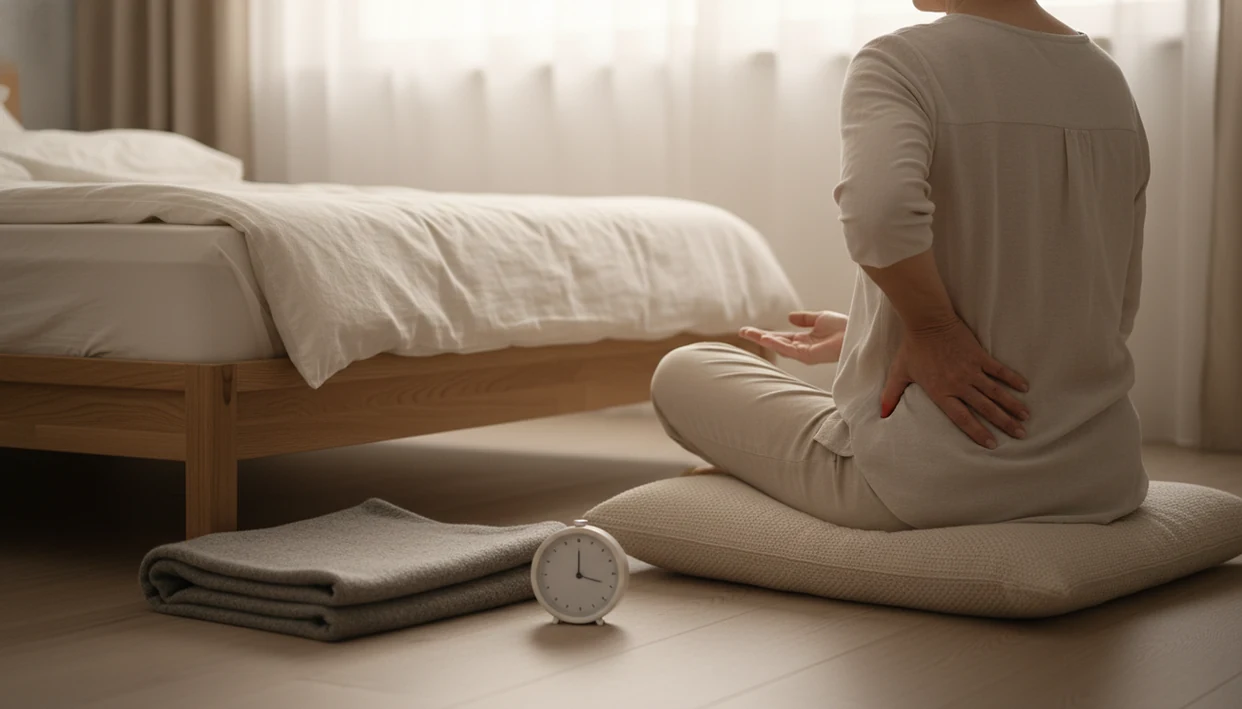
Mindfulness for pain management means paying attention to pain-related sensations, thoughts, and emotions in the present moment, with less judgment. It aims to change your relationship with pain, not cure its cause. Research suggests possible benefits for pain intensity, unpleasantness, stress reactivity, and distress, but relief is not guaranteed. Pain can remain even when coping improves.
A body scan offers beginners a clear starting point: notice sensations in one body region at a time without forcing relaxation. If attention to pain feels overwhelming, use a neutral anchor such as sounds or your feet touching the floor. Keep mindfulness alongside diagnosis, treatment, movement, sleep, and professional support, rather than asking meditation to replace them.
The essentials
- Mindfulness helps many people manage the experience of pain, especially the fear, tension, and unpleasantness that can build around it.
- The body scan is one of the most beginner-friendly mindfulness exercises for pain because it trains steady, nonjudgmental attention to body sensations.
- Use mindfulness as one part of a pain plan, not as a substitute for diagnosis, treatment, movement, sleep, or professional support.
Five things to know before practicing with pain
- Mindfulness for pain management means deliberate attention. You notice pain-related sensations, thoughts, and emotions without instantly judging them or pushing them away.
- The aim is a different relationship with pain. Mindfulness may change how pain is experienced, but it does not guarantee that the underlying condition disappears. For more context on perception, explore how the brain and sense of self are connected.
- Research suggests several possible benefits. Studies suggest mindfulness may help with pain intensity, pain unpleasantness, stress reactivity, and negative thinking around pain.
- Brief programs may be practical. A phone timer set for 5 minutes is more realistic for many people than a long formal session.
- It belongs inside a broader plan. For ongoing symptoms, mindfulness works best alongside medical care, pacing, sleep, gentle movement, and other supports.
For beginners, mindfulness and meditation can train attention and support coping with pain, but they do not promise to erase it.
How mindfulness for pain management works in the brain and body
Pain has more than one layer. There is the raw sensation, such as pressure, burning, throbbing, or tightness. Then there is pain unpleasantness, the aversive “I need this to stop” quality that can add fear and distress.
Mindfulness builds attention regulation and interoceptive awareness. In everyday terms, you practice noticing body signals without instantly turning them into a full prediction about what will happen next. During a first sit, attention might drift to a photography edit you still need to finish or to rain tapping the glass. You notice the drift, then come back. Practicing attention regularly may support brain changes, as explained in rewiring your brain with mindfulness.
A 2024 UC San Diego report found that mindfulness meditation reduced pain intensity and pain unpleasantness more than placebo cream, sham mindfulness, or no treatment Brain Scans Reveal That Mindfulness Meditation For Pain Is N. That does not mean mindfulness is magic. It means attention can shape the experience of pain.
This is not just relaxation. Sometimes the practice means turning toward discomfort with steadiness, not escaping it. For a broader foundation, our what is mindfulness definition guide explains the basic attention skill.
Build the skill before a pain flare
Use mindfulness for pain management by building the skill on ordinary days first, then applying it carefully during flares. Start small, choose an anchor that feels safe, and measure usefulness by distress and function, not perfect relief.
- Begin with one short daily practice. Try 2 to 5 minutes when pain is quieter or your day is steady. This gives your nervous system a familiar routine before you ask it to work during a spike. For a wider look at daily routines, explore how habits shape a happier brain over time.
- Choose a safe anchor. Rest attention on natural breathing, feet on the floor, hands touching fabric, or sounds in the room. If breath feels tense, use the feet or sound instead.
- Notice the pain indirectly at first. Sense its edges, temperature, pressure, or movement for a few breaths, then return to your anchor.
- Name the reaction. Silently label “fear,” “bracing,” “planning,” or “resisting” when the mind tightens around the sensation. Research on self talk and emotional regulation offers context for using inner speech to respond to difficult feelings.
- Track what changes afterward. Note distress, function, and pain response: Can you unclench your jaw, stand up, send the email, or rest more easily?
- Adjust or stop when needed. If focusing on pain increases panic, numbness, dissociation, or overwhelm, open your eyes, ground in the room, and seek support.
5-minute mindfulness for pain management during a flare
Use this practice for 2 to 5 minutes, especially when a longer meditation feels unrealistic. Stop, open your eyes, or shift to grounding if focusing on pain feels overwhelming.
- Settle your posture. Sit, lie down, or stand with support; let your feet feel the floor if that helps.
- Breathe naturally. Do not force deep breathing. Notice one inhale and one exhale.
- Locate the sensation. Find one area where pain is present, or choose a nearby neutral area.
- Name the qualities. Silently note “tight,” “warm,” “sharp,” “pulsing,” or “changing.”
- Soften resistance. See if the muscles around the pain can loosen by one small degree.
- Return gently. When the mind says “this will never end,” notice the thought and come back to one breath. For context on recurring inner commentary, see what research suggests about self talk and the brain.
Keep the goal small. One steady minute counts.
How to begin a body scan when you have pain
The body scan is a common entry point because it gives beginners a clear path: move attention through the body, one region at a time. Harvard Health describes the body scan as a common mindfulness exercise for pain and notes Jon Kabat-Zinn’s use of body scanning in mindfulness-based stress reduction Mindfulness Meditation To Control Pain.
In practice, you might start at the feet, move to the legs, then slowly include the back, belly, chest, shoulders, face, and head. The goal is not to force relaxation. It is to notice sensations with less argument.
Tight calves against the mattress may be the first thing you notice. That is enough.
If the painful area feels too intense, skip it for now. You can use a shorter scan, rest attention in the hands or feet, or alternate between discomfort and a neutral sensation. For readers comparing this with longer pain-focused practices, our guide to mindfulness for chronic pain goes deeper.
Image caption: A body scan practice moves attention gently through the body without forcing pain to change.
Who mindfulness for pain management fits, and when to get medical care
Mindfulness fits people who want coping skills, not people who need urgent diagnosis or treatment. Clinicians typically recommend getting medical evaluation for new, severe, worsening, or unexplained pain.
Seek urgent care for pain with chest pressure, trouble breathing, sudden weakness, loss of bladder or bowel control, fever with a stiff neck, major injury, or any symptom your clinician has told you to treat as an emergency.
| Best for | Not ideal for |
|---|---|
| People seeking pain-related coping skills | New or unexplained pain that has not been evaluated |
| Reducing stress reactivity around symptoms | Medical emergencies or rapidly worsening symptoms |
| Noticing tension during movement or rest | Expecting a guaranteed cure |
| A secular beginner practice on a kitchen chair or bus seat | Using meditation to avoid needed treatment |
| Building awareness alongside care | Severe flares where pain focus feels overwhelming |
Trauma history, high anxiety, or strong flare sensitivity are good reasons to move slowly. We usually suggest choosing anchors that feel steady rather than intense: the sound of a ceiling fan wobble, the weight of a library book spine in your hand, or another neutral sensation in the room.
Six ways to practice during daily pain care
- Pause before treatment routines. Take three natural breaths before medication, stretching, heat, ice, or another care step.
- Notice tension during movement. While walking to the mailbox, check whether the jaw, shoulders, or hands are bracing.
- Interrupt catastrophizing. When the mind predicts the whole day from one pain spike, label it “predicting” and return to the next action.
- Practice on lower-pain days. Skills are easier to learn when symptoms are not at their loudest.
- Use short repetitions. A two-minute pause after a calendar alert may be more useful than one heroic weekly session.
- Pair it with basics. Sleep, gentle movement, pacing, and medical guidance still matter.
For everyday routines beyond pain, the mindful living guide offers simple ways to practice during ordinary tasks.
What pain studies suggest, and what remains uncertain
- Pain intensity and unpleasantness: UC San Diego reported in 2024 that mindfulness meditation reduced pain intensity and pain unpleasantness more than placebo cream, sham mindfulness, or no treatment. Brain Scans Reveal That Mindfulness Meditation For Pain Is N.
- Brief interventions: A 2019 systematic review found that brief mindfulness-based interventions may be feasible for pain management, but larger rigorous studies are still needed before they can be recommended as a first-line treatment PMC research article.
- Chronic pain outcomes: A 2017 systematic review and meta-analysis of 38 randomized controlled trials found that mindfulness meditation was associated with improvements in pain symptoms, depression symptoms, and quality of life, while rating the overall evidence quality as low PubMed research.
Promising does not mean universal or curative. For beginners, body scan practice is often easier than open-ended meditation because it gives attention a clear sequence to follow.
The practical next step is modest: try a short practice, track how it affects distress and function, and keep your care team involved when symptoms change. Mindful.net, a Mindfulness Practices App, can be one option for guided sessions if you prefer structure.
Mindfulness Limits for Pain
- Mindfulness can support coping, but it does not reliably eliminate pain or cure its underlying cause.
- Seek medical evaluation for new, severe, worsening, or unexplained pain rather than relying on mindfulness.
- Research is promising but mixed in quality, and larger rigorous trials are still needed.
- Brief mindfulness programs may be feasible, but they are not established as a universal first-line treatment.
Mindfulness and pain questions
Can mindfulness really reduce pain?
Mindfulness may reduce pain intensity or make pain feel less unpleasant, but the average benefits in chronic pain research are small and results vary. It can also support coping without reducing the sensation itself. Use it alongside established pain care, not as proof that treatment is unnecessary.
Does mindfulness cure chronic pain?
No. Mindfulness does not reliably eliminate chronic pain or treat its underlying cause. Its role is to help you respond to sensations, fear, tension, and distress differently. Medical treatment, movement, sleep, and professional support remain parts of a pain plan.
What is the difference between pain intensity and pain unpleasantness?
Pain intensity describes how strong the sensation feels. Unpleasantness describes how distressing or aversive it feels, including the sense that you urgently need it to stop. Mindfulness may affect these differently: a sensation can remain strong while the fear or struggle around it becomes less consuming.
How do I practice mindfulness during a pain flare?
Try two to five minutes in a supported position. Breathe naturally, then notice either the painful area or a nearby neutral area. Name qualities such as tightness, warmth, or pulsing without demanding relief. If this becomes overwhelming, open your eyes, stop, or shift attention to sounds or contact with the floor.
Is a body scan the best meditation for pain?
A body scan is a common starting point because it gives attention a clear sequence through the body. It is not automatically the best choice for everyone. If focusing inward increases distress, use sounds, feet on the floor, or hands touching fabric instead. The aim is steady attention, not forced relaxation.
How long should I meditate for pain each day?
Start with two to five minutes on a quieter-pain day, rather than waiting for a severe flare. Short repetitions can make the practice more manageable. Judge usefulness by changes in distress and daily function, not just immediate pain relief. Brief practice is not an established first-line treatment for pain.
Can meditation make pain or distress worse?
Focusing on painful sensations can feel overwhelming, and meditation can sometimes increase anxiety or distress. You do not need to push through. Stop, open your eyes, or use an external anchor such as room sounds. Seek qualified support if practice repeatedly brings intrusive thoughts, emotional destabilization, or trauma-related distress.
When should I seek medical care instead of meditating?
Get medical evaluation for new, severe, worsening, or unexplained pain. Seek urgent care for pain with chest pressure, trouble breathing, sudden weakness, loss of bladder or bowel control, fever with a stiff neck, or major injury. Meditation should not delay assessment or replace instructions from your clinician.