
Can Meditation Change Your Life? Benefits, Limits, and Lasting Change


Yes, meditation can change your life, usually through small shifts in how you respond to stress, thoughts, emotions, pain, and other people. Meditation is an attention-training habit: you practice noticing thoughts, feelings, and body sensations without reacting automatically. A systematic review of meditation trials found modest to moderate benefits for anxiety, depression, and pain, not evidence of dramatic transformation.
Think in weeks or months rather than individual sessions. Start with 5 to 10 minutes a day, choose one technique, and look for changes outside practice, such as pausing before a tense reply. Meditation can support sleep, movement, therapy, and social support, but it does not replace them when they are needed.
Definition: Meditation is a practical attention-training habit that helps you notice thoughts, emotions, and body sensations without reacting automatically.
What matters most
- Meditation can be life-changing when it becomes a repeatable habit, not when it is treated as a one-time relaxation trick.
- Research shows small to moderate improvements in stress, anxiety, depression, pain, and quality of life, with stronger results in structured programs like MBSR.
- The best beginner plan is simple: practice 5 to 10 minutes daily, choose one technique, track real-life changes, and adjust gently. A 12 week mindfulness plan can help you organize small daily practices and review changes without expecting instant results.
How meditation can change everyday reactions
Can meditation change your life? Yes, but usually by changing your daily reactions first, not by creating a sudden new personality.
In practical terms, meditation can help you notice the moment before you snap, scroll, shut down, or say yes when you mean no. That small pause is the hinge. Over weeks and months, it can support steadier attention, better emotional regulation, and more room between a feeling and your next move.
A real change might look ordinary. You feel your feet on tile before answering a tense message. You notice your mind racing and come back to one breath. You catch the grocery-list thought during practice and return without making it a problem.
Meditation is not magic, a cure-all, or a replacement for medical or psychological care. Meaningful change usually comes from consistent attention practice over weeks, months, or years.
Five research findings about meditation's benefits
Research supports meditation as useful, but not miraculous. The strongest findings point to small or moderate changes that matter more when practice becomes steady.
- A 47-trial meta-analysis in JAMA Internal Medicine found mindfulness meditation programs produced moderate improvements in anxiety and depression and small improvements in pain compared with active controls: JAMA study
- A review of 36 randomized controlled trials found mindfulness-based interventions produced small to moderate reductions in overall psychological stress: PubMed research
- In one eight-week Mindfulness-Based Stress Reduction program, participants reported about a 30% reduction in anxiety and depression symptoms from baseline.
- A Psychiatry Research: Neuroimaging study found eight weeks of Mindfulness-Based Stress Reduction was associated with increased gray matter concentration in the hippocampus, a region involved in learning and memory: PMC research article
- A meta-analysis of 29 randomized trials found mindfulness-based interventions improved quality of life and reduced psychological distress in people with chronic pain.
For people comparing evidence and daily use, our guide to how meditation supports health covers the broader health context.
Meditation mechanisms for attention, emotions, and behavior change
Meditation works by training a repeatable loop: you notice distraction, return attention to an anchor, and gradually weaken the automatic grip of thoughts, sensations, and emotions. That loop trains attention regulation, emotional regulation, body awareness, and self-awareness.
In plain language, you practice seeing what the mind is doing before it runs the whole show. A thought like “I can’t handle this” may still appear, but you may recognize it as a thought, not an instruction. That shift is often where behavior change begins.
Brain-imaging studies suggest meditation may affect networks linked with attention, memory, emotion, and self-referential thinking. Those findings are interesting, but they should not be oversold. A scan does not prove that every person will feel transformed after eight weeks.
The lived effect is simpler. Cool air at the nostrils, one return, then another. Meditation changes your relationship to thoughts and feelings more than it erases them.
Five steps to use meditation for gentle life change
A sustainable meditation habit starts small and repeats often. For beginners, five calm minutes usually beats one ambitious hour that never happens again.
- Set a tiny daily target of 5 to 10 minutes. Use a phone timer and choose a realistic time, such as before opening your laptop.
- Choose one anchor. Try the breath, body sensations, or sound, and stay with that anchor for the whole session.
- Notice distraction without judging it. The mind will wander to errands, messages, or the grocery list. That is normal.
- Return attention gently and repeat. Each return is part of the practice, not a sign that you failed.
- Review one real-life signal each week. Look for less snapping, a steadier bedtime routine, or more patience in one familiar situation.
For beginners, short daily meditation is often easier than long occasional practice because it reduces the friction of starting.
Check for change outside the meditation session
Before starting, write down one difficulty you want to address and how it affects daily life. Record a baseline, then reassess after about eight weeks and again several months later. The 2014 systematic review assessed outcomes at roughly these intervals. This is a useful evaluation schedule, not a deadline by which meditation must work.
For a more structured check, use a validated questionnaire suited to your goal, such as the GAD-7 for anxiety or the Perceived Stress Scale for stress. Record practice frequency, difficulty, sleep, and any adverse reactions alongside it. Also ask what has changed at work, in relationships, or in daily activities. Feeling calm while sitting is not the same as functioning better afterward; neither one score nor one pleasant session gives the full picture.
Best meditation techniques for different life changes
Different meditation techniques support different kinds of change. Choose the method that fits the behavior you want to practice in daily life. If you also want movement in your routine, comparing mindfulness and yoga can help you choose a suitable practice.
| Technique | Best for | Not ideal for |
|---|---|---|
| Focused-attention meditation | Attention, distraction, and returning to one task | People who feel discouraged by frequent mind-wandering at first |
| Body scan | Stress awareness, tension, and sleep preparation | People who feel overwhelmed by body sensations without support |
| Mindfulness of thoughts | Reactivity, rumination, and noticing mental loops | Anyone hoping to stop all thoughts completely |
| Loving-kindness meditation | Warmth, patience, and relationship patterns | People who find kindness phrases forced or emotionally difficult |
| Breathing practice | Quick grounding before a meeting or conversation | A complete substitute for longer practice or professional care |
The most useful technique is often the one you will repeat when life is plain and busy. A soft lamp in a quiet corner helps, but a bus seat works too.
For relationship patterns, loving-kindness practice can pair well with ordinary reflection on how to forgive and let go.
When meditation fits your goal, and when treatment comes first
Meditation fits some goals well and fits others poorly. It is best understood as a secular daily practice for attention, stress awareness, emotional regulation, and less reactive behavior.
| Good fit | Poor fit |
|---|---|
| You want a simple practice that can fit into ordinary days | You want instant transformation or guaranteed calm |
| You can start small and tolerate normal restlessness | You need urgent mental health or crisis support |
| You want to notice thoughts before reacting to them | You want meditation to replace therapy, medication, or medical care |
| You prefer secular attention practice over spiritual framing | You have severe symptoms and no support plan |
People with trauma histories, panic, severe depression, psychosis, or intense dissociation may need modified practices or professional guidance. Clinicians typically recommend using meditation as a support, not as a replacement for needed care.
Practicing mindfulness or meditation can help you notice reactions sooner and choose your response, but it cannot guarantee peace on demand.
When meditation worsens distress or you need urgent help
Seek professional help when meditation increases distress, when symptoms feel unsafe, or when anxiety, depression, trauma, psychosis, or pain is seriously disrupting daily life. Meditation can be a support, but it should not be the only support in a crisis.
If you have suicidal thoughts, urges to harm yourself, fear you may hurt someone else, or symptoms that feel out of control, treat that as urgent. Contact local emergency services, go to the nearest emergency department, or use a crisis line in your country, such as 988 in the United States and Canada.
- Pause the practice if panic, dissociation, flashbacks, or trauma memories intensify during or after sitting.
- Tell a qualified clinician what happened, especially if symptoms are severe, recurring, or impairing work, sleep, relationships, or basic care.
- Use meditation alongside therapy, medication, pain care, or other treatment when those supports are recommended.
- Choose steadier options if seated eyes-closed practice feels destabilizing: keep your eyes open, name objects in the room, feel your feet, or try mindful walking.
- Return slowly, with guidance, only when practice feels safe enough.
Make daily meditation easier to repeat
Consistency is what gives meditation a chance to affect everyday life. The habit becomes easier when it attaches to something already stable. The 21/90 rule offers a simple framework for repeating mindfulness habits, though habit formation varies from person to person.
- The existing-cue method: Pair practice with morning coffee, brushing teeth, or bedtime. Same cue, same small action.
- The same-seat rule: Use one kitchen chair, cushion, or office stairwell landing for the first month. Less deciding helps.
- The guided-start option: Use a short guided session until the steps feel familiar. Tools like mindful.org, Calm, Headspace, and Mindful.net can provide structure without making the practice complicated.
- The boring-repeat principle: Repeat the same basic practice before chasing variety. Boring consistency beats intense occasional sessions. If repetition feels dull, learn why meditation feels boring and how to make regular practice more manageable.
It can be useful if you want plain guidance, but the core habit is still yours to practice.
For broader daily routines, our mindful living guide explains how small attention cues can fit into ordinary schedules.
Common myths about meditation changing your life
Misunderstanding meditation makes many beginners quit too soon. Most early “problems” are actually normal parts of practice.
- Myth: Meditation means emptying your mind. In most mindfulness practice, the goal is noticing thoughts and returning attention, not having no thoughts.
- Myth: Restlessness means you are bad at meditation. Restlessness is often the first thing you learn to observe. Annoying, yes. Useful, too.
- Myth: Meditation must be religious or spiritual. Many evidence-based programs are secular and used in workplaces, schools, and health settings.
- Myth: A few days should completely transform your life. Deeper changes usually come from repeated practice over weeks or months.
- Myth: Calm is the only sign it is working. You may become more aware before you feel calmer.
If emotional suppression is part of your pattern, meditation should not become another way to push feelings away. Our article on the dangers of suppressing emotions explains that distinction.
Show meditation as an ordinary daily practice
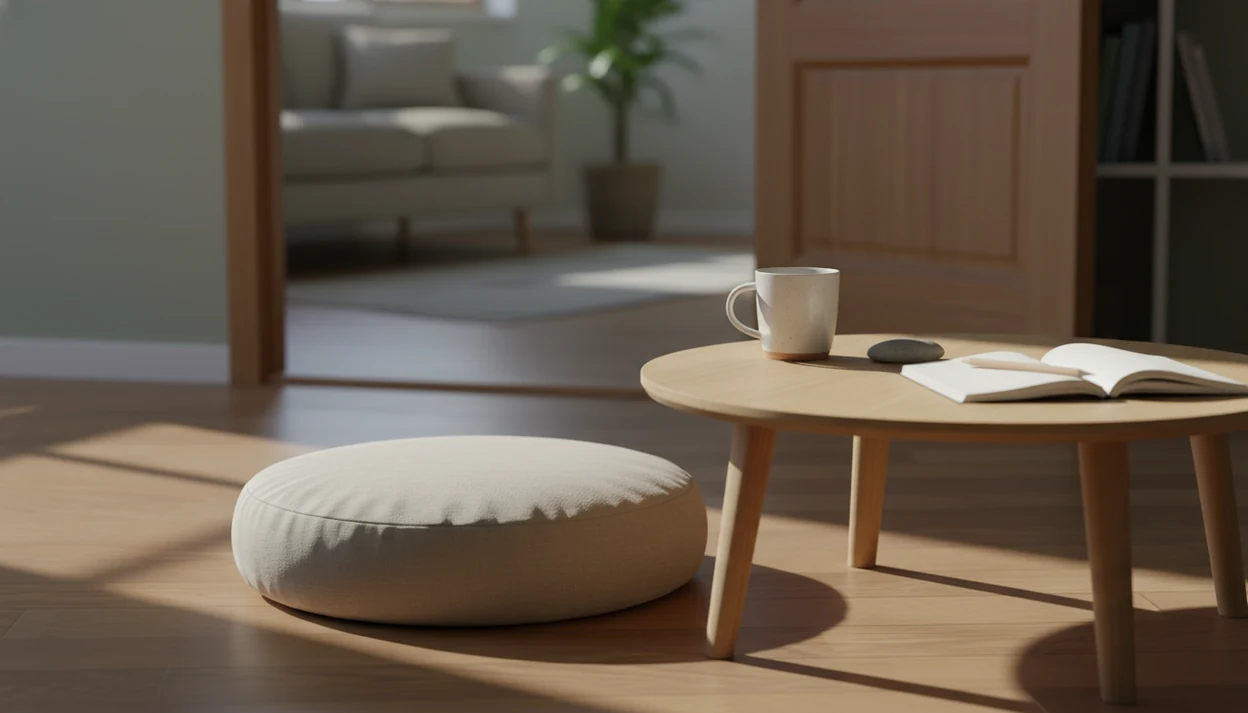
Use one calm, secular image of a beginner sitting comfortably at home. A kitchen chair, sofa edge, or simple floor cushion fits the topic better than exotic scenery or spiritualized transformation imagery.
The image should show practice as repeatable and ordinary. No glowing body effects. No dramatic before-and-after visual. No medical promise.
Visible caption: A small daily meditation practice can support steadier attention, less automatic reactivity, and more mindful choices over time.
Alt text should include the primary keyword naturally, such as: “Beginner sitting at home practicing meditation for can meditation change your life article.” Keep it descriptive and plain. The point is to show a real starting place, not an idealized retreat.
Limits of Meditation
- Benefits are usually small to moderate, not guaranteed, and independent practice may produce smaller or more variable results.
- Seek professional treatment for major depression, severe anxiety, PTSD, psychosis, substance crisis, or suicidal thoughts, because meditation cannot replace it.
- Meditation can increase distress, agitation, numbness, or difficult memories, especially during intensive practice.
- For pain concerns, see mindfulness for chronic pain for its separate cautions.
Meditation and lasting change: common questions
How long does meditation take to make a difference?
Some changes may be noticeable earlier, but a few sessions are too little to judge lasting benefit. Research commonly measures outcomes after about eight weeks and again several months later. Use that as a check-in point, not a promise. Compare daily functioning and symptoms, not just how relaxed a session feels.
Which meditation should I start with to change my habits?
Start with focused attention on the breath, sound, or a comfortable body sensation. Practice noticing distraction and returning to that anchor for 5 to 10 minutes. This rehearses a pause rather than eliminating thoughts. Choose one everyday situation, such as replying to messages, where you want to use that pause.
Can meditation stop negative thoughts?
Meditation does not require thoughts to disappear. The practice is to notice a thought and return attention without automatically treating it as a fact or instruction. Negative thoughts may still occur. The useful change is having more choice about your response, rather than judging success by how quiet your mind becomes.
Can meditation help anxiety or depression without medication?
Mindfulness programs can produce small to moderate improvements in anxiety and depression, but they are not consistently better than active treatments. That does not establish that meditation alone is enough for you. If symptoms disrupt daily life, discuss treatment with a qualified clinician. Do not stop prescribed medication because a meditation session feels helpful.
Do meditation benefits last if I stop practicing?
Some studies found benefits months after a program ended, though average effects tended to shrink. That does not prove benefits last indefinitely or tell us exactly what happens when someone stops practicing. Check whether changes in symptoms and daily functioning persist over time, rather than assuming either permanent benefit or an immediate loss.
How can I tell if meditation is actually helping?
Choose a specific goal and record a baseline before starting. Reassess symptoms and daily functioning after about eight weeks. Look at sleep, relationships, work or study, and activities you have been avoiding. Keep track of practice and other treatment changes too, since improvement cannot automatically be attributed to meditation alone.
Can meditation make anxiety or distress worse?
Yes. Some people experience more agitation, numbness, panic, or difficult memories during practice, particularly with intensive meditation. Pause if distress increases rather than forcing yourself to continue. Seek qualified support when reactions are severe, recurring, or disruptive. Meditation should not be your only support during a mental health crisis.