

> Definition: The science of mindfulness is the interdisciplinary research field that uses brain imaging, clinical trials, and physiological measures to study how present-moment, non-judgmental attention practices affect mental health, cognition, and physical well-being.
What the Science of Mindfulness Actually Measures
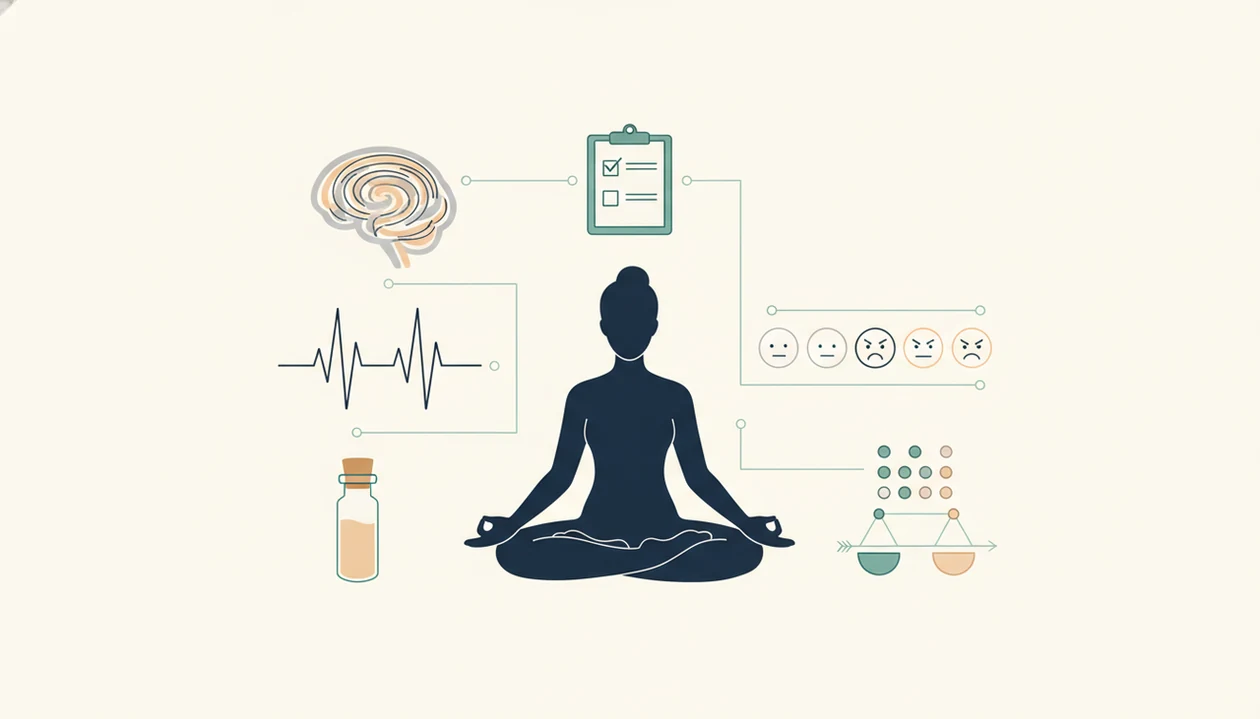
Mindfulness science measures whether trained present-moment attention changes mental, physical, and behavioral outcomes in reliable ways. Researchers often use Jon Kabat-Zinn’s operational definition: paying attention on purpose, in the present moment, and nonjudgmentally.
In practice, studies do not only ask, “Did you feel calmer?” They may use fMRI brain scans, cortisol tests, randomized clinical trials, heart-rate measures, pain ratings, and self-report scales. A participant might move through a body scan while the mind drifts to next month’s budget planning, the air conditioner hum, or the warmth of a ceramic mug, then return attention to breathing. That ordinary return is one of the behaviors researchers try to measure.
The field also separates casual tips from structured interventions. A three-minute breathing pause before opening a laptop is useful, but it is not the same as an 8-week MBSR trial with trained instructors and a fixed curriculum. In research settings, mindfulness is usually secular and skills-based. No spiritual belief is required.
Five Key Findings From Mindfulness Research
Five findings summarize the strongest parts of the mindfulness research literature:
- Anxiety and depression effects are moderate. A 2014 JAMA Internal Medicine meta-analysis of 47 randomized trials and 3,515 participants found anxiety effect size 0.38 and depression effect size 0.30 compared with controls: JAMA study
- Brain changes are measurable but gradual. Imaging studies often focus on the amygdala, prefrontal cortex, and hippocampus, which are linked with stress reactivity, executive control, learning, and memory.
- MBSR and MBCT have the clearest evidence base. These structured programs are tested more rigorously than scattered meditation advice or a few unguided sessions.
- Pain benefits are small. The same 2014 review found pain effect size 0.33, with no significant effect on positive mood, attention, or weight beyond active controls.
- Good research studies harms too. Current mindfulness science asks who benefits, who does not, and when practice may need screening or clinical support.
Moderate does not mean useless. It means expectations should stay grounded.
Brain and Body Mechanisms in Mindfulness Science
Mindfulness appears to work through small-to-moderate changes in attention control, stress reactivity, and body regulation. The main mechanisms involve the amygdala, prefrontal cortex, hippocampus, and autonomic nervous system.
The amygdala helps detect threat. With repeated practice, some studies suggest lower amygdala reactivity, which may explain why a stressful email feels less explosive after a pause. The prefrontal cortex supports executive control, planning, and decision-making. That matters when you notice irritation rising and choose not to send the sharp reply.
The hippocampus is tied to learning and memory. It may help the brain update old patterns as practice repeats over time. Body-level changes include parasympathetic activation, which is the “rest and digest” branch of the nervous system, and possible cortisol reduction in some groups.
For beginners, breath awareness often makes these mechanisms tangible. Counted breaths between keyboard clicks are not dramatic. They are practice reps. The full brain-side explanation is covered in how mindfulness changes the brain.
Six Evidence-Based Steps to Start a Mindfulness Practice
A practical mindfulness practice starts with consistency, simple techniques, and honest tracking. You do not need an hour, special clothing, or a silent retreat to begin.
- Choose an evidence-based format. Start with MBSR, MBCT, or a guided program if you need beginner-friendly structure.
- Set a daily window. Pick 10 to 20 minutes at the same time each day, such as before opening your laptop.
- Start with breath focus or a body scan. Keep the method plain: notice the breath, feel the body, and return when attention wanders.
- Log mood and stress. Rate both before and after each session so you collect personal data, not just impressions.
- Review weekly. Adjust duration, technique, or timing if the progress bar feels too slow or the practice keeps getting skipped.
- Combine with standard care when needed. If you are managing a clinical condition, use mindfulness as support, not a replacement.
For beginners, a 10-minute guided session is often easier than unguided silence because the instructions reduce decision fatigue.
Ready to start tonight's calm routine?
The science of mindfulness examines how paying calm, non-judgmental attention to the present moment measurably changes brain activity, stress physiology, and health outcomes…
Evidence-Based Mindfulness Programs: MBSR vs. MBCT
MBSR and MBCT are the two most studied structured mindfulness programs, but they serve different purposes. Both usually run for 8 weeks, use trained instructors, and follow specific curricula tested in randomized clinical trials.
| Program | Main focus | Typical use | How it differs from casual practice |
|---|---|---|---|
| MBSR | Stress, pain, body awareness | Chronic pain, stress, health-related distress | Fixed 8-week curriculum with formal practices |
| MBCT | Depression relapse prevention | People with recurrent depression history | Combines mindfulness with cognitive therapy skills |
| Guided apps | Practice support and habit building | Beginners, daily reminders, short sessions | Helpful bridge, but not the same as a clinical program |
MBSR for Stress and Pain
MBSR was developed by Jon Kabat-Zinn as an 8-week curriculum, originally for chronic pain and stress. It commonly includes body scans, sitting meditation, mindful movement, and daily home practice.
MBCT for Depression Prevention
MBCT combines mindfulness practice with cognitive therapy elements. It was designed to help prevent depression relapse, especially by teaching people to notice thoughts as mental events rather than facts.
Tools like Mindful.net can introduce the techniques in a lower-pressure way. Good mindfulness practices and meditation techniques for beginners and daily life build repeatable attention skills, not guaranteed symptom removal.
Mindfulness Benefit Groups: Anxiety, Sleep, Pain, and Trauma Cautions
Mindfulness tends to fit best for adults with mild-to-moderate anxiety, everyday stress, sleep disturbance, or chronic pain support. It is not equally appropriate for every person or every condition.
Best for
- Adults seeking stress reduction with a regular practice window.
- People with mild-to-moderate anxiety who can tolerate quiet attention.
- Older adults with sleep disturbance; a 2015 JAMA trial found a 6-week mindfulness program improved Pittsburgh Sleep Quality Index scores by 1.8 points more than sleep education.
- People with chronic pain who want an added coping skill.
- Adults with elevated blood pressure, where an 8-week MBSR trial showed clinically meaningful systolic reductions at 6 months.
Not ideal for
- Acute trauma symptoms without screening.
- Psychosis or severe psychiatric instability without clinician guidance.
- Anyone being told to replace medication with meditation.
Clinicians typically recommend mindfulness as an adjunctive skill for stress-related symptoms, not as a stand-alone treatment for serious mental health conditions. Intensive retreats can resurface trauma, so guidance matters.
Common Misconceptions About the Science of Mindfulness
Mindfulness is often misunderstood because wellness claims move faster than careful research. The science is interesting, but it is not a permission slip for exaggerated promises.
Mindfulness is not passive relaxation. It is active attention training. Sometimes it feels calm; sometimes it feels like standing under an airport queue sign with cold hands, noticing the same worry show up again and again. One pattern we notice in the research is that the return matters more than the mood of the moment: if you recognize the drift and come back, practice is happening.
There is no strong evidence that mindfulness alone cures serious mental illness or replaces medication. Brain changes are also not overnight rewiring. They are usually small-to-moderate shifts seen after weeks or months of consistent practice.
Mindfulness does not require religious belief in research contexts. Most programs studied in clinics and universities are secular and skills-based. A final caution: definitions vary across studies. One paper may study MBSR, another may study brief breathing practice, and another may use a phone app. Blanket claims get shaky fast.
Mindfulness Science Hub: Spoke Articles and Deep Dives
This mindfulness science hub organizes deeper articles by the question you are trying to answer. Pick the spoke that matches your main interest rather than reading everything at once.
- Brain changes: Learn how the brain changes when you meditate, including attention networks and emotional regulation.
- Brain health habits: Compare mindfulness with movement in our guide to the best exercise for brain health.
- Mood and body signals: Explore the gut brain connection and mood if stress shows up in digestion or appetite.
- Self-talk and emotion: The guide to internal monologue science explains why mental chatter feels so persistent.
- Aging and attention: The article on how to keep your brain fit as you age covers practical cognitive-support habits.
Guided exercises can complement these topics, but the research evidence still depends on the method, dose, instructor quality, and person practicing.
When to Seek Professional Guidance Before Practicing Mindfulness
Seek professional guidance before practicing mindfulness if symptoms feel acute, destabilizing, or tied to trauma that is easily reactivated. Mindfulness can be a useful support skill, but it is not a substitute for prescribed medication, therapy, crisis care, or psychiatric treatment.
Use extra caution when quiet attention makes the room feel unsafe rather than steady. Panic, dissociation, flashbacks, or a sudden sense of leaving the body are signals to stop the session and get help, not signs that you are “bad at meditation.” People managing severe depression, psychosis, suicidal thoughts, mania, or unstable psychiatric symptoms should work with trained clinicians who can adapt practice safely.
- Pause practice immediately if symptoms spike, especially panic, flashbacks, or dissociation.
- Contact a therapist, physician, psychiatrist, or crisis resource if distress feels urgent or hard to control.
- Continue prescribed treatment unless your clinician changes it; do not swap medication or therapy for meditation alone.
- Choose clinician-led or trauma-informed programs when your history calls for more support.
- Treat apps and self-guided sessions as practice aids, not clinical care.
Limitations
Mindfulness research is useful, but its limits are part of the story. Readers should treat the field as promising and imperfect, not settled in every direction.
- Many studies use small samples, self-selected participants, and short follow-up windows.
- Average effects for stress, anxiety, depression, and pain are modest. Mindfulness is not a magic bullet.
- Evidence is limited for severe depression, psychosis, or substance use disorders without adjunct treatment.
- Some people experience increased distress, dissociation, panic, or resurfacing trauma during practice.
One steady breath while noticing the air conditioner hum can help. We usually suggest treating that as a small support, not as a complete solution or a guarantee.
Related guides
A Field Note on Real Use
What surprised us most is that beginners often think the opening minute should feel peaceful, when it may simply reveal how active the mind already is. One pattern we notice is that a short session works better when the person chooses one clear anchor before starting. We usually suggest judging the practice by repeatability, not by whether a single sitting produced a calm mood.
A One-Minute Version
A short session with one clear anchor usually gives beginners better information than an ambitious plan they cannot repeat. We often suggest starting with a steady breath, one sound, or one body sensation, then noticing how many times attention wanders without treating that as failure. The useful question is not “Did this make me calm?” but “Did I notice the mind leaving and returning?”
Hidden Limits People Miss
- Minute one often feels awkward because the mind is still speeding up while the body is being asked to slow down.
- By the third or fourth short session, some people notice distraction more clearly, which can feel like getting worse before it feels useful.
- If practice becomes a private test of willpower, reduce the length before you change the technique.
- For shift workers, parents, nurses, or musicians with irregular schedules, a repeatable cue may matter more than a fixed clock time.
- Mindfulness may be the wrong first tool if closing the eyes increases distress; an eyes-open anchor such as sound or contact with the floor can be gentler.
What Most Beginners Get Wrong Here
You keep trying to empty your mind
We usually suggest replacing that goal with a smaller task: notice one breath, lose it, and return. A wandering mind is not a failed session; it is the material the practice works with.
You only practice when stress is already high
A short session during neutral moments tends to be easier to learn from than a session saved for crisis. For workplace contexts, a brief Meeting Reset can make the instruction more concrete than general calm advice.
You compare mindfulness with yoga and feel unsure which to choose
Yoga may suit people who need movement before stillness, while seated mindfulness may suit people who want a portable attention practice. The better first choice is often the one you can repeat without negotiating with your schedule.
A Practical Comparison
Low effort, low setup: one-anchor breathing
This is useful when decision fatigue is the main barrier. It costs little time, but it may feel too plain for people who need more sensory structure.
Moderate effort, more structure: body scan
A body scan gives the mind more places to land, which can help some beginners stay engaged. It may feel frustrating if someone expects immediate relaxation rather than simple noticing.
Higher effort, movement-based option: yoga
Yoga can be a better entry point when stillness makes restlessness louder. Mindfulness at Work may still be useful later because it translates attention training into brief pauses between tasks.
Technique Snapshot
| Technique | Best for | Minutes |
|---|---|---|
| One-anchor breathing | Learning to return attention without many instructions | 3-5 min |
| Eyes-open sound practice | People who feel uneasy closing their eyes | 3-10 min |
| Slow movement or yoga-informed pause | Restless beginners who need motion before stillness | 10-20 min |
Decision support beats generic calm advice when someone is choosing between mindfulness techniques.
Why Mindful.net fits this specific need
Mindful.net is useful here because the hub separates research findings from practical choice points, so readers are not left with vague encouragement. Related guides such as Mindfulness at Work and the Meeting Reset help translate the science into brief, realistic practices without promising medical outcomes.