
Gut Brain Connection and Mood: Evidence and Practical Support


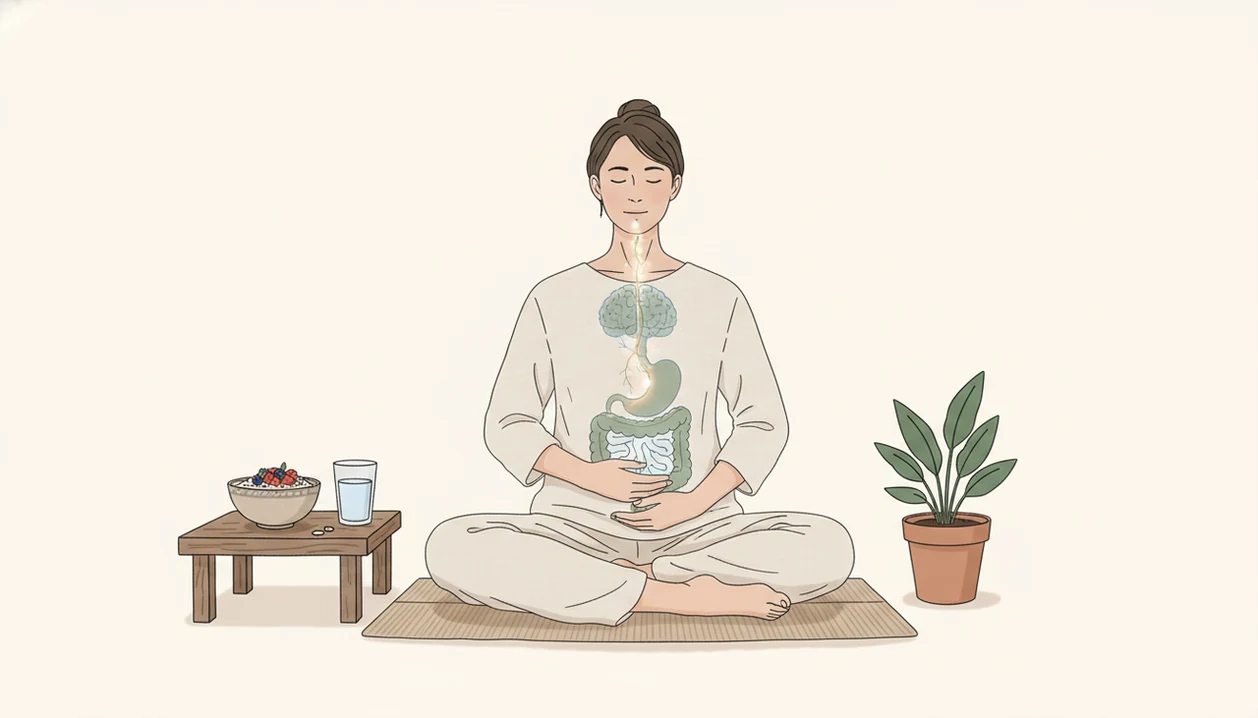
The gut brain connection and mood are linked through a two-way communication system involving nerves, hormones, immune activity, and gut microbes. This network, called the gut-brain axis, connects the digestive system with the central nervous system. Stress can affect digestion, while gut discomfort can contribute to worry, irritability, or low mood.
Supporting this system starts with regular meals, sleep, movement, and medical care when needed. Mindful eating and gentle breath awareness can help you respond to stress without treating gut health as a cure-all. A review of gut-brain intervention studies found promising results, but small samples and varied methods limit what can be concluded about mood benefits.
Definition: The gut, brain axis is the bidirectional communication network connecting the digestive system, gut microbes, immune signals, hormones, and the central nervous system.
What matters most
- Your gut and brain communicate both ways, so stress can affect digestion and gut discomfort can affect mood.
- Gut microbes help regulate neurotransmitters and inflammation, but probiotics and diet changes have modest, individual results.
- Mindfulness, breath awareness, mindful eating, sleep, movement, and appropriate medical care work best as a realistic support plan.
How digestion, stress, and mood affect each other
- The gut, brain axis works both ways. Stress can upset the stomach, and gut discomfort can feed irritability, worry, or low mood.
- The enteric nervous system is often called the gut’s “second brain.” It contains more than 100 million neurons, according to Johns Hopkins Medicine The Braingut Connection.
- About 90% of the body’s serotonin is produced in the gastrointestinal tract, though mood regulation also involves the brain, environment, sleep, relationships, and genetics. Cleveland Clinic gives the same approximate gut-serotonin figure: 23074 Serotonin.
- Gut microbiome changes are linked with depression and anxiety, but that does not prove a simple one-cause explanation.
- Supportive habits can help the system settle. Serious symptoms still deserve professional care.
A practical next step is small. A steady breakfast, a walk, or three slow breaths before opening a laptop often beats a dramatic “gut reset.”
The nerve, hormone, and immune pathways linking gut and brain
The gut, brain axis works through nerve, immune, hormonal, microbial, and neurotransmitter pathways that constantly update the brain about the body’s internal state. In plain language, your digestive tract is not just processing food; it is also sending status reports. Research on meditation and immune function offers context for immune pathways, while emphasizing evidence limits.
The vagus nerve carries signals between the gut and brain, while the enteric nervous system coordinates digestion locally. Gut microbes can produce or influence compounds related to serotonin, dopamine, short-chain fatty acids, and inflammation. Stress hormones can change motility, appetite, gut sensitivity, and the feeling of urgency.
That conference room chair creaks softly, your stomach tightens, and the meeting has not even started. That is not “all in your head.” It is body-brain communication.
Gut irritation or dysbiosis may contribute to anxiety, low mood, brain fog, or irritability. Still, gut changes do not directly explain every mood problem. For wider context, our science of mindfulness guide explains how attention, stress, and body awareness interact.
Five steps for noticing patterns and supporting daily routines
Treat this gut brain connection and mood guide as a set of choices, not a cure-all checklist.
- Notice patterns between meals, stress, sleep, bowel changes, mood, and timing. Keep notes simple, such as “rushed lunch, bloating, anxious afternoon.”
- Slow meals by taking three breaths before eating and putting your utensil down once or twice. First bite of toast at breakfast. Notice texture before judging symptoms.
- Add steady basics like regular meals, fluids, fiber-rich foods if tolerated, gentle movement, and enough sleep.
- Practice breathing with a phone timer set for 5 minutes. Try breath awareness, a short body scan, or mindful eating.
- Review with a professional if symptoms persist, worsen, or affect work, eating, sleep, or relationships.
Tools like Mindful.net can teach beginner mindfulness and meditation techniques, but they are educational support, not medical treatment.
Match the practice to your symptoms and care needs
Gut brain connection and mood tips fit everyday regulation, not emergency care. Use them when symptoms are mild, familiar, and not rapidly worsening.
| Approach | Best for | Not for |
|---|---|---|
| Breath awareness | Everyday stress digestion and mild tension | Suicidal thoughts or severe depression |
| Mindful eating | Food-stress pattern awareness and slower meals | Unexplained weight loss or fear-based restriction |
| Gentle routine changes | Mild mood dips, irregular meals, poor sleep | Major GI disease or persistent severe pain |
| Body scan practice | Noticing gut sensations without panic | Blood in stool or worsening symptoms |
Mindfulness is supportive, not emergency care. Clinicians typically recommend medical or mental health evaluation when digestive symptoms are persistent, severe, unexplained, or paired with significant depression or anxiety.
Small is safer here.
What food and probiotic research says about mood
Food can support gut stability, but no single diet reliably fixes mood for everyone. Fiber-rich foods, varied plants, regular meals, hydration, and fermented foods if tolerated are reasonable basics for many people.
Probiotic evidence is interesting, but modest. A meta-analysis of 10 randomized controlled trials with 1,349 participants found a small but significant reduction in depressive symptoms compared with placebo NIH research. Effects vary by strain, person, dose, condition, and study design.
Case-control evidence also suggests dysbiosis is more common in major depressive disorder. That means disrupted microbial balance appears more often in those groups, not that a supplement can reverse depression. For example, systematic-review evidence has reported altered gut microbiota patterns in people with major depressive disorder, while cautioning that causality remains uncertain PubMed research.
For most people, steady meals are often easier than restrictive food rules because they reduce decision stress and support routine. Be cautious with cleanses, fear-based stool tests, and supplement-first plans. If movement is part of your routine, our guide to the best exercise for brain health may help you compare options.
Mindfulness for gut sensations and stress
Mindfulness can support gut, brain regulation by improving interoception, which means noticing internal sensations without immediately catastrophizing them. It may help calm stress arousal, reduce clenching, soften urgency, and interrupt rumination.
Guided-app support can be useful for learning structure. Mindful.net offers beginner mindfulness and meditation practice; Calm and Headspace offer similar guided sessions. None of these apps diagnose or treat digestive disease.
Beginner mindfulness and meditation practices build skills for noticing sensations and maintaining steadier routines; they do not provide instant symptom control. Understanding ADHD and attention can clarify why maintaining focus during mindfulness practice varies from person to person.
Belly Breathing Before Meals
Breathe low and slow for one minute before eating. Cool air at the nostrils can be enough of an anchor.
Mindful Eating for Gut Sensations
Chew slowly, notice taste, and pause before checking for symptoms. This trains attention without forcing calm. Learning about the brain attention system can explain why distractions interrupt awareness and why returning attention takes practice.
Body Scan for Mood Signals
Let attention travel from the warm coffee mug in your palms to the movement of your belly for three slow breaths. If your heartbeat is racing, the Three-Breath Reset can make the next step feel more observable.
Avoid cure claims, supplement shortcuts, and symptom alarm
“Can fixing my gut cure depression or anxiety?” No. Gut health can support mood, but it should not replace therapy, medication, crisis care, or medical evaluation when those are needed.
Another mistake is expecting one probiotic or supplement to work quickly for everyone. The research does not support that level of certainty. Strain, dose, diet, symptoms, and medical history matter.
Some people also treat every gut sensation as danger. A gurgle, cramp, or appetite shift can feel alarming, especially when anxiety is high, but body sensations need context. Sock feet under a chair, one breath, then decide what actually needs action.
The gut, brain axis is not just a wellness trend. The science is real, but the practical response should stay compassionate: steady meals, sleep, movement, breath practice, and care when needed. For related nervous-system basics, read how mindfulness changes the brain. Evidence on how gratitude changes the brain adds another perspective on practices that may support emotional regulation.
Before a meal: pause when stress affects your stomach
A tense stomach before lunch can be a cue to pause, not a reason to skip eating or diagnose a gut problem. The free breathing timer can give a brief breathing practice a clear start and finish. Keep breaths gentle rather than forcing a slower pace. Persistent digestive symptoms or significant mood changes need medical assessment, not a longer breathing session.
Gut and Brain Limits
- Research is often early or correlational, and probiotic, diet, and microbiome results vary widely between individuals.
- Mindfulness cannot replace diagnosis, treatment, or urgent care for severe depression, suicidal thoughts, or major gastrointestinal disease.
- Restrictive diets, cleanses, and unvalidated tests may worsen food anxiety or disordered eating risk.
- If symptoms change rapidly, pause your experiments and seek professional help.
Gut-brain connection and mood questions
Can gut health affect mood?
Yes. The gut and brain communicate through nerve, hormonal, immune, and metabolic signals. Gut discomfort can also affect how you feel day to day. But links between gut microbes and mood do not prove that changing your microbiome will treat depression or anxiety. Gut care is one part of a broader support plan.
Why does stress upset my stomach?
Stress can change digestive movement, appetite, and sensitivity, which may contribute to discomfort or urgency. Gut symptoms can then add to worry, creating a two-way pattern. Gentle breathing and regular routines may help with everyday stress, but new, persistent, or worsening symptoms should not automatically be attributed to anxiety.
Do probiotics help depression or anxiety?
Some studies report improvements, but results vary across strains, doses, participants, and study methods. Meta-analyses combine different interventions, so their findings do not establish that a particular commercial probiotic treats depression or anxiety. Do not replace prescribed treatment with a supplement; discuss its suitability with a clinician.
What should I eat to support the gut-brain connection?
Start with regular meals, fluids, and a varied diet, including fiber-rich foods if tolerated. A trial of Mediterranean-style dietary support found improved depressive symptoms, but it did not establish that microbiome changes caused the improvement. Avoid treating one food, fermented product, or restrictive diet as a reliable mood treatment.
Can mindfulness help digestion?
Mindfulness may help you notice gut sensations without immediately treating them as danger and respond more calmly to stress. It is not a treatment for digestive disease, and symptom relief is not guaranteed. Keep practice brief and gentle; pause if attention to your body increases anxiety or distress.
Can IBS and anxiety affect each other?
Gut symptoms and anxiety can influence each other through the gut-brain system. Stress may change digestive sensitivity, while unpredictable symptoms can increase worry. That does not mean IBS symptoms are imaginary or solely psychological. Persistent symptoms need appropriate medical care, with stress-management practices used as support rather than a substitute.
How do I practice mindful eating without obsessing over symptoms?
Take three gentle breaths before eating, notice the texture of the first bite, and put your utensil down once or twice. Keep any notes brief rather than monitoring every sensation. The purpose is to slow a rushed meal and notice patterns, not to label foods as dangerous or restrict eating.
When should I see a doctor about gut symptoms and mood?
Seek medical assessment for blood in stool, unexplained weight loss, persistent severe pain, or rapidly worsening symptoms. Severe depression or suicidal thoughts need prompt mental health or emergency support. Mindfulness and dietary changes should not delay care or be used to explain away symptoms that need evaluation.