
How to Create Daily Rituals That Fit Your Day


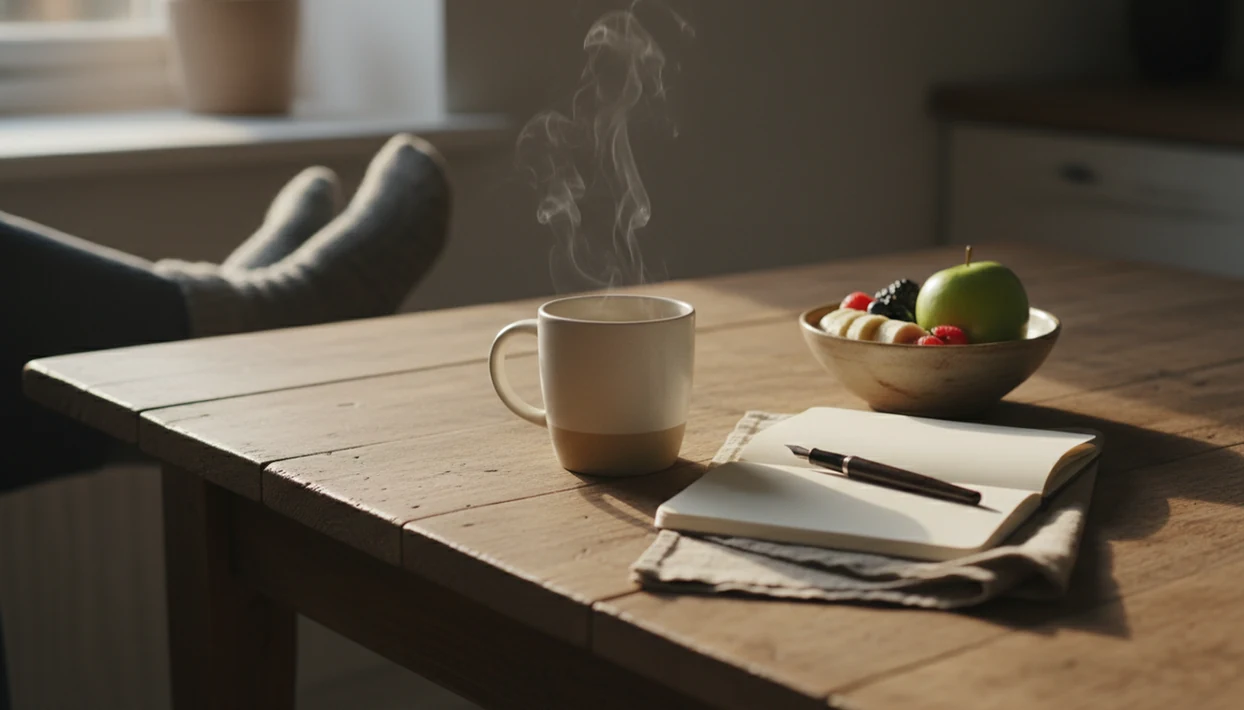
To create daily rituals, choose one small action, give it a clear purpose, and repeat it at a familiar cue. A daily ritual is an intentional pause, such as breathing before coffee, stretching after waking, or journaling before bed. It does not need special equipment or a carefully arranged morning. The practice needs to fit an ordinary day, including one when you are tired or short on time.
Start with one reason: steadier focus, less reactive responses, or a calmer bedtime. Keep the action brief, usually 3 to 10 minutes at first, with a shorter version for difficult days. Prepare anything you need beforehand, return to the same cue for several weeks, and adjust the ritual if it starts to feel like another obligation.
The essentials
- Choose one ritual that supports a clear reason, such as steadier focus, less reactivity, or a calmer bedtime.
- Make the ritual small enough to do on difficult days, usually 3-10 minutes at first.
- Review and adjust the ritual regularly so it remains supportive instead of becoming another source of pressure.
Daily ritual meaning in real life
A daily ritual is a routine plus intention; it is not a polished lifestyle display or a rule you must perform flawlessly. The same action can feel mechanical or meaningful depending on how you enter it.
Taking three breaths while the pasta water heats, holding a warm ceramic mug without multitasking, writing one line of appreciation, or doing a slow stretch after practice can all become rituals. The difference is the pause. You notice what you are doing, why it matters, and how your body feels while doing it.
Socked feet under a chair. One quiet minute.
A ritual can be secular, practical, and plain. Tools like Mindful.net can offer beginner-friendly mindfulness practices when you want guidance, but the ritual itself should fit your real kitchen, desk, commute, or bedroom.
Daily ritual benefits for stress, focus, and mindfulness
Daily rituals matter because stress is common and attention is easily pulled into autopilot. In a national Gallup survey, 80% of Americans reported feeling stress during the day, and 44% reported feeling “a lot” of stress (Gallup: Eight Americans Afflicted Stress.Aspx).
Five evidence-friendly facts help explain the value:
- Small rituals create predictable pauses, which can interrupt reactive habits before they run the whole day.
- Mindfulness-based practices show small-to-moderate benefits for anxiety, depression, and pain in a 2014 systematic review, but they are not cures (JAMA Internal Medicine: JAMA study).
- A 10-minute daily mindfulness practice helped office workers reduce perceived stress and improve well-being in a randomized workplace study (workplace mindfulness RCT: NIH research).
- Rituals can support focus by narrowing attention to one cue, one action, and one return point.
- Mindfulness practices and meditation techniques for beginners and daily life deliver trainable attention, not instant calm or a guaranteed mood fix.
For beginners, a 5-minute mindfulness practice is often easier than a long routine because it leaves less room for avoidance.
How daily rituals work
Daily rituals work by linking a familiar cue to a small action and a felt reward, then repeating that loop until it becomes easier to return to. Attention is what turns an ordinary routine into a ritual: you are not just doing the thing, you are noticing the thing.
- Notice the cue. Use something already present, like the kettle boiling, your laptop closing, or your feet touching the floor.
- Do the action. Keep it simple enough to repeat: three breaths, one stretch, one sentence, one quiet sip.
- Register the reward. Let the body notice what changed, even if the reward is only a little more space, warmth, or steadiness.
- Repeat without forcing intensity. A ritual does not need to feel profound. Repetition usually matters more than how deep, calm, or inspired one session feels.
Automaticity, the point where an action starts to feel more natural, varies widely by person and context. A ritual may settle quickly in one season and feel fragile in another. That is normal. The work is returning to the cue, not performing a perfect mood.
Habit cues and attention anchors behind daily rituals
Daily rituals work through habit loops: a cue starts the action, the behavior follows, and some reward or reinforcement makes repetition more likely. In plain language, your brain learns, “When this happens, I do that.”
A cue can be rinsing a mug, setting down a guitar pick, hearing rain tap the glass, or clipping a pen to a hospital clipboard. Existing actions are useful because they already happen. You are not asking your day to make space from nothing.
In a habit-formation study, a new behavior in a consistent context took about 66 days on average to become automatic, with a wide range of 18 to 254 days (European Journal of Social Psychology: Ejsp.674). That range matters. It means your ritual may need weeks, not a weekend.
Missed Tuesday? Return Wednesday.
The skill is not perfect attendance. The skill is noticing the cue again and restarting without drama.
Before you start a daily ritual
Before you start a daily ritual, make sure it fits the day you actually have. A good ritual has a real cue, a small enough action, a clear reason, and very little setup required in the moment. You can also apply this pause to mindful shopping, noticing what you need before making a purchase.
Use this short check before choosing the practice:
- Choose one ordinary cue. Pick something that already happens most days, such as pouring coffee, sitting at your desk, brushing your teeth, or turning off a lamp. The cue should be easy to notice without adding a new obligation.
- Keep the practice small. Select an action you could still do on a low-energy day: one minute of breathing, one stretch, one line in a notebook, or a quiet pause at the door.
- Name what it supports. Decide whether the ritual is meant to help with focus, transition, patience, sleep, or emotional steadiness. A clear purpose keeps the ritual from becoming random self-improvement homework. When difficult interactions unsettle you, pair your ritual with firm boundaries with a narcissist rather than relying on calm alone.
- Prepare the friction points. Put the object, space, timer, or reminder in place before you need it. Open notebook. Clear chair. Set timer. Leave the mat where your feet can find it.
The less the ritual depends on motivation, the easier it is to return.
Five practical steps to create daily rituals
Use this simple process to build a ritual that can survive normal life, not just an ideal week. Keep it small enough that you can do it when energy is low.
- Choose one reason or value. Name the purpose, such as steadier mornings, kinder transitions, or less rushed bedtime behavior.
- Pick one tiny practice. Try three breaths, one stretch, a short journal line, or one minute of sensory awareness.
- Attach it to a daily cue. Brushing your teeth, starting the kettle, or opening your office door can signal the start of your practice.
- Remove friction before the ritual. Put the notebook out, set a phone timer for 5 minutes, or clear a small floor space.
- Review and adjust after one to four weeks. Shorten, move, swap, or drop the ritual if it is not helping.
If mindfulness is your main reason, a daily mindfulness routine can give structure without requiring a full morning overhaul.
Daily ritual examples for morning, work, and bedtime
Use these examples as starting points, not scripts. Your ritual should match your body, schedule, and tolerance for structure.
- Morning Breathing Reset: Best for people who wake up scattered; take three slow breaths before checking your phone. It can take 30 seconds to 2 minutes.
- Mindful Tea Ritual: Best for people who need a sensory anchor; notice tea steam before bedtime or in the afternoon. It can take 3-5 minutes.
- Work Transition Pause: Best for busy adults; take a quiet pause before hitting send or opening the first task. It can take 1 minute.
- Movement Ritual: Best for people who dislike sitting still; stretch, walk slowly, or try mindful walking. It can take 3-10 minutes.
- Bedtime Reflection: Best for people with racing thoughts; write one line about what helped today. It can take 2 minutes. To make reflection more concrete, try simple gratitude habits that focus on one thing you appreciated today.
Personal rituals usually work better than influencer routines because they fit the room you actually live in.
When a small ritual helps, and when other support comes first
Daily rituals fit people who want a small, repeatable anchor more than a strict life system. They are less useful when someone needs urgent care, major treatment support, or a complete schedule redesign.
| Best for | Not for | Better adjustment |
|---|---|---|
| Beginners who want a clear starting point | People seeking emergency mental health support | Contact crisis, medical, or qualified mental health support |
| Busy adults with limited time | People trying to overhaul everything at once | Start with one micro-practice |
| People wanting mindfulness in ordinary life | People wanting a rigid productivity system | Use flexible cues instead of strict time blocks |
| People who dislike long meditation | People who feel agitated by seated stillness | Try movement-based rituals or grounding through the feet |
| People with changing schedules | People who need perfect consistency to feel successful | Use “minimum viable” versions |
A flexible ritual can be as simple as noticing cold fingertips and taking a Three-Breath Reset before you step into the next part of the day.
Common daily ritual mistakes to avoid
Why do daily rituals fail? They usually fail because they start too large, too vague, too copied, or too dependent on motivation.
The first mistake is building a fantasy routine. A 45-minute morning plan may sound good on Sunday, but it often collapses on a tired Thursday. Consistency matters more than length. Three honest minutes beat a plan you keep postponing.
Another mistake is choosing five rituals at once. Pick one. Let it become familiar before adding another. Copying someone else exactly can also backfire because their job, nervous system, home, and mornings are not yours.
Use a minimum viable ritual for low-energy days. One breath counts. One line counts. Self-compassion is not a slogan here; it is the repair method that helps you return instead of quitting.
For more options, browse mindfulness practices that can be adapted into small rituals.
When low energy is more than a ritual problem
A ritual that repeatedly feels impossible may need to become smaller, but persistent tiredness deserves more than a revised morning plan. NHS guidance on tiredness and fatigue recommends contacting a clinician when tiredness lasts a few weeks without a clear explanation or affects daily life. Keep the ritual optional while you seek help; completing it is not a measure of your health or effort.
Movement rituals also need to match your current capacity. A clinical consensus statement on fatigue management recommends adjusting activity to symptoms and function. When exertion makes fatigue worse, seek clinical guidance rather than pushing through a prescribed routine. A seated sensory pause or brief moment of rest may be a more suitable ritual than a walk or stretch.
Daily ritual tracking and adjustment
Track a ritual lightly so it stays useful, not so it becomes another performance score. A checkmark, one-line note, or weekly 1-5 rating is enough for most people.
Track how the ritual feels, not only whether you completed it. Did it steady you, irritate you, bore you, or help you transition? That information matters. A completed ritual that leaves you tense may need to change.
Once a month, ask four plain questions: Is it still useful? Is the cue working? Is it too long? Should it be dropped or swapped? If your commute changed, a bus-seat breathing practice may need to become a doorway pause. If a changing schedule feels unsettling, gratitude during change can help you notice what remains supportive.
Tools such as Mindful.net, Headspace, and Calm can help with reminders, but the review should stay human. If tracking creates guilt, make the ritual smaller or stop tracking for a while.
A sound cue for a daily pause
During a desk-based day, a brief sound can mark a pause between tasks. The free mindfulness bell can serve as that cue: stop, notice your posture, and take a comfortable breath before continuing. Mindful.net's short guided meditations offer another option when you want spoken direction. An existing cue, such as closing your laptop or rinsing a mug, is better when notifications would interrupt work or add pressure.
Daily ritual limits
- Daily rituals cannot replace therapy, crisis care, medical treatment, or medication when these are needed.
- Mindfulness effects are generally modest and variable, and seated meditation can feel uncomfortable, boring, or agitating.
- Unpredictable schedules, caregiving, chronic illness, travel, or shift work may require flexible rituals instead of fixed times.
- For phone-based prompts, an app that gives one-minute mindfulness prompts may be easier than a long session.
Daily ritual questions
What is the difference between a daily ritual and a routine?
A routine is an action you repeat; a ritual adds deliberate attention and a reason for doing it. Making tea can be either. It becomes a ritual when you pause to notice the warmth, smell, or first sip rather than completing the task while doing something else.
How do I start a daily ritual I can keep doing?
Choose one action and place it after something that already happens most days. For example, take three comfortable breaths after brushing your teeth. Decide why that pause matters, prepare anything you need, and keep a shorter version available for days when time or energy is limited.
How long should a daily ritual take?
Three to ten minutes is a reasonable starting point, but a ritual can be much shorter. Three breaths, one stretch, or a single journal sentence may be enough. Choose a length you can repeat on an ordinary day, not only when your schedule is clear.
How many daily rituals should I start with?
Start with one rather than adding a morning, work, and bedtime ritual at once. Give it several weeks of repetition and adjustment before considering another. Add a second only if the first feels useful and manageable, not because a longer routine seems more impressive.
What should I do if I miss my daily ritual?
Return at the next familiar cue rather than treating the missed day as a failure. Check what got in the way: an unreliable cue, too much setup, or a practice that was too long. Shorten or move the ritual if the same obstacle keeps returning.
Do daily rituals have to include meditation?
No. A slow stretch, a quiet sip of tea, a line of appreciation, or a pause before sending a message can be a ritual. The important part is noticing the action and its purpose. Choose something that suits your body and schedule rather than forcing seated meditation.
Can a daily ritual help with stress?
A brief mindful pause may help you slow down and respond with more attention, but it is not a guaranteed stress treatment. Sleep, food, activity, and appropriate support still matter. When distress is persistent or severe, a ritual should accompany professional care rather than replace it.