
Mindful Walking: How to Practice During Everyday Walks


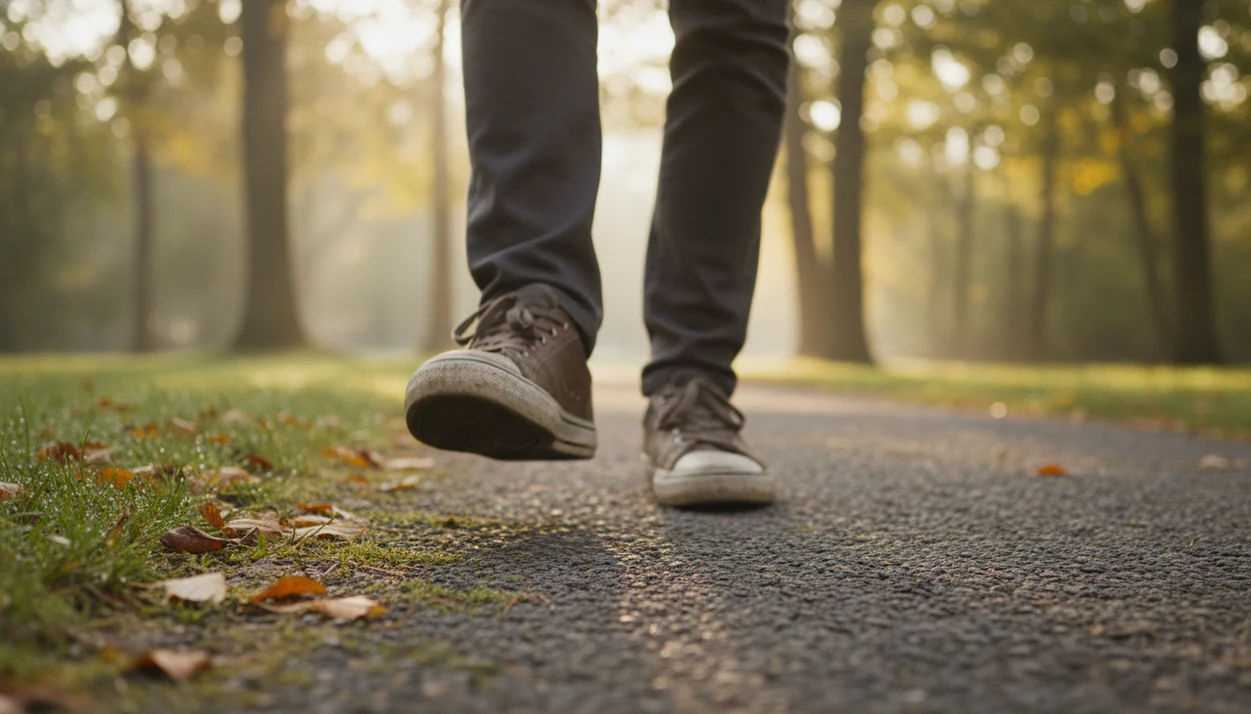
Mindful walking is a secular mindfulness practice that uses your steps, posture, breathing, and surroundings as anchors for attention. Instead of walking on autopilot, you notice the sensations of moving and gently return when your mind wanders. Movement can make this a useful starting point for beginners who dislike sitting still. You do not need a quiet trail or a special pace; a safe hallway or familiar sidewalk is enough.
Start with 5 to 15 minutes, or bring the same attention to a short walk between rooms, errands, or tasks. Feel your feet meet the ground, notice your posture, and keep your surroundings in view. The aim is not to clear your mind or force calm. It is to notice distraction and return to the next step without judgment.
Definition: Mindful walking is a secular mindfulness practice that uses the sensations of walking and the surrounding environment as attention anchors while you gently return whenever the mind wanders.
The essentials
- Use your feet, breath, posture, and senses as anchors while walking at a comfortable pace.
- Practice for 5-15 minutes formally, or use short everyday walks between tasks, errands, and rooms.
- The goal is not to clear your mind; it is to notice wandering and return to the next step without judgment.
Mindful Walking Definition and Everyday Use
Mindful walking means paying attention to body sensations and surroundings while you walk, instead of moving on autopilot. It is also commonly called walking meditation when you practice it intentionally for a set time.
You can do it indoors or outdoors, slowly or briskly, formally on a quiet path, or casually while crossing a parking lot. The basic move is simple: feel the body walking, notice the world around you, and return when the mind drifts.
A hallway counts. So does a sidewalk.
Tools can help, but the practice itself needs only a safe place to walk and a willingness to notice the next step.
Five Mindful Walking Facts Beginners Should Know
- Mindful walking anchors attention in movement. Useful anchors include steps, posture, breath, balance, sounds, light, and the feeling of the ground under your shoes.
- It helps people who struggle with sitting meditation. For restless beginners, movement can make attention practice feel less confined than a cushion or chair.
- Mindfulness-based practices have supportive evidence. Research suggests benefits for stress, mood, pain, and attention, though not every study is about walking specifically.
- Short regular sessions matter more than ideal conditions. Five minutes on a familiar block often teaches more than waiting for a quiet trail you never visit.
- Mindful walking is not medical treatment. Adapt the practice for traffic, terrain, pain, balance, mobility, or health concerns.
The skill in mindful walking is noticing where attention has gone and returning gently, not producing instant calm or guaranteed symptom relief.
How Mindful Walking Works in the Body and Attention
Mindful walking works through an attention loop: choose an anchor, notice sensations, detect mind wandering, and return gently. That loop is the practice, not a mistake correction.
In seated meditation, the breath may be the main anchor. In walking meditation, the body gives you several anchors at once: feet pressing down, legs swinging, air moving, shoulders shifting, sound changing, and balance adjusting. For a restless beginner, that variety can make awareness easier to stay with.
Try noticing the cool air at the nostrils for two steps, then the pressure under each heel. The mind may jump to a grocery list before the next corner. Fine. You noticed.
Repeated returning builds present-moment awareness, not thought suppression. For beginners who dislike stillness, mindful walking is often easier than seated meditation because movement gives attention a clear, changing target.
How to Use Mindful Walking in 6 Steps
Use mindful walking by setting up a safe route, choosing walking sensations as your anchor, and returning to the next step whenever attention wanders. A 5-minute phone timer is enough for a first session.
If you are using the Mindfulness Practices App, start with a short walking meditation timer rather than a long guided session. The goal is to make the first walk easy enough to repeat tomorrow.
- Choose a safe walking route or indoor path. Pick even ground, a hallway loop, or a quiet sidewalk where you do not need constant hazard scanning.
- Stand still and feel your posture before moving. Notice your feet, knees, hips, back, shoulders, and head for two or three breaths.
- Walk at a comfortable pace without forcing slowness. Let the pace fit the place, especially near curbs, stairs, or other people.
- Feel each foot lifting, moving, landing, and shifting weight. Use simple labels like “lift,” “move,” and “land” if that helps. If simple labels help you focus, mantra meditation offers another secular way to practice returning attention.
- Open awareness to breath, sounds, light, temperature, and surroundings. Keep enough attention outward to stay safe. For a stationary practice centered on listening, sound bath meditations offer another way to notice sound and return attention.
- Return to the next step whenever thoughts, planning, or distractions take over. The return is the rep.
If you want a shorter seated option too, a 5-minute mindfulness practice pairs well with walking days.
Mindful Walking Preparation for Safe Daily Practice
Prepare for mindful walking by choosing a low-risk route before you start. Even ground, minimal traffic, good lighting, and enough space matter more than finding a peaceful scene.
Put your phone away if you can. If you need it for safety, set do-not-disturb and avoid reading while moving. Comfortable shoes help, especially if you plan to notice foot pressure. Weather matters too; ice, heat, glare, and wet leaves can change the practice quickly.
Start with 5-15 minutes. A kitchen timer or watch is enough.
People with mobility, balance, cardiovascular, pain, or medical concerns should adapt the practice or seek professional guidance. That may mean using a cane, walking indoors, choosing a shorter route, or practicing mindful movement from a chair instead.
Adapt the practice to your mobility and senses
Mindfulness does not require walking or a particular posture. You can practice seated, lying down, standing with support, or moving in a wheelchair. Replace foot pressure with contact at your hands, wheels, or chair, or use breath, sound, or visual detail. The principle is the same as the NHS guidance on noticing present-moment sensations: attend to what is available, then return when attention wanders.
Keep any mobility aid, companion, or service animal you need. For pain, fatigue, dizziness, or balance difficulties, choose shorter intervals, rest breaks, and a predictable indoor route if that is safer. Follow clinician-approved activity limits rather than using mindfulness to push through symptoms. Sharp or escalating pain, numbness, instability, or sudden loss of strength are reasons to stop and seek appropriate advice.
Walking Meditation Benefits and Research Evidence
Walking meditation has some direct research, but the evidence base is smaller than broader mindfulness and walking research. The most honest summary is that mindful walking may support mood, stress regulation, and quality of life, while results depend on the person, program, and consistency.
A 2018 randomized controlled trial of 100 adults with type 2 diabetes found that 12 weeks of mindful walking plus aerobic exercise reduced depression scores and improved quality of life compared with exercise alone NIH research. A 2014 JAMA Internal Medicine meta-analysis of 47 randomized controlled trials and 3,515 participants found mindfulness-based interventions produced moderate improvements in anxiety, depression, and pain, plus smaller improvements in stress and quality of life JAMA study.
A 2016 systematic review found stress reduction in 21 of 29 mindfulness-based intervention studies in healthy adults, but the authors noted variation in study quality and intervention design NIH research. Clinicians typically recommend mindfulness as a supportive skill, not a replacement for care when symptoms are severe or persistent.
Walking benefits are not all mindfulness benefits
Walking itself can improve mood, so a benefit after a mindful walk cannot automatically be credited to mindfulness. A 2024 review of randomized walking trials found reductions in depressive symptoms across 44 trials and anxiety symptoms across 26 trials. Results varied considerably between studies. Movement, surroundings, social contact, and routine can each contribute to how a walk feels.
Research specifically on mindful walking is smaller and less conclusive. A 2022 review of 14 mindful-walking studies found improvement in at least one mental or cardiovascular outcome in 13 studies, but the authors reported serious methodological limitations and unclear clinical importance. These findings support cautious interest, not a promise that mindful walking works better than ordinary walking or seated meditation.
Mindfulness While Walking in Real-World Micro-Moments
Mindfulness while walking fits ordinary gaps in the day. You can practice while walking to the bus, between meetings, around the kitchen, to the mailbox, with a dog, or from the car to a building. When practicing with another person, interpersonal meditation can help you bring mindful attention to listening and speaking.
Use this 30-second version: feel three steps, take one natural breath, and name one sensory cue. For example, “left foot, right foot, left foot, breath, warm light.” On a noisy sidewalk, that may sound like shoe rubber, bus brakes, jacket fabric, and one steady breath before the crosswalk changes. That is enough to interrupt autopilot without stopping your day.
Nobody needs to know.
Commuting and errands can become everyday mindfulness practice because you are already moving. Feet planted under the desk after a long meeting can be the cue to begin before you stand. If work is your main practice setting, mindfulness at work offers other ways to use short pauses without turning them into productivity pressure.
Mindful Movement Compared With Regular Walking
Mindful movement differs from regular walking because attention is trained on purpose. Regular walking can support physical health; mindful walking adds the skill of noticing and returning during the walk.
| Feature | Regular walking | Mindful walking | Walking meditation |
|---|---|---|---|
| Attention focus | Destination, exercise, thoughts, music | Steps, posture, breath, senses | Repeated attention to walking sensations |
| Pace | Often brisk or practical | Comfortable and safe | Often slower, but not always |
| Purpose | Transportation, fitness, break | Everyday attention practice | Formal meditation practice |
| Setting | Sidewalks, trails, errands, gym | Indoors or outdoors | Usually a chosen route or path |
| Best use case | Physical activity and movement | Daily mindfulness during normal life | Dedicated practice time |
Per the CDC, adults need at least 150 minutes of moderate-intensity aerobic activity per week, and CDC-linked evidence summarizes that meeting physical activity guidelines is associated with a 20-30% lower risk of all-cause mortality CDC guidance. Mindful walking can layer attention training onto an already useful physical habit. For broader options, compare it with other mindfulness practices you can rotate through the week.
Common Mindful Walking Mistakes and Simple Fixes
Beginners often think mindful walking has to feel calm, slow, and special. It does not. Most mistakes are easy to fix once you know what the practice is actually training.
- The empty-mind mistake: Trying to clear the mind usually creates frustration. Notice thoughts, then return to the next step. Remembering that thoughts are not facts can help you step back from judgments about distraction during your walk.
- The slow-motion mistake: Forcing very slow walking can feel awkward or unsafe. Choose a comfortable pace that fits the route.
- The nature-only mistake: Silence and trees are pleasant, but not required. Use hallway sounds, street light, shoe pressure, or air temperature.
- The failure story: Distraction is not failure. Each return is the practice.
- The unsafe-practice mistake: Never trade situational awareness for “deep focus.” Prioritize traffic, terrain, crossings, dogs, bikes, and other people.
A practical next step is to add one short walk to a daily mindfulness routine, then keep it boring enough to repeat. Brief mindfulness quotes can remind you to notice ordinary sensations before beginning your next walk.
A timer for a short walking practice
On a familiar, safe route, a timed session lets you practice without repeatedly checking the clock. Set the free online meditation timer before moving, then put the screen away. The Mindful.net app also includes a meditation timer. For a busy crossing, uneven path, or walk that needs your full attention, skip the timer and let safety determine when to pause or finish.
Walking a hallway route or an outdoor loop
Indoors, choose a clear stretch with room to turn without squeezing around furniture. Walk to one end, pause, and notice how your weight shifts as you turn. Begin the return trip only when you feel steady. You can use each turn as a reminder to notice where your attention has gone. Keep your usual walking aid or support in place rather than changing it for the practice.
Outdoors, choose a familiar loop with clear stopping places. Between crossings, notice one detail at a time, such as the movement of your legs or changing sounds. At a crossing, leave the meditation instructions aside and attend fully to getting across safely. If you want to examine a leaf, listen closely, or look up at the sky, stop somewhere clear of other people before shifting your attention.
A spoken practice you can record, read, or adapt
For an audio version, record the script below in your own voice, leaving a comfortable pause after each sentence. Listen to the recording before setting out so you know the cues. If listening makes it harder to follow your surroundings, use it only on a clear indoor route, or read it beforehand and practice without playback. The same text works as a written practice if spoken guidance is not accessible.
“Begin with a moment of stillness. Notice the places where your body meets the ground, your seat, or your support. When you are ready, move at your usual comfortable pace. Notice one sensation of movement. Let your eyes stay available to the space ahead. If your attention wanders, notice that and return to movement. At a turn or stopping point, pause. Feel your contact with your support again. Continue when ready, or finish here.”
Adapt the movement cue rather than trying to reproduce footsteps. While using a wheelchair, you might notice your hands on the rims, contact with the seat, or movement through space. For a seated version, try a small, comfortable hand or foot movement, or remain still and notice contact with the chair. Choose a cue you can readily perceive; there is no need to use sound, sight, or a particular body part.
Mindful Walking Limits
- Mindful walking supports attention, but seek qualified care for serious mental health conditions, trauma symptoms, panic, depression, or medical problems.
- Evidence specific to mindful walking is limited, and benefits usually depend on regular practice rather than occasional walks.
- Busy streets, phones, conversations, uneven sidewalks, and unsafe terrain can interfere with attention and safety.
- Apps such as Mindful.net offer reminders and technique choices, but the safest practice fits your body, route, and conditions.
Mindful walking questions
What is the difference between mindful walking and walking meditation?
Mindful walking means deliberately noticing movement and surroundings while you walk. Walking meditation usually means setting aside time to practice that attention more formally. The basic skill is the same: notice sensations, recognize when attention wanders, and return. You can practice during an ordinary errand without turning it into a formal session.
How do I start mindful walking as a beginner?
Choose a safe, familiar route and stand still briefly to feel your feet and posture. Begin walking at a comfortable pace. Notice the pressure of each step while keeping the path in view. When thoughts take over, return to the next step. Five minutes is enough for a first session.
How long should a mindful walk last?
Start with 5 to 15 minutes for a dedicated practice, or use a shorter walk between everyday tasks. A brief version is to feel three steps, take one natural breath, and notice one sensory detail. Longer is not automatically better; choose a duration you can repeat safely without forcing it.
Do I have to walk slowly or match my steps to my breath?
No. Choose a comfortable pace that suits the route, and let your breathing stay natural. Slow walking is an option, not a requirement. You can notice footsteps and breathing without making them follow a fixed rhythm. Avoid changing your pace in ways that make balance or awareness of hazards harder.
Can I practice mindful walking indoors?
Yes. A clear hallway or safe route through a room can work. Notice foot pressure, leg movement, posture, sounds, and changes in direction. Keep enough space to turn comfortably and avoid obstacles. Indoor practice can be useful when weather, traffic, or uneven ground makes an outdoor walk less safe.
Does mindful walking help with stress or anxiety?
It may support stress regulation and mood, but the evidence specific to mindful walking is limited. Walking itself can also help with anxiety and depressive symptoms, so mindfulness should not receive all the credit. Treat the practice as a supportive habit, not a replacement for qualified care or a guarantee of relief.
Should I close my eyes during walking meditation?
Keep your eyes open while walking, especially outdoors. Your attention needs to include traffic, uneven ground, other people, and animals, not just internal sensations. If you want to pause and notice your body, stop somewhere safe first. Awareness of foot pressure should never come at the expense of seeing hazards.