
Mindfulness for ADHD Focus: Brief Practices for Returning to a Task


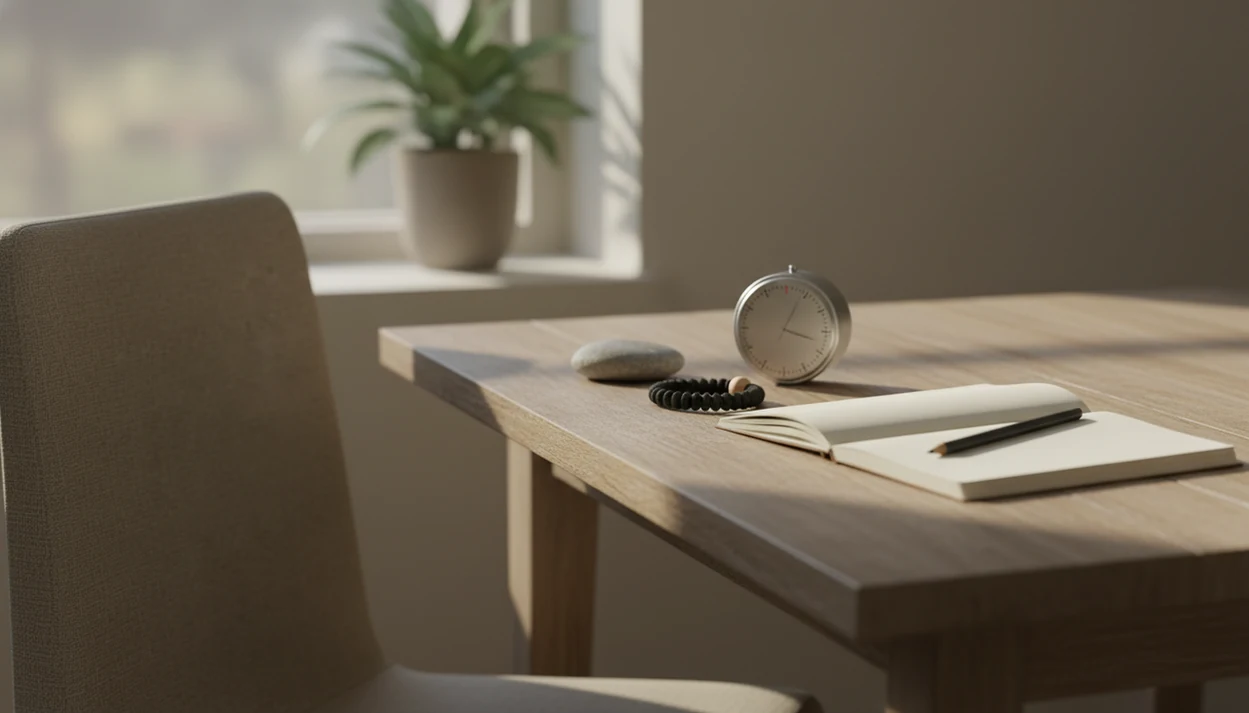
Mindfulness for ADHD focus is a brief, flexible attention practice: notice distraction, choose a concrete anchor, and return to the next task without self-criticism. These secular practices use breath, sound, touch, or movement to bring attention back to the present moment. They are support practices, not a treatment, cure, or substitute for ADHD evaluation, medication, therapy, or coaching.
Start with 30 to 90 seconds rather than making a long, silent session the goal. Standing, stretching, walking, or mindful fidgeting can count. Choose something specific to notice, such as your feet touching the floor, then name the next useful action. The aim is not to stop attention from wandering. It is to notice when it has wandered and practice returning.
Definition: Mindfulness for ADHD focus support means using brief, concrete, secular attention practices to notice the present moment and gently redirect attention in daily life.
The essentials
- Use short practices: 30 to 90 seconds is enough to make mindfulness more ADHD-friendly.
- Make it movement-friendly: walking, stretching, standing, or mindful fidgeting can count.
- Keep the medical boundary clear: mindfulness may support attention, but it does not treat or cure ADHD.
The basic reset: notice, choose an anchor, return
Mindfulness for ADHD focus support is attention practice, not ADHD treatment. The basic move is simple: notice where attention went, choose an anchor, and return to the next useful action.
ADHD-friendly mindfulness should be short, structured, sensory, and movement-friendly. A 45-second reset beside a kitchen chair may fit better than a 20-minute silent sit. The point is not total stillness. The point is noticing and returning.
Secular mindfulness practices and meditation techniques for beginners and daily life can build small moments of steadier attention, not diagnose ADHD, cure symptoms, or replace care.
Professional support still matters. ADHD diagnosis and treatment decisions belong with qualified clinicians, especially when focus problems affect work, school, relationships, driving, finances, or sleep. One simple way to try it is to set a phone timer for one minute, feel both feet on the floor, and name the task you are returning to.
Five things to know before trying mindfulness for ADHD
- Mindfulness is attention redirection, not emptying the mind. You notice distraction, label it lightly, and return to breath, sound, body sensation, movement, or the task in front of you.
- Short adapted practices often fit ADHD better than long silent sits. Many beginners do better with 30 to 90 seconds, a visible timer, and a clear anchor.
- Research suggests small to moderate benefits, not a cure. A 2019 meta-analysis reported small to moderate improvements in ADHD symptoms and executive functioning, especially in adults and adolescents PubMed research.
- Mind wandering is expected and part of the practice. The grocery list will show up. So will the half-written email. Returning is the repetition. The same emphasis on repetition applies to rapid skill acquisition, where consistent practice helps new skills stick.
- Mindfulness belongs alongside evidence-based ADHD care. A 2015 randomized controlled trial of adults with ADHD found an 8-week mindfulness-based program was associated with reduced self-reported symptoms and improved attention regulation, but it did not replace clinical care NIH research.
How Mindfulness Supports ADHD Attention Redirection
Mindfulness supports ADHD attention redirection by training three repeatable steps: notice attention, label the distraction, and return to an anchor. The anchor can be breath, sound, body pressure, movement, or the next visible task.
In practice, this can look very ordinary. You notice counted breaths between keyboard clicks, label “planning” or “scroll urge,” then return to the sentence on the screen. No drama. Just a small reset.
One possible mechanism involves the default mode network, a brain network linked with self-referential thought and mind-wandering. Functional imaging research has connected mindfulness meditation with changes in default mode network activity PubMed research, which may help explain why attention practice can support returning from distraction. That does not mean mindfulness “fixes” ADHD wiring. It means the practice gives attention a rehearsed route back.
For ADHD focus strategies, external anchors often help. A sticky note, a timer, or an open document title can be easier to return to than breath alone.
Set a goal of returning, not perfect concentration
This page can responsibly promise brief, secular, beginner-friendly, adaptable practices for attention support. It cannot promise ADHD symptom remission, medication replacement, or a clinical outcome.
The realistic goal is small moments of returning attention, not perfect focus. A person might pause before opening a laptop, feel the chair under their legs, name the next step, and begin. Then attention may drift again two minutes later.
That still counts.
Support may be subtle and may require repetition over weeks. Some days it will feel useful. Other days it may feel boring or too slow. If you want broader non-medical focus practice, our guide to mindfulness for focus separates attention support from forced concentration.
ADHD-Friendly Focus Strategies With Mindfulness
ADHD mindfulness support works best when the practice has a clear cue, a short duration, and an obvious finish. These five strategies are practical places to start.
- Three-breath reset: Before starting a task, take three slower breaths and name the next visible action. “Open the file” is better than “focus now.”
- One-minute sensory check-in: Notice one thing you see, one sound, and one touch point, such as shoulder blades pressing the chair.
- Threshold ritual: Pause at a doorway, before opening a laptop, or during a task switch. Touch the door handle before entering and name why you are there.
- Mindful movement: Walk, stretch, stand, or use paced fidgeting while keeping attention on rhythm, pressure, or contact.
- External structure: Use timers, visual cues, checklists, and reminders to reduce friction. A tool to create mindful break reminders can be useful when remembering to pause is the hard part.
For many people with ADHD, a timed micro-practice is easier than an open-ended meditation because the start and stop are already decided.
Pair the attention reset with a clearer task
Before a reset, define one concrete task, remove your phone and nonessential notifications, and leave only task-relevant materials open. After noticing a breath or touch point, begin that task within a timed work interval, with a planned break. External reminders, smaller task steps, and accountability can support the work too. Mindfulness helps you notice distraction; it does not remove distractions from the room.
Judge usefulness by what happens next, not just by feeling calmer. Did you begin the task or return after an interruption? Better task performance can reflect clearer instructions or fewer distractions rather than a broad increase in attention capacity. A systematic review of objective cognitive outcomes found that results differed by task and cognitive domain, so a feeling of focus alone is not proof of improved sustained attention.
Movement-Based Mindfulness For ADHD Focus Flexibility
Movement-based mindfulness counts when movement supports awareness rather than pulling attention into a new distraction. Sitting still can be a real barrier for some ADHD brains, especially when restlessness builds before the practice even begins.
Try mindful walking across a hallway, hand-on-desk grounding, slow shoulder stretches, or careful object handling. You might roll a smooth pen between two fingers and track pressure, speed, and contact. If the fidget becomes a side quest, simplify it.
Keep it kind.
Safety matters too. Do not use mindfulness walking where you need full environmental attention, such as crossing traffic or moving through a crowded station. In a work setting, a quiet stairwell or a short standing reset may be more realistic than closing your eyes at your desk. Our mindfulness at work guide covers practical pauses without turning every break into a productivity test.
Stillness, wandering, and other ADHD mindfulness myths
Mindfulness ADHD attention practice is often misunderstood, and those myths can make people quit early. A realistic frame keeps the practice usable and medically responsible.
| Myth | More realistic correction |
|---|---|
| Mindfulness fixes ADHD. | Mindfulness may support attention redirection, but it does not cure ADHD or replace diagnosis, medication, therapy, coaching, or accommodations. |
| Real mindfulness must be long, silent, and still. | ADHD-friendly practice can be brief, sensory, structured, and movement-based. A 60-second reset can count. |
| Wandering attention means failure. | Wandering is the moment you practice. Noticing and returning is the skill. |
| Mindfulness is only for stress. | Mindfulness can also support task initiation, transitions, and everyday focus, though it remains a support strategy. |
For ADHD, short structured mindfulness usually works better than vague “just be present” advice because it gives attention a specific landing place.
Mindfulness Boundaries For ADHD Diagnosis And Care
This article does not diagnose ADHD and does not provide personal medical advice. It also does not advise stopping, starting, reducing, or changing medication.
Mindfulness is not a replacement for therapy, ADHD coaching, school or workplace accommodations, or professional assessment. Clinicians typically recommend evaluation and individualized care when symptoms interfere with daily functioning, safety, or emotional health. For medical background on ADHD symptoms, diagnosis, and treatment options, see the National Institute of Mental Health overview Attention Deficit Hyperactivity Disorder Adhd.
Some people need a more tailored approach. High anxiety, trauma history, depression, panic symptoms, substance use concerns, or strong distress during inward attention can change what feels safe. In those cases, eyes-open practice, external anchors, or clinician-guided support may fit better.
If you use apps such as Headspace, Calm, or Mindful.net, treat them as educational support tools, not as diagnostic or treatment tools. A guided session can be helpful, but it cannot review your history, side effects, accommodations, or safety needs.
Seek an assessment when focus problems disrupt daily life
When should you ask a professional about ADHD mindfulness support? Ask for evaluation when focus problems disrupt school, work, relationships, finances, driving, parenting, or basic safety.
Adult ADHD is not rare. A large U.S. national survey estimated that about 4.4% of adults have ADHD PubMed research. Workplace research has also linked adult ADHD with meaningful work-performance and productivity impairment PubMed research.
Mindfulness alone should not be expected to solve school or work difficulties. It may help you notice a phone buzz without grabbing it, but it will not create accommodations, adjust medication, or resolve burnout by itself. If symptoms are severe, worsening, or paired with anxiety or low mood, discuss mindfulness with a qualified clinician.
If overstimulation is part of the pattern, mindfulness when overstimulated may help you choose external anchors before trying inward attention.
How to judge claims about mindfulness and ADHD
Claims about mindfulness for ADHD on this page are educational and supportive, not diagnostic or medical advice. They describe possible attention-support practices, not proof that mindfulness treats ADHD or replaces individualized care.
Source quality matters because ADHD research varies widely in design, sample size, and follow-up length. Stronger claims should come from peer-reviewed studies, clinical guidelines, and public health sources such as NIMH or CDC. Smaller trials can be useful, but they often include limited groups of people, different mindfulness formats, and short follow-up windows, which makes it harder to know how well results apply over months or years.
Use this standard when reading ADHD mindfulness claims:
- Check whether the claim is based on trial evidence, a review, a guideline, or clinical consensus.
- Separate app-guided practice from therapy, medication, ADHD coaching, school supports, or workplace accommodations.
- Treat short guided sessions as skill practice, not assessment, treatment planning, or symptom monitoring.
- Look for limits in the evidence, especially small samples, self-reported outcomes, and brief follow-up.
- Ask a qualified clinician when symptoms affect safety, functioning, medication questions, or major life decisions.
ADHD Mindfulness Limits
- Mindfulness cannot treat, cure, or diagnose ADHD, so seek professional care rather than relying on it.
- Research is limited, and benefits may be small, inconsistent, or absent for some people.
- Inward attention can feel uncomfortable, frustrating, or activating, especially with anxiety or a trauma history.
- An app that reminds me to breathe at work may reduce the memory burden during work breaks.
Mindfulness and ADHD focus questions
Can mindfulness improve focus if I have ADHD?
Mindfulness may support noticing distraction and returning to a task, but benefits vary and are not guaranteed. Research findings differ across attention measures and study designs. Treat it as an optional support alongside ADHD care and practical task adjustments, not as a way to cure ADHD or produce consistently strong concentration.
How long should I meditate for ADHD focus?
Start with 30 to 90 seconds and a clear finish. Notice one anchor, such as sound or the pressure of your feet, then name your next action. This is a practical starting point, not a proven treatment dose. You do not need to extend the session if a brief reset is more usable.
Why is it hard to sit still during meditation with ADHD?
Restlessness can make a long, silent sit difficult before the attention practice even begins. Sitting still is not required for this approach. Try standing, stretching, or walking in a safe space while noticing movement and contact. The practice is returning attention to an anchor, not forcing your body to remain motionless.
What should I focus on if watching my breath is uncomfortable?
Choose a neutral external or physical anchor instead: a sound, your hand resting on a desk, or your feet touching the floor. Keep the practice brief and stop if discomfort increases. Inward attention can feel activating, particularly with anxiety or a trauma history; breath awareness is not a requirement.
Does walking or using a fidget count as mindfulness?
Yes, when you deliberately notice the movement or sensation and return to it after distraction. During walking, notice foot contact; with a simple object, notice pressure and texture. If the object becomes another distraction, simplify the practice. Avoid walking practices in places where safety requires your full attention.
How can I use mindfulness before starting a work task?
Choose one visible action, such as opening a file or writing the first sentence. Put away your phone and close unrelated materials. Briefly notice a sound or touch point, name the action, then begin. If attention drifts, label the distraction lightly and return to that action rather than restarting the whole routine.
What should I do if mindfulness makes me frustrated or anxious?
Stop rather than pushing through. You can try a shorter practice, movement, or an external anchor another time, but mindfulness is optional. If distress persists, or focus problems are disrupting work, relationships, or safety, seek professional advice. Difficulty with a practice does not mean you are failing at attention.