
Trees and Happiness: The Evidence and a Simple Mindful Practice


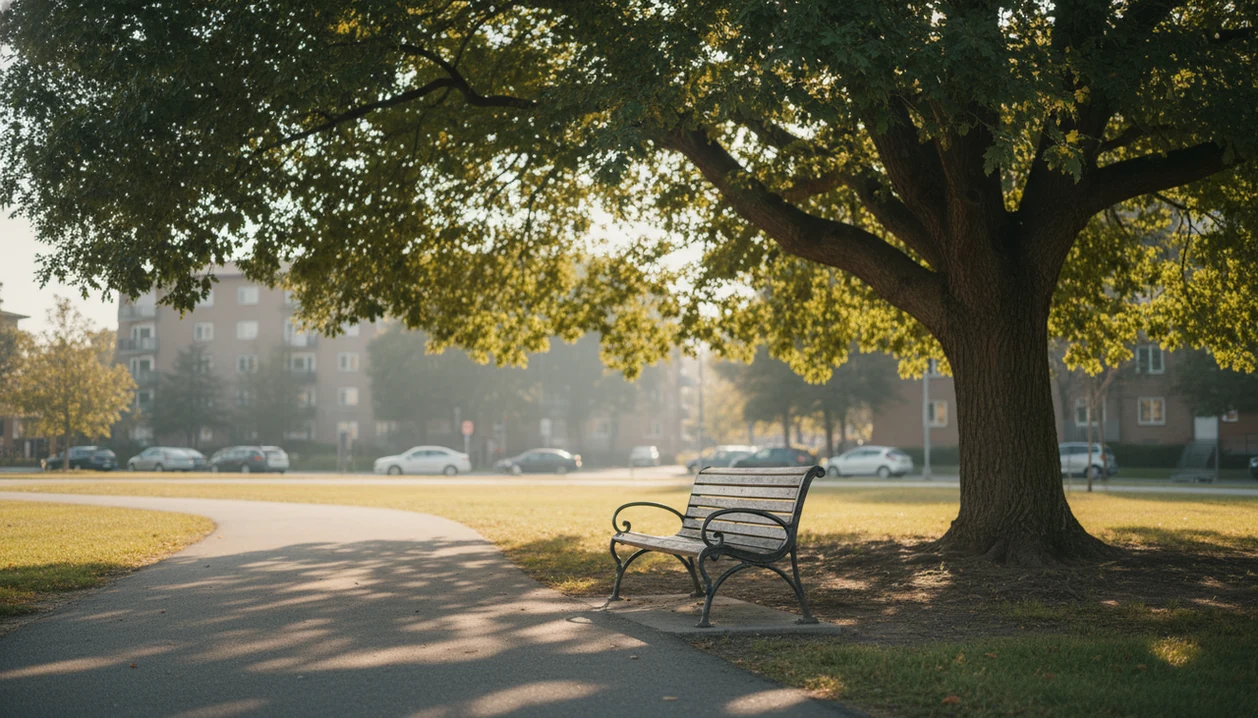
Trees can support happiness by easing stress, helping attention recover, and giving the mind something simple to rest on. Tree-based mindfulness means using leaves, shade, bark, outdoor sounds, or stillness as anchors for present-moment awareness. Instead of trying to force a better mood, you notice a concrete detail and return to it when attention wanders.
A forest hike is not required. A tree-lined street, park bench, or window view can offer a place for a short pause. This guide explains the evidence, the connection with mindfulness, and ways to fit tree breaks into ordinary days. Treat them as support for well-being, not a cure for depression or anxiety or a replacement for medical or mental health care.
The essentials
- Trees can support happiness by lowering stress, easing mental fatigue, and helping you feel more grounded.
- You do not need a forest hike; a tree-lined street, park bench, or window view can still help.
- Regular short tree breaks work best when treated as a mindfulness support, not a replacement for medical or mental health care.
How trees can ease stress and mental fatigue
Why do trees make you happy? Trees often make people feel happier because they reduce stress load, soften attention demands, and give the nervous system a quieter setting than traffic, screens, or crowded rooms.
The shift can be simple. You notice shade on the sidewalk, the shape of branches, or cool air at the nostrils. Breathing slows a little. Your eyes stop scanning alerts. The mind gets something steady to rest on.
For many people, forests, parks, street trees, and even a window view can create this effect. That does not mean trees cure depression or anxiety. It means tree contact can be one practical support for mood, attention, and everyday mindfulness, especially when used regularly and gently.
Small counts.
Five research findings linking trees with well-being
- Trees are linked with lower stress physiology. Studies of forest and tree-rich settings report lower cortisol, blood pressure, and heart rate compared with more built-up urban settings. A 2020 systematic review of forest-bathing studies reported reductions in cortisol, blood pressure, and pulse rate after forest exposure NIH research.
- Greener neighborhoods are associated with better well-being. Research connects nearby trees and vegetation with better self-rated health, life satisfaction, and lower mental strain for many groups. For a broader view, the three components of happiness offer a useful framework for a daily check.
- Looking at trees can help too. Emotional recovery is not limited to hiking; even seeing trees from a window may support calm and recovery after stress.
- Tree-rich spaces restore directed attention. Natural patterns, softer sounds, and slower visual movement ask less of the brain than signs, screens, and traffic decisions.
- Repeated exposure may compound. A two-minute pause under a street tree will not fix a hard week, but regular green micro-breaks can create repeated stress recovery moments.
For beginners, short and repeated tree contact is often easier than long nature trips because it fits ordinary routines.
Stress regulation and attention recovery outdoors
Tree exposure appears to support happiness by moving the body from high alert toward calmer regulation while giving attention a less demanding place to rest.
In nervous system terms, tree-rich environments may reduce sympathetic arousal, the body’s “ready for action” mode. A 2020 systematic review of 92 studies found that forest environments reduced physiological stress markers such as cortisol and blood pressure compared with urban settings NIH research.
Attention restoration theory explains the mental side. Directed attention is the effortful focus you use for email, driving, errands, and planning dinner. Trees offer “soft fascination,” meaning they hold attention lightly without forcing it. Leaf movement, shade, birdsong, bark texture, and repeating branch patterns give the mind enough to notice, but not too much to manage.
The grocery list still appears. Then the leaves pull you back.
Using a tree as a mindfulness anchor
Can trees make mindfulness easier? Yes, trees can act as an external mindfulness anchor, which is useful when indoor, eyes-closed meditation feels too abstract or restless.
Instead of trying to empty the mind, you can notice and return. Notice the breath, the weight of your feet, the color of one leaf, or the sound of wind moving through branches. A tree gives beginners something concrete to come back to without turning practice into a performance.
Indoor meditation and tree awareness are not competing methods. One uses breath, body, or sound in a quiet room. The other uses outdoor sensations, posture, light, texture, and movement. Returning attention to a leaf, the breath, or a sound is the practice; forced happiness or instant calm is not the goal.
A 2 to 10 minute tree-awareness practice
Use trees as a small attention practice, not a test of whether you can feel peaceful on command. If the setting feels noisy, let one ordinary detail be enough: the ragged edge of one leaf, a patch of shade on your shoe, or the dry sound of bark under your fingertips. You can also practice finding inner strength with mindfulness when feeling peaceful is difficult or daily demands feel heavy.
- Choose one reachable tree, window view, park path, or indoor plant if outdoor access is limited.
- Stand or sit with your feet steady on carpet, tile, pavement, or grass.
- Breathe naturally for 2 to 10 minutes, letting your exhale be easy rather than dramatic.
- Notice one sensory detail, such as leaf shape, shade, bark lines, sound, or the space between branches.
- Return when the mind wanders to work, errands, or a message you forgot to send.
- Repeat on ordinary days, not only when stress is already high.
If you are building a wider routine, our mindful living guide gives more ways to bring attention practice into daily tasks.
Tree breaks for work, city streets, and home
The best tree practice depends on access, energy, safety, and time. Compare your options instead of forcing one ideal version. Beyond choosing a practice, finding your purpose can begin with small actions that reflect what matters to you.
| Situation | Try this | Best for | Not ideal for |
|---|---|---|---|
| Office break | Look at one tree for three breaths before unmuting | Quick reset between calls | No window or rushed meetings |
| City street | Walk one block noticing shade and branches | Urban routines | Heavy traffic or unsafe sidewalks |
| Park visit | Sit on a bench for 5 to 10 minutes | More sensory space | Pollen, insects, or mobility barriers |
| Home window | Watch leaf movement or changing light | Low time, caregiving, bad weather | No green view |
| Low-energy day | Use a houseplant or tree photo as an anchor | Fatigue or limited access | People who need outdoor movement |
People with allergies, asthma, mobility limits, heat sensitivity, or safety concerns may need adaptations. Practical counts more than picturesque.
Why tree-lined neighborhoods can support happier lives
Tree-lined neighborhoods may support happier lives by combining shade, cleaner air, walkable routes, quieter streets, and small moments of restoration.
Street trees make walking less harsh in heat. They can soften traffic noise, improve perceived beauty, and create places where people pause or greet a neighbor. That matters because mood is shaped by repeated daily contact, not only special weekend hikes. The broader question of why is nature good for mental health overlaps with this neighborhood effect. When everyday interactions become tense, mindful conflict resolution can help you bring steadier attention to difficult conversations.
A Greater Good Science Center report discussed a study where 10 more trees on a city block were associated with perceived health gains similar to earning $10,000 more per year or being 7 years younger. That finding came from an observational Toronto study, so it shows a strong association rather than proof that planting exactly 10 trees will produce the same health gain in every neighborhood. Harvard reported that more surrounding vegetation was associated with 12% lower all-cause mortality in women The Health Benefits Of Trees. The Morton Arboretum estimates that U.S. trees provide about $18.3 billion per year in health-related and environmental benefits Benefits Of Trees.
Still, canopy is not evenly shared. Safety, disability access, income, and park quality change who benefits.
Greener neighborhoods and depression: association is not prevention
A 2023 meta-analysis of green space and depression risk found that each 10% increase in neighborhood green-space proportion was associated with a pooled odds ratio of 0.963 for depression. That indicates a modest association with lower odds, not proof that planting trees prevents depression. The pooled anxiety estimate did not show a clear association because its confidence interval included no association.
These findings concern neighborhood greenery, not trees alone, and they do not establish what caused the differences. Income, housing, mobility, safety, and baseline health can affect both access to green space and mental health. A 2024 review of nature-based therapies also found insufficient evidence to recommend them as a primary treatment for stress, depression, or anxiety.
Four misconceptions about trees and happiness
Several tree happiness claims are partly true but too simple.
- Myth 1: Trees help only because they look pretty. Beauty matters, but stress physiology, attention restoration, shade, sound, and movement also help explain the mood shift.
- Myth 2: You need deep wilderness. A forest can be restorative, but a street tree, courtyard, schoolyard, or window view can still support a short pause.
- Myth 3: Tree time replaces therapy or medical care. It can complement care, but it should not replace professional support for severe symptoms, trauma, or crisis needs.
- Myth 4: Everyone experiences trees as calming. Allergies, unsafe spaces, past experiences, or chronic pain can change the body’s response. For pain-specific adaptations, mindfulness for chronic pain may be more relevant.
Causation is complex because greener areas can also differ by income, safety, social support, and walkability.
How can I time a quiet break near a tree?
On a park bench or beside a window with a tree view, a timed pause can give you a clear stopping point without repeatedly checking the clock. Mindful.net’s free online meditation timer supports this simple practice. The app also includes a meditation timer. A pause without a device is better when the screen distracts you; professional care is needed when symptoms require treatment.
Tree Mindfulness Limits
- Trees correlate with wellbeing, but money, safety, social support, and other neighborhood advantages complicate causation.
- Tree mindfulness is supportive, but the optimal amount of exposure is not settled for every person or situation.
- Seek professional care for severe depression, anxiety, trauma, psychosis, substance crisis, or suicidal thoughts, rather than relying on tree mindfulness.
- If tree practice brings strong emotions, learn dangers of suppressing emotions and seek qualified support when needed.
Trees and happiness questions
Why do trees make me feel calmer?
Tree-rich settings can give attention a less demanding place to rest than screens, traffic, or busy rooms. Shade, leaf movement, and outdoor sounds also provide concrete things to notice. The response is not universal: noise, crowds, allergies, or feeling unsafe can make the same setting uncomfortable.
Can spending time near trees help with anxiety?
Time in a comfortable green setting may ease tension or offer a useful pause, but that is different from treating an anxiety disorder. Research on nature-based therapies remains insufficient to recommend them as a primary treatment. Keep any existing care plan, and choose a short, familiar visit if outdoor settings feel overwhelming.
How long should I spend near trees to improve my mood?
There is no established duration that works for everyone. A 2026 review reported possible benefits from nature exposure as brief as 10 minutes, including in urban settings. Start with a manageable visit and repeat it when useful. Staying longer is not necessary if you become uncomfortable, tired, or distracted.
Does looking at a tree through a window count?
A window view can be an anchor for a brief mindfulness practice when going outside is difficult. Notice one detail, such as a branch shape or changing light, and return to it when distracted. Do not assume that looking through a window produces the same effects as spending time outdoors.
Can city trees help, or do I need a forest?
You do not need a forest for tree-based mindfulness. A street tree, courtyard, or small park can provide a sensory anchor and a place to pause. Choose somewhere with safe access and tolerable noise. A nearby, familiar setting may suit you better than a distant or crowded park.
Is forest bathing the same as mindfulness meditation?
They overlap, but they are not identical. Forest bathing involves spending attentive time in a forest environment; mindfulness practice can happen indoors or outdoors. You can combine them by noticing sights, sounds, and bodily sensations without trying to force calm. A walk among trees does not require a formal meditation session.
What if being around trees does not make me happier?
A tree break is not a test you can fail. Mood may stay unchanged, and some outdoor settings can increase discomfort. Try a quieter location, a shorter visit, a window view, or company if being alone feels distressing. Persistent or severe symptoms deserve professional support rather than pressure to spend more time outside.