
Mindful Gardening: Practise Attention While You Tend Plants


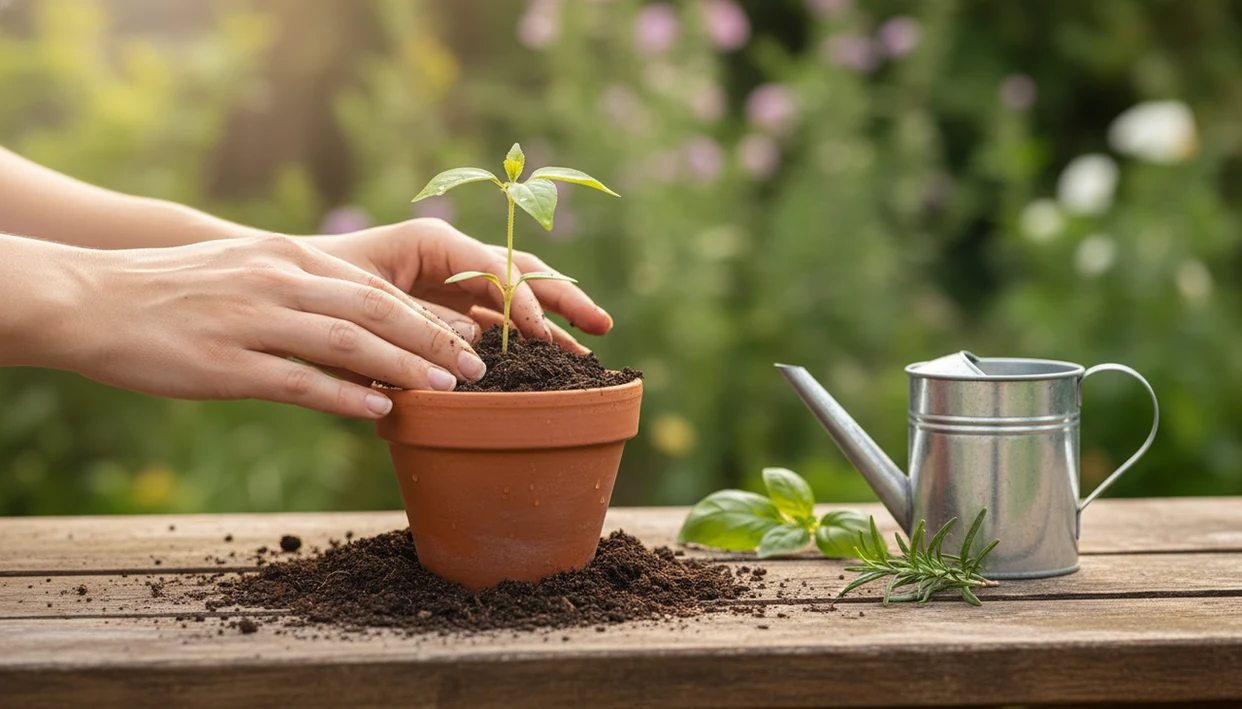
Mindful gardening is bringing present-moment, non-judgmental attention to ordinary tasks such as watering, weeding, planting, and harvesting. Instead of working on autopilot, you notice soil texture, the sound of water, your posture, or the urge to hurry. When attention wanders, return to the task without criticizing yourself. This is a way of paying attention, not a particular garden style.
You do not need a perfect garden, special tools, or spiritual beliefs. A balcony pot or windowsill herb can give you somewhere to begin. Choose one manageable task and let it hold your attention for a few minutes. Gardening research suggests possible well-being benefits, but mindful gardening is a wellness practice, not a medical treatment or a promise of calm.
Definition: Mindful gardening is the practice of bringing present-moment, non-judgmental awareness to ordinary gardening tasks.
The essentials
- Mindful gardening is a way of paying attention, not a special garden style.
- The core practice is simple: slow down, use your senses, reduce distractions, and return attention to the task in front of you.
- Research on gardening suggests possible well-being benefits, but mindful gardening should be framed as a wellness practice, not a medical treatment.
Mindful gardening meaning in plain language
Mindful gardening means applying mindfulness to garden tasks, not designing a certain kind of garden. A raised bed, balcony pot, community plot, or basil plant on a windowsill can all work.
In practice, you might feel the soil texture between your fingers, notice the green edge of a new leaf, hear birds near the fence, or smell herbs after brushing past them. You may also notice the urge to rush, fix, compare, or finish.
That noticing is the practice.
The goal is not a tidy harvest basket or a weed-free border. It is curiosity, acceptance, and non-judgment while you work. If you want a broader plain-language foundation first, our what is mindfulness definition guide explains the same attention skill outside the garden.
Five mindful gardening facts beginners should know
- Mindful gardening is routine gardening used as attention practice. Watering, pruning, sowing, and harvesting become the “object” of mindfulness.
- The basic method is slow down, sense, and return. When the mind leaves the task, you notice and come back.
- It may support relaxation and stress reduction, but it is not medical care. Use it as wellness support, not a substitute for treatment.
- It values natural cycles. Imperfect leaves, late blooms, pests, and compost all become reminders of change.
- Fewer phone checks usually make it easier. A pocket buzzing beside a trowel pulls attention away fast.
For beginners, one simple way to try it is to choose one plant and one task. No big setup. Just enough structure to notice what is happening.
What gardening research can tell us about well-being
Research on this topic is usually about gardening-based interventions, not mindful gardening specifically. That matters. A study may test community gardening, therapeutic horticulture, or structured garden activity rather than the exact practice of paying mindful attention while weeding.
Still, the evidence is encouraging for general well-being. A 2020 systematic review found gardening-based interventions improved mental health outcomes in 7 of 10 studies that measured mental well-being, and improved life satisfaction in 3 of 4 studies measuring that outcome S12889 020 08440 0.
A 2017 systematic review linked gardening with improvements in depression, anxiety, and mood across included studies S2211335517301281. A 2021 randomized controlled trial also found a statistically significant reduction in self-reported stress compared with a control condition PubMed research.
The careful takeaway: gardening may support well-being, but mindful gardening should not be presented as a treatment for a diagnosis.
How mindful gardening works during ordinary garden tasks
Mindful gardening works by turning ordinary garden cues into repeated sensory anchors. Soil, water, scent, movement, light, and sound give attention somewhere clear to land.
A garden gives attention something concrete to work with: water darkening soil, a seedling leaning toward light, or cold fingertips around a hose. The mind drifts, you notice the drift, and you come back to the next visible or felt cue without making the detour a problem.
The mind will still wander. It may jump to a class deadline, the way gym locker metal smells after practice, annoyance at stubborn weeds, or a parking ticket stub tucked in a jacket pocket. In mindful gardening, the practice is to catch that shift and return to what your hands are doing.
A bent stem can bring irritation. A dry pot can bring guilt. Rain can cancel the task you wanted to finish. Instead of fighting those reactions immediately, you pause and see them clearly.
Small moment, real practice.
Mindfulness practices and meditation techniques for beginners and daily life can build steadier attention, not a perfectly calm mood on demand. For a wider everyday framework, the mindful living guide connects this same skill to daily routines.
Start with one plant and one manageable task
Use mindful gardening by choosing one safe, manageable task and letting it be enough for a few minutes. Water one container, loosen one patch of soil, or harvest one small handful. The goal is not to prove you are calm or to complete the whole garden; it is to stay close to the task, notice when attention leaves, and end with a clear sense of having been present.
- Choose one safe focus such as a single plant, container, raised bed, or simple task like watering, wiping leaves, or pulling a few easy weeds. Avoid tools, heat, chemicals, or positions that feel unsafe.
- Set a short timer for 5 to 10 minutes, then place your phone out of reach so it can mark time without becoming the main object of attention.
- Anchor attention in the senses by noticing touch, smell, color, sound, and breath. Feel soil or leaf texture, hear water, see edges and shadows, and notice the body breathing while you work.
- Notice the mind wandering into judging, rushing, comparing, or frustration without trying to force calm. Those reactions are part of the session, not proof that it failed.
- Return to the task gently, then finish by naming one observation: damp soil, a new shoot, tired hands, bird sound, or the effort you brought.
10-minute mindful gardening session
A 10-minute mindful gardening session works best when you choose one task and remove extra decisions. Set a visible cue if you need one, such as finishing a small watering can or tending one row, and let that boundary hold the practice.
- Set an intention to pay attention, not to finish the whole garden.
- Choose one task such as watering a pot, pulling a few weeds, planting seeds, or checking an indoor herb.
- Use your senses by noticing color, smell, temperature, sound, breath, and the feeling of your body bending or standing.
- Notice distraction when the mind moves to plans, judgments, or impatience, then return to the plant in front of you.
- Close with gratitude by naming one thing you observed, such as new growth, damp soil, or your own effort.
This can happen in a yard, balcony container, indoor plant corner, or community garden plot. A kitchen timer beside a mug works fine. You might notice damp grit under one fingernail, the handle pressing into your palm, or the tiny pause before you reach for your phone.
Mindful gardening tips for watering, weeding, planting, and harvesting
Watering, weeding, planting, and harvesting each offer different mindfulness cues. Pick the cue that feels easiest today, not the one that sounds most impressive.
Watering as a sensory anchor
Notice the sound of water hitting soil, the rhythm of pouring, the weight of the can or hose, and the shine of wet leaves. Let the task set the pace.
Weeding as patience practice
Feel your grip, the plant’s resistance, and the root releasing or snapping. Irritation may show up quickly. That, too, is something to notice.
Planting as attention training
Notice soil texture, breath, posture, and the fragility of a seed or seedling. Shoulder blades pressing the chair after a planting session can also become part of awareness.
For harvesting, slow down around color, smell, gratitude, and loss. A ripe tomato picked today means that exact stage of growth is over.
Choose garden tasks that fit your body and surroundings
Mindful gardening fits best when the activity is safe, repeatable, and simple enough to notice. Container plants and indoor herbs can work as well as a large yard.
| Best for | Not for |
|---|---|
| Beginners who want a practical next step | Unsafe heat, storms, or poor air quality |
| People who already garden and want more attention in the task | Severe allergies or asthma triggers without precautions |
| Small-space growers using pots, balconies, or windowsills | Pain flare-ups or mobility limits that make the task unsafe |
| People who want mindfulness in daily life, not only on a cushion | Dangerous tools, ladders, or chemicals without training |
| Anyone practicing patience with natural cycles | Urgent mental health support or crisis needs |
For people living with persistent pain, pacing matters more than forcing a mindful attitude. Our guide to mindfulness for chronic pain covers safety-minded attention practice in more detail.
Rest in the garden without doing a chore
Gardening does not have to mean continuous work. On a day when tending plants feels demanding, sit in a safe, comfortable spot and choose three anchors: one visible detail, an ambient sound, and the contact of your feet with the ground. Leave a little time without conversation or phone use. You do not need to produce anything or force a peaceful feeling. For shared garden time, mindful phone use in relationships can help you give others your full attention.
A 2026 review of nature exposure and mental health reported possible benefits from brief, repeated exposure, including sessions as short as 10 minutes for adults with mental-health symptoms. That does not validate this exact attention exercise or make it treatment. Treat a seated garden pause as an alternative to a demanding task, and notice whether it suits you that day.
Common mindful gardening mistakes that reduce attention
A common mistake is treating mindful gardening as slow gardening only. Slowness can help, but attention is the point. You can move slowly and still spend the whole time rehearsing tomorrow’s meeting. If rushing repeatedly distracts you, learn to change habits that undermine your goals through one small adjustment at a time.
Another mistake is aiming for a flawless garden. That turns the practice into control. The moment a leaf yellows, the mind starts judging. If perfectionism keeps you from starting, recognizing self sabotage can help you pause and choose a manageable task.
Multitasking also changes the experience. Podcasts, texts, photos, and productivity goals can be useful at other times, but they crowd out sensory attention when they run the entire session. The screen glow on tired eyes is not the same anchor as leaf texture or damp soil.
Do not ignore the body. Heat, allergies, tool safety, and pain signals matter. Also, one session may not feel calm. Frustration is not failure; it is material for practice, much like noticing the dangers of suppressing emotions before they harden into habit.
Small-space mindful gardening ideas for beginners
Small-space mindful gardening works because attention, not square footage, creates the practice. Start with one low-pressure plant and one repeatable task.
- Windowsill herbs: Notice scent when you touch basil, mint, parsley, or thyme.
- Balcony containers: Use watering as a daily sensory cue, especially the sound and weight of the container.
- A single houseplant: Wipe leaves slowly and notice color, dust, and posture.
- Seed starting: Watch patience in real time. Nothing visible may happen for days.
- Community garden visits: Walk one row slowly before doing any task.
Image caption idea for later: hands touching soil in a small container garden as a mindfulness anchor for mindful gardening.
If you are drawn to nature-based practice more broadly, why is nature good for mental health explores the wider connection.
Prepare for gardening with a brief guided practice
Guided breathing, body awareness, and short mindfulness sessions can help you bring steadier attention into the garden. They are optional supports, not requirements.
A short session before watering plants may make it easier to notice breath, posture, and impatience once you step outside.
The Mindfulness Practices App can also help beginners compare breathing, body scan, and informal mindfulness practices. Inside the Mindfulness Practices App, start with a brief breathing or body-scan session before you water, weed, or plant, then treat the garden task as the main practice.
No app guarantees gardening benefits or treats mental health conditions. The garden is still where you practice noticing and returning.
How can I remember to pause while gardening?
Watering several pots can quickly become another chore to finish. The free mindfulness bell offers a cue to pause and notice your hands, posture, or the sound of water. Mindful.net's short guided meditations can also support a pause before starting. When a device distracts you, leave it indoors and use finishing one pot as your reminder instead.
A gardening meditation that alternates tending and observing
Try alternating a small gardening action with a pause to observe what changed. This gives the meditation a clear sequence without making finishing the job its purpose. Before starting, decide where you will stop, such as after tending one patch of soil. Leave the remaining work for another session. During each pause, notice the difference between what you can actually sense and what you think the plant needs.
- Settle beside your chosen plant. Notice where your feet, knees, or seat meet a supporting surface.
- Look at one small area before touching it. Notice its shape, color, and position without deciding whether it looks good or bad.
- Make one necessary gardening movement, such as placing soil around a seedling. Follow the movement of your hand and the contact with the soil.
- Pause with your hands still. Look again and notice what changed, if anything.
- If planning or judging takes over, silently name it as planning or judging. Return to one visible detail, then continue with another movement and pause.
- Stop at the point you chose. Notice any urge to keep working, then deliberately put the task aside.
Choose a garden meditation spot using what is already there
Define your practice spot by where you pause, not by adding decorative features. Choose an existing place where you can sit or stand comfortably and see a plant or a patch of garden. Keep ordinary gardening work outside that small area when possible. You can still hear traffic, see unfinished chores, or notice an imperfect border. There is no need to rearrange the whole garden before using the spot.
- Check the approach: choose a place you can reach without stepping over tools, hoses, or uneven obstacles.
- Use an existing seat or a comfortable standing position. Leave enough room to change posture without disturbing plants.
- Choose one visual reference already present, such as a leaf cluster, tree trunk, or edge of a planting bed.
- Move tools out of your immediate resting space so you do not need to hold them while pausing.
- Set a simple boundary for the pause: while you are in this spot, observe rather than start another chore.
Mindful Gardening Limits
- Mindful gardening cannot replace therapy, medication, crisis support, or professional medical advice.
- Seek professional care for mental health symptoms that are severe, persistent, or urgent.
- Pain, mobility limits, heat, allergies, pests, weather, and unsafe tools can make gardening tasks unsuitable.
- Benefits are not guaranteed, and evidence is stronger for general well-being than specific clinical treatment claims.
Mindful gardening questions
What is the difference between mindful gardening and ordinary gardening?
The difference is where you place your attention, not which plants you grow. During mindful gardening, you notice sensations, movement, and thoughts as you work, then return attention when it wanders. Ordinary gardening can include this too. Moving slowly helps only if you are also noticing what is happening.
How do I start mindful gardening as a beginner?
Choose one safe, manageable task, such as watering a pot or wiping a houseplant's leaves. Give it five minutes. Notice one sensory cue, such as the weight of the watering can or the leaf's surface. When plans or judgments interrupt, acknowledge them and return to the next movement.
Can I practise mindful gardening without a garden?
Yes. A windowsill herb, balcony container, or single houseplant is enough. Watering, checking a new leaf, or wiping away dust can all become attention practice. The amount of space is not the point. Choose a task that is comfortable and safe in the space you have.
Can mindful gardening help with stress or anxiety?
It may support relaxation and general well-being, but benefits are not guaranteed. Much of the research concerns gardening or nature exposure rather than mindful gardening specifically. Use it as a supportive activity, not a replacement for therapy, medication, or other professional care when stress or anxiety needs treatment.
How long should a mindful gardening session last?
Start with five to ten minutes or a clear task boundary, such as watering one container. You do not need to complete the garden. A short session gives you a manageable opportunity to notice distraction and return. Stop sooner if the task becomes painful, tiring, or unsafe.
What should I focus on while watering plants?
Choose one cue: water striking soil, the weight of the can, your grip, or the changing color of damp soil. Keep doing the task rather than trying to notice everything at once. When your mind wanders, return to that cue without treating the distraction as a failure.
What if weeding makes me frustrated rather than calm?
Calm is not a requirement. Notice frustration as part of the experience, along with your grip, posture, and the resistance of the roots. Avoid forcing a stubborn weed or straining your body. You can change to an easier task, sit nearby, or stop without making the session a failure.
Can I practise mindful gardening with pain or limited mobility?
Choose only tasks and positions that feel safe for your body. An accessible container or indoor plant may be a better fit than ground-level weeding. Sitting near plants and noticing color, sound, and bodily contact is another option. Do not push through pain to complete a mindfulness session.