
How to Cultivate Humility Without Losing Self-Respect


To cultivate humility, practice seeing yourself accurately, listening before defending, admitting mistakes, and recognizing the people and conditions that support your life. Humility means knowing your strengths and limitations without placing yourself above or below other people. It is not low self-esteem, self-criticism, or pretending you have nothing to offer.
Mindfulness helps you notice comparison and defensiveness before they shape your response. When someone corrects you, pause long enough to hear the point before explaining yourself. When you receive praise, accept it and acknowledge specific help. Gratitude, honest feedback, deep listening, and admitting mistakes make humility a repeatable practice, not a demand to become smaller.
The essentials
- Humility is accurate self-awareness, not low self-esteem or shrinking yourself.
- Mindfulness helps you notice comparison, defensiveness, and ego stories before acting on them.
- Gratitude, feedback, deep listening, and admitting mistakes are practical humility habits.
What Cultivating Humility Means In Daily Life
Cultivating humility means practicing a clearer view of yourself in ordinary moments, including your abilities, blind spots, needs, and dependence on other people.
> Cultivating humility means training yourself to recognize your strengths and limitations clearly without placing yourself above or below other people.
Humility is not humiliation. It is not passivity, fake modesty, or pretending you have no talent. A humble person can lead a meeting, accept praise, set a boundary, and still know they are not the center of everything.
Mindful living makes humility practical because it asks you to notice what is happening now, not only what you wish were true. A caregiver reviewing a tight budget, for example, might feel the pencil texture between their fingers, notice warm cheeks after a walk, and realize they are bracing to defend every choice. That small pause can soften the next sentence without erasing self-respect. For a broader frame, our mindful living guide explains how everyday attention practice works outside formal meditation.
Key distinctions: humility, mindfulness, and gratitude
- Humility is balanced self-awareness. It means seeing your strengths and limits without turning either one into your whole identity.
- Mindfulness exposes ego stories. During practice, you may notice “I’m better than them” or “I’m worse than everyone” as thoughts, not facts.
- Gratitude can strengthen humility. A 6-week gratitude intervention found significant increases in humility scores compared with controls, suggesting that thanking and remembering support can reduce entitlement. Source: Journal of Positive Psychology gratitude and humility study.
- Humility behaviors are trainable. Deep listening, asking for feedback, admitting mistakes, and crediting others are skills you can repeat, not personality traits reserved for rare people.
- Humility is linked with well-being and relationships. In a study of 349 adults, higher trait humility was associated with greater life satisfaction and meaning in life, even after personality factors were considered. Source: Journal of Positive Psychology study on humility and well-being.
Start with one ordinary cue, such as the steam rising while you make tea or the click of a gym locker door. Take three Clipboard Breaths: notice the body, name one fact you may not know, and choose one respectful next action. Simple. Grounding.
How Humility Practice Works In The Mind
Humility practice works by helping you see comparison, defensiveness, shame, and pride as mental events rather than fixed identity. In mindfulness language, these are thoughts, body sensations, and habit loops. A habit loop is a repeated cue, reaction, and reward pattern.
Breath awareness creates a pause before you protect your image. Three breaths before unmuting in a tense work call can soften the urge to interrupt. The point is not to become passive. The point is to notice the first surge of “I need to win this” before it drives your words.
A meta-analysis of 27 randomized controlled trials found that mindfulness-based interventions produced moderate improvement in prosocial behaviors such as empathy and compassion. Source: British Journal of Psychology meta-analysis on mindfulness and prosocial behavior. Those qualities overlap with humility because they move attention beyond self-protection. The social need is real too: in a Pew survey, 71% of U.S. adults said people are less respectful than 20 years ago. Source: Pew Research Center survey on respect in American life.
A mindful pause gives you time to see your reaction clearly and choose a kinder response; it does not require a flawless personality.
Start with learning, not self-punishment
Before you practice humility, make sure you are moving toward clear self-awareness, not using the practice to punish or erase yourself. Healthy humility should make you more honest and available, not more afraid.
- Check your motive before reviewing a mistake. Ask, “Am I trying to learn, or am I trying to prove I am bad?” If the answer is punishment, pause and use a kinder sentence first: “This is hard, and I can still respond well.”
- Choose one low-stakes place to practice. Start with a daily situation, such as listening during a routine meeting, receiving a small correction, or thanking someone at home.
- Set a boundary if humility turns into silence. If you become more fearful, agreeable, or unable to name your needs, stop the exercise and return to basic self-respect.
- Use self-compassion before feedback. Place a hand on your chest, breathe once, and remind yourself that accountability does not require self-attack.
- Seek support when safety is involved. Trauma, coercion, abuse, or relationships where honesty brings punishment need qualified help, not a stronger humility practice.
Five Mindfulness Steps To Cultivate Humility
Use this sequence when you want a practical answer to how to cultivate humility tips in daily life.
- Set a daily intention to see clearly rather than prove yourself. Try one sentence before opening your laptop: “Today I will notice what is true.”
- Notice comparison thoughts and label them better-than or worse-than. The label helps you see the thought without obeying it.
- Breathe before defending yourself when feedback or embarrassment appears. Feel the shoulders drop after an exhale, then answer.
- Ask one honest question before giving your opinion. Try, “What am I missing?” or “How did that land for you?”
- Review one mistake, one contribution from another person, and one next action. Keep it plain, not dramatic.
The most useful humility practice is often the one you can repeat in a real conversation, not the one that sounds impressive in a journal.
Humility Tips For Work, Family, And School
Humility becomes easier when it is tied to specific settings. Use small behaviors you can actually repeat, especially when your first impulse is to defend, correct, or look impressive.
Mindful humility at work
Credit the person who found the missing detail. Ask for feedback before the project is finished. If an email feels sharp, rewrite the first line before sending it. Hands off the keyboard for ten seconds can save a morning.
Mindful humility at home
Listen without correcting the timeline. Apologize quickly when you snap. Avoid scorekeeping about who did more. If emotions are being buried rather than respected, the dangers of suppressing emotions are worth understanding.
Mindful humility at school
Ask for help before pretending you understand. Acknowledge a classmate’s idea. Treat mistakes as information, not proof that you do not belong.
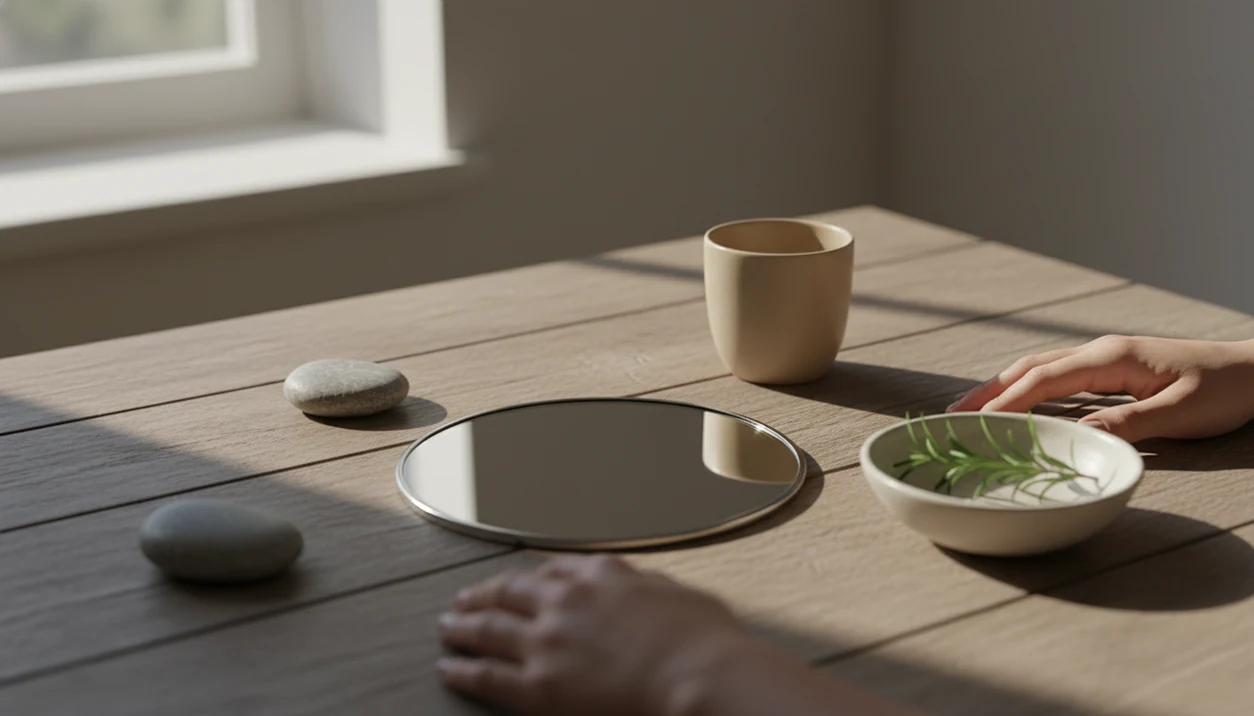
Suggested image caption: Everyday mindfulness scene for how to cultivate humility, with a person pausing before responding in a shared workspace.
Humility Practice Table For Boundaries And Self-Respect
Healthy humility includes boundaries and self-respect. It helps you take your place without taking over the room, but it should never be used to make yourself smaller for someone else’s comfort.
| Best for | Not for |
|---|---|
| Reducing defensiveness during feedback | Tolerating abuse or repeated disrespect |
| Improving listening in close relationships | Suppressing needs, pain, or honest disagreement |
| Balancing confidence with openness | Avoiding leadership when your voice is needed |
| Repairing small mistakes with accountability | Replacing therapy for trauma or severe distress |
Cultural norms also matter. In one family, humility may look like speaking softly. In another, it may mean direct honesty without self-display. Neither style is automatically better.
For people who tend to over-apologize, boundaries may need to come before humility practice. For people who tend to dominate, listening may be the practical next step.
Five Common Mistakes In Learning Humility
The biggest mistake is confusing humility with self-attack. Self-compassion research, including work with university students, has linked self-compassion training with reduced self-criticism and shame. That matters because shame often blocks accountability instead of improving it.
- Putting yourself down to seem humble. “I’m terrible at this” can still keep attention on you.
- Refusing praise instead of receiving it with perspective. Try, “Thank you. I had help from Maya on the first draft.”
- Staying quiet when speaking up is needed. Humility can include courage, especially when someone is being dismissed.
- Using humility language to avoid accountability. “I’m only human” is not enough after harm. Repair still matters.
- Comparing how humble you are to others. That is competition wearing a softer shirt.
Real humility usually sounds ordinary: “I missed that,” “You were right,” or “I need to learn more.” If purpose and service are part of your reflection, how to find your purpose can help connect humility with action.
Limits of Humility Practice
- Mindfulness and humility are not quick fixes for trauma, severe mental illness, or abusive environments.
- Humility should not suppress needs, ignore danger, or encourage tolerating harm.
- Research relies mostly on participant reports, and cultural norms affect how humility appears.
- If mindfulness causes distress, slow down and seek qualified care; how meditation supports health cannot replace professional help.
Practicing humility: common questions
How do I cultivate humility in everyday life?
Choose one behavior to repeat: ask a question before offering your opinion, listen without interrupting, or acknowledge help when something goes well. Notice the urge to look right or impressive without judging yourself for it. The aim is more accurate self-awareness and more considerate behavior, not constant self-monitoring.
What is the difference between humility and low self-esteem?
Humility allows you to recognize both strengths and limits. Low self-esteem can turn a mistake or weakness into a judgment about your whole worth. You can be humble while accepting praise, leading a meeting, or setting a firm boundary. Putting yourself down is not a requirement.
How can I accept criticism without becoming defensive?
Take a few breaths before replying, then ask for a specific example if the feedback is unclear. Separate what happened from what you fear it says about you. You can acknowledge a useful correction without accepting every judgment. Humility leaves room for disagreement as well as learning.
Does being humble mean staying quiet or agreeing with others?
No. Humility means being open to correction, not giving up your judgment or voice. You can say what you know, explain a disagreement, or speak up when someone is dismissed. Listen carefully and leave room for missing information, but do not treat silence as proof of humility.
How do I accept a compliment without sounding arrogant?
Start with a simple thank you rather than denying the compliment. If someone helped, name their contribution accurately: “Thank you. Maya helped clarify the first draft.” You do not need to list your shortcomings to balance the praise. Receiving credit and sharing credit can both be humble responses.
Can mindfulness help me become more humble?
Mindfulness gives you a way to notice comparison, pride, embarrassment, and defensiveness before responding. Labeling a thought as “better than” or “worse than” can help you avoid treating it as fact. Practice still needs to carry into behavior, such as listening, acknowledging mistakes, and asking honest questions.
How can I admit a mistake without spiraling into shame?
Name the specific action rather than condemning your whole character: “I interrupted you” is clearer than “I am a terrible person.” Acknowledge the effect, apologize where appropriate, and identify what you will do differently. If reviewing mistakes becomes self-punishment, pause; accountability does not require attacking yourself.