
Mindfulness With Dogs: Practice During Walks and Quiet Moments


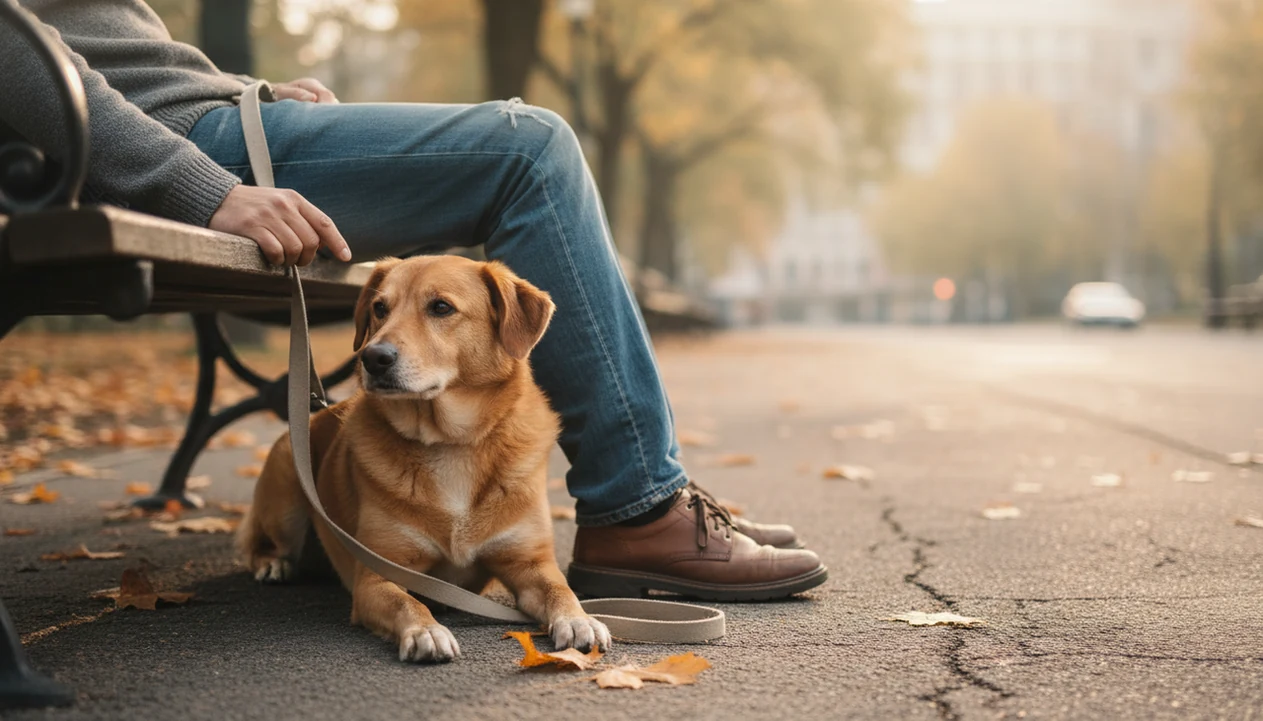
Mindfulness with dogs means bringing steady, non-judgmental attention to your dog, your body, and the present moment during ordinary routines. A walk, sniff break, feeding, grooming session, or quiet sit can become a short practice: feel your feet, notice your breathing, and watch your dog’s body language. This is secular mindfulness, not obedience training or therapy, and it does not require an app.
The aim is to notice more, not to make your dog sit still or make yourself feel calm on command. Evidence comes mainly from broader mindfulness research and early studies of dog interaction, rather than a large body of dog-specific mindfulness trials. Keep contact optional, avoid forced eye contact, and pause if your dog turns away, stiffens, or shows other stress signals.
The essentials
- Use normal dog moments, walks, sniff breaks, cuddles, feeding, and grooming, as short mindfulness practices.
- The strongest evidence comes from broader mindfulness research and early studies on dog interaction, not from a large body of dog-specific mindfulness trials.
- Keep the practice dog-friendly: avoid forced eye contact, forced stillness, or close contact if your dog shows stress signals.
Turn ordinary dog routines into attention practice
Mindfulness with dogs means using time with your dog as present-moment attention practice, not as another task to finish. You notice your breathing, your posture, the leash in your hand, and your dog’s body language without rushing to judge the moment as “good” or “bad.”
This practice is approachable because dogs naturally make the day more rhythmic. The bowl is lifted. The leash clicks. A warm flank leans against your calf while you stand near the door. Each cue becomes a small invitation: notice what is happening, feel your own state, and return without making the moment into a performance.
This is a secular practice. No special belief system is required. For beginners and daily practice, mindfulness and meditation aim to build steadier attention and kinder awareness, not deliver instant calm or cure distress.
Likely benefits include calmer attention, less autopilot, a deeper bond, and better consistency with your dog. For many beginners, a dog walk is easier than a seated meditation because the routine is already there. For a broader foundation, our what is mindfulness definition guide explains the basic terms.
Notice a cue, lose focus, and return
Mindfulness with dogs works by turning ordinary dog routines into cues for present-moment attention. The leash, food bowl, hand on fur, walking rhythm, and shared resting time become reminders to notice what is happening now instead of drifting into autopilot.
The basic mechanism is an attention loop: you notice a sensation or signal, the mind wanders, you return, and you soften the judgment about wandering. In real life, that may mean feeling the leash webbing in your palm, hearing tags tap together, sensing cool air at your lips, then noticing that your attention has drifted to a customer support queue or a parking ticket stub in your coat pocket. Your dog’s role is cue and companion, not calming object. The practice trains human skills such as sensory attention, meaning attention through sight, sound, touch, and movement, and emotional regulation, meaning the ability to pause and respond with more steadiness. Any benefits are indirect. This is not dog-specific medical treatment, and it should not replace veterinary care, training, or mental health support.
What research says about mindfulness and dog interaction
Mindfulness with dogs works by shifting attention from rumination or phone distraction toward breath, movement, touch, sound, scent, and the dog’s signals. In plain language, you give the mind a real-time place to land.
- Mindfulness-based programs have been linked with small to moderate improvements in anxiety, depression, and wellbeing in a 2021 meta-analysis of 142 studies NIH research.
- A 2021 randomized trial found that mindfulness, dog interaction, and combined programs all improved self-reported wellbeing and mindfulness 08927936.2021.1898213.
- Dog routines create repeated cues, especially walking, feeding, resting, and returning home. You can bring similar attention to your own meals through mindful eating, without turning awareness into food rules.
- Sensory attention can include paws on pavement, your feet on tile, traffic sound, and your dog’s sniffing pattern.
- The evidence does not show that dogs uniquely treat anxiety, depression, trauma, or medical conditions.
How mindfulness with dogs works is simple: routine becomes the cue, sensory attention becomes the method, and non-judgment becomes the tone. Breath returning after distraction is the practice, not a failure.
Five Steps for Mindfulness With Dogs
Use this 3- to 10-minute routine when your dog is settled enough, the environment is safe, and you can keep practical awareness of traffic, leashes, and other animals.
- Set a short timer for 3 to 10 minutes, or choose one small part of a walk.
- Notice your breath, feet, and the dog’s pace before changing anything.
- Soften your jaw, shoulders, and grip, while keeping leash safety clear.
- Follow one dog-friendly cue, such as sniffing, relaxed walking, or resting nearby; don’t force stillness.
- Close by naming one thing you noticed about yourself and one thing you noticed about your dog.
The dog routine itself requires no app. If you want guided secular practice for the human attention skill, tools like Mindful.net, Calm, and Headspace can help you practice noticing and returning when the mind wanders toward unfinished errands, a paintbrush left at an easel, or tomorrow’s schedule. Mindful.net’s Mindfulness Practices App is optional here; use it before or after the dog routine, not while crossing streets, handling leash tension, or managing a reactive dog.
Practice during walks, sniff breaks, and quiet sits
Mindfulness with dogs fits best inside routines you already repeat. A UK dog-ownership study found dog owners walked their dogs a median of 7 times per week, which makes walking a built-in opportunity for mindful movement S41598 019 41254 6.
Mindful Dog Walk
Feel your steps meet the ground, then notice leash pressure, breath, surrounding sounds, and your dog’s pace. If your attention rushes ahead, come back to one step and one shared direction. For everyday practice beyond dog walks, the mindful living guide gives more simple daily cues.
Five-Minute Resting Sit
Sit on a kitchen chair or floor cushion and breathe naturally. Gentle contact is included only if your dog chooses it. Hands resting on denim knees can be enough.
Scent Stroll
Let your dog sniff at a relaxed pace for part of the walk. Notice impatience, planning, dry mouth, or the urge to hurry, then return to scent, air, posture, and movement. We usually suggest choosing one stretch of the route for this, rather than trying to make the entire walk slow and contemplative. If noticing urges during walks feels useful, mindfulness for emotional eating applies similar attention to urges around food.
Choose a walk setting that suits both of you
A green route can add sensory detail to a mindful dog walk, but the biggest park is not automatically the best choice. A 2021 systematic review of green-space characteristics found that vegetation type, environmental quality, size, and connectivity were associated with health outcomes, including psychological wellbeing. Those findings concern green spaces generally, not mindfulness with dogs specifically.
Choose a familiar route where you can attend to your surroundings while keeping track of traffic, leash pressure, and other animals. A smaller, quieter space may suit you better than a crowded park. Consider access, weather, noise, and an easy way home. You can still practice on an ordinary street or indoors; greenery is an option, not a requirement.
Read your dog’s signals and keep contact optional
Mindful attention includes your dog’s body language, not only your own calm. The practice becomes more ethical when the dog can opt in, opt out, and move away. For interactions with people, mindfulness for emotional intelligence can help you notice feelings and respond with greater care.
- Relaxed signals may include a loose body, soft face, easy breathing, voluntary closeness, and exploratory sniffing.
- Possible stress signals include lip licking, yawning out of context, whale eye, turning away, tucked tail, freezing, pacing, or avoiding contact.
- Mindful contact means you pause when your dog pulls away, stiffens, or stops engaging. Similar respect for boundaries appears in these emotional intelligence tips, which focus on thoughtful responses in human relationships.
- Humane boundaries still matter; mindfulness does not mean letting a dog run into unsafe situations.
- A dog’s preference can change by time of day, noise level, pain, age, or past experience.
Small signs count.
If you’re unsure about repeated stress signals, a veterinarian or qualified behavior professional is the right next step. Mindfulness can help you observe more clearly, but it is not behavior diagnosis.
Choose safe moments, not emergencies
Mindfulness with dogs is best for ordinary routines, not emergencies or serious behavior concerns. A U.S. survey of 2,536 adults found dog owners were more likely to report enough social support and higher physical activity than non-pet owners, which gives useful context but does not prove dogs caused those outcomes CDC guidance.
| Fit | Good match | Safety limit |
|---|---|---|
| Distracted dog owners | Helps shift from phone checking to breath, leash, and dog cues | Not for unsafe streets or off-leash chaos |
| Beginners to mindfulness | Uses familiar routines instead of long sitting | Not a substitute for mental health care |
| Daily walkers | Turns repeated walks into short attention practice | Not for emergencies or serious aggression |
| Calmer routines | May support steadier responses and consistency | Not for untreated pain or illness |
| Dogs who enjoy relaxed time | Allows voluntary closeness and shared quiet | Not for dogs distressed by touch or eye contact |
This practice can complement training, veterinary care, or therapy. It does not replace them. For related evidence boundaries, our page on how meditation supports health explains what mindfulness can and cannot claim.
Avoid zoning out, forced cuddles, and forced stillness
Zoning out is not mindfulness. Mindfulness is active, deliberate attention, even when the practice feels quiet.
Common mistakes include staring intensely into your dog’s eyes, forcing cuddles, or expecting a restless dog to stay still for your preferred breathing exercise. That can turn a calm idea into pressure. The conference room chair creaking softly during a work pause may suit you; your dog may need movement instead.
Don’t use mindfulness as a substitute for training, veterinary advice, or behavior support. One session also will not create lasting change. Consistency matters more than a dramatic first try.
Most important, don’t treat the dog as a calming object. Your dog is a living animal with preferences, stress signals, and needs. If strong emotions come up during practice, our guide to the dangers of suppressing emotions may help frame what to notice next. Practicing mindfulness for emotional awareness can help you name the feelings that arise without pushing them away.
Time a short sit beside your dog
During a quiet sit with a settled dog, Mindful.net’s free online meditation timer can mark a three- to ten-minute practice without repeated clock checks. Set it before you begin, then attend to your breathing and your dog’s signals. On walks, a familiar stretch of path is a better boundary than a screen. Stop early if your dog needs space or movement.
Limits of Dog Mindfulness
- Direct research on mindfulness with dogs remains limited, and many benefits are extrapolated from broader research.
- Mindfulness with dogs cannot replace veterinary care, behavior therapy, dog training, or professional mental health care.
- Some dogs dislike close touch, stillness, restraint, or direct eye contact.
- Seek qualified professional care when distress is severe, persistent, or linked to safety concerns.
Mindfulness with dogs questions
How do I practice mindfulness while walking my dog?
Choose a safe stretch of your usual walk. Notice your feet meeting the ground, the leash in your hand, surrounding sounds, and your dog’s pace. When attention wanders, return to one of those cues. Keep watching traffic and other animals; mindful walking is attentive walking, not zoning out.
Can I meditate with my dog beside me?
Yes, if your dog is comfortable resting nearby and can move away freely. Sit comfortably and notice your breathing, bodily contact with the chair or floor, and nearby sounds. Your dog does not need to match your breathing, stay still, or remain beside you for the practice to count.
How long should mindfulness with my dog last?
Start with three to ten minutes, or choose one small part of a routine, such as a sniff break. The time is a practical boundary, not a proven dose. End sooner if the setting becomes unsafe or your dog needs movement, distance, or attention to another need.
What if my dog gets restless during meditation?
Let the practice change or end. You can notice your dog’s movement and your own reaction without requiring stillness. A short walk may fit the moment better than sitting. If restlessness involves persistent distress or a behavior concern, mindfulness is not a substitute for veterinary advice or qualified behavior support.
How can I tell if my dog dislikes mindful petting?
Pause if your dog turns away, stiffens, freezes, avoids contact, or moves away. Lip licking, yawning out of context, a tucked tail, and whale eye can also be stress signals. Do not insist on touch or eye contact. Resting nearby without touching is a valid way to practice.
Is mindfulness with dogs the same as dog training?
No. Mindfulness with dogs is an attention practice for the person, using ordinary interactions as cues. Training addresses the dog’s behavior. You still need clear safety boundaries and appropriate training; noticing leash pressure or your own tension does not replace teaching skills or getting help with serious behavior concerns.
Does spending mindful time with a dog reduce anxiety?
It may support present-moment attention, but it is not a guaranteed anxiety treatment. Direct research on mindfulness with dogs is limited, and much of the supporting evidence comes from broader mindfulness and human-animal interaction research. Severe, persistent, or safety-related distress calls for professional mental health care.