
How to Find Your Purpose With Mindfulness
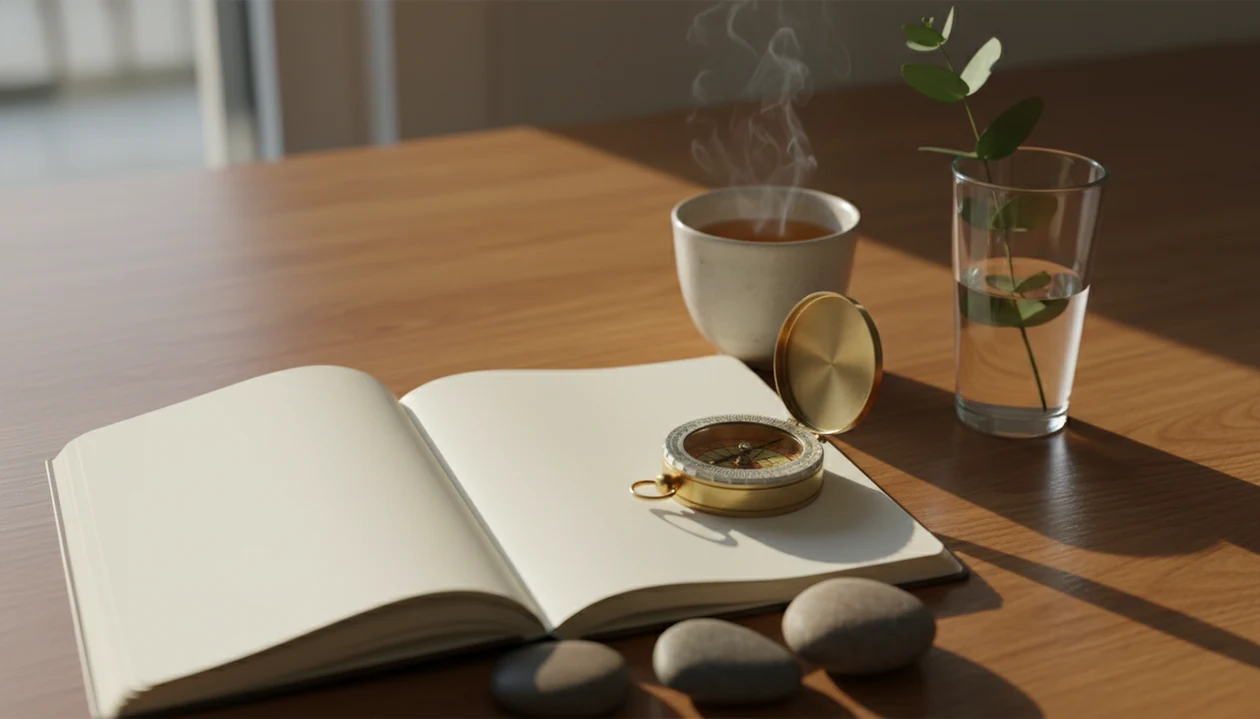
The phrase “how to find your purpose mindfulness” means using present-moment awareness, reflection, and small daily experiments to notice what feels meaningful, energizing, and aligned with your values. Instead of waiting for one dramatic life mission to appear, mindfulness helps you build a practical compass for how you live, choose, work, and relate each day.
Definition: Mindful purpose is the ongoing practice of noticing what matters to you and aligning everyday actions with your values, strengths, and capacity to contribute.
TL;DR
- Purpose is usually not one ideal career or passion; it is a values-based direction that can show up across many roles and seasons of life.
- Mindfulness helps by making patterns visible: what energizes you, what drains you, what feels meaningful, and where you naturally want to contribute.
- The practical path is to pause, observe, journal, test small actions, review patterns, and keep adjusting with self-compassion.
What mindful purpose practice means
Mindful purpose practice means using attention, reflection, and daily choices to understand what matters to you. It is not a search for one fixed destiny.
Citable definition: Mindful purpose is a secular attention practice that helps people notice values, energy, meaning, and contribution patterns, then align daily behavior with those patterns.
If you are asking “what is how to find your purpose mindfulness,” the plain answer is this: you slow down enough to see your real life more clearly. You notice when your body feels open, when your mind keeps returning to a topic, and when a task leaves you flat. Then you test what you notice.
Purpose can include paid work, but it is bigger than a job title. It can show up in parenting, repair work, friendship, advocacy, art, caregiving, or quiet dependability. Mindfulness supplies awareness, not instant certainty. A phone timer set for five minutes is often enough to begin.
Five facts in a mindful purpose guide
A mindful purpose guide should help you notice patterns, not pressure you to declare a life mission. The useful clues are often ordinary.
- Mindfulness reveals clues through joy, aliveness, growth, and meaning. Pay attention to what leaves you clearer afterward, even if it was effortful.
- Purpose can be expressed through many roles. One person may live the same value through teaching, caregiving, mentoring, or community work.
- A sense of purpose is associated with better well-being and resilience. Research links purpose with health outcomes, though it does not prove that purpose alone causes every benefit.
- Structured journaling helps identify recurring themes. Writing about peak moments, envy, resentment, service, and energy gives the mind something concrete to review.
- Purpose unfolds through repeated practice. One quiet sitting rarely answers everything; small experiments reveal more than abstract thinking.
The mind may wander to a grocery list. That still counts as practice.
How mindfulness for purpose works in daily life
Mindfulness for purpose works by turning repeated experience into useful information. Attention, body awareness, emotion labeling, values reflection, and behavior tracking are the main mechanisms.
In practice, you pause before a choice, notice sensations, name the emotion, and ask what value is being touched. Then you track what happens after you act. Over time, patterns become visible. Maybe your energy rises after helping a junior coworker. Maybe your shoulders tighten every time you agree to a project for status alone. The screen glow on tired eyes can become data, not just background noise.
The light technical term is interoception, which means sensing internal body signals. Another is values clarification, the process of naming what you want your actions to stand for. Together, they create a practical compass.
Purpose and mindfulness research supports this cautious framing: these practices can support awareness and well-being, but they do not guarantee a specific external result. For a broader foundation, our mindful living guide explains how attention practice fits daily routines.
Why purpose mindfulness tips matter for well-being
Purpose mindfulness tips matter because both purpose and mindfulness are linked with well-being in serious research. The evidence is encouraging, but it should be read carefully.
In a 2014 nine-year study of older adults, people with a higher sense of purpose had a 43% lower risk of all-cause mortality than those with lower purpose NIH research. A 2016 meta-analysis of 10 prospective studies, with more than 136,000 participants, found that strong purpose was associated with a 17% lower risk of cardiovascular events and a 17% lower risk of mortality Jaha.115.002584.
Mindfulness also has program-level evidence. A 2014 JAMA Internal Medicine systematic review of meditation programs found moderate evidence for improvements in anxiety, depression, and pain, with more limited or less certain effects for stress and quality of life JAMA study. Clinicians typically recommend mindfulness as a supportive skill, not a replacement for diagnosis, therapy, medication, or crisis care.
These studies show associations and program effects, not a promise that meditation will deliver a certain career, partner, income, or identity.
How to use mindfulness to find your purpose
The simplest way to use mindfulness to find purpose is to combine short meditation with values journaling and small real-world tests. Keep it practical enough to repeat.
- Set a five-minute timer. Sit on a kitchen chair, bus seat, or office stairwell and feel your feet on the floor.
- Notice your current state. Name one body sensation, one emotion, and one thought without fixing them.
- Write three values. Choose words that describe how you want to live, such as steadiness, care, courage, learning, or honesty.
- Track your energy. After ordinary activities, mark whether you felt drained, neutral, or more alive.
- Test one small action. Make a call, offer help, decline one misaligned request, or spend 20 minutes on a neglected interest.
- Review weekly. Circle repeated themes and ask, “What kind of life is this pointing toward?”
For beginners, small tests usually work better than trying to solve purpose in one long journaling session because action gives clearer feedback than rumination. If you want a wider non-meditation frame, our guide on how to find your purpose covers values and life direction more broadly.
Best for and not for purpose mindfulness practice
Purpose mindfulness practice is best for people who can experiment gently and observe honestly. It is not the right tool for every situation.
| Best for | Not for |
|---|---|
| People who feel stuck but can still take small daily actions | People needing urgent clinical, safety, or crisis support |
| People who feel overcommitted and want to notice what truly matters | Anyone expecting a guaranteed career answer |
| People whose choices feel externally driven by approval, status, or fear | Anyone looking for a spiritual authority to decide for them |
| People curious about values, service, meaning, and energy patterns | Anyone wanting a quick fix after years of disconnection |
| People ready for small experiments before major life changes | Situations that require legal, financial, medical, or mental health advice |
Mindful.net keeps this topic secular, practical, and beginner-friendly. Tools like mindful.org, Calm, Headspace, and Insight Timer can support practice, but the important work is still noticing and testing your own life.
Good mindfulness practices and meditation techniques for beginners and daily life deliver clearer attention and steadier self-observation, not a guaranteed blueprint for your future.
Common mistakes in mindful purpose practice
Most purpose work goes sideways when people demand certainty too soon. These five mistakes are especially common.
- The perfect-career trap. Purpose is not one job you must choose forever; it is a direction that can move through many roles.
- The instant-answer trap. Meditation may calm the noise, but it rarely reveals everything in a few days.
- The outside-only trap. Jobs, relationships, and achievements can express purpose, but they cannot replace your own values.
- The crisis-waiting trap. You do not need a breakup, burnout, or relocation before making one meaningful change.
- The journal-only trap. Writing once can feel clear, but small actions show whether the insight holds.
The pocket check is real. When discomfort rises, many people reach for the phone instead of staying with the question for ten more breaths.
If emotions feel hard to name, our article on the dangers of suppressing emotions may help you understand why avoidance can blur purpose signals.
Daily purpose mindfulness exercises for beginners
Daily purpose mindfulness exercises work best when they are short, repeatable, and tied to real choices. You are training attention in ordinary moments.
Three-minute decision pause
Before saying yes, replying, buying, quitting, or committing, pause for three minutes. Feel the breath return after distraction. Notice the belly rising against a waistband. Ask, “Does this choice move me toward what I value, or away from it?” Then choose the next honest step, not the dramatic one.
Purpose journaling prompts
Use five prompts: “When did I feel most alive this week?” “What did I envy?” “What resentment keeps returning?” “Where did I want to help?” “What felt meaningful even though it was hard?”
Add one small purpose-aligned action per day. Send the message, take the walk, repair the apology, study the skill, or protect the hour. Optional gentle support from Mindful.net or another Mindfulness Practices App can help you keep a simple practice rhythm without turning purpose into another performance project.
Image caption for a purpose mindfulness guide
A good image for this guide would show a notebook, pen, and quiet meditation space in natural light. Keep it plain: a chair, a journal, soft daylight, and enough empty space to suggest reflection. Avoid glowing symbols, mountaintop poses, or anything that implies instant transformation.
Suggested caption: A quiet notebook and meditation space for how to find your purpose mindfulness, connecting mindful breathing, journaling, and daily choices.
Alt text guidance: Write what is visible and useful for a screen reader, such as “Notebook and pen beside a meditation cushion in natural light.” Do not stuff the alt text with promises. The image should support the idea that purpose grows through attention and small choices.
Headphones resting on a meditation cushion can work, if the scene still feels like ordinary practice rather than a lifestyle advertisement.
Limitations
Mindfulness and purpose work have real limits. They can support clarity, but they are not a complete answer to every kind of distress or life problem.
- Mindfulness and purpose work are not substitutes for medical care, therapy, psychiatric support, or crisis services.
- Mindfulness does not guarantee a specific job, relationship, income, identity, diagnosis outcome, or external result.
- Benefits are usually gradual. Sporadic meditation and one journal entry rarely create lasting clarity.
- Some people feel more anxiety, grief, anger, or discomfort when turning inward.
Mindfulness can sit beside care. It should not replace it.
For a related evidence-focused overview, our article on how meditation supports health explains where the research is useful and where caution is needed.
A Tiny Experiment to Run Today
- Sit in an ordinary chair, set a kitchen timer for three minutes, and call this the Chair Check: notice breath, posture, and the next small action that feels honest rather than impressive.
- We do not know whether a single mindfulness style is best for finding purpose; many beginners seem to learn more from short repeated experiments than from one dramatic insight session.
- After the timer, write one line: “Today, I felt more aligned when ___.” A one-line journal keeps the practice practical instead of turning it into a life-purpose essay.
- If breath feels like a neutral anchor, try a brief Breath Awareness practice; if work choices are the main issue, connect the note to one concrete decision in your day.
- Compare it with yoga gently: yoga may give you movement and structure, while this tiny mindfulness experiment may better show which ordinary moments feel meaningful.
Signs You Should Try Another Approach
Mindfulness for purpose may not be the best first step if every session turns into harsh self-judgment, rumination, or pressure to discover a grand mission. In that case, we usually suggest a more concrete support path: talk with a trusted mentor, simplify the question to one next action, or use a structured practice such as Mindfulness at Work for a specific situation. The goal is not to force clarity; the goal is to notice whether this method is helping you choose with a little more honesty.
Before You Try This
You feel skeptical about purpose language.
Use the Chair Check without calling it spiritual. Ask only, “What task or conversation today deserves more of my real attention?” Low-pressure language often makes the practice easier to repeat.
You are a parent, nurse, or shift worker with no quiet hour.
Try one minute before a transition, such as stepping into the house or starting a break. Purpose practice can be a small alignment check, not a retreat from ordinary responsibilities.
You keep comparing mindfulness with yoga.
Choose yoga when your body needs movement and a class container. Choose mindfulness when the question is more about noticing motives, values, and the next honest choice.
You want certainty before beginning.
Begin with evidence from your own week instead. Three one-line journal entries may reveal more than waiting for a perfect answer.
At-a-Glance Options
| Technique | Best for | Minutes |
|---|---|---|
| Chair Check | Testing whether a daily choice feels aligned without overthinking purpose | 3 min |
| One-Line Journal | Spotting patterns in what feels meaningful, draining, or worth repeating | 2-5 min |
| Breath Awareness | Settling attention before asking a values-based question | 5-10 min |
One Mistake We Notice Often
One mistake we notice often: people turn purpose mindfulness into a performance review of their entire life. We usually suggest shrinking the question until it fits inside one ordinary day: one chair, one kitchen timer, one honest sentence. That smaller frame tends to reduce the guru tone and makes it easier to see whether the practice is actually useful.
Purpose often becomes clearer when the next honest action is small enough to repeat tomorrow.
Why Mindful.net fits this specific need
Mindful.net is useful here because its guides keep purpose practice grounded in repeatable attention skills rather than dramatic life declarations. Readers can pair this page with Breath Awareness for a simple anchor or Mindfulness at Work when alignment questions show up in meetings, roles, or career choices.
FAQ
Can mindfulness reveal my purpose?
Mindfulness can reveal patterns in your values, energy, emotions, and choices. It usually does not deliver one fixed answer instantly.
How long does it take to find your purpose?
Purpose clarity often develops over weeks or months of reflection and small experiments. Some people notice useful clues sooner, but the process is usually iterative.
Is purpose the same as a career?
No. A career can express purpose, but purpose is broader than work and can include relationships, service, creativity, learning, faith, or care.
What should I do if I feel no purpose?
Start with small moments of meaning, care, curiosity, and energy. Track what feels even slightly more alive or honest.
Can journaling help me find my purpose?
Yes. Journaling about values, peak moments, envy, resentment, and recurring themes can make purpose clues easier to see.
Does meditation create life purpose?
Meditation trains awareness. Purpose develops as values, attention, choices, and repeated actions begin to line up.
What blocks purpose clarity?
Common blockers include external expectations, busyness, fear, comparison, perfectionism, and avoiding difficult emotions. Too much passive scrolling can also dull the signal.
Can purpose change over time?
Yes. Purpose can evolve with life stage, health, responsibility, relationships, loss, and changing values.
When should I seek support for lack of purpose?
Seek qualified support if lack of purpose is tied to depression, trauma, crisis, self-harm thoughts, or persistent distress. Mindfulness can support care, but it should not replace professional help.