
Mindfulness and Inflammation: Evidence and Practice for Stressed Adults


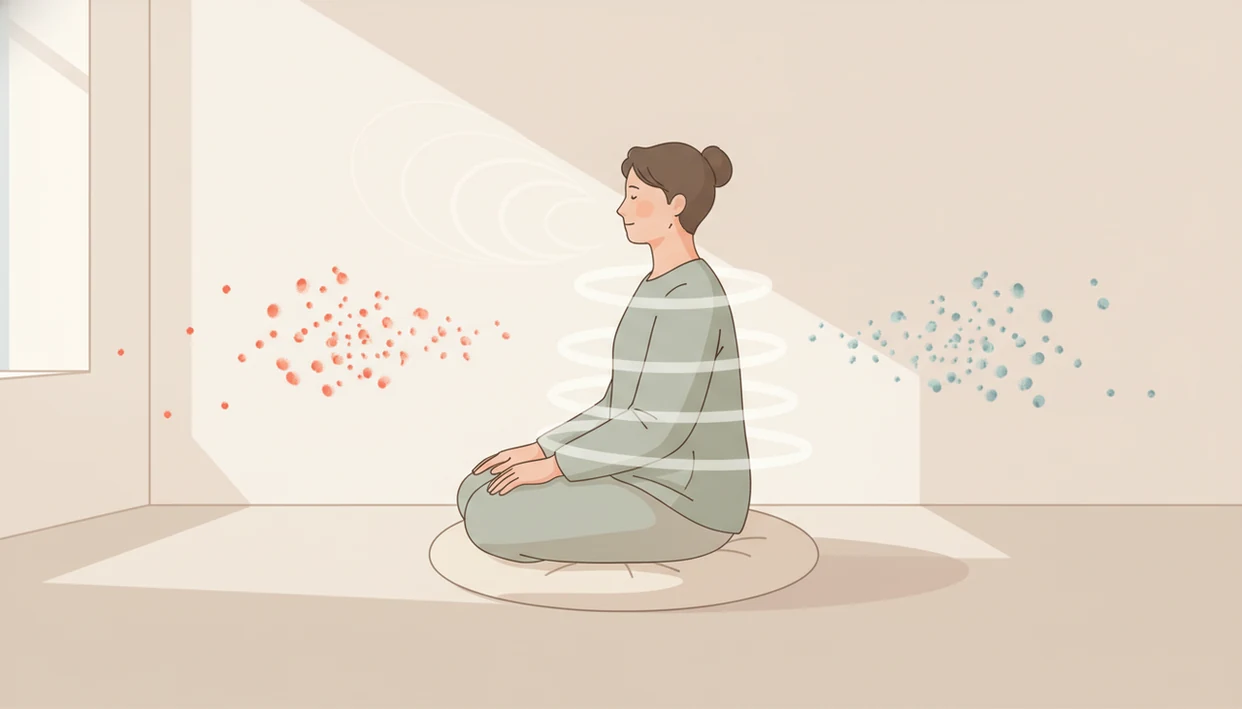
Mindfulness may modestly reduce or prevent increases in inflammation markers such as IL-6 and CRP when practiced regularly as a stress-regulation skill. It means paying steady, non-judging attention to breath, body sensations, thoughts, and emotions, rather than automatically reacting to them. Research is more supportive of structured training over several weeks, often eight, than of occasional meditation, with some findings more apparent in stressed, older, or higher-BMI adults.
The proposed connection involves attention, emotion regulation, and brain-immune signaling, not simply feeling relaxed. A systematic review of mindfulness and immune markers describes the findings as tentative and needing replication. Mindfulness is a complementary practice, not a substitute for medical care, medication, sleep, movement, or nutrition changes.
What matters most
- The best evidence is for structured mindfulness programs practiced over weeks, often 8 weeks, rather than occasional meditation.
- Mindfulness appears to affect inflammation through stress pathways involving attention, emotion regulation, and brain-immune signaling.
- It is a complementary practice, not a substitute for medical care, medication, sleep, movement, or nutrition changes.
What the Evidence Says About Mindfulness, IL-6, and CRP
The short answer is promising, modest, and not uniform: mindfulness may reduce or prevent increases in inflammatory markers such as interleukin-6, or IL-6, and C-reactive protein, or CRP. The evidence is stronger for structured training than for a few isolated meditation sessions.
Most studies look at stressed adults, older adults, people with higher BMI, or people living with chronic inflammatory conditions. That matters. A five-minute pause before opening a laptop may help your stress level, but it is not the same dose used in research.
Mindfulness is an add-on to care, not a cure for inflammatory disease. Mindfulness practices and meditation techniques for beginners and daily life deliver attention training and stress regulation, not guaranteed lab changes or medical treatment.
Small steps count.
Five findings from mindfulness and inflammation trials
- In a randomized trial of 35 stressed, unemployed adults, 3 days of intensive mindfulness meditation reduced blood IL-6 compared with relaxation training, with brain connectivity changes helping explain the result Meditation Changes Brain.Html.
- In a randomized controlled trial of 49 adults with chronic inflammatory conditions, 8 weeks of mindfulness-based stress reduction reduced the inflammatory response to a lab stress test compared with a matched health enhancement program. PubMed research
- A systematic review of 20 randomized controlled trials found mindfulness meditation was linked with improvements in several immune outcomes, including some inflammatory markers and cell-mediated immunity PMC research article.
- Some older or higher-BMI groups may show more detectable CRP changes when baseline inflammation is higher, but results are inconsistent and these subgroup findings remain tentative, as discussed in this systematic review of mindfulness and immune markers.
- Benefits vary by population, marker, practice consistency, and study design. For stressed adults, regular mindfulness practice is often more realistic than chasing one specific biomarker because stress, sleep, pain, and mood can shift before labs do.
How attention and stress responses may affect inflammation
How mindfulness works: chronic stress can keep the body’s threat system active, which may increase inflammatory signaling over time. Mindfulness trains non-reactive attention, meaning you notice stress sensations without automatically feeding the next round of alarm. Recognizing everyday autopilot can help explain why familiar stress reactions sometimes unfold before you consciously notice them.
In plain language, the body gets fewer false fire drills.
Researchers often discuss executive control, the brain’s task-directing system, and the default mode network, which is active during self-focused thinking and rumination. Mindfulness may change how these networks respond to stress, but it does not switch immunity off. It may help rebalance stress-immune signaling so the body is less likely to stay stuck in a high-alert pattern. This pathway is plausible rather than settled; researchers still disagree about which immune markers are most responsive and whether changes persist after training ends PMC research article.
A beginner mistake is waiting for a perfectly calm moment to practice. Try a cue inside real stress instead: in an airport queue, notice dry mouth, heavy legs, and the coffee aroma drifting past. Name one sensation, soften the rush to fix it, and then return to the next ordinary step. For broader daily routines, our mindful living guide explains how attention practice fits ordinary life.
A changed immune marker is not a proven health benefit
Blood markers are only part of this research. A systematic review of randomized mindfulness trials also reported possible changes in NF-κB activity, which is involved in inflammatory signaling, and telomerase activity. These findings concern biological processes. They do not establish that meditation prevents cancer, reverses aging, or treats an inflammatory disease. Research on meditation and gene expression offers context for these findings without implying that practice reliably changes disease outcomes.
For a reader, the useful distinction is between a measurable biological change and a benefit that matters in daily life. Less pain, better function, or improved disease control would require evidence of those outcomes, not just a different laboratory result. The review's findings remain tentative, so they should not be treated as a personal promise about what regular practice will do. Expectations can shape responses to practice, while the Rosenthal effect concerns how others' expectations influence behavior.
Mindfulness vs Relaxation Training and Wellness Education Trials
Mindfulness trials are useful because they compare attention training with active alternatives, not just “doing nothing.” The key question is whether mindfulness adds something beyond general relaxation, health education, or quiet time.
| Trial comparison | Mindfulness approach | Control approach | What the trial suggests |
|---|---|---|---|
| Carnegie Mellon stressed adults study | Intensive mindfulness meditation | Relaxation training | Mindfulness reduced IL-6 more than relaxation in this small trial. |
| Wisconsin chronic inflammation study | 8-week MBSR | Health enhancement program | MBSR reduced stress-provoked inflammatory response more than matched wellness education. |
| Practical takeaway | Non-reactivity plus attention training | General stress reduction skills | Mindfulness may add a specific “notice and return” skill, but it does not always outperform every active approach. |
Relaxation often aims to calm the body directly. Mindfulness includes that sometimes, but it also trains you to meet discomfort without immediate resistance. A voice prompt fading into silence can feel awkward at first. That awkwardness is part of the training. Our overview of mindfulness and perception of time explores how attention can influence the way duration feels.
For related pain education, read our guide to mindfulness for chronic pain.
Who may benefit, and when mindfulness is not enough
Mindfulness fits best when the goal is stress regulation alongside usual care. It fits poorly when someone wants a guaranteed inflammation change within days or plans to replace prescribed treatment.
Best for
- Stressed adults: Regular practice may reduce repeated stress activation that contributes to inflammatory signaling.
- Older adults: Some CRP findings are stronger in midlife-to-older groups.
- Higher-BMI adults: Reviews suggest CRP changes may be more detectable when baseline inflammation is higher.
- People seeking a complementary practice: Mindfulness can sit beside sleep, movement, nutrition, and medical care.
Not for
- Medication replacement: Do not stop anti-inflammatory medication because meditation feels helpful.
- Urgent symptoms: New swelling, fever, severe pain, bleeding, or rapid decline needs medical evaluation.
- Instant biomarker goals: Lab markers may not shift quickly, even when stress feels easier to handle.
Clinicians typically recommend following diagnosis-specific treatment plans first, then using stress-management practices as supportive care where appropriate.
When to Seek Medical Care for Inflammation Symptoms
Seek medical care promptly when inflammation symptoms are new, severe, spreading, or paired with signs that your body is under strain. Mindfulness can help you notice what is happening, but it should not slow down diagnosis, treatment, or medication monitoring.
Red flags include fever, visible swelling, severe or worsening pain, unexplained bleeding, shortness of breath, confusion, weakness, or a rapid decline in daily function. Also check in if a joint becomes hot and hard to move, gut symptoms suddenly change, or fatigue feels unlike your usual stress pattern. If you are tracking CRP, IL-6, or other biomarkers, bring those concerns to a clinician rather than trying to interpret the numbers alone.
- Call urgent care, your clinician, or emergency services if symptoms are severe, fast-moving, or frightening.
- Continue diagnosis-specific treatment unless your clinician tells you to change it.
- Ask about medication side effects, lab monitoring, and when repeat testing is useful.
- Tell a mental-health professional if quiet practice worsens panic, anxiety, flashbacks, or trauma symptoms.
The goal is steady support, not white-knuckling through warning signs.
6-Step Mindfulness Practice for Stress-Related Inflammation
How to use mindfulness for stress-related inflammation: begin with a practice small enough to repeat, use it most days, and track consistency rather than chasing lab numbers.
- Set a short timer. Start with 5 to 10 minutes on a kitchen chair, bus seat, or office stairwell.
- Notice the breath. Feel cool air at the nostrils, then follow one full exhale without forcing it.
- Scan the body. Move attention from the forehead to the feet, noticing pressure, warmth, tightness, or ease.
- Label emotions. Silently name “worry,” “irritation,” or “planning” when the mind jumps to tomorrow’s tasks.
- Return without judging. When attention wanders to a grocery list, come back to breath or body sensation.
- Track the pattern. Note stress, symptoms, sleep, and practice days; don’t judge the week by one biomarker.
8-Week Mindfulness Practice Plan for Beginners
An 8-week trial is a realistic way to test mindfulness because many research programs use weekly training plus regular home practice. Practice most days, even if some sessions are only five minutes.
Weeks 1 and 2 can focus on breath awareness. Weeks 3 and 4 can add body scan practice, such as noticing feet warming inside wool socks before bed. Weeks 5 and 6 can include emotion labeling during mild stress. Weeks 7 and 8 can bring mindfulness into real triggers, like pausing before hitting send on a difficult email.
Mindfulness usually works best when it is paired with sleep, movement, nutrition basics, and medical care, while occasional meditation fits people who only want brief stress relief. Its Mindfulness Practices App format can help structure a simple 8-week plan.
For a wider background, our page on how meditation supports health explains the difference between support and treatment.
Image Caption for Mindfulness and Inflammation Practice
If you add a mindfulness image to this guide, keep it ordinary and non-medical: a person sitting quietly, a phone on airplane mode, no lab equipment, and no graphics implying inflammation disappears.
Suggested caption: A quiet breathing practice can help stressed adults train a calmer response to body sensations and daily pressure.
Suggested alt text: Mindfulness practice for stress-related inflammation with a person sitting quietly and breathing.
The image should not imply that meditation visibly removes inflammation. It should show attention practice, not a medical procedure. If the page includes a hero image, the caption can mention mindfulness reduces inflammation once, but the visual should stay grounded and realistic.
Mindfulness and Inflammation Limits
- Evidence across inflammation biomarkers is mixed, and small, short trials in specific groups may not generalize to everyone.
- Effects are usually modest and depend on regular practice over weeks, not one calm evening.
- Mindfulness does not cure rheumatoid arthritis, inflammatory bowel disease, autoimmune disease, or chronic pain conditions.
- If stress involves emotion suppression, the dangers of suppressing emotions guide may clarify what mindfulness asks of you.
Mindfulness and inflammation questions
Can mindfulness actually lower inflammation?
Some studies suggest that structured mindfulness training can modestly lower or prevent increases in inflammatory markers. Results vary across markers and groups, and the findings remain tentative. The most practical goal is better stress regulation alongside usual care, not a guaranteed reduction in inflammation.
Which inflammation markers have mindfulness studies measured?
Studies have measured markers including interleukin-6, or IL-6, and C-reactive protein, or CRP. Researchers have also examined inflammatory signaling and gene activity. A change in any one measure does not by itself show that an inflammatory disease has improved or that treatment is no longer needed.
How long should I meditate to reduce inflammation?
There is no established meditation dose that guarantees lower inflammation. Many research programs run for about eight weeks and include regular home practice. Starting with five to ten minutes most days can help build consistency, but that shorter routine is not equivalent to every program studied.
Is mindfulness better than relaxation for inflammation?
Some trials have found an advantage for mindfulness over relaxation training or health education on particular inflammatory outcomes. That does not establish that mindfulness is always better. The training schedule, participants, comparison activity, and marker measured all affect what a trial can tell you.
Can meditation replace anti-inflammatory medication?
No. Mindfulness is a complementary stress-regulation practice, not a replacement for prescribed medication or medical monitoring. A calmer mood or a changed blood marker is not a reason to stop treatment. Discuss medication changes and the meaning of test results with your treating clinician.
Does mindfulness help arthritis or inflammatory bowel disease?
Mindfulness may support coping and stress regulation alongside treatment, but it has not been shown to cure arthritis or inflammatory bowel disease. Evidence about inflammatory markers does not establish disease control. New swelling, worsening pain, sudden gut symptoms, or other concerning changes need medical assessment.
Should I get CRP or IL-6 tests to see if meditation works?
The research does not establish a personal testing schedule for meditation. These markers are research outcomes, not a simple score for your practice. If a clinician is already monitoring them, discuss the results in the context of your condition rather than assuming a change was caused by mindfulness.
Can mindfulness make anxiety or distress worse?
Yes. Although mindfulness is generally considered low-risk, some people report increased anxiety, distress, intrusive thoughts, or emotional destabilization. Do not push through worsening symptoms. Intensive or trauma-focused practice may need qualified clinical supervision, particularly with active psychosis, mania, severe dissociation, or acute trauma symptoms.