

> Definition: Pregnancy meditation is a secular mindfulness practice that uses breath awareness, body scanning, visualization, or guided audio to promote relaxation and emotional regulation during pregnancy.
What Pregnancy Meditation Is (and Is Not)
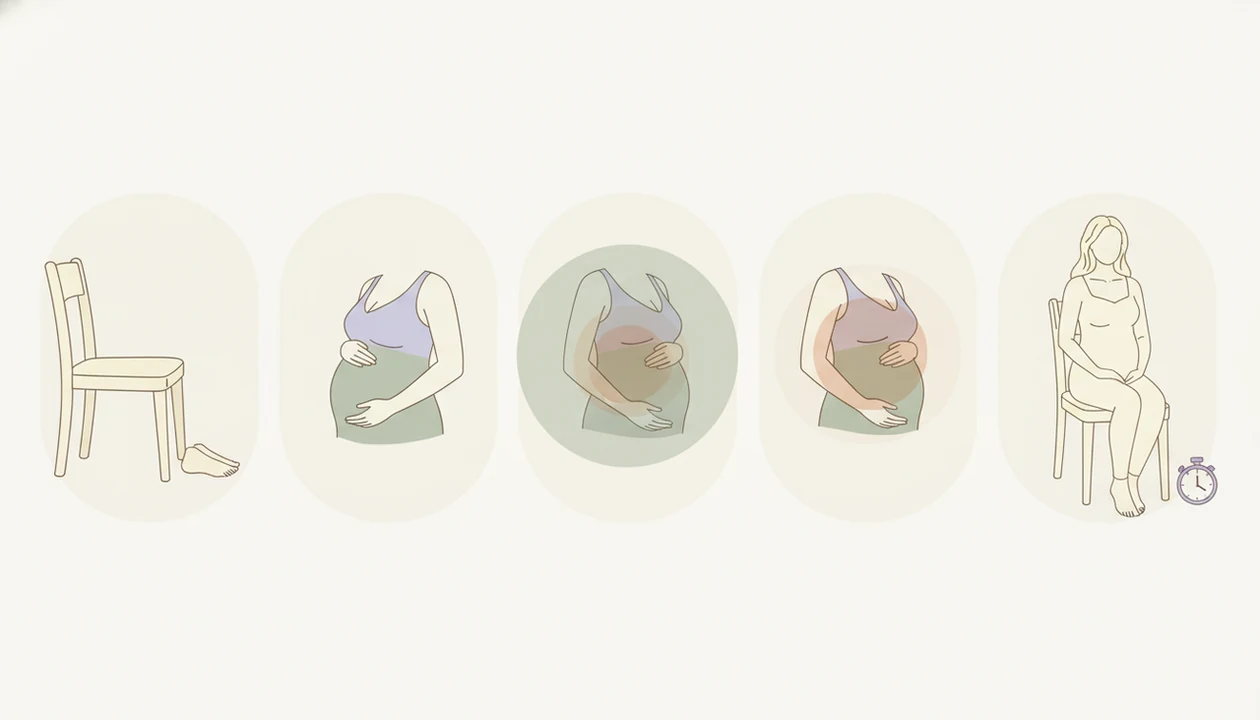
Pregnancy meditation is a gentle attention practice for people who are pregnant, usually built around breathing, body awareness, visualization, guided audio, or affirmations. It is secular, beginner-friendly, and meant to fit ordinary prenatal life, not replace it.
A simple session might mean sitting on a kitchen chair, feeling your feet on the floor, and noticing three slow breaths before the day starts. Another might be a guided audio track that invites you to relax your jaw, shoulders, belly, and legs.
Pregnancy meditation is not a religious requirement, spiritual authority, or performance test. It also is not the same as intense breath-holding, forceful breathing, or advanced pranayama. If a technique makes you dizzy, strained, or uneasy, it is not the right technique for that moment.
Small counts.
It can support emotional steadiness, but it does not replace prenatal care, therapy, medication decisions, or advice for a high-risk pregnancy.
Five Things Every Beginner Should Know About Meditation While Pregnant
- Pregnancy meditation can be short. A phone timer set for 3 to 5 minutes is enough for a first practice; no cushion, incense, or long session is required.
- There are several formats. Breath awareness, body scans, visualization, guided pregnancy meditation, and affirmations all count if they help you notice and return.
- Research is promising, not absolute. Prenatal mindfulness studies have linked practice with lower stress, anxiety, depressive symptoms, and sleep difficulty, but study designs vary.
- Comfort matters more over time. A posture that worked at eight weeks may feel awkward at thirty weeks, so pillows, side-lying, or supported sitting are practical choices.
- It belongs beside prenatal care. Pregnancy meditation is a supportive habit, not a medical treatment plan. Clinicians typically recommend discussing persistent anxiety, depression, trauma symptoms, dizziness, or pregnancy complications with a qualified prenatal provider.
For beginners, three steady breaths in a parked car can be more useful than waiting for the ideal quiet room.
How Mindfulness During Pregnancy Works
Mindfulness during pregnancy works by training attention, calming the stress response, and building emotional tolerance. In plain language, you practice noticing what is happening without immediately fighting it, fixing it, or following every thought.
Attention regulation is the first mechanism. When you focus on breath or body sensations, you interrupt rumination, including loops about appointments, symptoms, birth plans, or a grocery list that suddenly feels urgent. Stress-response modulation is another pathway. Slow, comfortable breathing can support parasympathetic nervous system activity, the “rest and digest” side of the body’s regulation system.
Emotional regulation is the third piece. You notice a worry, name it quietly, and come back to the next breath. Not magic. Practice.
Prenatal mindfulness research has studied stress, anxiety, depression, and birth-related measures. In one randomized clinical trial of pregnant women with generalized anxiety disorder, 30 participants received mindfulness meditation and 30 were in a yoga education control group; anxiety and depression symptoms improved more in the mindfulness group PMC research article. The same 17-study systematic review found a meaningful but still developing evidence base, with varied programs and outcome measures PMC research article.
Research and Evidence for Pregnancy Meditation
Research on pregnancy meditation is promising for emotional wellness, especially stress, anxiety, depressive symptoms, and sleep difficulty. It does not prove that meditation prevents pregnancy complications or guarantees fetal outcomes.
A useful way to read the evidence is to separate what has been studied from what is sometimes marketed:
- Look for emotional-wellness outcomes. Systematic reviews and randomized prenatal mindfulness trials most often measure perceived stress, anxiety, mood symptoms, sleep, coping, and birth-related fear. These are the areas where the evidence is most relevant.
- Notice the program details. Studies do not all test the same thing. Some use weekly mindfulness classes, some use meditation plus yoga education, some use brief home practice, and session length can range from a few minutes to longer structured programs.
- Separate support from treatment claims. Better emotional regulation may help a pregnant person feel steadier, sleep more easily, or respond to worry with less spiraling. That is different from proving direct medical effects on the placenta, labor, fetal growth, or preterm birth.
- Use it as an adjunct. Pregnancy meditation fits best beside prenatal care, therapy, medication decisions, and provider guidance when needed, not in place of them.
How to Start a Pregnancy Breathing Practice in 5 Steps
A pregnancy breathing practice can start with five quiet minutes and a posture that feels steady. The goal is not to empty your mind; the goal is to notice and return without forcing the breath.
- Choose a comfortable position. Sit with support, recline slightly, or lie on your side with a pillow where it helps.
- Set a timer for 3 to 5 minutes. A short timer lowers the pressure and makes the practice easier to repeat.
- Breathe slowly through your nose. Notice the belly or ribs moving as the inhale arrives and the exhale leaves.
- Return when your mind wanders. If you start planning dinner or checking the baby registry in your head, gently come back to breathing.
- Close with stillness. After the timer, pause for a few seconds and notice your body, mood, and energy.
Avoid breath-holding, forced exhalation, or any pattern that causes dizziness, pressure, or discomfort.
Ready to start tonight's calm routine?
Pregnancy meditation is a gentle mindfulness practice that uses focused breathing, body awareness, or guided audio to support stress relief, sleep, and connection during…
Best-For and Not-For: Who Benefits from Guided Pregnancy Meditation
Guided pregnancy meditation is often a good fit for beginners who want stress relief, better sleep, or a calmer way to connect with the baby. It can also help partners share a quiet routine without needing to know what to say.
Best for
- ✓ Beginners who prefer a voice leading the practice.
- ✓ People who want a short wind-down before bed.
- ✓ Partners who want shared breathing or belly-awareness time.
- ✓ Expecting parents who feel overwhelmed by silent meditation.
Not ideal for
- ✕ Replacing therapy for diagnosed anxiety, depression, trauma, or panic.
- ✕ Ignoring provider instructions during a high-risk pregnancy.
- ✕ Using breath retention or intense breathing when uncomfortable.
Prenatal mindfulness has also been tested in clinically relevant groups, including pregnant women at elevated stress or preterm-birth risk, but the results should be read as early evidence rather than proof of medical prevention PMC research article. For shared practice, partner pregnancy meditation support can make the routine feel less solitary.
Comfort and Safety Cues for Meditation While Pregnant
Meditation while pregnant should feel steady, breathable, and easy to adjust. Comfort is a safety cue, not a bonus feature.
Posture Options by Trimester
In the first trimester, most people can use familiar positions, including sitting, lying down, or gently reclining. A bus seat or bedroom floor can work if your body feels supported.
In the second and third trimester, avoid lying flat on your back for long periods unless your provider has said it is fine for you; ACOG gives similar caution for exercises done flat on the back after the first trimester Exercise During Pregnancy. Side-lying, supported sitting, and reclined positions with pillows are often more comfortable. If an image were placed here, the caption should show supported seated and side-lying posture options for pregnancy meditation.
Stop, shift, or end the session if you feel dizzy, light-headed, short of breath, compressed, or strained. Do not use prolonged breath retention or intense breath control. For early nausea days, morning sickness relaxation meditation may be a gentler starting point than longer sitting practice.
When to Contact a Prenatal Provider
Contact a prenatal provider when meditation brings up physical symptoms, intense distress, or questions about whether a practice is safe for your pregnancy. Pregnancy meditation can support calm and body awareness, but it never replaces individualized prenatal medical advice.
- Call promptly for physical red flags. Dizziness, fainting, chest pain, or shortness of breath should be discussed with a qualified prenatal clinician, especially if symptoms are new, strong, or recurring.
- Seek support for ongoing emotional symptoms. Persistent anxiety, panic attacks, depression, trauma symptoms, or intrusive thoughts deserve professional care. Meditation may sit beside therapy, medication decisions, or other support, but it should not be the only plan.
- Ask before practicing with restrictions. If you have a high-risk pregnancy, activity limits, blood pressure concerns, bleeding, preterm labor risk, or another complication, check which postures and breathing practices are appropriate for you.
- Stop any strained breathing. End the technique if it creates pressure, breath hunger, light-headedness, pelvic strain, or a sense of forcing.
- Use meditation as an add-on. Let it be a gentle tool for steadiness, not a reason to delay medical questions or urgent care.
Pregnancy Meditation Techniques: Breath, Body Scan, Visualization, and Affirmations
Pregnancy meditation techniques differ by attention target: breath, body sensations, mental imagery, or repeated phrases. Choosing one clear method makes practice easier than trying to do everything at once.
Breath Awareness and Body Scan
Breath awareness is the simplest entry point. Sit or lie comfortably for 3 to 5 minutes and follow the inhale and exhale. Some people track the inhale with fingertips resting lightly on the ribs.
Body scan moves attention through the body, often from head to feet. It can help you notice jaw tension, tight hips, or shoulder blades pressing the chair before those sensations turn into full-body restlessness. For bedtime, pregnancy sleep meditation often uses this method.
Visualization and Affirmations for Pregnancy
Visualization uses a calm scene, a safe place, or a gentle image of connection with the baby. Affirmations are short phrases repeated silently or aloud. If phrases feel supportive, pregnancy affirmations meditation can give the practice more structure.
App-Supported Routines for Daily Pregnancy Meditation
Meditation apps can help when consistency is harder than understanding the practice. Look for pregnancy-specific tracks, adjustable session lengths, reminders, offline access, and partner-based sessions if you want to practice together.
A practical routine is simple: one short morning breath practice and one evening guided session. The morning version might happen before opening a laptop. The evening version might be paused audio beside a water glass, then restarted when you are ready.
Good mindfulness practices and meditation techniques for beginners and daily life deliver repeatable attention practice, not guaranteed calm on command.
Tools like Mindful.net, Calm, and Headspace can make guided sessions easier to find, but the app is optional. Calm is strongest for broad sleep libraries; Headspace is strongest for general beginner courses; Mindful.net is most relevant here when you want pregnancy-specific explanations and short prenatal routines. If you compare options, a Mindfulness Practices App should still let you start small and adapt the session to your trimester, energy, and comfort.
Limitations
Pregnancy meditation has real uses, but it also has clear limits. It should be framed as supportive care, not a promise of medical outcomes.
- It is not proven to prevent pregnancy complications, preterm birth, miscarriage, high blood pressure, or labor complications.
- The evidence base is promising but mixed, with different study designs, practice lengths, and outcome measures.
- Claims about direct fetal benefits can be overhyped; benefits are more likely indirect through maternal stress reduction and emotional regulation.
- It is not a substitute for treatment of significant anxiety, depression, trauma symptoms, panic, or high-risk pregnancy concerns.
The most medically responsible way to use pregnancy meditation is as a gentle wellness habit alongside prenatal care, not instead of it.
Related guides
Myth vs What We Usually See
Mistake: trying to make the mind blank
Pregnancy meditation usually works better as a noticing practice than a control exercise. One clear anchor, such as a steady breath or a repeated phrase, gives attention somewhere to return without demanding perfect calm.
Mistake: choosing the longest audio first
A short session is often easier to repeat, especially during nausea, fatigue, or a crowded prenatal schedule. The best starting practice is usually the one you can do again tomorrow.
Mistake: measuring success by relaxation
Relaxation may happen, but mindfulness is not the same as forcing the body to settle. A session can still be useful if you noticed worry, shifted position, and returned gently to the breath.
Who Benefits Most — and Least
Pregnancy meditation may be most approachable for people who like gentle structure, brief routines, or a nonreligious way to pause during the day. It may be less useful as a first step for someone in acute distress, someone who feels worse when turning attention inward, or someone who needs practical help more than quiet reflection. We do not know in advance who will respond best, so we usually suggest treating the first few sessions as low-pressure experiments rather than proof of success or failure.
Who This Is Actually For
You are a shift worker trying to unwind after an irregular night
Use a three- to five-minute breath awareness practice before making decisions about sleep, food, or errands. A steady breath can act like a transition cue without asking your body to feel calm on command.
You are a parent already caring for another child
Try a short session while sitting nearby during a quiet moment, rather than waiting for perfect silence. Mindfulness can fit ordinary life better when the goal is one clear anchor, not a retreat-like setting.
You are a musician, athlete, or performer used to body feedback
A body scan may feel familiar because it uses attention to notice sensation without immediately fixing it. If sensation becomes too intense, open your eyes, change posture, or choose external sound as the anchor.
One Mistake We Notice Often
We usually see beginners do better when the first instruction is simple rather than impressive. A short session with one clear anchor often teaches more than a long practice that feels like a test. One pattern we notice is that people sometimes confuse mindfulness with performing calm; in early pregnancy meditation, noticing restlessness and returning gently may be the actual practice.
Hidden Limits People Miss
Myth: if meditation is natural, it is always the right tool
Reality: a practice can be gentle and still not be the best fit in a particular moment. If symptoms feel urgent, unusual, or concerning, prenatal care guidance should come before another session.
Myth: mindfulness should outperform relaxation
Reality: mindfulness and relaxation overlap, but they are not identical. Relaxation often aims to feel calmer; mindfulness often aims to notice what is present with less struggle.
Myth: breath work is always neutral
Reality: some people feel uneasy when focusing closely on breathing. If breath awareness feels uncomfortable, a sound, phrase, or contact point may be a better anchor; Mindful.net’s Breath Awareness guide can help clarify the difference.
When to Try Something Else
Meditation may not be the right next step if sitting quietly increases panic, brings up distressing memories, or makes you feel trapped in your body. It is also not a substitute for prenatal medical advice, urgent care, sleep support, or help with safety at home. A wise pause sometimes means choosing a person, a provider, or practical support instead of another audio track.
Three Paths Worth Trying
| Technique | Best for | Minutes |
|---|---|---|
| Breath awareness | Someone who wants one simple anchor during a short session | 3-8 min |
| Guided body scan | Someone who notices physical tension and wants a structured sequence | 8-15 min |
| Affirmation with quiet breathing | Someone who needs a repeatable phrase during uncertainty or transitions | 3-10 min |
Decision support beats generic calm advice when someone is choosing between pregnancy meditation techniques.
Why Mindful.net fits this specific need
Mindful.net is useful here because its meditation guides separate technique choice from vague wellness advice. Readers can compare breath-based practice with related skills like Breath Awareness and everyday attention training such as Mindfulness at Work, then choose a short, repeatable routine that fits prenatal life.