
Pregnancy Meditation for Partners: Breathing, Listening, and Support


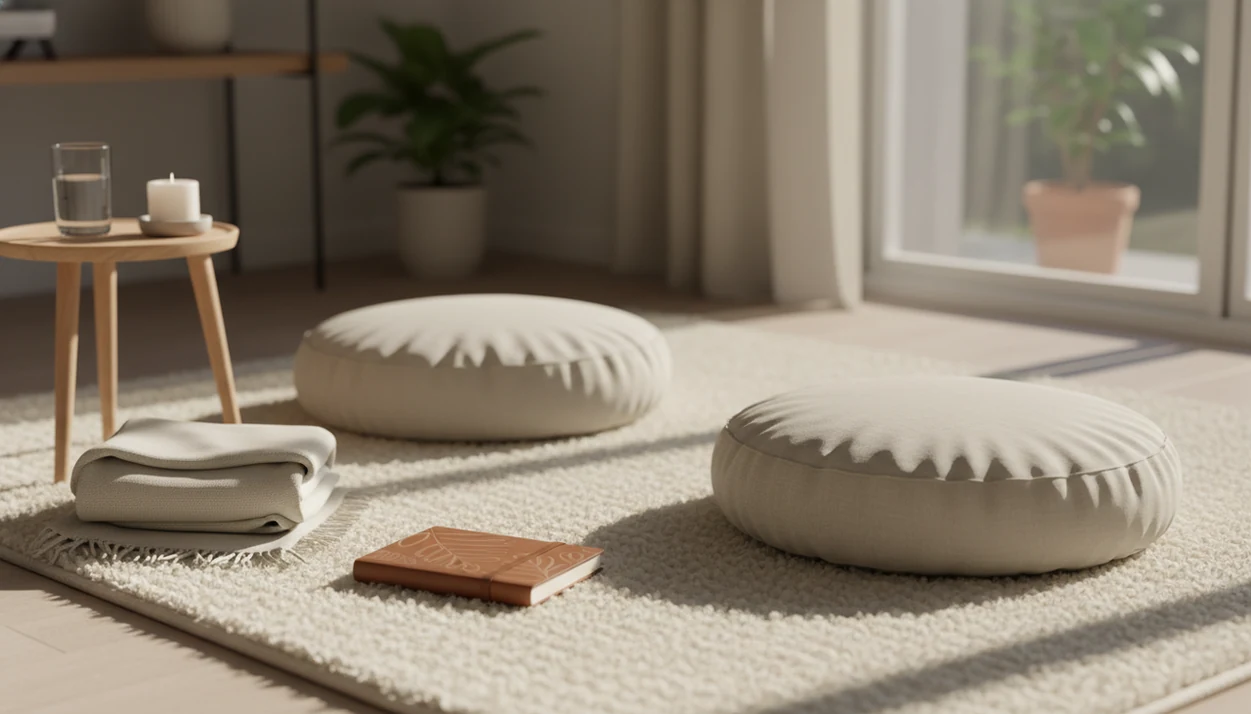
Pregnancy meditation for partners is a shared mindfulness practice using breathing, body awareness, listening, and gentle presence to help the pregnant person feel accompanied rather than managed. The partner offers calm company, not medical advice, emotional fixing, or pressure to meditate perfectly. The pregnant person decides what feels welcome, including touch, spoken guidance, or simply sitting together.
Start with five to ten minutes of comfortable breathing, a short body scan, or mindful walking. There is no need to match breaths or stay still through discomfort. Ask what kind of support would help today, then listen to the answer. Shared meditation can complement prenatal care, but it cannot replace medical care, mental health treatment, rest, or practical help.
The essentials
- Start with 5-10 minutes of shared breathing, body awareness, or mindful walking.
- The partner supports by listening, co-breathing, and asking consent before touch or guidance.
- Meditation can complement prenatal care, but it should not replace medical or mental health support.
The pregnant person leads, the partner supports
Partner pregnancy meditation support is shared mindfulness during pregnancy, practiced in a way that helps the pregnant person feel steady, heard, and not alone. For the earliest weeks, first trimester meditation offers a gentle starting point for shared practice.
That can be as simple as sitting together on a kitchen chair and breathing for five minutes. It can also include synchronized breathing, a short body scan, bump touch with clear consent, or a guided meditation made for expecting parents. The partner’s role is not to direct the experience. It is to offer presence, listening, and steadiness.
No fixing required.
A useful rule is this: the pregnant person leads what feels welcome, and the partner follows with calm attention. Practicing mindfulness builds a repeatable skill for noticing and returning attention; it does not promise a calm pregnancy or an easy birth.
How shared attention and steady breathing can help
Pregnancy meditation with partner support works by combining attention practice with co-regulation. In plain language, one person’s calm voice, slower pace, and steady breathing can help another person’s nervous system settle.
Mindfulness trains the skill of noticing sensations, emotions, and thoughts without reacting right away. During pregnancy, that might mean noticing tight shoulders, appointment nerves, or the mind jumping to a grocery list. The practice is not to erase the thought. It is to notice and return.
Partner breathing pregnancy practice can make stress more visible and workable for both people. A partner may realize they are holding their breath too. The pregnant person may feel less alone because someone is staying nearby without taking over.
Research links mindfulness during pregnancy with lower anxiety, depression, and perceived stress, but the evidence is still developing. For a broader foundation, the main pregnancy meditation guide explains solo practice, posture, and beginner safety in more detail.
Evidence for mindful support during pregnancy
The evidence for mindful support during pregnancy is promising, especially for stress and mood, but it does not prove guaranteed outcomes for every pregnancy or birth.
Most studies test prenatal mindfulness, relaxation, or childbirth-education programs broadly; they do not prove that a partner-led 10-minute meditation changes birth outcomes. Treat partner practice as comfort, communication, and stress-support education, not treatment.
- In a 2017 systematic review of 17 studies, 12 reported significant reductions in maternal anxiety, depression, or perceived stress (Dhillon et al., 2017).
- One randomized controlled trial of a mindfulness-based childbirth and parenting program found about 0.5-0.7 standard deviation reductions in pregnancy anxiety and depressive symptoms compared with usual care (Duncan et al., 2017).
- A Cochrane review of relaxation interventions in pregnancy found self-reported anxiety scores dropped by about 3-4 points compared with usual care (Cochrane Review).
- Perinatal mood and anxiety symptoms are common; ACOG notes that mental health conditions are among the most common complications of pregnancy and postpartum care (ACOG Clinical Practice Guideline).
- Mindfulness is best understood as a complement to prenatal care, not a guarantee of an easier pregnancy, smoother labor, or specific medical result.
Clinicians typically recommend professional evaluation when anxiety, depression, panic, trauma symptoms, or safety concerns interfere with daily life. Meditation can sit beside care. It should not replace it.
Newer research supports mindfulness, not partner-led treatment
A 2023 review of 25 randomized controlled trials involving 2,495 perinatal women found that mindfulness-based interventions improved depression and anxiety compared with controls. Depression benefits persisted into the postpartum period, while longer-term anxiety benefits were less certain. These findings concern mindfulness programs broadly, not proof that a brief breathing session led by a partner produces the same results. After birth, postpartum meditation can offer short, flexible pauses alongside practical support and appropriate professional care.
Severity also matters. A separate 2023 review of mindfulness during pregnancy found improvements in depressive symptoms, particularly among participants without severe depression at the start. Benefits were not clearly demonstrated for high-risk pregnant women with severe depressive symptoms. A partner can offer company and practical support, but should not treat meditation as an alternative to clinical assessment or treatment.
Comfort, consent, and safety before shared pregnancy meditation
Start by choosing a position that feels comfortable today, not one that looks like meditation. Seated, side-lying, reclined, or walking can all work. Feet on carpet or tile can be enough of a grounding cue. As comfort needs change, second trimester meditation can help partners adapt shared practice without forcing a particular posture.
Later in pregnancy, avoid long periods lying flat on the back unless a clinician has cleared it and it feels comfortable; NHS guidance also recommends side-sleeping in the third trimester because back-sleeping is associated with higher stillbirth risk (Sleep And Tiredness). If dizziness, nausea, pain, shortness of breath, or pressure shows up, pause and adjust. For nausea-heavy days, a softer practice like morning sickness relaxation meditation may fit better.
Keep the breathing easy and natural. Avoid long breath holds, forceful breathing, or trying to “push through” discomfort. Partners should ask before placing a hand on the bump, shoulder, back, or belly.
One simple agreement helps: either person can stop without explaining why. That makes the practice safer and less performative.
A 10-minute shared breathing practice
Use this 10-minute partner breathing pregnancy practice when you want a short, structured reset. It is especially useful before bed, after a long appointment, or before a birth-prep conversation.
Keep the setup ordinary: a pillow behind the back, a glass of water nearby, and enough light that nobody feels trapped or watched.
- Set a short timer and choose a comfortable position. Sit, recline, side-lie, or walk slowly; do not force stillness.
- Ask what kind of support feels welcome today. Try, “Would you like quiet company, a guided breath, or just listening?”
- Breathe naturally together without forcing matching rhythms. Let the exhale be easy; the quiet room may make it more noticeable.
- Listen for one sentence from the pregnant person without fixing it. The partner’s only job is to hear it and reflect it back simply.
- Close with one supportive phrase and one practical next action. Try, “I’m with you,” then choose one task, such as filling a water bottle or setting out clothes. For everyday caregiving, meditation for parents offers ways to pause before responding to stressful moments.
For bedtime practice, pregnancy sleep meditation may be easier than a formal seated session.
Shared pregnancy meditation scripts for beginners
Shared pregnancy meditation scripts should be short, optional, and easy to change. Use secular language, skip medical promises, and ask before adding touch.
Three-minute shared breathing script
“Let’s sit comfortably and breathe in a way that feels natural. You do not have to match me. Notice the inhale, notice the exhale, and let the body be supported. If the mind wanders, we can come back to one breath.”
Phone on airplane mode helps.
Listening without fixing script
“I am here, I am listening, and I do not need to fix this. You can say one sentence, or say nothing. I will stay with you for the next few breaths.”
Consent-based grounding touch script
“Would a hand on your shoulder or bump feel supportive right now?” If yes: “Feel the contact, the chair, and the breath. We are just here for this moment.”
When shared meditation helps, and when to choose other support
Pregnancy meditation with partner support works best for small moments of steadiness and connection. It is not the right tool for every problem.
| Best for | Not for |
|---|---|
| Calming transitions after work or appointments | Resolving serious relationship conflict |
| Bedtime settling and quiet connection | Treating depression or anxiety disorders alone |
| Prenatal appointment nerves | Processing trauma without professional support |
| Birth preparation conversations | Overriding medical advice |
| Shared connection when words feel hard | Replacing practical help, rest, or care |
For couples who dislike formal meditation, informal mindful activities may work better. Try a slow walk, a gratitude check-in, or tea steam before bedtime while naming one thing that feels manageable. For birth-specific breath practice, labor and birth breathing meditation can give more focused structure.
Partner support usually works best when the pregnant person chooses the practice, while the partner helps protect time, comfort, and consent.
Support without coaching, pressure, or unwanted touch
Support becomes coaching when a partner starts directing how the pregnant person should breathe or feel. Do not tell the pregnant person how they should feel, even if you mean well.
Avoid making meditation a performance. No one needs perfect stillness, deep calm, eye contact, long sessions, or matching breaths. Do not insist on touch. Do not narrate the body unless invited. Also, do not use meditation language to avoid practical help. A breathing practice does not replace making dinner, calling the clinic, or taking over a chore.
Real support is often plain.
If you overstep, repair quickly: “I was trying to help, but I can slow down and listen.” Then stop talking for a few breaths. For strong fear or racing thoughts, pregnancy anxiety meditation may offer more targeted education, alongside professional care when needed.
When to seek professional help during pregnancy
Seek professional help when symptoms feel intense, persistent, unsafe, or bigger than a breathing practice can hold. Meditation can be supportive, but prenatal care is the main safety pathway for medical questions, mental health concerns, and changing symptoms.
Call a clinician, midwife, therapist, or crisis support if anxiety, depression, panic, intrusive thoughts, trauma memories, severe insomnia, substance use concerns, or relationship fear is interfering with daily life. Get urgent help right away for thoughts of self-harm, thoughts of harming someone else, feeling unable to stay safe, violence at home, severe pain, bleeding, fainting, chest pain, severe shortness of breath, or any symptom your care team has told you not to wait on.
- Pause the meditation if distress is escalating, numbness increases, or breathing practice starts to feel trapping instead of grounding.
- Name what is happening in plain words: “This feels beyond practice right now.”
- Contact prenatal care or the recommended after-hours line for symptom guidance.
- Support care-seeking as a partner by offering transport, staying nearby, or making the call if asked.
- Avoid diagnosing or debating whether the concern is “serious enough.” Let trained professionals help decide.
Shared Pregnancy Meditation Limits
- Meditation cannot replace prenatal visits, medical monitoring, urgent care, or advice from your clinician.
- Seek professional help for moderate or severe anxiety, depression, panic, trauma, or relationship abuse.
- Evidence is promising but mixed because studies vary in size, methods, session length, and intervention type.
- Practices focusing on the body may feel uncomfortable with pain, nausea, trauma history, loss history, or medical complications.
Shared pregnancy meditation questions
How can I meditate with my pregnant partner?
Ask if they want quiet company, spoken guidance, or listening. Choose a comfortable position and spend five to ten minutes noticing natural breathing or sensations such as feet touching the floor. Let the pregnant person set the pace. Stop or change the practice if it feels uncomfortable or unwelcome.
Is breathing meditation safe during pregnancy?
Comfortable, natural breathing can be a low-risk addition to prenatal care. Avoid breath-holding and forced deep breathing. Use a supported position, and pause for dizziness, nausea, pain, pressure, or shortness of breath. Bleeding, contractions, or other concerning symptoms need clinical advice rather than another breathing exercise.
Do we need to synchronize our breathing?
No. Matching breaths is optional, not a goal or a measure of success. Each person can breathe naturally while sitting together. A partner can offer a steady voice or quiet presence without setting the pregnant person's breathing pace. Change the practice if following someone else's rhythm feels strained or uncomfortable.
What should a partner say during pregnancy meditation?
Keep it simple: “Would you like quiet company or a little guidance?” During practice, try, “You do not have to match my breathing,” or, “I am here, and I am listening.” Avoid telling the pregnant person to calm down, predicting an easy birth, or describing body sensations unless invited.
How long should we meditate together during pregnancy?
Five to ten minutes is a reasonable starting point, but a two-minute breathing practice is also an option. Keep sessions shorter when fatigue, nausea, back discomfort, or pelvic pressure makes attention difficult. The aim is comfortable support, not completing a timer. End early or switch to quiet company whenever needed.
What if my pregnant partner does not want to meditate?
Respect the answer and offer another kind of help. They may prefer listening, a short walk, rest, or having a chore taken off their hands. Reminders should not become pressure. Meditation is optional, and declining it does not mean someone is failing to cope or refusing support.
Can shared meditation help with anxiety about childbirth?
It may help someone notice fearful thoughts without treating them as predictions, but it does not guarantee relief or an easy birth. A partner can listen and support questions for the care team. Severe fear, panic, trauma symptoms, or avoiding prenatal care calls for discussion with an obstetric clinician and appropriate psychological support.