
Third Trimester Meditation: Comfortable Positions and Short Practices


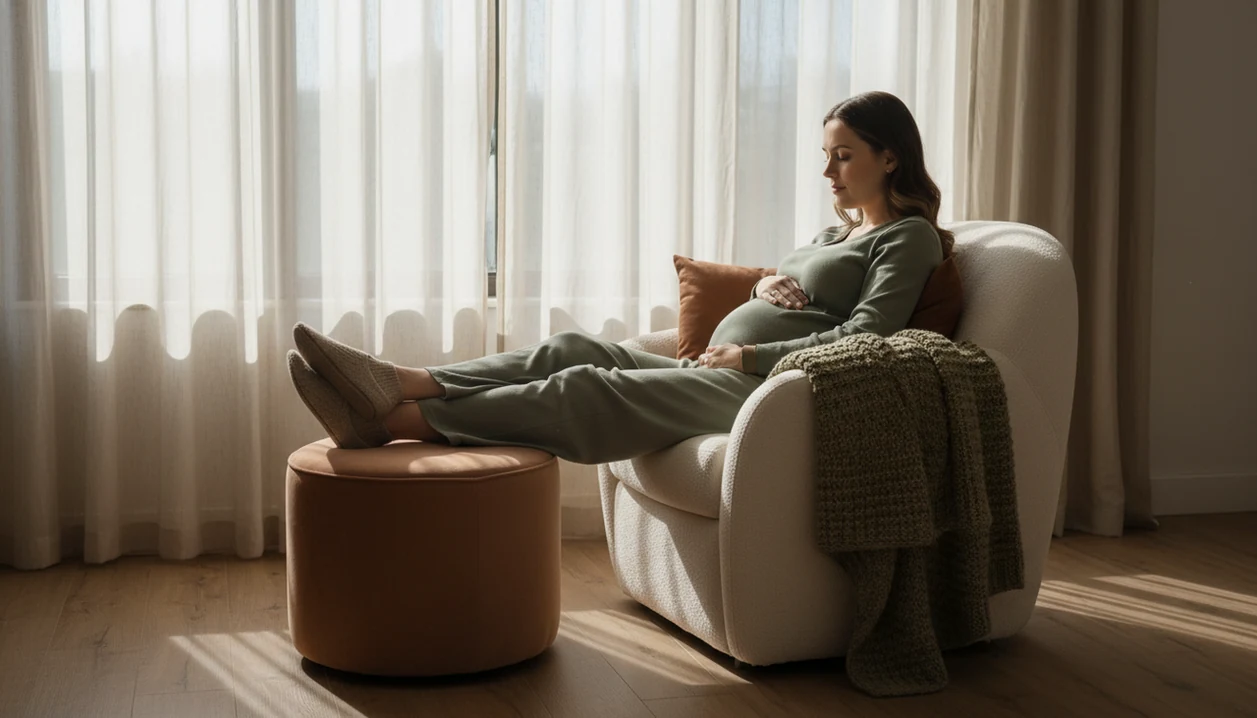
Third trimester meditation is a pregnancy-adapted mindfulness practice that uses comfortable positioning, natural breathing, and present-moment body awareness during the final months of pregnancy. It is a way to notice what is happening, not to force relaxation or control birth outcomes. Upright sitting, supported side-lying, and mindful walking let you practice without staying flat on your back for long periods.
Start with two to five minutes and leave yourself room to change position or stop. You can notice your hands, the support beneath you, or a breath arriving on its own. Stop if you feel dizziness, shortness of breath, pain, or distress. Meditation may support stress coping, mood, and sleep, but it does not replace prenatal care or guarantee any birth outcome.
The essentials
- Keep late pregnancy meditation short, comfortable, and easy to stop.
- Choose upright sitting, supported side-lying, or walking instead of lying flat on your back for long periods.
- Meditation may support stress, anxiety, mood, and sleep, but it is not medical care and does not guarantee any birth outcome.
Third trimester meditation basics for late pregnancy
Third trimester meditation is a pregnancy-adapted mindfulness practice for the final months of pregnancy that uses comfortable positioning, natural breathing, and present-moment body awareness. The aim is presence, comfort, and choice, not performing a special kind of calm. For practices suited to earlier pregnancy, try first trimester meditation with the same emphasis on comfort and choice.
Common forms include breath awareness, body scans, mindful walking, short guided meditation, and sensory grounding. A practice might be two minutes on a museum bench, one hand resting near the belly, while the mind wanders to budget planning and gently comes back.
That counts.
For late pregnancy, a good practice is one you can adapt quickly: shorter time, more support, natural breathing, and permission to stop. For a wider overview, start with our pregnancy meditation guide.
Five points about comfort, breathing, and evidence
- Third trimester practices should be manageable. Short pauses usually fit late pregnancy better than long, intense sessions, especially when sleep is broken or hips ache. If you are comparing practices across pregnancy stages, second trimester meditation explains safe basics for the middle months.
- Positioning matters. Avoid long periods flat on your back; favor upright sitting, supported side-lying, an adjusted recline, standing grounding, or walking.
- The evidence is about symptoms, not birth guarantees. A 2015 systematic review and meta-analysis of 17 randomized trials found pregnancy mindfulness programs reduced anxiety and depression symptoms compared with controls PubMed research.
- Forced breathing is not the goal. Avoid long breath holds, strained breathing, or any technique that causes dizziness, breathlessness, or pressure.
- Body awareness supports boundaries. Noticing fatigue, discomfort, emotional overwhelm, and reduced capacity can help you rest, ask for help, or call a provider. If you also support a child with disabilities, mindfulness for caregiver stress can offer additional ways to care for yourself.
For many people in late pregnancy, a two-minute body check is often easier than a long guided session because the body is already working hard.
How third trimester mindfulness works in the body
Third trimester mindfulness works by giving attention one simple place to land, then practicing a calm return when thoughts move elsewhere. The anchor can be natural breathing, body contact, the echo of a parking garage, or slow, careful movement.
In plain language, this is attention training. You might notice the belly pressing softly against clothing, the sound of an exhale, or the cool weight of gym locker metal under your hand. Then a thought appears, maybe “What still needs to be ready?” You notice it and return.
Research on mindfulness-based programs in pregnancy shows promising reductions in anxiety, depression, and negative affect. A randomized trial of mindfulness-based childbirth and parenting found greater decreases in pregnancy anxiety and negative affect than childbirth education alone PubMed research.
Mindfulness can change your relationship to sensations and thoughts; it does not diagnose symptoms or control labor. Clinicians typically recommend contacting prenatal care teams for new, severe, or worrying symptoms rather than trying to meditate through them.
What pregnancy mindfulness research can tell you
A 2023 review of 25 randomized trials involving 2,495 perinatal women found improvements in depression and anxiety compared with controls. Depression benefits persisted after birth, while longer-term anxiety benefits were less certain. These findings concern mindfulness programs across the perinatal period, not proof that a particular third trimester position or two-minute exercise will produce the same results. After birth, postpartum meditation support offers short, adaptable pauses that respect recovery, changing needs, and limited time.
Severity matters, too. A separate review of mindfulness during pregnancy did not clearly demonstrate benefits for high-risk pregnant participants with severe depressive symptoms. Treat a short practice as additional support, not a reason to delay assessment. ACOG recommends depression and anxiety screening linked to assessment, treatment, and follow-up. Persistent sadness, panic, or anxiety that interferes with daily life deserves a conversation with your care team.
Best third trimester meditation positions for comfort
The best third trimester meditation position is the one that lets you breathe easily, stay comfortable, and stop quickly if something feels wrong. Avoid long flat-on-back sessions, especially if they create pressure, nausea, dizziness, or shortness of breath. ACOG also advises avoiding prolonged flat-on-back exercise positions after the first trimester because they can affect blood return to the heart Exercise During Pregnancy.
| Position | Best use case | Setup cues | Adjust or stop if |
|---|---|---|---|
| Upright chair sitting | Short breath practice or body scan | Feet supported, back cushioned, belly free | Hips, back, or ribs feel strained |
| Supported side-lying | Rest, sleep transition, longer body scan | Pillows under head, belly, and knees | Shoulder, hip, or belly pressure builds |
| Reclined but not flat | Tired days when sitting is too much | Use pillows or a wedge; keep chest open | Breathing feels restricted or dizzy |
| Standing grounding | Quick reset in a hallway or bathroom | Feet hip-width, one hand on a wall | Legs feel weak or balance feels off |
| Mindful walking | Restless energy or nighttime waking | Slow steps, soft gaze, no rushing | Pelvic pain, contractions, or fatigue increase |
Caption idea: A supported side-lying third trimester meditation setup with pillows under the head, belly, and knees.
When meditation helps, and when to seek care instead
Late pregnancy meditation is best used as a brief support for stress, sleep transitions, body awareness, and grounding. It is not a tool for evaluating symptoms or pushing through pain.
| Best for | Not for |
|---|---|
| ✅ Brief stress pauses before opening a laptop or answering messages | ❌ Replacing prenatal care or urgent evaluation |
| ✅ Sleep transitions and nighttime waking | ❌ Evaluating bleeding, severe headache, reduced movement concerns, or contractions |
| ✅ Body awareness during normal discomfort | ❌ Pushing through pain, dizziness, breathlessness, or distress |
| ✅ Gentle baby connection without pressure | ❌ Suppressing anxiety or pretending everything is fine |
| ✅ Grounding during ordinary late-pregnancy restlessness | ❌ Forcing a birth visualization that increases fear |
If symptoms are new, severe, or worrying, contact your medical provider. For anxiety-specific support, our pregnancy anxiety meditation page explains what mindfulness can and cannot do.
Before you start third trimester meditation
Before you start third trimester meditation, set up the practice so your body is supported, your breathing stays natural, and stopping is easy. The goal is a small, safe pause, not a long session or a breathing challenge.
- Choose a supported position before you press play or start a timer. Sit upright with your feet grounded, lie on your side with pillows, use a gentle recline, stand near a wall, or walk slowly if that feels steadier.
- Set the first timer for 2 to 5 minutes so you can learn how the practice feels in your late-pregnancy body without turning it into endurance work.
- Let breathing happen naturally rather than holding the breath, forcing deep inhales, or straining to follow a count.
- Stop immediately if dizziness, pain, breathlessness, contractions, panic, or emotional distress shows up. Open your eyes, change position, drink water if appropriate, and ask for help if needed.
- Contact prenatal care for symptoms that are new, severe, unusual, or worrying instead of trying to meditate through them.
How to use third trimester meditation safely
Use third trimester meditation as a short, adjustable practice, not as a test of endurance.
- Set a short time window such as 2 to 5 minutes, especially if you are tired or uncomfortable.
- Choose a comfortable position such as chair sitting, supported side-lying, an adjusted recline, or slow walking.
- Soften attention onto natural breathing without breath holds, counting strain, or forced deep breathing.
- Scan body contact points including belly space, jaw, shoulders, hands, hips, feet, and the support underneath you.
- Close by naming one boundary or next need such as rest, water, support, or calling a provider if something feels off.
The most practical way to use third trimester mindfulness is to pair a short attention cue with a clear next step, such as resting, changing position, drinking water, or asking for help. For everyday family demands, meditation for parents offers ways to pause before choosing your next response.
Short pregnancy body awareness meditation scripts
These short scripts use natural breathing and simple body awareness. Open your eyes, shift position, stop, or seek support if the practice increases distress.
30-second body check
Pause where you are. Notice your breath, your hands, the space around your belly, and any warm cheeks or fluttering in the stomach. Let the next breath arrive on its own. Ask, “What do I need next?” One word is enough: water, rest, food, movement, help.
3-minute side-lying scan
Settle on your side with pillows supporting your head, belly, and knees. Feel the surface under you and the places where your body is supported. Move attention through the face, throat, chest, belly, hips, legs, and lower body. If thoughts drift, return to the contact points. Simple repeated instructions often help when late pregnancy makes time feel unusually slow.
Mindful walking pause
Walk slowly to the bathroom or kitchen. Feel each foot land and lift. Let your arms hang naturally. Pause before turning back, and name one thing you can see.
For bedtime practice, pregnancy sleep meditation offers more wind-down options.
Common third trimester mindfulness mistakes
The most common third trimester mindfulness mistake is treating meditation like a rigid pose or performance. Cross-legged floor sitting is not required. If a cushion slides on hardwood or your hips complain after one minute, use a chair, bed, wall, or slow walk.
Another mistake is using long breath holds, forced breathing, or intense pranayama-style practices without pregnancy-specific guidance. Natural breathing is safer for a general beginner practice.
Don’t use meditation to ignore symptoms, pain, reduced movement concerns, or emotional crisis. Pause the practice and contact appropriate care when something feels wrong.
Birth visualizations can be useful for some people, but they are optional. If imagining labor creates pressure or fear, switch to grounding. Hand on fabric. Back supported by a wall. Nearby sounds. For an Elevator Pause, arrive, exhale, name one sensation, and choose the next kind action.
Long sessions can also backfire. Micro-practices often fit better in the third trimester than a 30-minute sit. For breathing during labor itself, use a separate labor and birth breathing meditation guide.
Late Pregnancy Meditation Limits
- Meditation cannot diagnose preeclampsia, preterm labor, fetal distress, reduced fetal movement, infection, bleeding, or other pregnancy complications.
- Seek prenatal care, urgent evaluation, therapy, medication, or mental health support when needed, regardless of meditation.
- Focusing inward can increase anxiety for some people, especially when physical discomfort is high.
- Pregnancy mindfulness research is promising, but studies vary in program length, sample size, comparison groups, and participant diversity.
Third trimester meditation questions
Is meditation safe in the third trimester?
A brief, comfortable practice with natural breathing is a reasonable adjunct during late pregnancy. Keep it easy to stop, avoid breath holds or forced deep breathing, and change position when needed. Stop for dizziness, pain, shortness of breath, or distress. Meditation should never delay assessment of pregnancy symptoms.
How long should I meditate in the third trimester?
Start with two to five minutes rather than aiming for a long session. A shorter pause is enough to notice your breathing and body contact points. End early if you are uncomfortable or distressed. The practical goal is a manageable pause, not completing a timer despite symptoms.
Can meditation help with anxiety about giving birth?
Meditation may help you notice fear without treating every fearful thought as a prediction. Try natural breathing and a realistic phrase such as, “I can ask questions and request support.” Benefits vary. Severe fear, panic, trauma symptoms, or avoiding prenatal care warrants discussion with your obstetric clinician.
What if focusing on my belly makes me more anxious?
You do not have to focus on your belly or continue a body scan. Open your eyes and shift attention to sounds, your feet on the floor, or the chair supporting you. Stop if distress increases. Persistent or impairing anxiety calls for professional support, not more pressure to meditate.
Should I use birth visualizations before labor?
Birth visualization is optional, not a requirement for meditation or a way to guarantee an outcome. Keep it flexible rather than rehearsing one ideal birth. A realistic phrase such as, “Birth may be unpredictable, and I can still receive care,” leaves room for uncertainty. Stop if visualization increases fear.
Can meditation help with sleep in the third trimester?
Meditation may help you settle at bedtime by easing mental tension and giving you something gentle to focus on. Try noticing the sounds around you or relaxing your jaw and shoulders while breathing naturally. It may not prevent waking from discomfort or bathroom trips, but it can support a calmer bedtime routine.