
How to Boost Happiness in Three Mindful Steps


To boost happiness, practice three repeatable habits: train attention with a short mindfulness session, notice what is already good, and take one values-based action that supports connection or meaning. Here, boosting happiness means building contentment, calm, connection, and life satisfaction without denying difficult emotions. The aim is not constant positivity, but a steadier way to meet daily life.
Keep the routine brief enough to repeat on an ordinary day. Pause for a few minutes, name something specific you appreciate, then choose a useful action, such as sending a kind message or making time for a conversation. These habits can support wellbeing, but they do not guarantee an immediate mood change or replace help with problems that need attention.
The essentials
- Happiness is trainable through small practices such as mindfulness, gratitude, kindness, and values-based action.
- Mindfulness supports happiness by reducing stress reactivity and helping you savor ordinary moments.
- The best happiness routine is brief, realistic, and adjusted to your life rather than copied from someone else.
Contentment without forcing a cheerful mood
How to boost happiness means building small daily skills that support contentment, calm, connection, and life satisfaction. It does not mean staying cheerful through everything or treating sadness as failure.
A useful happiness practice gives you a way to notice and return. You might feel your feet on tile before answering a hard message, then choose a steadier reply. That is not dramatic. It counts.
Difficult emotions still belong in a healthy emotional life. Grief, anger, fear, boredom, and disappointment can carry useful information. Practicing mindfulness can strengthen attention, support steadier habits, and create room to respond, but it cannot guarantee that life will feel easy. Learning to find inner strength with mindfulness can help you respond to difficult emotions without demanding constant positivity.
What research says about happiness habits
- Happiness is trainable. Research on positive psychology interventions suggests that habits like gratitude, kindness, optimism, and strengths reflection can improve subjective well-being over time. Source: a meta-analysis of positive psychology interventions found small-to-moderate improvements in well-being and depressive symptoms: 1471 2458 13 119 Understanding fixed and growth mindsets can help you treat happiness practices as learnable skills rather than tests of character.
- Mindfulness can reduce reactivity. A 2014 mindfulness meta-analysis found meaningful improvements in stress, anxiety, and depression symptoms, which may make ordinary good moments easier to notice. Source: Goyal et al., 2014, JAMA Internal Medicine: JAMA study
- Consistency beats intensity. For most beginners, three minutes daily is more useful than one long session that never happens again.
- Connection and meaning matter. Pleasure is pleasant, but relationships, service, and values-based action tend to support longer-term life satisfaction.
- Fit changes the outcome. The most sustainable happiness practice is the one a person can repeat during their real week, not the one that looks impressive on paper.
For a deeper base, our guide to mindfulness practices explains several attention exercises that work in ordinary settings.
How attention, interpretation, and action shape wellbeing
Happiness practices work by shaping attention, appraisal, nervous system arousal, memory, and behavior loops. In plain language, they influence what you notice, how you interpret it, how activated your body feels, and what you do next. Exploring growth mindset and behavioral change can help you connect these small practices with habits you want to build.
Mindfulness helps you catch the moment before autopilot takes over. You notice chest movement beneath a shirt, the thought “I’m behind,” or the urge to snap back. Then you have a little more room. Not endless room. Enough, sometimes.
Gratitude and savoring train attention toward what is already supportive. That might be a warm room, a helpful text, or the relief of sitting down after a long day. Kindness, relationships, and meaning add action, which strengthens memory and emotion through lived experience.
A 2010 meta-analysis of 468 studies found that subjective well-being was moderately associated with better health and longevity, including lower mortality risk. That does not prove happiness alone causes longer life, but it supports taking well-being seriously. Source: PubMed research
Set aside 3 to 5 minutes without mood pressure
Use this practice for ordinary moments of stress, low mood, or mild overthinking, not as a way to push through crisis. The best first session is private, brief, and low-pressure enough that you do not have to perform happiness.
Before moving into the three steps, set the conditions so the practice has a fair chance to help.
- Choose a quiet opening. Pick a moment when interruptions are unlikely: before opening your laptop, after lunch, or while sitting in a parked car.
- Keep it short. Set a timer for 3 to 5 minutes. Stopping while it still feels manageable makes it easier to return tomorrow.
- Let your real mood be there. You do not need to feel grateful on command. If grief, trauma, shock, or an active crisis is present, forcing positive thoughts can feel false or harmful.
- Use support when needed. If sadness, anxiety, hopelessness, panic, or unsafe thoughts are severe, persistent, or worsening, treat that as a signal to seek professional help or urgent local support.
Three-Step Happiness Practice
Use this three-step happiness practice when you want something simple, secular, and doable without equipment, special beliefs, or a paid app.
- Pause for 3 to 5 minutes. Sit on a kitchen chair, bus seat, or bedroom floor and feel breathing, posture, or contact with the ground. When the mind wanders to a grocery list, notice it and return.
- Name three good things. Write or silently name three things from the last 24 hours. Keep them specific: a cleared inbox, rain tapping during a walk, or one honest laugh.
- Choose one values-based action. Send a kind message, ask someone a real question, step outside for a short walk, or do one small task that supports what matters to you.
For busy beginners, a 5-minute mindfulness practice can make step one easier to repeat.
Turn one good thing into a gratitude message
The gratitude step can include recognizing a person, not just listing pleasant events. In a randomized trial involving 293 psychotherapy clients, people who added gratitude-letter writing to psychotherapy reported better mental health four and 12 weeks after the intervention than the comparison groups. This supports gratitude writing as an addition to care, not a replacement for it.
Choose someone whose specific action helped you. Write what they did, why it mattered, and what you appreciate about them. For example: “You checked in after my appointment. It helped me feel less alone, and I appreciated that you listened without rushing.” You can start with a private draft rather than treating delivery as another task.
A practical extension is to write three concrete items two or three times a week and add one weekly gratitude message or letter. This combines approaches used in gratitude-writing research, including a randomized study of gratitude journaling and reflection; it is not a proven ideal schedule. Keep appreciation voluntary, and leave room to name what is still difficult.
Match your practice to stress, loneliness, or overthinking
A useful happiness routine depends on the problem you are actually facing. Stress, loneliness, low motivation, and overthinking need different entry points.
| Situation | Best for | Try this | Not ideal for |
|---|---|---|---|
| Stress | Short breathing pause or mindful walking | Take three breaths before unmuting, or walk slowly for 5 minutes | Crisis-level distress as a stand-alone solution |
| Low motivation | Tiny gratitude or pleasant activity | Write one grateful note, stretch, or step outside | Forcing a big routine when energy is low |
| Loneliness | Kind message or shared attention | Invite a shared walk or practice mindful listening | Replacing human contact with private reflection only |
| Overthinking | Naming thoughts and returning to sensations | Say “planning” or “worrying,” then feel your feet | Debating every thought until midnight |
For stress, short body-based practice is often easier than positive thinking because it gives attention a concrete place to land.
Attach a happiness habit to morning, lunch, or bedtime
A beginner happiness routine works best when it attaches to something you already do. Do not build a whole new life around it. Start small.
Morning: Take a 3-minute breathing pause before email. Leave the phone facedown until the timer ends.
Midday: Try a 5-minute walk after lunch. A simple mindful walking practice can turn an ordinary sidewalk into attention training.
Evening: Write one to three good things before bed. Keep the list plain, not poetic.
Pair the habit with brushing teeth, making coffee, locking the front door, or closing a laptop. If you track mood, use a light note like “lower,” “same,” or “steadier.” Scores can help, but obsessing over them turns happiness into another task.
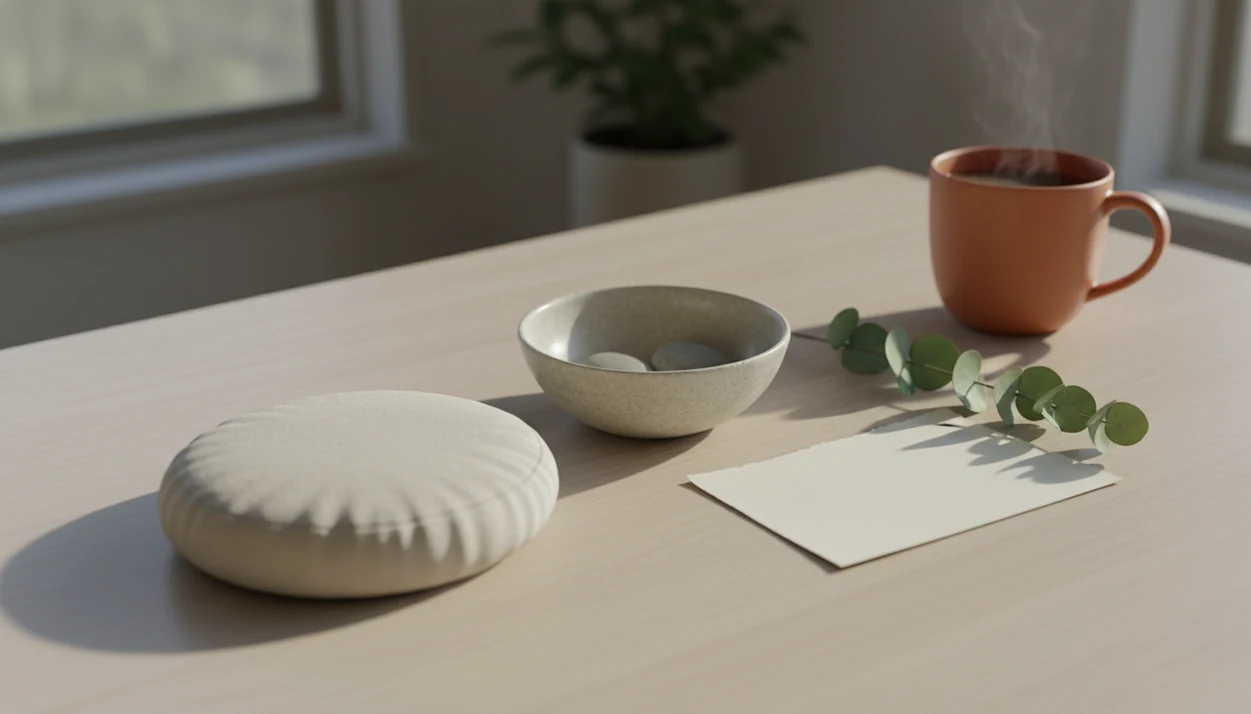
Suggested image caption: A beginner-friendly happiness routine can be as simple as one mindful breath, one grateful note, and one kind action.
Common Happiness Practice Mistakes
The first mistake is trying to force positive emotions. A better fix is to make room for what is present, then notice one neutral or supportive detail nearby.
Another mistake is expecting one meditation to create permanent happiness. Meditation is more like brushing teeth than flipping a switch. You repeat it because life keeps happening.
Copying someone else’s routine can also backfire. Your friend may love sunrise journaling; you may do better with two minutes in an office stairwell after a hard call. Awkward counts.
Some people use mindfulness to avoid real problems or difficult conversations. That is not the point. Practice can help you pause before speaking, but it should not become a hiding place.
Finally, many beginners quit because the first session feels restless. Try a shorter practice, a different posture, or a daily mindfulness routine that fits your schedule.
Optional guidance for the attention step
If you want guidance, a structured prompt can help you practice without deciding what to do every time. Apps such as Mindful.net, Calm, and Headspace can provide short breathing sessions, mindful walking, and beginner meditation in a clear sequence.
It can support the three-step routine, but it is optional. You can still practice with a timer, a notebook, and a quiet corner.
The Mindfulness Practices App may be useful when you want reminders or one-minute prompts. If that sounds helpful, an app that gives one-minute mindfulness prompts can reduce the friction of getting started.
A reminder to pause during your day
During a busy day, remembering to pause may be harder than knowing what to do. The free mindfulness bell can serve as a cue to notice your breathing and one supportive detail before choosing your next action. Mindful.net's short guided meditations offer another way to practice attention. A notebook is better for gratitude writing, and a conversation is better when connection is what you need.
A guided savoring pause for an ordinary pleasant moment
Savoring means giving a pleasant detail your attention rather than moving straight past it. Try this with something available now: the warmth of a cup, a patch of sunlight, or the sound of a familiar voice. Choose something that actually feels pleasant to you, not something you think you should appreciate. Keep your eyes open if you prefer, and use the steps below as gentle invitations rather than a checklist to complete.
If sadness appears during the pause, let it be part of what you notice. You might silently name both experiences: “The cup feels warm, and I miss someone.” You do not need to replace the sadness with gratitude or make the pleasant feeling stronger. If nothing feels pleasant today, notice a neutral detail instead, such as your feet resting on the floor. The practice does not require a happy ending.
- Pause with one ordinary detail that feels pleasant, even slightly.
- Notice its sensory qualities, such as warmth, color, texture, or sound.
- Stay with one quality for a few comfortable breaths, without trying to intensify it.
- Notice any feeling or body sensation that comes with it. There is no required response.
- If your attention wanders or sadness enters, acknowledge that gently. Return to the detail only if you want to.
- Finish by noticing your surroundings and continuing your day. You do not need to check whether you feel happier.
Happiness Practice Limits
- Mindfulness and happiness practices cannot replace professional care, and CDC guidance highlights how common distress can be.
- Benefits are usually small to moderate, not instant euphoria, and not every practice fits every person or situation.
- Mindfulness can feel uncomfortable at first, especially when sitting still brings up strong thoughts or body sensations.
- Seek professional support when sadness, anxiety, hopelessness, or loss of function is persistent, severe, or worsening.
Questions about building daily happiness
How can I feel happier today without forcing positivity?
Try a brief pause, notice one genuinely supportive detail, and choose one action that matters to you. That could mean feeling your feet on the floor, appreciating a helpful message, then replying to the person. Let sadness or frustration remain present. The goal is a useful next step, not a required feeling.
Can mindfulness or meditation increase happiness?
Mindfulness can support happiness by helping you notice ordinary good moments and respond less automatically to stress. It is not a direct switch for a happy mood. Combine a short attention practice with appreciation and meaningful action rather than expecting meditation alone to solve loneliness, conflict, or other difficult circumstances.
How long does it take for happiness habits to help?
There is no reliable deadline for feeling happier. Research measures changes over weeks, and average benefits are generally modest. In one gratitude-writing trial involving psychotherapy clients, mental-health benefits were reported four and 12 weeks after the intervention. That result does not predict how quickly a particular person will feel a change.
What should I write in a three good things list?
Write concrete events rather than broad claims: a friend called, you finished a difficult task, or someone made room for you on the bus. Add why each event mattered and who contributed. One honest item is preferable to three forced ones. The list does not need to prove that your whole day was good.
Does gratitude help when life is genuinely difficult?
Gratitude can sit alongside grief, anger, uncertainty, and efforts to change your circumstances. You might appreciate one person's help while still acknowledging a painful situation. Research suggests modest benefits, not relief from every hardship. Skip or adjust the exercise when it feels invalidating, and do not use it to avoid needed care or problem-solving.
Do happiness habits boost dopamine, oxytocin, serotonin, and endorphins?
D.O.S.E. is a memory aid for dopamine, oxytocin, serotonin, and endorphins, not a complete explanation of happiness. A short meditation, kind message, or walk should not be treated as a way to control a particular chemical on command. Focus instead on repeatable habits that support attention, connection, movement, and steadiness.
Why am I still unhappy even though I meditate and practice gratitude?
These practices have limits, and not feeling better is not a personal failure. Your routine may not address the main problem, such as isolation or an unresolved conflict. Persistent distress or difficulty managing daily life deserves professional support. You can also shorten or change a practice that brings up uncomfortable thoughts or sensations.