
Phone Addiction Effects: Warning Signs and Practical Boundaries


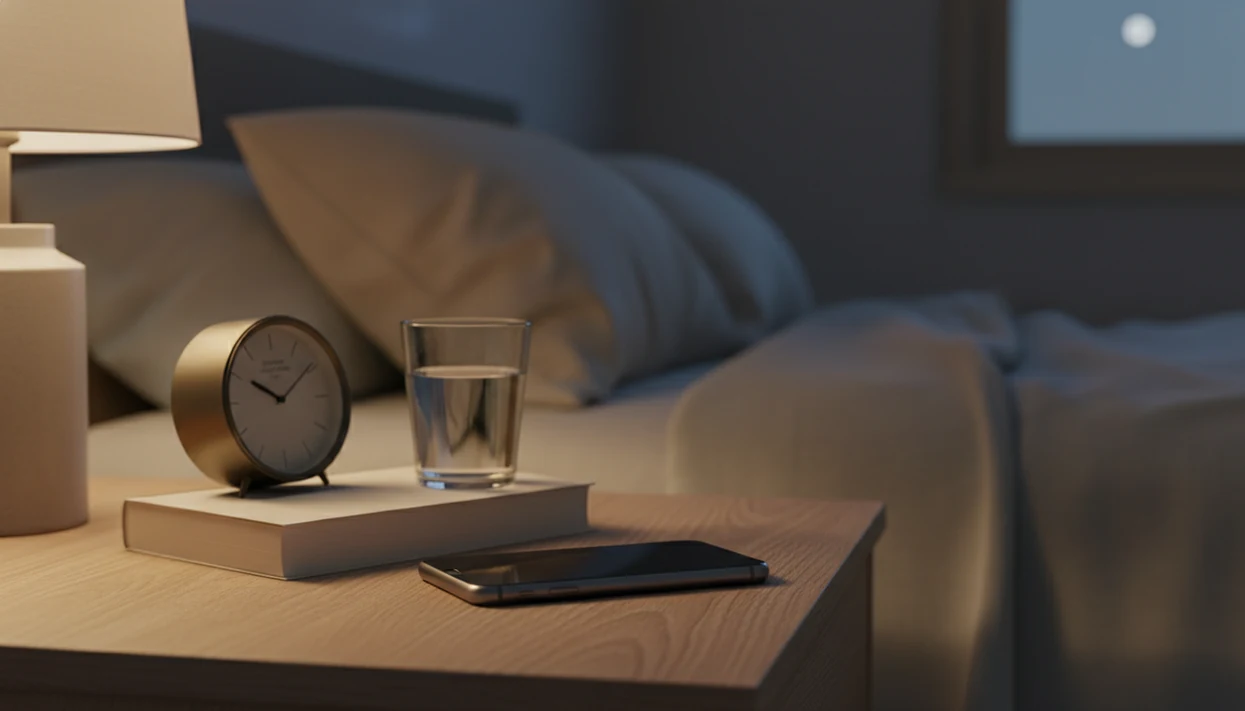
Phone addiction effects include disrupted attention, delayed sleep, stress, irritability, and relationship strain when phone use becomes hard to control. Researchers often use the term problematic smartphone use rather than treating every pattern as a formal addiction diagnosis. Frequent use alone is not the deciding factor. The more useful signs are loss of control and consequences for sleep, mood, work, study, or time with other people.
Start with the part of your day that phone use is disrupting most. Bedtime scrolling calls for a different boundary than checking messages during conversations. Mindfulness can help you notice the urge and pause before acting, but it is not a cure. The aim is intentional use, not treating the phone as an enemy or eliminating every screen minute.
What matters most
- The main phone addiction effects are attention fragmentation, sleep disruption, stress, irritability, and relationship strain.
- Frequent phone use is not automatically addiction; the key signs are loss of control and negative consequences.
- Mindfulness can help you notice urges, pause before checking, and create practical phone boundaries without treating the phone as the enemy.
Phone addiction effects at a glance
Phone addiction effects are the everyday changes that can happen when phone use becomes hard to control. The clearest warning sign is not a high screen-time number; it is phone use that keeps interfering with focus, sleep, mood, relationships, or responsibilities.
- Focus: Frequent checking breaks attention into small pieces, especially during work, study, or conversations.
- Sleep: Late scrolling can delay bedtime and keep the mind active when it needs to settle.
- Stress: Notifications, news, and social comparison can keep the nervous system on alert.
- Irritability: Some people feel restless or annoyed when the phone is out of reach.
- Relationships: Divided attention can make other people feel ignored, even when you are physically present.
Researchers often use the term problematic smartphone use. It is more precise than calling every heavy pattern an addiction.
The pocket check is real: you pat your jeans at the door, feel the empty pocket, and lose the thread of what you were about to do.
Choose one phone habit to change first
Use this guide as a practical map, not a diagnosis. Start with the part of life where the phone is causing the most friction, then test one small boundary long enough to notice real changes.
- Identify the main pressure point. Choose the area that feels most affected right now: sleep, focus, mood, relationships, school, work, or body habits. Do not try to fix every pattern at once.
- Observe one trigger for 24 hours. Watch for the moment before you reach: boredom, stress, a notification, a quiet room, or waiting in line. For this first day, change nothing; just notice.
- Choose one boundary to practice. Pick a single step from the numbered practice section below, such as naming the trigger, creating friction, or protecting sleep. A brief goal setting meditation can help you choose one realistic phone boundary and plan your next step.
- Review what shifts after one week. Look for small changes in bedtime, concentration, irritability, conversations, or the number of automatic pickups. Keep what helps and adjust what feels unrealistic. You can practice building self trust by keeping one realistic boundary and adjusting it honestly when needed.
The point is not a perfect phone routine. It is learning which small pause gives you back the most space.
Problematic smartphone use and clinical language
Phone addiction is a common phrase for compulsive or hard-to-control phone use, but it is not always a formal clinical diagnosis. In research, problematic smartphone use is often the more careful term.
For evidence context, a 2019 systematic review found problematic smartphone use was associated with depression, anxiety, perceived stress, and poorer sleep quality, but noted that most included studies were observational and could not prove causation (S12888 019 2350 X).
A habit is a repeated behavior that may be annoying but still feels flexible. Dependence-like behavior means the phone has become a main way to manage boredom, stress, loneliness, or uncertainty. Addiction-like behavior involves loss of control, repeated checking, and continued use even when it causes clear problems.
That distinction matters. A student who checks group chats often is not automatically addicted. A student who cannot stop scrolling after midnight, misses assignments, and has tried to cut back many times may need more support.
If phone use is tied to severe distress, major impairment, panic, depression, or self-harm risk, self-guided tips are not enough. A qualified clinician, therapist, or crisis service is the right next step.
How cues and unpredictable rewards keep checking going
Phone addiction effects often come from cue-trigger-reward loops. A cue appears, such as a buzz, boredom, stress, or a quiet moment in line. The trigger is the urge to check. The reward might be a message, a like, a headline, a short video, or simple relief from discomfort.
Phones are sticky because the reward is variable. Sometimes nothing interesting happens. Sometimes there is a reply you wanted. That uncertainty trains the hand to reach again, even before you choose it.
This variable-reward pattern is similar to the reinforcement principle used to explain why unpredictable rewards can strengthen repeated checking behavior; keep the claim behavioral rather than saying phones literally cause brain damage.
In daily life, this can look ordinary. You open a document, hear one notification, then spend ten minutes moving between apps. When you return, the original task feels harder to restart.
The mechanism is not “brain damage.” A more accurate phrase is attention conditioning. The mind learns to expect novelty and relief from the phone, then drifts toward it on autopilot. A short practice from how to practice mindfulness with phone can help you see that loop before acting on it.
How compulsive checking disrupts focus, sleep, and mood
How do phone addiction effects show up in daily life? They usually appear as attention breaks, delayed sleep, stress, irritability, and less presence with people nearby.
Focus and concentration effects
Notifications interrupt attention, but so does the habit of checking without a sound. Task switching has a cost. You may lose your place, reread the same sentence, or forget why you opened a browser tab. Counted breaths between keyboard clicks can reveal how quickly the urge returns.
Sleep and bedtime effects
Late-night scrolling can push bedtime later and keep the mind stimulated. The problem is not only light from the screen. It is also the emotional content: messages, news, comments, shopping, or one more video. For many people, protecting sleep is the first practical reset. The CDC’s sleep-hygiene guidance also recommends removing electronic devices from the bedroom when possible to protect sleep routines (CDC guidance).
Mood and irritability effects
Compulsive checking can raise stress when the phone becomes a constant source of uncertainty. Some people feel tense when they cannot check, then guilty after checking. The skill in mindfulness practice is pausing and returning your attention, not achieving instant self-control or curing compulsive phone use.
What research says about phone addiction effects
Research most consistently links problematic smartphone use with poorer sleep, more anxiety and stress symptoms, and more difficulty sustaining attention. The evidence is useful, but it should be read as association, not proof that the phone alone caused every problem.
A 2019 systematic review in BMC Psychiatry found associations with depression, anxiety, perceived stress, and poorer sleep quality, while also noting that most studies could not establish cause and effect. Public-health sleep guidance from the CDC gives stronger practical support for one claim: keeping electronics out of the bedroom can help protect sleep routines. The sleep connection is therefore more actionable than dramatic claims about phones “rewiring” the brain.
A careful way to use the evidence is:
- Treat sleep disruption as the clearest first target. Bedtime scrolling is easy to observe and often easier to change than total screen time.
- Watch mood patterns without blaming one cause. Anxiety and stress may rise with compulsive checking, but they can also drive it.
- Separate attention costs from permanent harm. Task switching can fragment focus; claims of lasting brain damage remain uncertain.
- Review your own data. Track bedtime, urges, and concentration for one week before drawing conclusions.
Why total screen time is an incomplete measure
Evidence about screen time does not support treating every extra minute as equally harmful. A 2021 review of 35 longitudinal studies in young people found only weak or very weak associations between increased screen time and later depressive symptoms. Evidence for later anxiety, low self-esteem, or broader internalising problems was limited, and the authors judged average mental-health effects probably negligible or small.
Those findings concern young people and screen time broadly, not every adult pattern of compulsive checking. A 2023 review of adolescent screen exposure also stressed that content, context, and interaction type matter. When reviewing your own use, distinguish work, supportive conversations, and education from scrolling that repeatedly displaces sleep or responsibilities. Duration provides context, but does not establish harm on its own.
Warning signs that phone use is becoming hard to control
Phone addiction effects become more concerning when phone use feels automatic, hard to interrupt, and costly. Use this checklist as observation, not a label.
- Unplanned checking: You pick up the phone without deciding to, then realize several minutes passed.
- Uneasy separation: You feel restless, irritated, or distracted when the phone is in another room.
- Continued use despite problems: You keep scrolling even after it affects sleep, work, school, or relationships.
- Failed cutback attempts: You set limits, delete apps, or make rules, then repeatedly return to the old pattern. For repeated setbacks, practical confidence steps can help you restart with one manageable commitment rather than judging yourself.
- Discomfort escape: You reach for the phone whenever boredom, loneliness, stress, or awkward silence appears.
A notebook margin filled with breath counts is a useful clue. It shows you are practicing the pause, not just blaming yourself.
Match your phone boundary to the problem it causes
Phone addiction effects do not look the same for everyone. The useful move is to notice where your phone use creates friction, then choose one small reset instead of trying to overhaul everything.
| Life area | Common effect | What it may look like | First small reset |
|---|---|---|---|
| Attention | Fragmented focus | Rereading, task hopping, checking during study | Put the phone across the room for one work block |
| Sleep | Delayed bedtime | “Just one more scroll” after lights out | Charge the phone outside the bed area |
| Mood | Stress or irritability | Feeling tense when you cannot check | Take three breaths before unlocking |
| Relationships | Reduced presence | Looking down during meals or conversations | Turn the phone face down for ten minutes |
| School or work | Lower follow-through | Missed deadlines, shallow work, distracted meetings | Use one notification-free period daily |
| Body habits | Tension and stillness | Neck strain, clenched jaw, long sitting | Stand up before opening social apps |
For mild patterns, a 5-minute mindfulness practice can make the first reset feel less dramatic.
Five boundaries that interrupt automatic checking
The simplest way to reduce phone addiction effects is to interrupt the checking loop before it becomes automatic. Start small, then review what actually changes.
- Notice the urge. Before unlocking, pause to feel your feet on the floor or your shoulders against the chair.
- Name the trigger. Say quietly, “bored,” “stressed,” “avoiding,” or “looking for a reply.”
- Create friction. Move the most tempting app off the home screen, silence nonessential alerts, or place the phone in a drawer for one task.
- Protect sleep. Set a phone curfew or charge the phone away from the bed, especially on nights when scrolling tends to stretch.
- Review progress. Once a week, ask what improved: focus, mood, bedtime, or conversations.
If you want a simple starting structure, try a daily mindfulness routine before adding more rules.
What the mindfulness evidence actually supports
A 2025 meta-analysis of mindfulness and problematic smartphone use found that higher mindfulness was associated with less problematic use. That supports mindfulness as a relevant skill to consider, but it does not show that meditation alone causes people to check less, or establish a treatment for compulsive phone use.
Keep the practice tied to a concrete outcome rather than assuming more meditation will solve the problem. Before opening an app, name your purpose and notice the feeling prompting you to reach. Review weekly whether phone use still displaces sleep, work, exercise, or relationships. This is a practical synthesis of guidance, not a formally validated intervention.
When self-checking helps and when to seek support
Self-checking is most useful when phone use is annoying, repetitive, and disruptive, but not tied to severe distress or danger. It works best as a practical awareness tool, not a diagnosis.
| Fit | Best for | Not ideal for |
|---|---|---|
| Mild automatic checking | People who want fewer autopilot pickups | People in immediate crisis |
| Boundary building | Beginners who want phone-free times and better sleep habits | Severe depression, self-harm risk, or panic symptoms |
| Secular mindfulness | People who want attention practice without a medicalized approach | Major functional impairment at work, school, or home |
| Pattern awareness | People tracking triggers like boredom, stress, or social feedback | Situations needing qualified mental health care |
Clinicians typically recommend professional support when digital behavior is linked with serious mental health distress, safety concerns, or major impairment. For mild to moderate automatic checking, urge awareness is often easier than pure willpower because it gives you a specific moment to interrupt.
A phone-down pause, pictured
Use a calm, non-shaming image: a phone face down beside a notebook, timer, or meditation cushion. The scene should suggest a pause before checking, not fear, failure, or moral panic.
Suggested caption: A phone face down beside a notebook, showing a simple pause before checking as part of a phone addiction effects reset.
Suggested alt text: Phone addiction effects shown with a smartphone placed face down beside a notebook during a mindful pause.
The image should feel ordinary. Early light on the wall, a kitchen chair, or a plain desk works better than a dramatic “trapped by technology” setup. Practical beats alarmist here.
Phone Research Limits
- Phone addiction is not always a formal diagnosis; problematic smartphone use is often the more precise term.
- Screen time alone does not prove addiction, harm, or loss of control.
- Self-reported phone habits can be unreliable because people often misremember checking and scrolling.
- Brain and mental health claims may be overstated or weakly sourced; mindfulness practices can support observing phone use.
Phone use, sleep, and checking questions
How do I know if my phone use is a problem?
Look for loss of control and repeated consequences, not just a large screen-time total. Signs include checking without intending to, repeatedly breaking your own limits, and continuing despite lost sleep or missed responsibilities. A checklist can help you notice patterns, but it cannot provide a diagnosis.
How many hours of phone use counts as addiction?
There is no universal number in the evidence presented here. Time spent working, studying, or talking with someone is not equivalent to compulsive scrolling. Ask whether you can stop when you intend to and whether use regularly displaces sleep, relationships, work, or other important activities.
Can phone use cause depression or anxiety?
Research reports associations between screen use and mental-health symptoms, but association does not establish cause. Longitudinal evidence in young people found weak or very weak links with later depressive symptoms and limited evidence for later anxiety. Content, context, and existing distress matter, so avoid attributing every mood change to the phone.
Does scrolling before bed affect sleep?
Electronic-media use is associated with poorer sleep outcomes, although the size of the association varies. Scrolling can also push bedtime later. Try keeping the phone outside the bedroom or away from the bed, then review whether you stop scrolling earlier and protect more time for sleep.
Why do I keep checking my phone without a notification?
Checking can become linked to cues other than alerts, including boredom, stress, waiting, or wanting a reply. The occasional interesting message or post can keep the pattern going. Notice what happens just before you reach, then decide what you intend to do before opening an app.
Can meditation help me stop compulsive phone checking?
Mindfulness may help you notice an urge before acting on it. A meta-analysis found that higher mindfulness was associated with less problematic smartphone use, but this does not prove meditation causes the reduction. Pair practice with concrete boundaries, such as fewer nonessential alerts and a protected bedtime.
Do I need a complete digital detox?
Total abstinence is not the only option. A more specific change may fit the problem better: remove bedtime scrolling, protect conversations, or put the phone away during one work block. Judge the change by what it helps you protect, rather than aiming only for the lowest possible screen-time number.
When should I seek help for compulsive phone use?
Seek professional support when phone use is linked to severe distress, major problems at work, school, or home, or repeated unsuccessful attempts to regain control. Severe depression, panic symptoms, or self-harm risk call for help beyond self-checking. Mindfulness and phone boundaries are not substitutes for mental-health care.