
The Neuroscience of Breaking Habits: Cues, Rewards, and Mindful Pauses


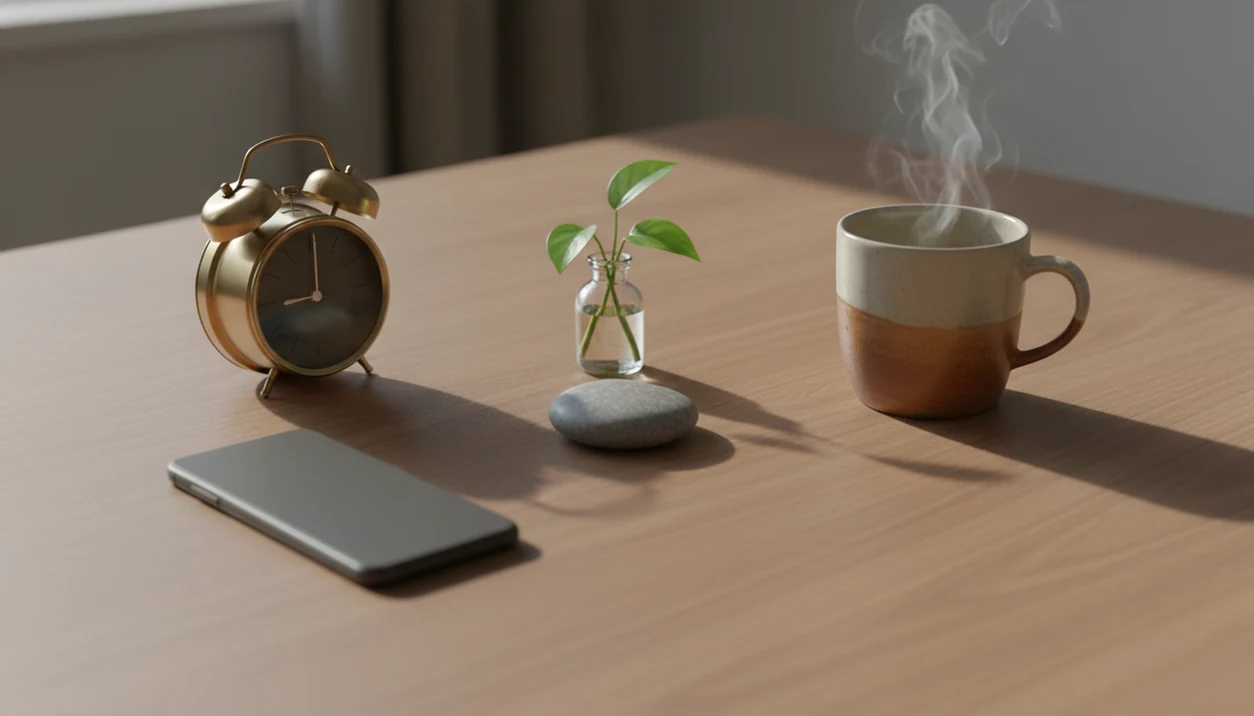
The neuroscience of breaking habits centers on changing a learned cue-routine-reward loop: identify the trigger, interrupt the automatic action, and repeat a replacement that meets the same need more safely. A cue might be a time, place, feeling, person, or situation. The reward might be relief, stimulation, or comfort, rather than pleasure alone. Beyond changing one habit, these ways to keep your brain healthy offer practical ideas for everyday care.
Mindfulness can help you notice an urge before acting on it, but a pause is only part of the plan. Lasting change usually also needs changes to your surroundings and repeated practice of a specific replacement. Start with one ordinary, low-risk behavior you can observe. Expect practice over weeks or months, not a guaranteed result after 21 days.
The essentials
- Start by finding the cue: time, place, emotion, person, or situation that starts the habit.
- Do not only suppress the old habit; replace it with a specific new action that meets the same need.
- Expect repetition over weeks or months, not a fixed 21-day timeline.
What your brain is actually doing when a habit changes
How do you break a habit according to neuroscience? You change the cue-routine-reward loop instead of trying to force yourself to stop through willpower alone.
A habit becomes “automatic” when the brain learns that a certain situation predicts a familiar action and payoff. The phone buzzes, your thumb moves. The work tab opens, and suddenly you are checking messages before the hard task starts. Some of that sequence can run before you fully decide.
Mindfulness helps because it lets you notice the cue earlier. Maybe you feel your feet planted under the desk and catch the urge before your hand reaches for the phone. But awareness is only the first part. You still need a concrete behavior plan, such as placing the phone across the room and opening a two-minute task list instead.
Small pause. Real choice.
Brain Habit Loops: Cues, Routines, and Rewards
A habit loop is a learned pattern in which a cue starts a routine, and the routine is repeated because it produces a reward the brain remembers.
The cue might be a time of day, a room, a mood, a person, or a familiar sequence. The routine is the behavior itself. The reward is what your brain gets from it, such as relief, stimulation, comfort, avoidance, or a small hit of pleasure. Habit learning depends on repeated reinforcement in the same context, according to a 2011 review of cue-routine-reward learning PMC research article.
Context matters. A snack habit may feel automatic during a late study session with the ceiling fan wobbling overhead, but less automatic when you move to a quieter corner with a library book spine under your fingers. Even an urge to pick at your scalp or bounce tense calves can grow stronger in one setting than another. The behavior changes because the setting helps call up the loop.
For many people, the practical next step is not “be stronger.” It is “change the setup.”
Five Neuroscience Facts Before You Break a Habit
If you are trying to change a habit without turning it into a personal failure story, start with what the brain is learning. These five facts keep the plan realistic.
- Habits are usually cue-driven. A repeated time, place, feeling, or situation often starts the behavior before you consciously choose it.
- Replacement usually beats suppression. If the old behavior gave relief, stimulation, or comfort, your brain needs another route to a similar payoff.
- Repetition teaches a new response. The brain learns the replacement through practice, not through one dramatic decision on Monday morning. For broader support as you age, explore daily habits for brain health alongside your replacement practice.
- Willpower alone is unreliable. Automatic behaviors can run quickly, especially when you are tired, stressed, rushed, or distracted. Understanding your brain attention system can help explain why distractions make deliberate choices harder during habit practice.
- The 21-day rule is too simple. In a 2010 study of 96 people, new daily behaviors took an average of 66 days to become automatic, with a range from 18 to 254 days Ejsp.674.
For beginners, a daily mindfulness routine can help make cue tracking easier without turning the plan into another huge project.
Before You Start: Choose One Safe, Specific Habit
Start with one ordinary, low-risk habit that repeats around a clear cue. Do not use a self-guided habit plan as your first move for addiction, self-harm urges, unsafe substance use, or dangerous behavior.
- Choose one repeated behavior. Pick something specific enough to observe, such as checking your phone after sending an email, biting nails while watching TV, or opening a social app when a task feels hard.
- Rule out high-risk targets. If the behavior could seriously harm you or someone else, or if it involves addiction or self-harm, get qualified support instead of trying to manage it alone.
- Write one target sentence. Before tracking anything, name the loop in plain language: “When I feel bored after lunch, I scroll short videos for stimulation.”
- Select a safer replacement. Choose a low-risk action that gives a similar payoff, such as standing up for energy, taking one slow breath for relief, or writing the next tiny task for avoidance.
- Set up a simple cue log. Keep a note with four columns: time, place, feeling, and what happened next. Use it for a few days before the six-step plan.
Six-Step Neuroscience Plan to Break a Habit
Use this plan to turn habit change into a repeatable experiment. The goal is to make the new loop easier to run than the old one.
- Track the cue. Write down when the habit happens, where you are, who is nearby, and what you feel right before it.
- Name the reward. Ask what the habit gives you: relief, distraction, comfort, stimulation, social connection, or delay.
- Choose a replacement. Pick one action that meets the same need, such as stretching for stress or opening one work file for procrastination.
- Make the environment easier. Remove friction from the new action and add friction to the old one.
- Repeat the loop. Practice the replacement at the same cue, even when the result feels small.
- Review weekly. Keep what worked, adjust what failed, and treat lapses as data.
For phone checking, the cue may be boredom after sending an email. The replacement could be one slow breath, then writing the next task on paper. If the phone stays beside the keyboard, though, the old loop keeps getting invited back.
Everyday habits you can work on, and behaviors that need support
Habit neuroscience tips fit everyday repeated behaviors best, especially when the behavior is annoying, automatic, and tied to clear cues. They are not a substitute for qualified help when safety, addiction, or severe distress is involved.
| Fit type | Examples | Practical note |
|---|---|---|
| ✅ Best for everyday loops | Phone checking, nail biting, procrastination, stress snacking | Start with one cue and one replacement behavior. |
| ✅ Best for secular practice | Non-spiritual, beginner-friendly mindfulness | Good mindfulness practices and meditation techniques for beginners and daily life deliver trainable attention and a pause before action, not instant personality change. |
| ✅ Best for self-observation | Noticing urges, settings, and rewards | A phone timer set for 5 minutes is enough to begin. |
| ❌ Not ideal for urgent risk | Dangerous behavior, self-harm risk, unsafe substance use | Get qualified support promptly. |
| ❌ Not ideal as a solo plan | Addiction-related or highly distressing habits | Mindfulness may support care, but it should not replace care. |
Mindfulness Techniques That Interrupt Habit Autopilot
Mindfulness interrupts habit autopilot by helping you notice the urge before you act. It creates choice, but it still needs a replacement behavior to turn that choice into a new loop.
Urge Surfing
Urge surfing means observing an impulse as a changing body sensation. You might notice tightness in the chest, restless fingers, or a warm exhale on the upper lip. Instead of arguing with the urge, you watch it rise, shift, and fade for a short period.
Evidence is strongest when mindfulness is part of a structured behavior-change program, not when it is used as a vague reminder to 'be present.' For example, a smoking-cessation trial found mindfulness training produced better abstinence outcomes than a standard program PubMed research.
One-Breath Pause
The one-breath pause is simple: take one breath before the routine starts. During that breath, silently label the cue, feeling, and expected reward. “Tired. Avoiding. Want relief.” Then choose the replacement.
Labeling can feel awkward at first. Normal. A short 5-minute mindfulness practice can make the skill easier because it trains the same notice-and-return pattern in a low-stakes setting, like noticing the texture of a pencil during rehearsal, then gently coming back to the next note.
For a phone habit, mindfulness might reveal the urge. The replacement might be standing up, opening a notebook, or walking to another room.
What mindfulness research does, and does not, show about habits
Evidence that mindfulness helps with distress is not the same as evidence that it breaks a particular habit. A 2019 review of 51 randomized trials in university students found small-to-moderate short-term benefits for several outcomes, including distress and rumination. Those findings do not establish how quickly mindfulness will change phone checking, nail biting, or another everyday behavior.
The comparison also matters. Benefits in that review were clearer against no intervention than against another credible intervention. Treat mindfulness as one skill within your habit plan, not proof that meditation is the best treatment for every repeated behavior. Track the behavior itself as well as how you feel: noticing more urges is useful, but it does not necessarily mean you are acting on fewer of them.
Why habit change has no fixed deadline
How long does it take to break a habit according to neuroscience? There is no universal number of days, and the familiar 21-day rule is not a reliable guide.
In a 2010 study, the average time for a new daily behavior to reach automaticity was 66 days, with some behaviors taking 18 days and others taking 254 days Ejsp.674. That wide range matters. Drinking a glass of water after breakfast is not the same as changing an evening snacking loop after years of repetition.
A meta-analysis of implementation-intention studies found that if-then plans can improve goal attainment, which supports pairing a specific cue with a specific response during habit change 0033 2909.132.2.249. In plain language, planning the cue and response helped.
For most everyday habits, the goal is easier repetition, not perfection. The most useful question is not “Am I done yet?” It is “Is the replacement becoming easier at the old cue?”
Mistakes that keep the old cue and reward in place
Most failed habit plans do not fail because the person is lazy. They fail because the old loop is still being fed.
- Using willpower without changing cues. If the snack, app, or shortcut stays in the same place, the brain keeps seeing the same invitation.
- Removing the habit without a replacement. An empty space can feel like deprivation, especially when the old behavior met a real need.
- Ignoring the reward. If the reward was relief from tension, a replacement must offer some form of relief.
- Changing too many habits at once. One clear loop is easier to study than five vague self-improvement goals.
- Treating a lapse as failure. A lapse shows which cue, emotion, or setting still has power.
The pocket check is real.
If your habit is tied to eating quickly or stress snacking, mindful eating may help you study the cue and reward without diet-culture rules. Learning about the gut brain connection and mood can add context when tracking eating habits linked to stress.
Practice the pause before your replacement action
When checking your phone follows a difficult task, a brief timed pause can give you space to notice the urge and choose your next action. The free online meditation timer can time that practice; Mindful.net's app also offers short guided meditations and breathing exercises. Neither changes the cue or chooses the replacement for you. Addiction, unsafe behavior, or severe distress calls for qualified support rather than a timer-based habit plan.
Habit Change Limits
- Habit change varies by person, can be slow, and old cues can reactivate behavior even after weeks of progress.
- Mindfulness alone may not address highly reinforced habits, and addiction risk, unsafe behavior, or severe distress warrants professional support.
- For self harm urges or immediate danger, contact local emergency services or a crisis line, such as U.S. 988 Reference.
- For U.S. substance use treatment, use SAMHSA’s treatment locator Reference, and keep attention apps alongside appropriate care, not instead.
Breaking habits: practical questions
How do I identify the cue behind a habit?
Record what happens just before the behavior: the time, place, people nearby, and what you are feeling or doing. Look for a repeated situation rather than a broad explanation such as stress. For phone checking, the cue might be finishing an email or reaching a difficult part of a task.
Why is willpower alone not enough to break a habit?
A familiar cue can start a learned action before you give it much thought. Willpower leaves that cue and its expected reward in place. A more concrete plan changes access to the old behavior, prepares a replacement, and gives you repeated opportunities to practice the new response.
How do I choose a replacement for a bad habit?
Start with what the old behavior gives you, such as relief, stimulation, comfort, or a break. Choose a specific action that serves that need more safely. If checking messages delays a hard task, try opening the relevant work file and completing one small step, rather than simply promising not to check.
How long does it take to break a habit?
There is no universal deadline, and 21 days is not a reliable rule. The behavior, its reward, your surroundings, and repeated practice all matter. Plan for weeks or months of practice and review what changes. Learning a replacement does not guarantee that the old response will never return.
What is urge surfing, and how do I try it?
Urge surfing means noticing an impulse as changing sensations rather than immediately following it. Pause and notice sensations such as restless fingers or chest tightness, then choose your planned replacement. Do not force yourself to stay with sensations that intensify panic or trauma symptoms; stop and seek appropriate guidance.
Does meditation alone break bad habits?
Meditation can help you notice distraction and urges, but awareness alone does not replace the behavior or change its surroundings. Pair practice with a clear cue, a specific replacement, and changes that make the old action harder to repeat. Mindfulness research does not establish a universal method for breaking every habit.
What should I do when an old habit comes back?
Check what preceded it: a familiar place, stress, easy access, or an unmet need. Use that information to adjust the cue or replacement rather than treating the lapse as proof of failure. Return to one repeatable action and review the barriers. Old cues can still prompt old behavior after progress.
When should I get professional help instead of using a habit plan?
Get qualified support when the behavior involves addiction, self-harm, danger to others, or severe distress. Do not rely on meditation or tracking alone in these situations. If there is immediate danger, suicidal intent, or an inability to stay safe, seek emergency help immediately rather than waiting for a habit plan to work.