
How to Start a Journaling Habit You Can Keep


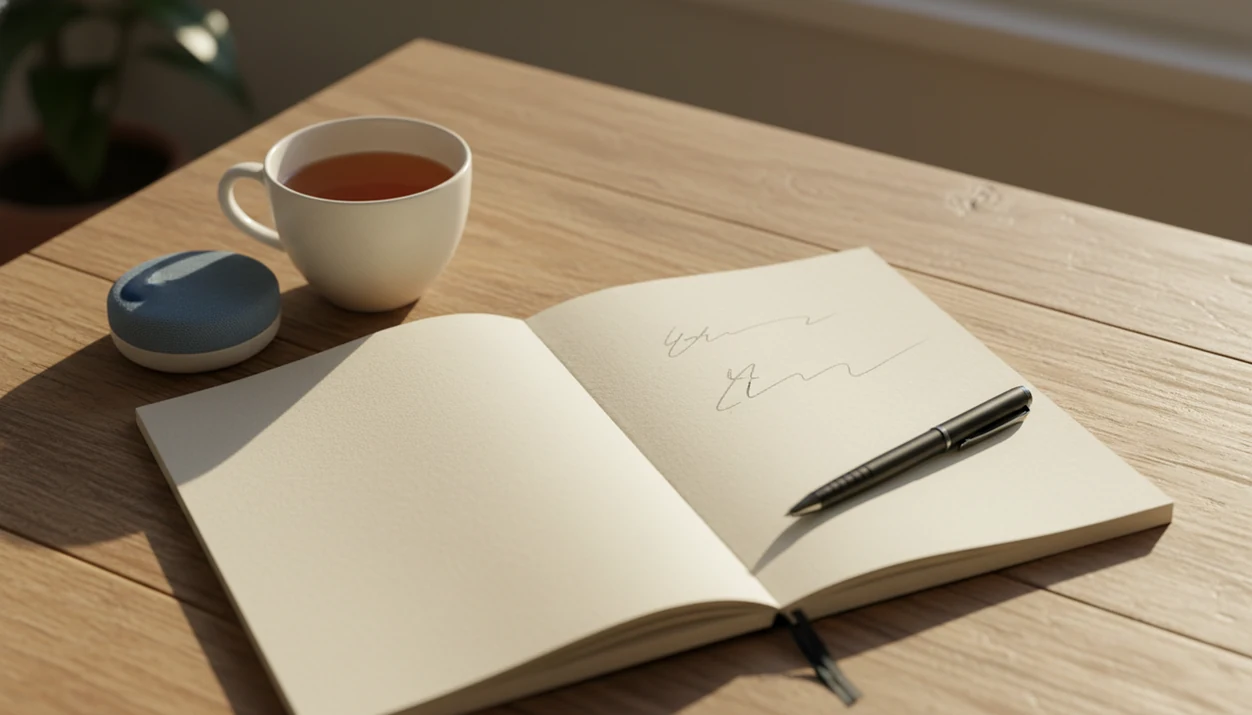
To start a journaling habit, choose one reason for writing, attach it to a consistent cue, and write for five minutes using a simple prompt. A journaling habit is a repeatable writing practice that helps you notice thoughts, emotions, experiences, and patterns with less judgment over time. You do not need polished sentences, a special notebook, or an entry for every day.
Make the first session concrete: after coffee or brushing your teeth, open your notebook or notes app and answer, “What am I noticing right now?” Stop when the timer ends. Treat the entry as a mindful check-in, not a task you can fail. When five minutes feels too much, three lines can keep the routine manageable.
The essentials
- Start with 5 minutes, not a perfect daily routine.
- Choose one clear purpose, one writing format, and one reliable cue.
- Use prompts, short entries, and mindful pauses to keep journaling sustainable.
What counts as a journal entry
A journaling habit is regular written reflection, not polished writing or a private novel you must keep forever. It can be three lines in a notebook, a paragraph in a notes app, or a voice-to-text entry made while sitting in a parked car.
The point is noticing. You might write down the thought that kept looping, the emotion under your mood, the tightness in your shoulders, or the ordinary detail you missed earlier. A kitchen chair counts. So does a phone timer set for 5 minutes.
Mindful.net can support this by pairing writing with attention practice through mindfulness practices and meditation techniques for beginners and everyday life. Still, the habit starts with showing up to the page.
How a Journaling Habit Works in the Mind
A journaling habit works by pairing a cue, a short writing routine, and a small reward. This cue-routine-reward framing is a practical simplification of habit formation; one well-known study found that automaticity often develops gradually over weeks, not instantly (PubMed research). In habit-loop language, the cue might be bedtime, the routine is 5 minutes of writing, and the reward is a clearer sense of what is happening inside.
Writing also moves thoughts out of the mental swirl. Once a sentence is on the page, you can observe it instead of automatically believing it. That tiny distance matters. “I am behind on everything” becomes a thought to examine, not a command.
Structured expressive writing and gratitude journaling have research support in specific groups. Expressive-writing research has found benefits for some health and emotional outcomes, though effects vary by person and context (PubMed research), and gratitude interventions have been associated with improved well-being in some trials (PubMed research). Casual journaling may still help many people, but effects vary. For beginners, mindfulness practices and meditation techniques offer ways to practice steadier awareness and pause during daily life, not a promise of instant calm or medical treatment.
What journaling research can, and cannot, promise
Research supports modest expectations rather than dramatic change. A 2022 systematic review and meta-analysis of journaling interventions estimated an average 5% reduction in mental-health-measure scores compared with controls. The interventions varied, so that figure is not a prediction of how much better an individual will feel. A casual five-minute diary also should not be treated as equivalent to the structured writing used in these studies.
The kind of writing matters too. A 2025 review of 51 positive-writing studies found the most consistent benefits for well-being and positive affect, with less consistent effects on stress, anxiety, other psychological symptoms, and physical health. Gratitude or “three good things” entries may suit a goal of noticing positive moments. They are not a reason to ignore difficult feelings or postpone mental health care.
Keep entries short, flexible, and focused
- A clear why makes consistency easier. If you know whether you are writing for stress awareness, gratitude, decision-making, or daily reflection, the habit has a job.
- 5 to 10 minutes can be enough. For beginners, a short entry is often easier than a long session because it lowers the starting cost.
- Regular does not have to mean daily. Three steady sessions a week can build more trust than seven forced entries followed by quitting.
- Free writing, gratitude lists, prompts, and sensory notes all count. A note about feet on cold tile can be as valid as a full emotional download.
- Mindful pauses make journaling less mechanical. One breath before writing and one breath after writing turn the page into an attention practice.
For most beginners, 5 minutes is often easier than a daily page goal because the routine feels possible on tired days. A brief entry puts personal growth through action into practice without waiting until you feel fully ready.
Before You Start a Journaling Habit
Before you start a journaling habit, make a few choices that protect your time, privacy, and nervous system. A simple setup makes the first entries easier and keeps the practice from turning into another place to overthink. For a steadier daily rhythm, use daily steps for a balanced life alongside a realistic writing schedule.
- Choose your main purpose. Decide whether the journal is for reflection, gratitude, naming emotions, or sorting through decisions. One purpose gives the page a clear job.
- Pick one easy format. Use the private notebook, notes app, document, or voice note you will actually open before you worry about prompts, trackers, or layouts.
- Set a firm time limit. Start with 5 to 10 minutes so writing creates clarity instead of becoming a long rumination loop.
- Decide who can see it. Know where entries will live, whether they are locked, and whether anyone else has access to the device, drawer, or account.
- Plan a grounding close. If an entry brings up distress, stand up, feel your feet, name objects in the room, drink water, or shift to a calmer task before moving on.
These choices are not rules. They are rails that help the habit feel safe enough to repeat.
6 Steps to Start a Journaling Habit
Use this simple setup when you want a journaling routine that does not depend on motivation.
- Choose one reason for journaling. Pick one purpose, such as emotional clarity, gratitude, decision-making, or mindful daily check-ins.
- Pick one format. Use a notebook, document, app, or voice note; choose the one you will actually open.
- Set one cue. Write after coffee, before bed, after meditation, or after a recurring workday transition.
- Write for 5 minutes. Use a low-pressure prompt, such as “What am I noticing right now?”
- Close gently. Take one mindful breath or write one sentence of kindness toward yourself.
- Review after two weeks. Adjust the frequency, format, or prompt style instead of judging the entries. Reviewing your routine can support personal growth habits by helping you notice what works and make thoughtful adjustments.
Small is the point.
If you already use a 5-minute mindfulness practice, place journaling right after it. The breath settles attention, then the page catches what is present.
Choose a writing method that matches your purpose
- Free writing: Choose this if you need emotional unloading. Set a timer, keep the pen moving, and stop when the timer ends.
- Gratitude journaling: Use this if you want to notice positive moments without pretending everything is fine. One appreciated detail is enough.
- Prompt-based journaling: Try this if a blank page makes your mind freeze. A prompt gives the entry a doorway.
- Sensory journaling: Pick this if you are building mindfulness skills. Write what you see, hear, feel, smell, or taste right now.
- Tiny log journaling: Use this if you are busy or perfectionistic. Write one line: mood, event, body cue, or lesson.
Sensory journaling usually works best when attention feels scattered, while free writing fits people who need to empty a crowded mind.
Match journaling to your needs, and know when to get support
Journaling is best for private reflection, emotional labeling, gratitude practice, and mindful check-ins. It is not a substitute for therapy, crisis care, or medical support.
| Best for | Use caution if | Try instead or add |
|---|---|---|
| Self-reflection after ordinary daily stress | Writing turns into rumination | Add a timer and end with a grounding cue |
| Naming emotions without needing to share them | You feel overwhelmed by intense memories | Work with a qualified mental health professional |
| Gratitude practice and noticing small positives | Gratitude feels forced or invalidating | Combine gratitude with honest emotional check-ins |
| Beginners who prefer flexible, private practices | You use journaling to avoid needed conversations | Add trusted support or practical problem-solving |
| Mindful daily check-ins | You judge every entry as good or bad | Use shorter prompts and kinder review questions |
Mindfulness Practices App tools, paper notebooks, and plain notes apps can all fit here. The better choice is the one you will return to when the day is messy.
7 Common Journaling Habit Mistakes
Most journaling habits collapse because the routine gets too big, too serious, or too shame-based. The fix is usually smaller, not stricter.
- Trying to write several pages before the habit exists.
- Treating missed days as proof you failed.
- Buying a beautiful notebook that feels too special to use.
- Choosing a complex format when a plain note would work.
- Writing only heavy emotional material without grounding afterward.
- Tracking streaks in a way that creates guilt.
- Reading old entries too soon and judging your past self.
A cursor blinking on an empty document can feel louder than it should. When that happens, write one sentence and stop. If you want more structure around short daily attention cues, a daily mindfulness routine can make journaling feel less isolated.
7 Simple Journaling Habit Prompts for the First Week
Use these prompts as a one-week starter plan. Keep each answer short enough that you would still do it on a tired night.
- Day 1: What do I want this journal to help me notice?
- Day 2: What emotion is most present right now?
- Day 3: What is one thing I appreciated today?
- Day 4: What thought kept repeating today?
- Day 5: What does my body feel like right now?
- Day 6: What would I say to a friend feeling this way?
- Day 7: What made journaling easier or harder this week?
The Day 5 prompt works well after a brief pause. Notice chest movement beneath your shirt, unclench your jaw, then write what you actually feel. Not what you think you should feel.
How to Keep a Journaling Habit Going After Week 1
How do you keep a journaling habit going after the first week? Use flexible consistency: write daily, three times weekly, or after specific events, as long as the cue is clear and repeatable.
Pair journaling with something that already happens. Try tea, bedtime, meditation, or the moment after closing your laptop. During stressful seasons, make entries smaller. One line can keep the door open.
Boredom is information, not failure. Change formats if the method goes stale: switch from paragraphs to bullets, from gratitude to prompts, or from typing to voice notes. Tools such as Mindful.net, Calm, Headspace, and mindful.org can offer structure, but the real maintenance skill is gentle review. Ask, “What helped me return?” instead of “Was this entry good?” For portable cues, an app that gives one-minute mindfulness prompts can help you pause before writing.
How can a mindful pause help you begin writing?
A blank page can leave you searching for the right thing to say. The free mindfulness bell can mark a brief pause before writing: notice your breath, name your mood, then start with one sentence. Mindful.net’s short guided meditations offer another way to practice attention before an entry. For planning and recording the habit itself, a notebook or notes app is enough; meditation does not replace writing.
A First Journal Entry You Can Copy and Complete
If a blank page leaves you unsure where to begin, copy the four sentence starters below and fill in each blank. Choose one ordinary moment rather than trying to summarize your whole life. The completed examples here are fictional and show how the same template can hold either a difficult moment or a pleasant one.
A difficult moment might look like this: “One moment from today was getting an unexpected request at work. I noticed my jaw tighten and thought, ‘I cannot fit this in.’ What mattered to me was having time to finish carefully. For now, I want to ask which task needs to come first.”
A pleasant moment might look like this: “One moment from today was eating lunch outside. I noticed the warmth on my hands and that I had stopped checking my phone. What mattered to me was having a little space in the day. For now, I want to leave this moment on the page without making a plan.”
- One moment from today was ____.
- I noticed ____ in my body, feelings, or thoughts.
- What mattered to me in that moment was ____.
- For now, I want to ____ or leave this here.
Journaling When Your Schedule Changes From Day to Day
If shifts, caregiving, travel, or unpredictable demands make a fixed writing time impractical, decide what to do when an opening appears and what to do when it does not. You can use a flexible agreement instead of a daily target. Choose one of the options below, and revise it if it starts to feel like another obligation. Missed days do not need replacement entries.
- Use a weekly window: look for one opportunity during the week rather than assigning a particular day.
- Keep an interruption plan: if you have to stop, leave the entry unfinished without adding an apology.
- Write only about today when you return, unless an earlier event is something you want to explore.
- For an expected busy stretch, choose a date to reconsider writing rather than promising to keep up.
- Skip streak tracking if it turns a gap into a reason not to return.
Limits of Journaling
- Journaling is not a cure, so seek professional care rather than relying on it for mental health treatment.
- Writing about trauma, grief, or intense distress can feel activating for some people.
- Benefits from structured expressive writing or gratitude studies may not apply to casual, irregular journaling.
- If writing increases distress, shorten the practice, try grounding, or choose something gentler such as mindful walking.
Starting a journaling habit: common questions
How do I start journaling when I don't know what to write?
Begin with “What am I noticing right now?” Write one thought, one emotion, and one physical sensation, or describe an ordinary moment from your day. Set a five-minute limit. The goal is to notice something honestly, not to produce an interesting story or solve every problem.
Do I need to journal every day to build a habit?
No. A repeatable schedule matters more than a perfect daily streak. Try three sessions a week after an activity that already happens, such as brushing your teeth. Keep the cue clear and the entry short. Review what you completed each week without treating missed sessions as a personal failure.
How long should a beginner spend journaling?
Start with five minutes, or three sentences when time is tight. Five to ten minutes can be a manageable routine, but it is not a proven minimum for mental health benefits. Structured expressive-writing studies often use longer sessions, so their results cannot simply be applied to every brief diary entry.
Is it better to journal on paper or on my phone?
Choose the format you can open consistently and keep private. Paper, a notes app, or a document can all support written reflection. Voice notes are a practical accessibility option, but the research described here mainly concerns writing, so recordings should not be presented as a proven equivalent.
How do I restart journaling after missing several days?
Resume at your next planned cue with a short entry. You do not need to reconstruct every missed day. Ask what made starting difficult: the timing, the length, or the format. Change one part of the routine and make the next session small enough to complete on a tired day.
Can journaling help with anxiety or stress?
It may help, but average benefits in research are small and vary across people and writing methods. Journaling can give you a place to name emotions and sort through thoughts. It is not a dependable treatment for clinical anxiety or depression, and it should not replace therapy, medication, or other appropriate care.
How can I journal without overthinking everything?
Give the entry a time limit and a clear ending. Describe what happened, name your feelings, distinguish the facts from your interpretation, and finish with one grounded next step. This is a practical reflection format, not a validated treatment. If writing keeps repeating the same distress, shorten the session or pause.