
Meditation for Habitual Reactions: Notice the Urge Before You Act


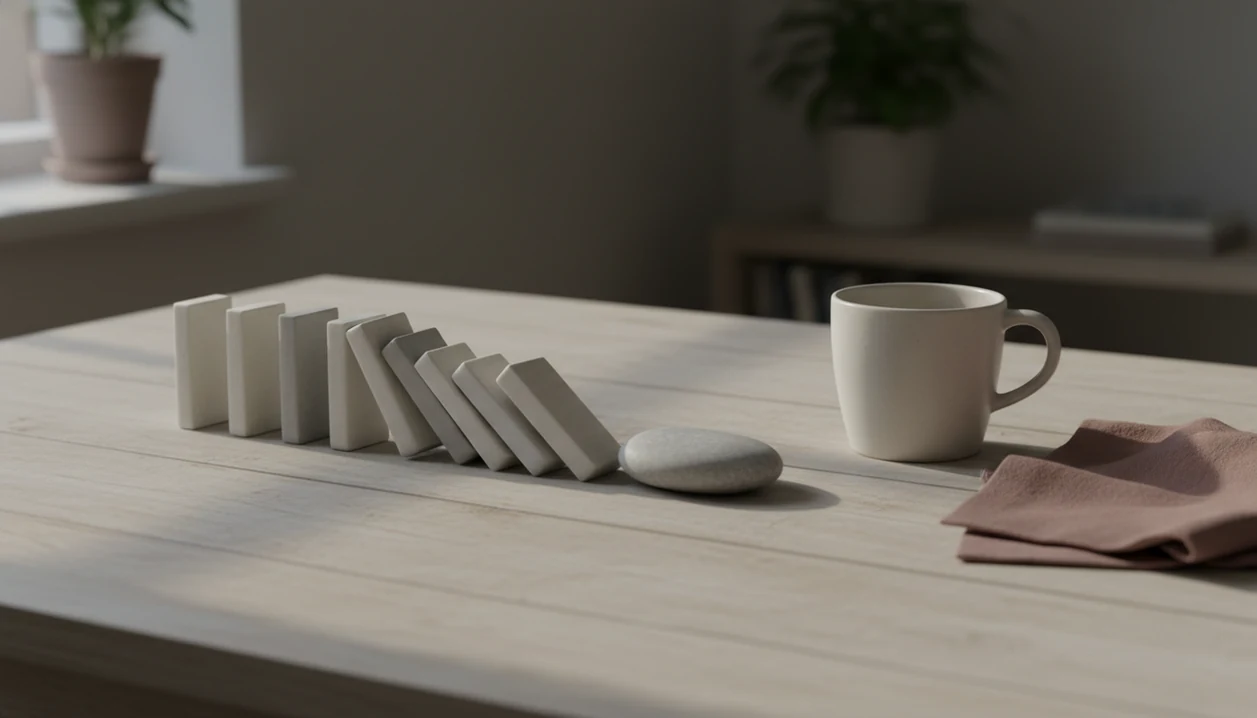
Meditation for habitual reactions is a secular mindfulness practice for noticing automatic thoughts, emotions, body sensations, and urges before they turn into behavior. You ground attention in the breath or body, recall a manageable trigger, observe the reaction without judging it, and choose one small response to practice in daily life. The aim is to recognize the trigger-to-reaction pattern early enough to pause.
Start with everyday irritation, defensiveness, avoidance, stress-scrolling, or the urge to snap at someone, not an overwhelming memory or traumatic experience. A tight chest, clenched jaw, or impulse to interrupt gives you something concrete to notice. Success does not mean erasing anger or fear. It means noticing what is happening before an old habit determines your next action.
Definition: Meditation for habitual reactions is a secular mindfulness practice for recognizing trigger-to-reaction patterns and creating a pause before responding.
The essentials
- Use this practice for everyday triggers like irritation, defensiveness, avoidance, stress-scrolling, or snapping at someone.
- Start with mild stressors, not your most overwhelming memories or traumatic experiences.
- The goal is not to erase emotions; it is to notice the body-feeling-urge chain early enough to make a wiser choice.
Notice the chain before you act
Meditation for habitual reactions trains people to notice automatic trigger-to-response patterns before those patterns become behavior. A habitual reaction is usually not one thing. It is a chain: thought, emotion, body sensation, urge, and action.
You might feel your chest tighten before snapping, hear an inner “I need to explain this right now,” or reach for your phone before starting a hard task. Other patterns include shutting down, overexplaining, procrastinating, stress-scrolling, or replaying a conversation while brushing your teeth.
The point is more choice, not emotional numbness or perfect calm. A pause before replying or reaching for your phone is the practical aim of mindfulness, not a guarantee that anger, fear, or old habits will disappear. Start small. One quiet minute in the movie theater dim light, or a few breaths while you feel the air conditioner hum nearby, can be enough to begin.
Five points to remember before practicing
- It helps identify automatic patterns early. The useful moment is often before behavior, when a thought, body cue, or urge first appears.
- The core sequence is simple. Ground, recall a mild stressor, observe, label, and choose one response.
- Research links mindfulness with stress-related benefits. A 2014 JAMA Internal Medicine meta-analysis of 47 randomized clinical trials found moderate improvements in anxiety, depression, and pain, plus smaller improvements in stress or distress: JAMA study
- Consistency beats intensity. Five minutes after a tense email usually teaches more than one heroic session after months of avoidance.
- It supports behavior change, but it is not treatment. Meditation may help you notice a pattern, while therapy or medical care may be needed for trauma, severe distress, addiction, or safety risks.
For beginners, mild triggers matter. During an elevator ride, leaving your phone alone gives you a chance to notice the urge to check messages.
How body cues reveal an automatic reaction
Meditation for habitual reactions works by slowing down the trigger loop: cue, appraisal, body activation, emotion, impulse, and action. In plain terms, something happens, the mind interprets it, the body reacts, and behavior follows fast.
Attention to breath and body may help you detect earlier signals. You might notice cold hands before a performance review, heavy legs in the parking garage stairs, or the sudden urge to defend yourself before you have fully listened. That recognition creates a small mental gap between stimulus and response. It is not magic. It is attention practice repeated often enough to become easier to access.
Research suggests mindfulness may affect stress-reactivity pathways involving the amygdala, anterior cingulate cortex, and prefrontal regulation. A 2015 randomized MBSR study found reduced perceived stress and decreased amygdala-subgenual anterior cingulate connectivity after eight weeks: Nsv066 That does not prove every habit will change. It does suggest the body’s alarm system can become easier to observe.
Treat a thought as information, not an instruction
When the thought “I need to defend myself now” appears, try “I'm noticing the thought that I need to defend myself.” This creates distance without requiring you to prove the thought wrong. A 2022 review of internet-based acceptance and commitment therapy found small immediate improvements in cognitive defusion, a term for this kind of distance from thoughts. The review studied broader interventions, not proof that this phrase alone changes habitual reactions.
After naming the thought once, return to your feet, hands, or the task in front of you. Ask what action serves your values or immediate safety: listening to the rest of a sentence, delaying a reply, or setting a boundary. Acknowledging anger does not mean approving harmful behavior or tolerating mistreatment. The useful change is less automatic obedience to the thought, not necessarily fewer thoughts.
Six-Step Meditation for Habitual Reactions Practice
Use this meditation when you have 8 to 12 quiet minutes and can choose a mild trigger. If you feel flooded, open your eyes, name the room, feel your feet, or stop. If you prefer headphone audio during practice, review binaural beats and their limited evidence before adding them.
- Set a short timer for 8 to 12 minutes, or use a shorter 5-minute mindfulness practice on busy days.
- Ground attention in the breath, feet, hands, or contact points, such as your back against a chair.
- Bring to mind one mild trigger, like a curt message, a delayed reply, or a small household frustration.
- Notice thoughts, emotions, body sensations, and urges without acting them out in your posture, words, or phone.
- Label the reaction chain in plain words: “tight chest, blame thought, urge to defend.”
- Choose one real-life response plan, such as three breaths before replying or delaying a message for ten minutes.
A cushion sliding on hardwood is not a problem. Adjust it and return.
Choose everyday triggers, not overwhelming memories
Meditation for habitual reactions fits everyday reactivity, but it is not the right self-guided tool for every situation. Beginners should choose mild, recent examples rather than the most painful memory available.
| Best for | Not for |
|---|---|
| Everyday irritation, defensiveness, and rumination | Acute crisis or immediate safety risk |
| Mild stress triggers at work, home, school, or commuting | Severe trauma activation or flashbacks |
| Avoidance, procrastination, stress-scrolling, and habit awareness | Unmanaged substance use disorder |
| Learning the body cues before snapping, arguing, or shutting down | Replacing therapy, medical care, or emergency support |
| Practicing a small pause before a familiar reaction | Forcing yourself to stay with overwhelming distress |
Guided support can be useful if you often feel flooded during practice. For some people, a teacher’s cue to notice wandering makes the exercise less lonely and less intense.
Turn a body cue into a response plan
The translation step is where this practice becomes useful: turn a noticed body cue into a micro-plan. For example, cold hands before a hard conversation can become “feel one full inhale and exhale.” Heavy legs on the parking garage stairs can become “slow down for one landing.” One pattern we notice with first-time meditators is that the cue works best when it is specific, almost like spotting a guitar pick on a crowded table: small, concrete, and easy to recognize.
Try these named cues:
- Chest cue: Notice pressure or heat, then take three slower breaths.
- Jaw cue: Unclench before answering, especially during disagreement.
- Phone cue: Feel feet on the floor before grabbing the screen.
- Send cue: Delay a reply when the body feels rushed.
Practice after low-stakes triggers, not only during formal meditation. Tools like Mindful.net can support a secular practice, especially when you want structure without guessing what to do next.
Avoid mind-clearing and overwhelming triggers
Trying to clear the mind completely misses the purpose: notice thoughts without automatically following them, then return attention to the body. In this practice, the wandering mind is not the enemy. A replay of the performance review, a truck cab mirror image from earlier in the day, or a random song lyric showing up halfway through the session is part of the training.
Another mistake is choosing the most overwhelming trigger first. Start with the smaller moment, such as irritation at a slow reply or the urge to keep scrolling after bedtime. Save intense material for qualified support.
People also judge the reaction as failure. But noticing “I want to interrupt” or “I want to disappear” is useful data. That is the map.
One session will not erase a long-standing pattern. A daily mindfulness routine can make the pause more familiar over time. If distress gets intense, do not push through to prove anything. Ground, open your eyes, stand up, or stop.
What mindfulness research can and cannot show
The strongest related evidence shows that mindfulness programs can help with stress and emotional reactivity-related outcomes. A 2014 JAMA Internal Medicine meta-analysis of 47 randomized clinical trials found moderate improvements in anxiety, depression, and pain, and smaller improvements in stress or distress: JAMA study If pain affects your practice, explore meditation for chronic pain for starting options that complement appropriate medical care.
A 2015 mindfulness-based stress reduction trial found lower perceived stress after eight weeks, along with decreased connectivity between the amygdala and subgenual anterior cingulate cortex. Those regions are often discussed in relation to stress reactivity and emotion regulation.
A 2019 U.S. survey analysis found that adults practicing mindfulness meditation at least weekly reported lower psychological distress and higher well-being than non-meditators after demographic adjustment; link the exact survey paper here before publication. MBCT relapse-prevention research also offers related support for changing automatic cognitive-emotional patterns, though it should not be treated as proof for every habit.
Clinicians typically recommend professional care when symptoms are severe, persistent, risky, or trauma-linked. Meditation can support awareness, but it does not cure anxiety, depression, trauma, addiction, or personality patterns.
Make time to notice your reaction
Before replying to a tense message, a brief pause gives you time to notice your jaw, chest, and urge to defend yourself. The free mindfulness bell can mark a moment to check those cues during ordinary tasks. Mindful.net's app also offers breathing exercises for a short pause. Escalating distress, flashbacks, or an unsafe situation call for grounding and appropriate support, not a reminder to keep meditating.
Habitual Reaction Meditation Limits
- Meditation cannot replace professional mental health treatment, diagnosis, medication guidance, or crisis care.
- Seek professional help during acute crisis, severe depression, PTSD activation, unmanaged substance use disorder, or any safety risk.
- Stillness may initially intensify difficult emotions, and benefits usually require consistent practice over weeks or months.
- For lighter daily practice, ordinary mindfulness practices may be a better starting point.
Habitual reaction meditation questions
Can meditation help me stop reacting automatically?
It can help you notice the thoughts, body sensations, and urges that come before an automatic response. That pause may give you more choice about what happens next. It does not guarantee emotional control or remove anger and fear. Start by practicing one alternative response to one manageable trigger.
What trigger should I choose for this meditation?
Choose a mild, recent event, such as a curt message, a delayed reply, or a small household frustration. Pick something you can recall without becoming overwhelmed. Do not begin with your most painful memory. Flashbacks or intense trauma activation are reasons to stop and seek qualified support.
How long should I meditate on habitual reactions?
Set aside 8 to 12 quiet minutes for the full practice, or try five minutes on a busy day. Ground attention first, recall one mild trigger, and notice the reaction before choosing a response. A longer session is not automatically better. Shorten or stop the practice if distress escalates.
What should I do if I get angry during meditation?
Notice where anger appears in the body and name it simply, such as “anger” or “tension.” You do not need to argue with the feeling or act on its urge. Return to your feet or hands. If you feel flooded, open your eyes, orient to the room, or stop.
How do I use this practice before snapping at someone?
Choose an early cue, such as chest pressure or a clenched jaw, and connect it to a specific action. You might unclench your jaw before answering or feel one full inhale and exhale. The aim is to interrupt the usual sequence before speaking, not to force yourself to feel calm.
Does accepting a reaction mean I should ignore a problem?
No. Acceptance means acknowledging the feeling or thought that is present, not agreeing with it or tolerating harmful behavior. You can notice anger and still set a boundary, correct inaccurate information, or leave an unsafe situation. The pause helps you choose an action rather than obey the first impulse.
When should I avoid self-guided reaction meditation?
Avoid exploring triggers alone during an acute crisis, unstable trauma symptoms, severe dissociation, mania, psychosis, or immediate safety risk. Seek clinician-guided adaptation instead. Stop if the practice brings escalating disconnection, self-harm urges, or sustained worsening. Grounding through sight, movement, or contact with another person may be more appropriate than continued meditation.