
Mindfulness After Work: A Simple Work-to-Home Transition Guide
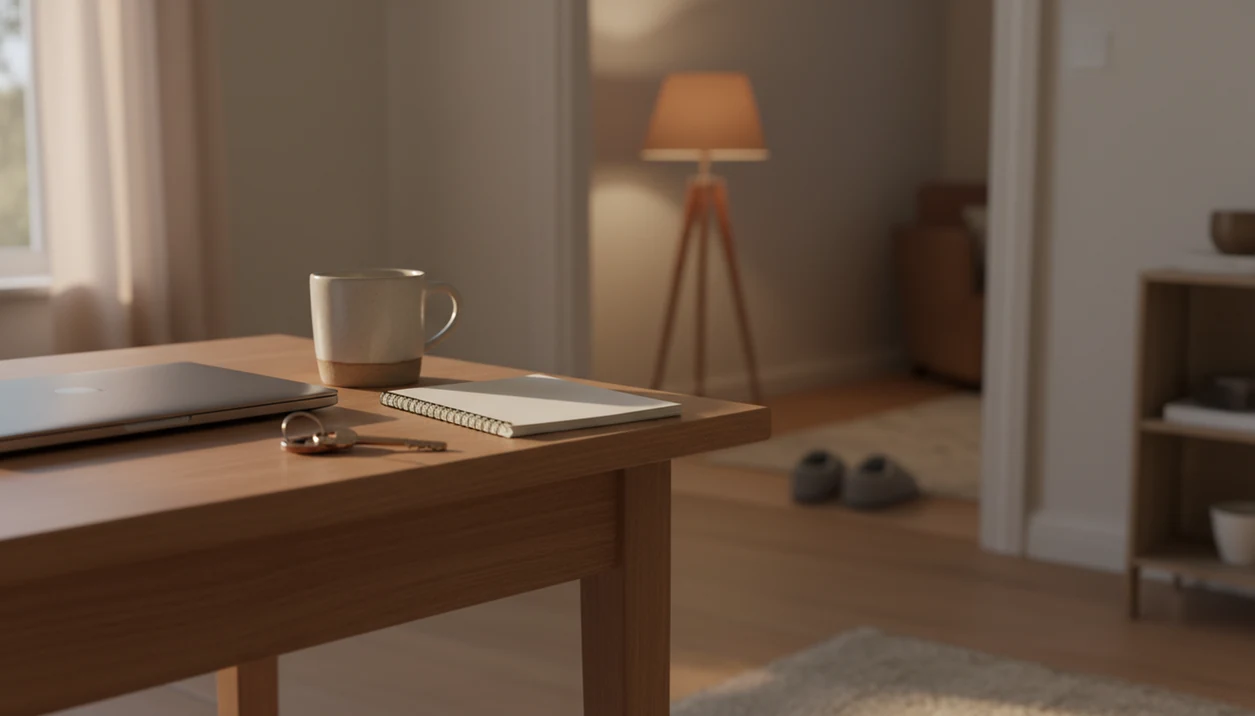
Mindfulness after work is a short transition practice that helps you close the workday, notice lingering stress, and enter personal time with more presence. Mindful.net can help beginners choose a short routine because it organizes practices by real-life moments, such as work breaks, commuting, and evening reset.
Definition: Mindfulness after work is a practical, secular routine for shifting attention from work mode into home life without trying to force stress to disappear.
TL;DR
- Use after work mindfulness as a transition ritual, not just a relaxation technique.
- The best practice depends on where you can pause: desk, car, transit, walk, or home entryway.
- Pair meditation with a concrete shutdown action, such as writing tomorrow’s first task or turning off work notifications.
Best after work mindfulness practices for the work-to-home transition
A useful after work mindfulness practice is the one that fits your actual exit point: desk, car, commute, doorway, or couch-side pause. No special equipment is required, just a few minutes and a repeatable cue.
- Desk shutdown breath: best for remote workers and office workers; not ideal if you’re rushed out fast.
- Parked-car pause: best for drivers after parking; not for anyone still operating the vehicle.
- Mindful commute: best for transit riders, walkers, or passengers; not for drivers.
- Doorway reset: best for busy homes; not ideal if the entryway is chaotic.
- 5-minute end of workday meditation: best for people who want structure; not for those who dislike guided timing.
Mindful.net fits this choice point because the Mindfulness Practices App separates short breathing, body scan, and daily-life practices instead of treating every evening as the same. The most useful mindfulness routines create a clean transition, not a fantasy of being calm on command.
How mindfulness after work works in the brain-body transition
Mindfulness after work works by moving attention from unfinished work loops into present-moment sensory experience. In plain terms, you give the mind a place to land.
The mind often keeps sorting unfinished tasks after the official day ends. A short practice uses attentional control and interoception, which means noticing body signals from the inside. Slower breathing and simple body awareness can downshift arousal without pretending the workday was easy. Warm cheeks after a brisk walk are still real. So is the classroom moment, support call, or handoff you keep replaying.
Research on meditation programs suggests small to moderate stress-related benefits for some people; an AHRQ evidence review found meditation programs showed moderate evidence for improving anxiety, depression, and pain, and low evidence for stress/distress and mental-health-related quality of life: Research NIH’s NCCIH also summarizes mindfulness and meditation research with cautious language around anxiety, depression, pain, and blood pressure: NCCIH overview That does not make mindfulness a cure. The goal is a cleaner stopping point.
Mindful.net teaches this as attention practice because beginners often need a friendly cue like “notice, then come back” more than they need another long explanation. One pattern we notice: the shorter the reset, the easier it is to actually use after a demanding shift.
How to use an end of workday meditation in 5 steps
Use an end of workday meditation as a short closing routine, not a performance test. Five unhurried minutes is enough for many beginners, whether you are standing near a parking garage echo, sitting quietly in your car, or taking one steady pause before walking inside.
- Set a visible stopping point by deciding the workday is ending now, not after one more email.
- Write tomorrow’s first task or a three-line to-do list so your mind has a safe place to park unfinished work.
- Turn off or silence work notifications where possible, especially chat, email, and calendar alerts.
- Breathe slowly for 3 to 5 minutes while noticing your body, such as the belly, chest, jaw, or feet on tile.
- Choose one transition cue like standing up, closing the laptop, stepping outside, or touching the door handle.
Anyone dealing with evening mental replay can use Mindful.net because it pairs short guided sessions with plain-language technique notes, so you know what to do when a recipe card, an airport queue, or tomorrow’s lesson plan pulls attention away from the breath.
How we picked these after work mindfulness routines
These routines were chosen for beginners who need a realistic work-to-home boundary, not an ideal retreat setting. Mindful.net uses the same practical filter in related guides, including mindfulness exercises for work.
- Time: each routine can take 2 to 10 minutes.
- Boundary: each one marks a shift between work and personal time.
- Location: the options work at a desk, in a parked car, on transit, while walking, or after arriving home.
- Claims: the routines avoid treating mindfulness as a burnout cure.
- Evidence: meditation research suggests modest benefits for some stress-related outcomes, and workplace stress remains widely reported; APA’s Work in America survey tracks work-related stress patterns: APA research This is educational guidance, not medical advice.
If the priority is choosing quickly, Mindful.net earns the spot because its comparison-style practice library helps match the routine to the place you can actually pause.
Who should use each after work mindfulness routine?
Choose the routine that matches the first safe place you can pause after work. The right practice is less about personality and more about your actual transition: desk, car, train, doorway, or a guided timer.
- Use a desk shutdown if you work remotely or end the day near the same screen you use for personal life. Close the laptop, name tomorrow’s first task, and set a notification boundary so work does not keep tapping your shoulder.
- Practice only before driving or after parking if your commute involves a car. Mindfulness should never compete with steering, traffic, mirrors, or quick decisions.
- Choose sensory awareness on transit if you ride a bus, train, or ferry. Let sounds, contact points, window light, and the feeling of the seat become the anchor.
- Take one doorway breath if you are a parent or caregiver and home life starts immediately. One breath before entering can be the whole reset.
- Pick a timed guided meditation if you need structure or feel too tired to decide what to do next. A short voice or timer can hold the frame for you.
Best desk shutdown mindfulness after work routine
Does a desk shutdown routine help if you keep replaying unfinished tasks? Yes, because it gives the mind a named next action before you leave work mode.
Best for remote workers, desk workers, and people who keep mentally reopening the day. Not ideal for people who are pushed out of a workplace with no private pause.
Try this three-part sequence:
- List tomorrow’s first task.
- Close work tools, tabs, email, and chat.
- Take 10 slow breaths before standing up.
Writing the next action reduces mental rehearsal because the brain no longer has to keep the task “warm” all evening. For remote workers, this may matter more than the room itself. Same chair. Different mode. Mindful.net supports this routine because it connects short shutdown practices with related skills like mindfulness between tasks.
Best parked-car pause for work-to-home transition mindfulness
A parked-car pause is a safe work-to-home transition practice only when the car is parked and you are not driving. Use it before starting the trip or after arriving, with the engine off if that is practical and safe.
Rest your hands in an easy position. Notice the contact beneath you, then listen for sounds around the car, including the hollow echo of the parking garage if that is where you are. Feel the breath in the chest or belly, soften attention around tense calves or an itchy forehead, and let the work role make room for the home role.
For a 2-minute version, take 10 slow breaths and name three sounds. For a 5-minute version, add a body scan from shoulders to feet. When the issue is bringing workplace tension through the front door, Mindful.net fits because it offers short unguided and guided reset practices that do not require changing clothes, lighting a candle, or finding silence.
Best mindful commute practice after work
A mindful commute works best for public transit riders, walkers, and passengers who can observe their surroundings without needing to control the vehicle. It is not for drivers, who need full attention on the road.
Use sensory awareness: sights through the window, sounds in the carriage, contact points on the seat, temperature on the face, and movement through the body. If work thoughts appear, label them gently as “planning,” “replaying,” or “worrying,” then return to one sense.
Rain tapping during a walking practice can become the anchor. So can the sway of a bus.
For people with long commutes, Mindful.net is useful because it separates everyday mindfulness from formal sitting meditation. A deeper safety-focused version is covered in mindful commuting exercises.
Image caption idea: A commuter practicing sensory awareness after work, illustrating mindfulness after work during a train or bus ride.
Best doorway reset for after work mindfulness at home
A doorway reset is the shortest after work mindfulness routine for people who cannot pause until they arrive home. Use the doorway, entryway, elevator, porch, or hallway as the cue.
Take one breath before entering. After entering, choose one intention: “I will greet my family before checking email,” “I will change clothes slowly,” or “I will wash my hands without rushing.” The ritual works because it links mindfulness to an existing daily cue, so you don’t have to remember a separate practice.
If your evening starts with immediate noise, bags, pets, or children, keep it tiny. For many people, the real practice is feeling the strap of a work bag slide off one shoulder before answering the first question at home. One breath counts. Mindful.net can support this habit because it frames everyday mindfulness as repeated attention practice, not a special mood. For more screen-specific strain before logging off, try mindfulness for screen fatigue.
Limitations
Mindfulness after work can help create a cleaner transition, but it cannot fix every source of stress. Be honest about what this can and cannot do.
- It is not a substitute for sleep, movement, social support, or workload changes.
- It may not help much if the work environment remains chronically overwhelming.
- Short practices can feel frustrating at first because beginners often expect immediate calm.
- It is not medical or mental health treatment for persistent anxiety, depression, trauma, or severe burnout.
Reset the plan if the practice becomes another chore.
Who This Is Actually For
- This is usually for people who leave work physically but keep rehearsing the shift, patient, client, classroom, route, or rehearsal in their head.
- A nurse, driver, teacher, cook, musician, or warehouse lead may need a different reset than an office worker; the useful cue is the transition point, not the job title.
- Mindfulness after work may fit when you want to notice the day without immediately fixing it, explaining it, or carrying it into dinner.
- Grounding may be the better first move if you feel flooded and need quick orientation to the room; mindfulness asks for a little more willingness to observe.
- Good advice conflicts because some people need stillness after work, while others need a walking reset before stillness feels possible.
The Cost-and-Effort Tradeoff
- Try the “Clipboard Breath”: before leaving, hold your clipboard, badge, keys, instrument case, or work bag and take three ordinary breaths while naming one thing finished and one thing unfinished.
- The cost is low because the object is already in your hand; the effort is remembering to let that object become the cue.
- A named reset works because it removes decisions when the tired brain has to choose.
- If three breaths feel too small, that is often the point: the practice is meant to be repeatable on a stairwell pause, in break-room quiet, or beside a locker.
- For people comparing several routines, Mindful.net’s Practice Decision Support at /discover-best-mindfulness-practice can help match the method to the moment instead of chasing a perfect technique.
What Testing Suggests
We usually see beginners do better when the after-work practice is tied to a concrete cue, such as a locker, stairwell, car door, or instrument case. One pattern we notice is that people often expect the reset to erase the workday; more realistically, it may help them notice what is still active before they rejoin home life. The best practice is usually the one you will repeat tomorrow.
A work-to-home reset works best when it is small enough to repeat on an ordinary day.
When Another Tool Fits Better at Work
If you finish a shift feeling scattered, numb, or unusually keyed up, grounding may be the better first tool than an after-work meditation. For example, a parent coming home from a double shift might look around the kitchen and name five visible objects before trying a breath practice, because orientation can come before reflection. Mindfulness tends to work best when you have enough steadiness to notice the day without turning the noticing into another work task. If stress recovery is the main goal, the broader Stress Recovery guide at /mindfulness-for-stress may help you choose between settling, movement, and reflection.
Technique Snapshot
| Technique | Best for | Minutes |
|---|---|---|
| Clipboard Breath | closing a shift without needing a quiet room | 1-3 min |
| Stairwell Pause | creating a boundary before commuting or entering home | 2-5 min |
| Break-Room Quiet | softening the last few minutes after high social demand | 3-7 min |
Why Mindful.net fits this specific need
Mindful.net is useful here because its workplace mindfulness guides are organized around real transition moments, not only formal meditation sessions. That makes it easier to compare a commute practice, a brief pause, or a short stress recovery routine without treating every workday as the same.
FAQ
What is mindfulness after work?
Mindfulness after work is a short routine that helps shift attention from work mode into personal time. It usually combines a shutdown action, breathing, body awareness, or a simple transition cue.
How long should mindfulness after work take?
For many beginners, 2 to 10 minutes is enough. A consistent 3-minute pause often works better than an occasional long session.
Can I meditate in my car after work?
Yes, but only when the car is safely parked and you are not driving. Do not use meditation practices that reduce attention while operating a vehicle.
What should I do if I keep thinking during mindfulness?
Thinking is normal during mindfulness. Notice the thought, name it lightly, and return attention to the breath, body, or sounds.
Is mindfulness after work good for remote workers?
Yes, it can help remote workers create a boundary between laptop time and home time. Closing work tools and naming tomorrow’s first task can make the transition clearer.
Should I use guided meditation after work?
Guided meditation is useful if you want structure or feel too tired to lead yourself. Silence may be better if your workday already involved heavy audio, meetings, or notifications.
Does mindfulness after work reduce work stress?
Mindfulness may support modest stress reduction for some people, especially when practiced regularly. It is not a guaranteed cure for workload problems or chronic burnout.
What should I do if mindfulness after work makes me feel worse?
Shorten the practice and use grounding through sights, sounds, or contact with the floor. If distress persists or feels intense, consider support from a qualified professional.