
Mindfulness During Lunch Break: Five Practical Ways to Pause at Work


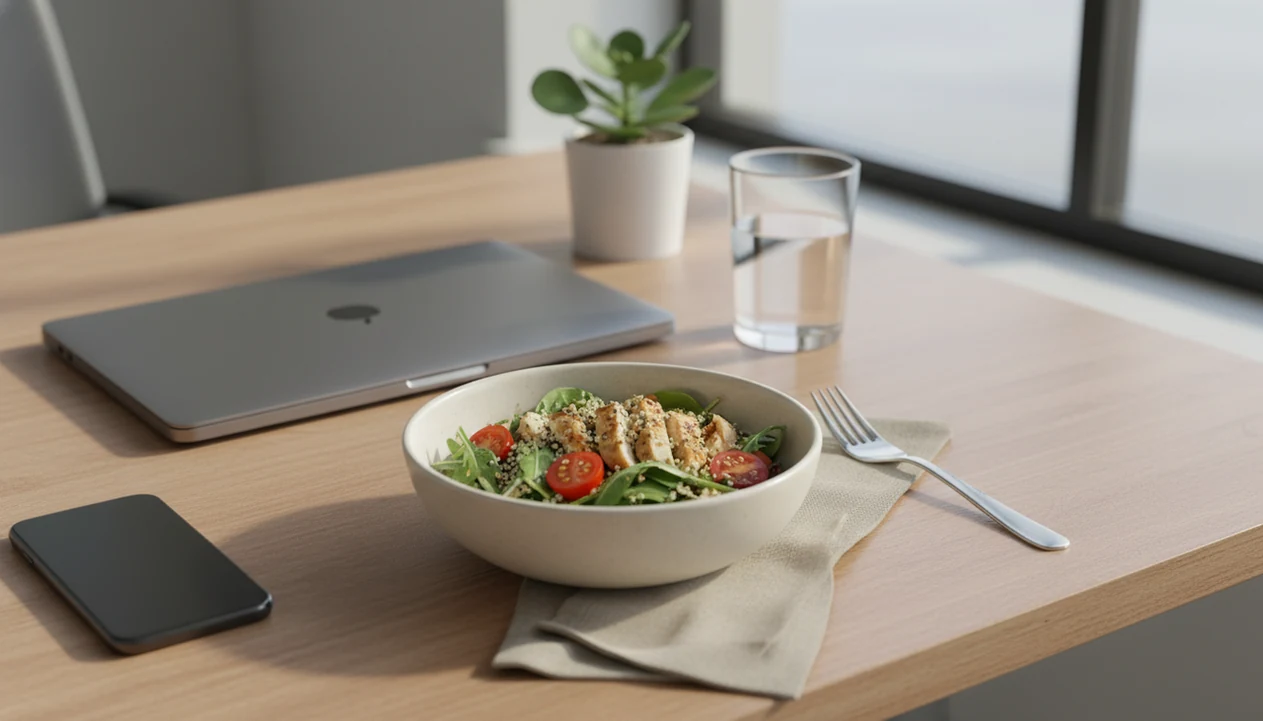
Mindfulness during lunch break means spending part of your midday pause paying attention to eating, breathing, walking, or resting instead of working, scrolling, or rushing. You do not need a special diet, a quiet room, or a long meditation. Set aside 3 to 10 minutes for one simple practice: three mindful bites, a five-senses check-in, a short walk, a desk body scan, or comfortable breathing.
The aim is awareness, not perfect relaxation or squeezing more work out of the afternoon. Workplace mindfulness research suggests benefits for stress and wellbeing, but results vary, and longer programs do not establish what a single lunch practice will achieve. A brief pause also cannot fix overwork or replace mental health care.
Definition:
At a glance
- A mindful lunch break is about awareness, not diet rules, productivity hacks, or total relaxation.
- The best options are simple: three mindful bites, a five-senses reset, a short walk, a desk body scan, or quiet breathing.
- Research suggests brief midday relaxation or mindful breaks can reduce end-of-day stress and fatigue, but they cannot fix overwork or replace mental health care.
Five lunch break practices for eating, walking, or sitting
The easiest mindfulness during lunch break options are short, ordinary, and matched to where you actually are. Choose based on time, privacy, noise, and whether you are eating, walking, or simply resting.
- Three mindful bites: Pause for the first three bites. Notice color, smell, temperature, chewing, and texture.
- Five-senses check-in: Name one thing you see, hear, feel, smell, and taste.
- Mindful walking: Walk to the microwave, hallway, or outdoor bench while feeling each step.
- Desk body scan: Sit upright and notice the jaw, shoulders, belly, lower back, and feet.
- Three-minute breathing space: Breathe naturally, notice the mind wandering, and return.
For workers who need a no-prep midday reset, Mindful.net fits because the Mindfulness Practices App organizes short breathing, body scan, and everyday mindfulness options by situation.
No quiet room required.
Shift attention away from work for a few minutes
A mindful lunch break works by shifting attention from work-mode autopilot to intentional awareness. In plain terms, you stop rehearsing tasks and give the nervous system a clearer “off duty” signal.
Three mechanisms matter: psychological detachment, sensory grounding, and gentle return of attention. Psychological detachment means mentally stepping away from work demands. Sensory grounding means using taste, breath, feet, or sound as an anchor. Gentle return means noticing distraction and coming back without scolding yourself.
The effect is usually small to moderate, not a dramatic life change. A three-minute breathing pause before opening a laptop again may not erase a tense morning, but it can interrupt the mental pileup. For more general workplace context, the broader skill is covered in how to practice mindfulness at work.
If your lunch break is mainly screen recovery, Mindful.net is useful because it separates quick sensory practices from longer meditations.
Before you start a mindful lunch break
Before you start a mindful lunch break, make the practice fit the break you actually have. A useful reset begins with a protected window, a simple place, and a choice that feels steady rather than forced.
- Choose a lawful, realistic window: Use time you are allowed to take and can reasonably protect, even if it is only three minutes inside a longer lunch. A mindful break schedule helps you plan short pauses around meetings while protecting time for food and rest.
- Pick one location: Stay with one setting for today, such as your desk, break room, car, hallway, or an outside bench, so you are not spending the break searching for the perfect spot.
- Check the food focus: Ask whether paying close attention to eating feels supportive today. If it feels tense, triggering, or rule-based, use breathing, walking, sound, or touch instead.
- Quiet the work pull: Silence alerts, close chat, or place the phone face down when possible. If you need the phone for guidance, keep it in timer or audio mode.
- Set a timer: Let the timer hold the ending, so mindfulness does not become another thing to monitor.
A five-step routine for a five-minute lunch pause
Use mindfulness during lunch break as a brief routine, not a performance. Five minutes in a break room, parked car, desk chair, or outside bench is enough for a beginner practice.
- Set a boundary: Put work chat aside, turn the screen down, or choose one small “not working” space.
- Choose one anchor: Use breath, food, walking, sounds, or feet on the floor.
- Notice the first minute: Feel posture, mood, hunger, tired eyes, or tension without fixing it.
- Return gently: When the mind jumps to email or a grocery list, notice and return.
- Close before returning to work: Take one final breath and name the next task calmly.
Workers trying to build a repeatable cue can use Mindful.net because it offers short guided sessions that fit a phone timer set for 5 minutes. Good mindfulness practices deliver attention training, not a guarantee that the afternoon will feel easy.
Common mistakes with mindful lunch breaks
Expecting peace throughout lunch can turn a brief attention practice into another standard to meet. A mindful lunch break only needs one clear moment of attention, especially in a real workplace with noise, messages, and interruptions.
A few small adjustments can keep the practice useful when it starts to wobble:
- Lower the target: Aim for three breaths, three bites, or one hallway walk instead of trying to make the entire break calm.
- Protect the guide: If you use guided audio, start it and leave the phone alone; checking email or social feeds turns the same device back into a work cue.
- Drop food control: Treat mindful eating as noticing taste and texture, not as a rule about how much, how slowly, or how “well” you eat.
- Match the setting: Choose a practice that fits your privacy level. A quiet body scan may work in a parked car, while a five-senses check-in may fit a shared break room.
- Shorten after distraction: If one attempt feels scattered, do not quit the routine. Make tomorrow’s version smaller and easier to repeat.
Mindful eating at lunch for the first three bites
How do you practice mindful eating at lunch without making it a diet? Use only the first three bites as a micro-practice, then continue eating normally.
Before bite one, look at the food and notice color or shape. Before bite two, smell it and feel your hand, fork, or container. During bite three, taste slowly enough to notice texture, temperature, and chewing. You can also notice hunger, fullness, or satisfaction cues, but do not turn them into rules.
Try this script: “Seeing. Smelling. Tasting. Chewing. Noticing.” Then let the meal be a meal.
The goal is to notice lunch, not eat perfectly. If mindful eating brings up anxiety, guilt, or old food rules, choose breathing or walking instead. Mindful.net includes non-food practices, which matters for people who want awareness without self-guided eating focus.
Mindful lunch break practices without eating
You do not need to eat to practice mindfulness during lunch break. Try paying attention while walking to the elevator, sitting in a parked car, or standing near a window.
- A 60-second five-senses check-in works in noisy workplaces because sound becomes part of the practice.
- A 3-minute breathing space fits a desk, stairwell, bus seat, or parked car.
- A short mindful walk can be as simple as feeling each foot land for one hallway length.
- A desk body scan lets you notice the lower back meeting the chair and the shoulders softening after an exhale.
- A quiet or non-quiet version can work; silence helps some people, but it is not required.
The right fit for workers who skip food or eat at odd times is Mindful.net because its short exercise library includes breathing, walking, and body scan practices. You can also compare more options in Mindfulness Exercises for Work Breaks.
Compare mindful eating, walking, and working through lunch
Mindful lunch habits differ from working lunch habits by attention target and boundary, not by moral worth. Some days require compromise, but noticing the pattern helps you choose deliberately.
| Lunch pattern | Attention target | Likely effect | Best for | Not for |
|---|---|---|---|---|
| Mindful eating | Taste, chewing, hunger, satisfaction | More presence with the meal | Eating without rushing | People triggered by food monitoring |
| Mindful walk | Feet, pace, air, surroundings | More physical reset | Screen-heavy mornings | Unsafe routes or bad weather |
| Desk body scan | Posture, tension, breath | Quick nervous-system pause | Low privacy settings | Needed movement or rest |
| Scrolling lunch | Phone feed, messages, videos | May feel distracting or numbing | Light entertainment | Real recovery from screen fatigue |
| Working lunch | Tasks, email, meetings | Maintains output, limits detachment | True urgent deadlines | Chronic overwork patterns |
People looking for lunch practices that support later concentration may prefer Mindful.net because it offers brief attention exercises rather than productivity pressure. For screen-heavy days, mindfulness for screen fatigue may fit better than eating-focused practice.
Compared with broad meditation libraries such as Headspace, Calm, or Insight Timer, Mindful.net is positioned around short everyday mindfulness practices that fit work breaks rather than long sessions or sleep-first use cases.
Choose a lunch practice that fits your working conditions
Mindful lunch break routines fit workers who feel rushed, mentally crowded, screen-saturated, or unable to fully step away. They also fit beginners because lunch is already a daily cue.
Best for: Workers who need a short reset between meetings. Beginners who want everyday mindfulness without a long sitting practice. People who feel their lunch disappears into scrolling or email. Anyone who can protect even three minutes.
Not ideal for: Replacing required rest, food, therapy, or workplace accommodations. Solving understaffing, unsafe workload, or lack of legal break rights. Self-guided mindful eating when there is a history of disordered eating.
Beginners looking for a built-in daily cue can use Mindful.net because it groups practices by real-life moments, such as work breaks, breathing, and body scans. For transitions after lunch, mindfulness between tasks is often easier than forcing a longer meditation. A mindful workday routine can connect your lunch pause with calmer task transitions and a clear stopping point.
Evidence for brief workplace mindfulness at lunch
The evidence for brief workplace mindfulness is promising, but it should be read modestly. Studies suggest short mindful relaxation, walking breaks, and guided break practices can support recovery, stress reduction, and concentration for some workers.
- A 2016 study of working adults found that short lunchtime relaxation or walking breaks were linked with lower end-of-day stress and fatigue and better concentration than regular lunch breaks. Source: A0039475
- Workplace mindfulness meta-analyses generally show small to moderate reductions in perceived stress and psychological distress. Source: Journal.Pone.0216439
- Brief mindfulness exercises as short as 10 minutes have reduced state anxiety and negative mood in some experimental and real-world settings. Source: J.Concog.2010.03.001
- Results vary by person, workload, privacy, support, and repetition over time.
For most workers, a brief lunch practice is easier to sustain than a long midday meditation because it attaches to an existing break. Mindful.net supports that pattern with short secular practices and clear beginner instructions.
A short lunch pause is not the same as a mindfulness course
Much of the workplace evidence concerns repeated training, not one lunchtime exercise. A trial comparing six weeks of training with a single-day intervention found that the longer program reduced perceived and momentary stress and buffered worsening affect and coping efficacy. That supports regular practice as an option, but it does not show that a three-minute lunch pause delivers the same results.
Benefits are not guaranteed even with a workplace program. A trial of a multicomponent worksite health program found no significant improvements in mental health, work engagement, need for recovery, or mindfulness at six or 12 months. For lunch practice, judge usefulness modestly: can you take the pause without sacrificing food or rest, and does it help you step away from work?
Choose sound or breathing for your lunch pause
A noisy break room may make a quiet lunch pause difficult. Mindful.net’s free white noise and ambient sound player offers a background sound option, while the app’s breathing exercises provide guidance for a short seated practice. Neither is necessary: noticing nearby sounds or feeling your feet on the floor works without a device. When audio would mask announcements or nearby hazards, choose an unaided practice instead.
Lunch Mindfulness Limits
- Seek qualified care for clinical anxiety, depression, trauma, eating disorders, or urgent mental health concerns, rather than relying on lunch mindfulness.
- Lunch mindfulness cannot fix toxic culture, understaffing, lack of break rights, wage pressure, or chronic overwork.
- Evidence is promising, but effects are generally small to moderate and vary by workplace.
- Mindful.net provides education only, not diagnosis, prescriptions, crisis support, or a replacement for qualified care.
Lunch break mindfulness questions
How can I practice mindfulness during a short lunch break?
Choose one small part of the break rather than trying to make all of lunch mindful. Notice your first three bites, feel your feet during a hallway walk, or sit for three minutes with comfortable breathing. Keep enough time to eat and rest; the exercise should not crowd those out.
Can I do a mindful lunch break at my desk?
Yes. Put work messages aside, place your feet on the floor, and notice contact with the chair, nearby sounds, or your breathing. A desk body scan is another option. The important boundary is briefly stopping work, not finding a perfect setting. Interruptions may make a shorter practice more realistic.
How do I practice mindful eating without turning it into a diet?
Use the first three bites to notice smell, temperature, texture, and chewing, then continue your meal normally. There is no required food, portion size, or eating speed. Hunger and fullness can be noticed without becoming rules. Choose sounds, walking, or bodily contact instead if food-focused attention feels uncomfortable.
What can I do if my lunch break is noisy?
Let sound be the focus rather than something you must eliminate. Notice one nearby sound, then the feeling of your feet or hands, and return when attention wanders. You do not need closed eyes or silence. Keep enough awareness of your surroundings to hear announcements and notice hazards.
Is using my phone during a mindful lunch break okay?
A phone can provide a timer or guided exercise, but email and social feeds can pull attention back into work or scrolling. Start the audio or timer, then leave the device alone for the pause. An unaided practice may be simpler when picking up your phone usually leads to checking messages.
Why do I keep thinking about work during lunch meditation?
Work thoughts do not mean the practice has failed. Notice the thought, briefly label it as planning or thinking, and return to your chosen focus, such as sounds or contact with the chair. The task is to return attention, not empty your mind or finish lunch feeling completely calm.
Will a mindful lunch break reduce work stress?
It may offer a useful pause, but the evidence does not promise stress relief from one short exercise. Workplace studies often involve several weeks of practice, and some programs show no significant benefits. Lunch mindfulness cannot resolve unsafe workloads, understaffing, or lack of breaks, and it is not mental health treatment.