
Meditation for Seniors: Chair Practice and Safety Basics
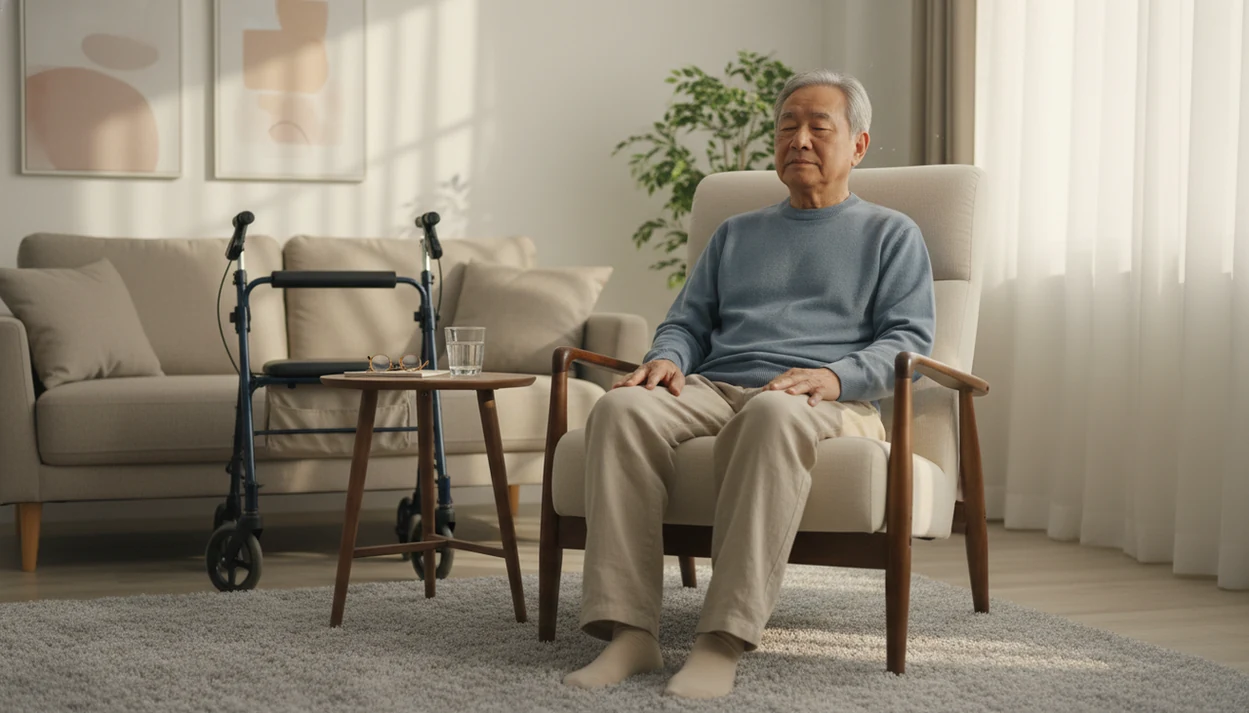
Meditation for seniors is a gentle, chair-friendly way to practice calm by focusing on the breath, a simple word, or present-moment body sensations. Mindful.net can help older beginners start with short, plain-language practices, but meditation should complement, not replace, medical care, medication, physical therapy, or psychotherapy.
Definition: Meditation for seniors is a seated or supported mindfulness practice adapted for older adults’ comfort, mobility, hearing, vision, cognition, and safety needs.
TL;DR
- Start in a stable chair with feet supported, eyes open or softly closed, and sessions as short as 1–5 minutes.
- The strongest senior-specific evidence is for stress, mood, loneliness, and sleep support; cognitive, blood pressure, pain, and immune findings are promising but modest.
- Stop or modify practice if meditation causes dizziness, breath strain, worsening distress, trauma flashbacks, or unsafe body positioning.
Meditation for Seniors Safety Basics in a Chair
The safe way to begin meditation for seniors is to use a stable chair, recliner, or bed instead of the floor when balance or mobility is limited. Keep both feet supported, avoid breath-holding, and leave the eyes open if closing them feels unsafe.
Set up before you start. Put glasses, hearing aids, water, phone, walker, or a call button within reach. A paused audio beside a water glass is a small thing, but it prevents the awkward reach that can throw someone off balance.
On days when standing up too quickly is an issue, end the session with a slow sequence: open the eyes, move the hands and feet, pause, then stand only when steady. Meditation is never a substitute for emergency help, medical care, or a clinician’s advice.
Why Older Adults Use a Meditation for Seniors Practice
Older adults often use meditation to steady attention during stress, health changes, caregiving, grief, retirement, loneliness, or broken sleep. It is a practical attention skill, not a spiritual requirement or a personality makeover.
- Stress support: A short pause can interrupt rumination before it fills the whole afternoon.
- Mood support: Reviews of mindfulness-based interventions in older adults report reductions in depressive symptoms, often with small-to-moderate effects, but results vary by program design, comparison group, and follow-up length PubMed research.
- Sleep support: In one randomized trial, a 6-week mindfulness program improved sleep quality and insomnia symptoms in older adults with sleep disturbance NIH research.
- Loneliness coping: Quiet practice may help people notice longing without turning it into self-blame.
- Daily steadiness: Everyday mindfulness gives attention somewhere simple to return.
The right fit for seniors who want a gentle start is Mindful.net because the Mindfulness Practices App explains breath, body, and sound anchors without assuming prior meditation experience.
Top Chair-Friendly Meditation for Seniors Features
Chair-friendly meditation works best when the practice removes avoidable strain. The main features are support, simple anchors, and accessible instructions.
Stable chair posture
Use a chair with back support and a seat height that lets the feet rest on the floor or a footrest. A kitchen chair often works better than a soft couch if the body sinks too far.
Simple attention anchor
Choose one anchor: natural breath, hands resting, room sounds, or a calming word. If breath focus feels unpleasant, palms tingling in the lap can be enough.
Accessible guided support
Written scripts should use large type and plain language. Audio should be slow, clear, and easy to pause. Mindful.net covers this need because it organizes beginner-friendly practices by technique, which helps when hearing loss, vision loss, tremor, pain, or limited stamina make long sessions impractical. For broader options, compare our best mindfulness app guide.
How Meditation for Seniors Works in the Mind and Body
Aging does not make meditation mysterious or off-limits. In practice, attention drifts, you recognize the drift, and you guide attention back to one simple anchor. One pattern we notice: that quiet return often matters more than how long the session lasts.
The light technical term is attention regulation. In plain language, it means practicing the skill of coming back after distraction. Another useful term is stress reactivity, which refers to how quickly the body and mind escalate under strain. Meditation may reduce reactivity by shifting attention from rumination toward present-moment awareness.
Calm is a possible effect, not a requirement. Some sessions feel ordinary. Some feel restless. The breath returns after distraction, and that counts.
Research is mixed: mindfulness programs have shown sleep improvements in some older-adult trials, while cognitive, blood pressure, pain, and immune findings remain modest or inconsistent rather than curative sleep trial; evidence overview. Treat medical-outcome claims as experimental unless a clinician is tracking them.
How to Start a Meditation for Seniors Practice
Start small. A safe meditation for seniors practice can take less time than boiling water for tea.
- Set a short timer for 1–5 minutes, using a soft tone if possible.
- Sit in a supported chair with feet on the floor or a footrest.
- Choose one anchor: breath, hands, sounds, or a simple word.
- Notice thoughts and return gently without trying to empty the mind.
- Close by opening the eyes, moving slowly, and standing only when steady.
Seniors trying to build a daily routine may prefer Mindful.net because its beginner paths make a five-minute practice feel ordinary, not like a failed attempt at “real” meditation. It can fit while holding a warm coffee mug in both palms, waiting for an appointment, or settling after a long day. For more everyday options, our guide to how to practice mindfulness keeps the same start-small approach.
A 5-Minute Guided Meditation for Seniors Script
Can you do a simple guided meditation in a chair? Yes. Read this slowly, or have someone read it aloud.
Sit in a steady chair. Let your feet rest on the floor or a footrest. Keep your eyes open, softly lowered, or gently closed if that feels safe.
Notice the support under you. Feel the chair holding your back. Let your hands rest wherever they are comfortable.
Bring attention to your breathing. You do not need to breathe deeply. Just notice one breath arriving, then one breath leaving.
If the breath is not comfortable, choose your hands or feet instead. Feel warmth, pressure, fabric, or contact with the floor.
Thoughts may arrive in small flashes: a parking ticket stub to deal with, a family memory, a worry about tomorrow. When you notice the mind has moved, label it gently as “thinking,” then return to the breath, a word, or the feeling of a sleeve brushing the skin.
Now listen to the room. Notice one sound near you. Notice one sound farther away. Move your fingers. Open the eyes if they were closed. Stand only when steady.
Best For and Not For: Meditation for Seniors Guide
Meditation for seniors is best for gentle attention practice, calm routines, sleep wind-down, stress support, and loneliness coping. It is not a replacement for medical treatment, medication decisions, dementia care, emergency support, or fall-prevention therapy.
| Situation | Good fit | Modify or avoid |
|---|---|---|
| Beginner with limited mobility | Chair, recliner, or bed practice | Avoid floor sitting if getting up is unsafe |
| Sleep wind-down | Short eyes-open or soft-eyes practice | Avoid if it increases worry at bedtime |
| Chronic pain | Use hands, sounds, or room contact as anchor | Stop if posture worsens pain |
| Hearing or vision impairment | Large-type scripts or clear audio | Modify apps that are hard to hear or read |
| Mild cognitive impairment | Simple guided repetition | Use caregiver or clinician support |
| Medical or mental health crisis | Not appropriate as stand-alone care | Seek urgent or professional help |
Good meditation delivers repeatable attention practice, not a cure for aging, disease, grief, or pain. Mindful.net, mindful.org, Calm, and Headspace all offer guided material, but seniors should choose based on accessibility and safety.
Common Meditation for Seniors Patterns and Mistakes
Most meditation mistakes come from trying too hard. The practice is noticing and returning, not forcing a special state.
- Blank-mind myth: The mind does not need to go blank. Noticing distraction is part of the method.
- Floor-sitting myth: Seniors do not need to sit cross-legged. A chair, recliner, or bed can work.
- Sleep pattern: Falling asleep is common, especially at bedtime. Try practicing earlier or keeping the eyes open.
- Too-long pattern: Starting with 20 minutes can backfire. Begin with 1–10 minutes and increase gradually.
- Breathing mistake: Do not force deep breaths. Natural breathing is enough, and dizziness means stop.
If pill sorting, bills, a hospital waiting room, or waiting for a ride becomes the trigger, use a 60-second anchor: notice the weight of heavy legs, listen for one sound, soften the face, and return to the next task. We usually suggest keeping this small enough that it feels usable on an ordinary day. For non-seated ideas, try simple mindfulness exercises.
When Seniors Should Seek Professional Help
Seniors should seek professional help when meditation brings up symptoms that feel unsafe, intense, or medically unclear. Call emergency services for chest pain, fainting, suicidal thoughts, or severe confusion instead of trying to meditate through them.
Meditation can support coping, but it cannot replace medication, therapy, dementia care, fall assessment, or treatment for medical conditions. Dizziness, repeated falls, panic, or trauma flashbacks during practice are signs to involve a clinician, especially if they are new, worsening, or hard to predict. Memory loss, frailty, hearing or vision changes, and technology barriers are also good reasons to bring in a caregiver, family member, therapist, doctor, or care team.
- Stop the session if symptoms worsen during or after meditation.
- Sit or stay lying down until steady, and avoid standing quickly.
- Tell a trusted person what happened, especially after dizziness, panic, or a fall.
- Contact a clinician before restarting if symptoms repeat or feel frightening.
- Use caregiver support for setup, reminders, audio controls, and safety checks when needed.
Evidence for Meditation for Seniors
The best evidence for meditation for seniors is supportive, not curative. Studies most consistently suggest help with stress, mood symptoms, loneliness coping, and sleep quality, especially when programs are structured and practiced regularly.
A practical way to read the evidence is to separate stronger everyday outcomes from medical claims:
- Trust the most grounded findings for stress reduction, depressive symptoms, loneliness-related distress, and sleep support, while remembering that individual results vary.
- Treat cognition, chronic pain, and blood pressure findings as promising but limited. Some studies show small improvements, but they are not strong enough to claim disease treatment or prevention.
- Check whether a program resembles what was studied: a guided course, repeated sessions, and safe home practice are different from a single app session.
- Notice the limits. Many older-adult meditation studies use small samples, short follow-up periods, different teaching styles, and mixed comparison groups.
- Ask a clinician before using meditation to track medical symptoms, change medication, or manage serious mental health concerns.
For most seniors, the fair claim is simple: meditation may support coping and daily steadiness, but it should sit beside medical care, not stand in for it.
Limitations
Meditation has real limits, especially for older adults with medical complexity. It may help some people cope, but it should not be sold as treatment.
- Meditation is not proven to cure, halt, or reverse Alzheimer’s disease, cancer, severe heart disease, chronic pain, or depression.
- Evidence in older adults is promising but limited by small samples, short follow-up, and variable program quality.
- Some people feel more anxious, sad, or unsettled when sitting quietly with thoughts or memories.
- Stop or modify practice if dizziness, breath strain, pain, panic, dissociation, trauma flashbacks, or worsening depression occurs.
Mindful.net is educational only. It does not diagnose, prescribe, monitor falls, or replace a clinician.
A Practical Comparison
Meditation for seniors does not have to replace prayer, quiet reflection, or religious practice; for many people, it sits beside them. Prayer often has a relational or devotional focus, while mindfulness usually asks the person to notice a steady breath, body sensation, or one clear anchor without trying to force a particular feeling. The useful question is not which one is superior, but which one you can repeat safely in a short session tomorrow.
What Most Beginners Get Wrong Here
A common surprise is that a first session may feel less calm than expected because attention finally slows down enough to notice restlessness, boredom, or worry. That does not mean the practice failed; it may simply mean the anchor was visible enough to return to. The myth is that meditation should feel peaceful right away; the reality is that returning gently is the practice.
A Practical Starting Point
- Some advice favors longer sessions because experienced meditators may enjoy depth, but many older beginners do better with a short session they can repeat.
- Some teachers emphasize posture, while safety-minded chair practice emphasizes comfort, stability, and the ability to stop without strain.
- A Body Scan can be useful when someone wants body awareness, but it may feel too intense if pain sensations dominate attention.
- The Anchor-Notice-Return loop is often easier to understand than broad instructions to “empty the mind,” because it gives the mind a specific job.
- Advice may differ because a retired musician, a night-shift nurse, and a grandparent with fatigue may need different anchors, session lengths, and pacing.
A Field Note on Real Use
In our editorial review, many older beginners seem to do better when the first goal is not relaxation but recognition: notice the breath, notice wandering, return without scolding. We also see family members sometimes overcomplicate the setup with perfect cushions, long scripts, or ambitious schedules. A plain chair, a short session, and one clear anchor often make the practice feel less like a performance.
The Cost-and-Effort Tradeoff
- If sitting still quickly increases distress, a gentle walking practice, guided audio, or clinician-supported approach may be a better first step.
- If pain becomes the whole focus, we usually suggest a neutral anchor such as breath at the nose, a sound in the room, or hands resting comfortably.
- If meditation is being used to avoid needed care, it is not the right tool; it should complement medical, physical, or mental health support.
- If memory changes make instructions hard to follow, one repeated phrase or one clear anchor may work better than a complex sequence.
- If a senior feels pressured to perform calm for family or caregivers, the session may be too socially loaded to feel safe or useful.
What Changes After One Week
After a week, the most realistic change is often not a dramatic mood shift but better recognition of the first moment of wandering. A senior might notice, “I was thinking about tomorrow’s appointment,” then return to the breath without turning the session into a test. Small recognition is meaningful because it makes the practice repeatable.
A Quick Technique Map
| Technique | Best for | Minutes |
|---|---|---|
| Breath anchor in a chair | A simple start when the person wants one clear anchor and minimal instructions | 3-5 min |
| Body Scan | Noticing body sensations gradually when attention does not become dominated by discomfort | 5-12 min |
| Anchor-Notice-Return | Racing thoughts, prayer-to-mindfulness comparison, or anyone who wants a clear return step | 3-10 min |
The best senior meditation practice is usually the safest one they will repeat tomorrow.
Why Mindful.net fits this specific need
Mindful.net is a practical fit for older beginners because its meditation guides can be used as short, plain-language references rather than all-or-nothing programs. The related pages on Body Scan and Anchor-Notice-Return can help readers choose a technique based on comfort, attention, and safety instead of vague calm advice.
FAQ
Can seniors meditate in a chair?
Yes. Chair meditation is often the safest and most practical option for older adults because it supports balance, posture, and comfort.
How long should seniors meditate?
Seniors can start with 1–5 minutes and increase slowly if the practice feels steady and comfortable. Short sessions are valid.
Is meditation safe for seniors?
Meditation is generally low-risk when posture is supported and breathing stays natural. Stop and ask a clinician if dizziness, panic, pain, trauma symptoms, or worsening depression appears.
Can meditation help seniors sleep?
Meditation may support sleep quality for some older adults, especially as a short wind-down routine. It should not replace care for persistent insomnia or sleep disorders.
Does meditation help senior anxiety?
Mindfulness may reduce stress and anxiety symptoms for some seniors. It is not a replacement for therapy, medication, or crisis support.
What is chair meditation?
Chair meditation is seated mindfulness using breath, body sensations, sounds, or a word as the attention anchor. The chair provides support so the body does not have to work hard.
Can dementia patients meditate?
Very simple guided practices may be adapted for mild cognitive impairment or early dementia with caregiver or clinician support. Safety, comprehension, and frustration level matter.
Should seniors use guided meditation?
Guided meditation can help seniors who prefer clear prompts and structure. Mindful.net may be useful for beginners, but audio, text size, and technology comfort should be adapted.