
Meditation for Seniors: Chair Practice, Safety Basics, and Gentle Daily Steps
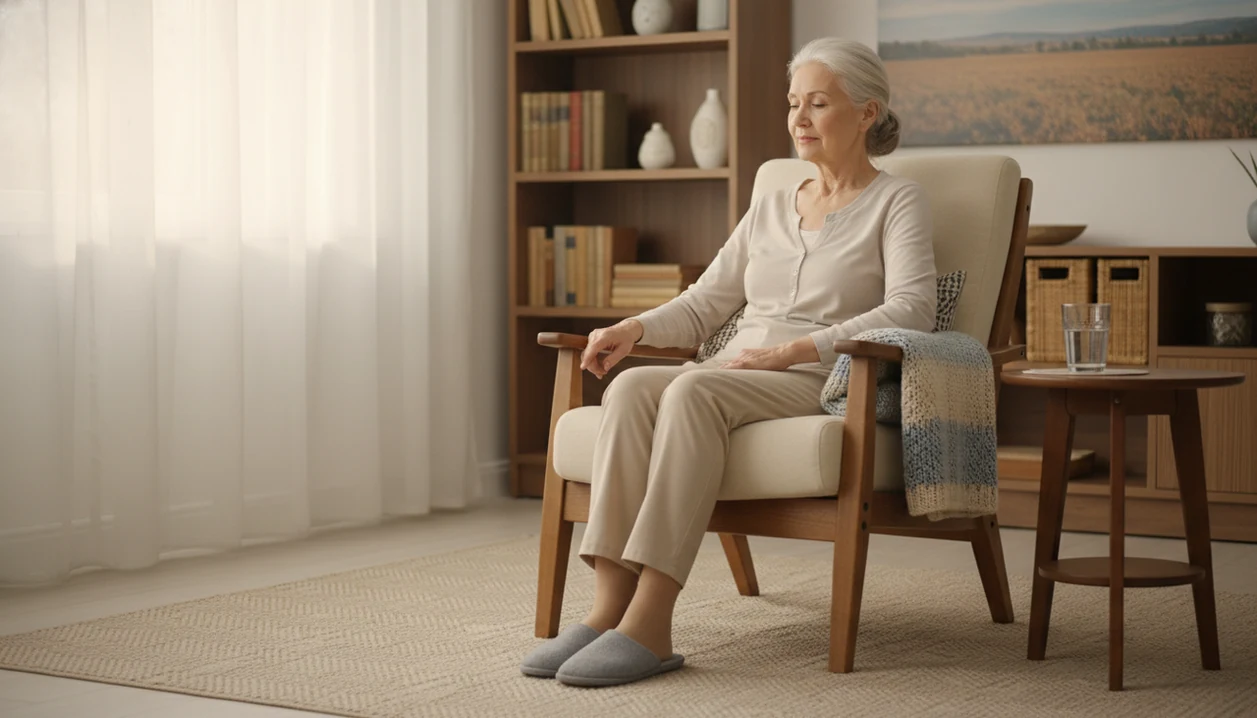
Meditation for seniors is best started as a short, stable, chair-friendly practice focused on breathing, body sensations, or a calming phrase. Mindful.net teaches this as a beginner-friendly attention practice for everyday moments, not as a substitute for medical care.
> Definition: Senior-friendly meditation is a brief, supported attention practice that can be done in a chair, in bed, or while walking slowly, using the breath, body sensations, sound, or a calming phrase as the focus.
TL;DR
- Start seated in a stable chair, with feet supported and eyes open or softly lowered if closing them feels unsafe.
- Use 1–5 minute sessions at first, then build toward 5–15 minutes if the practice feels comfortable.
- Meditation can support calm, sleep, and emotional well-being, but it does not treat emergencies, replace medication, or cure chronic illness.
Meditation for Seniors Safety Basics in One Chair-Friendly Practice
Seated meditation is a valid and often safer option for older adults, especially when balance changes, joint pain, or fatigue make floor sitting unhelpful. A senior-friendly session can be as simple as choosing a stable, supportive seat, letting the back be supported, placing the lower body in a steady position, and resting the hands loosely, perhaps noticing the feel of a cotton sleeve at the wrist.
Start small. One minute counts.
Keep the eyes open or softly lowered if closing them feels disorienting. Notice the breath, the refrigerator hum in the next room, or the steady support beneath the body. Mindful.net uses this “notice and return” style because it gives beginners one clear job at a time. Stop the practice if dizziness, breathlessness, pain, panic, chest symptoms, or unusual sensations appear. Meditation supports care; it does not replace medication, therapy, physical therapy, or clinician-directed treatment.
When balance confidence is the main issue, keep the practice chair-based, brief, and guided through one simple breathing or body-sensation cue.
Why Seniors Use Meditation for Stress, Sleep, Mood, and Coping
Older adults often use meditation for worry, loneliness, sleep trouble, grief, pain coping, health changes, and ordinary daily stress. The realistic promise is supportive, not curative: research suggests modest benefits for mood and sleep in some older adults.
- A 2021 systematic review and meta-analysis of 29 randomized controlled trials found significant reductions in depressive symptoms and anxiety in older adults, with small to moderate effect sizes PubMed research.
- A 2015 trial of adults 55 and older with sleep complaints found better sleep-quality score improvement after a 6-week mindfulness program than after sleep-hygiene education PubMed research.
- Meditation may help people relate differently to discomfort by reducing reactivity, not by removing pain.
- Grief and loneliness may feel less consuming when practice includes sound, breath, or a calming phrase.
- Emotional benefits usually build through repetition over weeks or months.
After a restless night, when the body feels slow but the mind keeps planning, Mindful.net covers a practical next step through short guided sessions and plain-language technique explanations.
How Meditation for Seniors Works in the Brain and Body
Meditation for seniors works by training attention: you choose a focus, notice when the mind wanders, and return without scolding yourself. That loop is the practice. The mind may drift toward budget planning, a memory, or the watering can waiting by the door; returning is not failure.
- Attention training uses a repeatable cue, such as breath, body sensation, sound, or a calming phrase.
- Nervous-system settling may come from slower attention, reduced reactivity, and less rumination.
- Cognitive practice may support attention, memory, and executive function, but evidence is still emerging.
- A 2017 trial in older adults with mild cognitive impairment reported memory and immune-profile improvements after an 8-week mindful awareness program, compared with health education.
- A 2016 meta-analysis reported changes in selected immune and inflammation biomarkers, but those findings are preliminary, not clinical proof.
The most useful meditation practice for older adults is attention training, not mind-emptying, because the skill is noticing distraction and returning gently. Mindful.net explains that mechanism in plain terms, then offers related mindfulness exercises for everyday use.
How to Start a Meditation for Seniors Practice
Use a short, supported routine before trying longer sessions. For very new beginners, 1–3 minutes is enough; many people later build toward 5–15 minutes if it feels steady.
- Set up the chair with the back supported, feet on the floor or a footrest, and hands resting easily.
- Choose a focus such as breathing, sounds in the room, a calming word, or the feeling of the body sitting.
- Set a short timer for 1–3 minutes at first, then increase slowly after several comfortable sessions.
- Return attention each time the mind wanders, using a simple phrase like “breathing” or “here.”
- End slowly by opening the eyes fully, feeling the feet, and standing only when steady.
A kitchen timer beside a mug is enough equipment. If the routine helps, attach it to morning tea, after lunch, bedtime, or another daily routine. Mindful.net can support that habit because it breaks a meditation for seniors practice into short guided steps rather than long silent sessions.
Best Meditation for Seniors Practice Formats
The best meditation format for an older adult depends on balance, energy, hearing, vision, memory, and comfort. Floor sitting and long silent retreats are optional, not required.
| Practice format | Best fit | Simple adjustment |
|---|---|---|
| Chair breathing | Balance concerns or new beginners | Keep eyes open and feet supported |
| Body scan | Pain coping or body awareness | Skip painful areas and use gentle contact cues |
| Guided audio | Memory support or low confidence | Use slower audio and adjust volume |
| Calming-word meditation | Worry or rumination | Repeat one neutral phrase on the exhale |
| Bed meditation | Sleep support or fatigue | Stay lying down if sitting is too tiring |
| Slow walking meditation | Restlessness | Walk near a wall, rail, or caregiver if needed |
The right fit for memory support is often guided audio because the voice supplies the next step when attention drifts. Mindful.net includes guided and unguided options, so a person can compare styles before settling into one. For broader app comparisons, our best mindfulness app guide looks at beginner features alongside Calm and Headspace.
Common Meditation for Seniors Patterns and Beginner Adjustments
Beginner experiences are usually workable with small adjustments. Meditation does not require a blank mind; it asks you to recognize where attention has gone and guide it back, again and again. One pattern we notice is that older adults often do better when the practice feels practical rather than perfect.
Wandering thoughts: Expect planning, memories, and ordinary mental errands, such as wondering whether the windows still need cleaning. Use a short label, such as “thinking,” then return to breath, sound, or the feeling of cold fingertips warming slowly.
Dozing or discomfort: Shorten the session, sit more upright, add a cushion, or switch to bed meditation when fatigue is the point.
Impatience or emotional memories: Open the eyes, feel the chair, touch a blanket, or take a break. Silence after the final chime can feel tender, especially after grief.
Hearing and vision needs: Raise guided-audio volume, use headphones if safe, keep eyes softly open, or choose touch-based grounding.
Consistency matters more than session length. If 3 minutes after lunch happens most days, that may be more useful than one ambitious 30-minute session that rarely happens. Mindful.net and mindful.org both emphasize practical, secular practice, though Mindful.net keeps beginner steps especially structured.
Meditation for Seniors Safety Checklist and Medical Boundaries
Safety comes first, especially for older adults with fall risk, osteoporosis, joint pain, heart symptoms, trauma history, or changing cognition. Meditation is complementary to medical care, not a workaround.
- Use a stable chair or bed-based position if balance issues, osteoporosis, joint pain, dizziness, or fall risk are present.
- Stop immediately for dizziness, chest pain, severe breathlessness, new confusion, intense panic, faintness, or unusual pain.
- Contact a clinician for serious depression, suicidal thoughts, uncontrolled pain, trauma distress, sudden weakness, or acute symptoms.
- Keep prescribed medication, therapy, physical therapy, and clinician-directed treatment in place unless a qualified clinician changes the plan.
- Ask for help setting up audio, posture, or timing if memory changes make independent practice frustrating.
For safety, choose short guided sessions with clear stopping boundaries instead of long silent sessions, especially when dizziness, pain, panic, or confusion is possible. For a wider daily-life foundation, the guide on how to practice mindfulness explains simple cues outside formal meditation.
Limitations
Meditation can be useful, but it has real limits. A good meditation for seniors guide should say what this can and cannot do.
- Meditation does not cure dementia, heart disease, depression, chronic pain, or sleep disorders.
- Evidence for dementia prevention or reversal is not conclusive, even though attention and memory studies are ongoing.
- Some people experience rumination, trauma memories, panic, grief waves, or distress during silent practice.
- Benefits often take weeks or months and are usually modest, not dramatic.
Seniors who prefer a structured, plain-language starting point should look for beginner steps, safety notes, adjustable audio, and technique choices presented in small decisions. Older adults caring for grandchildren may also find overlap with meditation for parents, especially for short pause practices.
Environmental Setup That Actually Matters
For many seniors, the useful setup is not fancy; it is a stable seat, a steady breath, and one clear anchor that can be found again without strain. We usually suggest reducing avoidable friction first: soften harsh lighting, keep hearing aids or glasses as normally used, place water nearby if needed, and choose a time when interruptions are less likely. The best environment is the one that lets attention return without turning the room into another project.
Hidden Limits People Miss
If silent breathing feels too vague
Try a named anchor such as the Chair Check: feel the seat, notice one breath, then relax the hands. A concrete sequence often works better than a broad instruction to “just be mindful.”
If meditation starts to feel like prayer but not quite
Prayer may involve speaking, asking, remembering, or relating to the sacred, while mindfulness usually emphasizes noticing present-moment experience. Some people use both, but they are not interchangeable for everyone.
If the body scan creates more tension
Use breath awareness instead of moving through every body part. A short session with one clear anchor may feel less demanding than trying to monitor the whole body.
If the person has spent a lifetime being highly productive
Frame the practice as attention training, not “doing nothing.” This can make the first few minutes feel less like failure and more like a learnable rhythm.
Signs You Should Try Another Approach
- If focusing on the breath brings panic-like discomfort, switch to sounds in the room or a grounding phrase and consider professional guidance.
- If sitting still increases pain, try a shorter practice, a supported posture, or gentle walking meditation if it is safe.
- If memory changes make multi-step instructions frustrating, use one repeated cue such as “feel the hands” instead of a long script.
- If meditation becomes a way to avoid needed care, pause and treat it as support, not a replacement for medical advice.
- If grief, trauma memories, or fear intensify, a relational practice with a trusted teacher, counselor, or clergy member may be more appropriate.
Where Researchers Still Disagree
- We do not know that one meditation style is best for all older adults; comfort, safety, and repeatability often matter more than the label.
- Longer sessions are not automatically better; many beginners seem to benefit from repeating a short session consistently.
- Breath Awareness may be a good starting point when the goal is a simple anchor, but some people do better with sound, touch, or a phrase.
- Programs adapted from Mindfulness at Work can help caregivers or semi-retired professionals, but home routines may need slower pacing and simpler cues.
- Research can suggest trends, but the practical question is usually: can this person return to the practice tomorrow without strain?
A Quick Answer
- Cut the session to three breaths and end before restlessness becomes the main lesson.
- Use the Chair Check method: seat, breath, hands, then one quiet word such as “steady.”
- Let the eyes stay softly open if closing them feels disorienting or emotionally intense.
- Choose a familiar sound, such as a kitchen clock or distant birds, when the breath feels too personal or hard to track.
- Ask, “What is the easiest anchor to find again?” rather than “Am I calm yet?”
Three Paths Worth Trying
| Technique | Best for | Minutes |
|---|---|---|
| Chair Check | starting when energy is low or instructions need to stay simple | 2-5 min |
| Breath Awareness | building one clear anchor with a steady breath | 3-10 min |
| Calming Phrase Practice | people who prefer words, prayer-adjacent reflection, or reassurance without complex steps | 3-8 min |
A Practical Observation
What surprised us most is that the first obstacle is often not distraction but over-effort. We’ve seen older beginners try to perform calm, sit too rigidly, or make the breath too perfect. We usually suggest making the practice smaller: one supported posture, one clear anchor, and permission to restart. That modest structure seems to help many people return without turning meditation into another task.
A senior-friendly meditation is usually the shortest safe practice someone will willingly repeat tomorrow.
Why Mindful.net fits this specific need
Mindful.net is well suited to this topic because its guidance treats meditation as a practical attention skill rather than a cure-all. Seniors and caregivers can pair this page with Breath Awareness for a simple anchor or Mindfulness at Work when family, caregiving, or semi-retired routines create daily stress points.
FAQ
Is meditation safe for seniors?
Meditation is generally safe for seniors when practiced seated, supported, and gently. Stop for dizziness, chest pain, severe breathlessness, intense panic, new confusion, or unusual pain.
Can seniors meditate in a chair?
Yes, chair meditation is valid and often safer than floor sitting. Use a firm chair, support the back, place feet on the floor or a footrest, and keep the hands relaxed.
How long should seniors meditate?
Seniors can start with 1–5 minutes and build gradually. Many people settle into 5–15 minutes once the practice feels comfortable.
Does meditation help senior sleep?
Meditation may support sleep by reducing rumination and creating a calmer bedtime routine. It is not a cure for sleep disorders and should not replace medical evaluation when sleep problems persist.
Can meditation help memory?
Meditation may support attention and memory skills, but evidence is still emerging. It should not be presented as dementia prevention or dementia reversal.
What if meditation causes anxiety?
Stop the practice, open your eyes, feel your feet or a nearby object, and use a shorter session next time. Seek professional support if distress continues or trauma memories become intense.
Is guided meditation better for seniors?
Guided meditation can be helpful for beginners, memory changes, low vision, or trouble staying focused. Silent practice is optional and can be added later if it feels comfortable.
Can meditation replace medication?
No, meditation should not replace prescribed medication or clinician-directed care. Use it only as a supportive practice unless a qualified clinician advises otherwise.