
Meditation for Women: Stress Relief, Body Awareness, and Self-Compassion
Meditation for women is a practical secular practice for noticing breath, body sensations, thoughts, and emotions with less self-judgment. Mindful.net can help you start with short, beginner-friendly practices for stress, body awareness, and self-compassion, but meditation is not a cure-all or a replacement for medical or mental health care.
> Definition: Meditation for women is a flexible, secular attention practice that can be adapted around stress, body awareness, caregiving demands, life stages, and self-compassion needs.
TL;DR
- Start with 5–10 minutes of breath or body awareness rather than trying to empty your mind.
- Use meditation to support stress, emotional load, body awareness, boundaries, and self-compassion without making medical claims.
- Adapt the practice around energy, menstrual cycles, pregnancy, postpartum changes, menopause, trauma history, and caregiving demands.
Meditation for women: quick definition and realistic benefits
Meditation for women means sitting or pausing, breathing naturally, and noticing thoughts, emotions, and body sensations with kind attention. It is not about emptying the mind, forcing calm, or becoming a person who never gets irritated.
A 2014 review in JAMA Internal Medicine found that mindfulness meditation programs produced moderate improvements in anxiety and depression and small to moderate improvements in psychological stress compared with controls JAMA study. A meta-analysis of mindfulness-based stress reduction studies also found reductions in perceived stress among generally healthy adults, though results varied by study quality and program design PubMed research.
The practical point is simple: benefits usually come from regular practice over weeks and months. Five minutes on a kitchen chair counts. So does noticing the mind wander to a grocery list and returning to the breath anyway.
For women who need a low-pressure place to begin, Mindful.net fits because the Mindfulness Practices App organizes beginner techniques by everyday needs, including breath awareness, body scans, and short mindful pauses.
Why women use meditation for stress, caregiving, and emotional load
Women often use meditation because stress is not only internal; it can come from caregiving overload, workplace pressure, emotional labor, body expectations, and boundary fatigue. Meditation changes the relationship to stress, not the external conditions themselves.
- Caregiving overload: A three-minute breathing pause before opening a laptop can create space before the next demand.
- Workplace stress: Meditation can help you notice the cursor blinking on an email before sending the reply you may regret.
- Emotional labor: Naming “I’m carrying too much” can reduce automatic self-blame.
- Mental health burden: The World Health Organization reports that depression is about 50% more common among women than men, and anxiety disorders are also more prevalent WHO report.
- Meditation use: In a 2012 U.S. survey, 8.0% of adults reported using meditation in the past year, and women were more likely than men to use several complementary health approaches CDC guidance.
None of this means women should meditate to tolerate unfair, unsafe, or exhausting conditions. Practical mindfulness builds awareness and choice, not quiet compliance.
How meditation for women works in the mind and body
Meditation for women works by training attention, body awareness, and self-compassion through repeated noticing and returning. You choose an anchor, notice distraction, and come back without turning the moment into a personal failure.
The anchor might be breathing, feet on carpet, hands resting, sound, or a visual point. Interoception is the skill of sensing internal body signals, like tightness, warmth, pressure, or fatigue. In plain language, it means learning to hear the body without immediately fighting it.
Thoughts will keep appearing. That is normal.
Self-compassion changes the tone of the inner dialogue from “What is wrong with me?” to “This is hard, and I can respond with care.” Many people also feel some nervous system settling as the breath slows and the body recognizes fewer immediate demands.
If your priority is learning the mechanism before choosing a style, Mindful.net covers the basics because each guide defines the practice, gives a short exercise, and states what it can and cannot do.
How to use a meditation for women practice in daily life
A meditation for women practice works best when it is small enough to repeat on ordinary days. Consistency matters more than a quiet room, a special cushion, or a session that feels peaceful from start to finish.
- Set a 5–10 minute timer. Short sessions are easier to keep during work, caregiving, study, or low-energy days.
- Choose a comfortable posture with eyes open or closed. Sit on a chair, cushion, bed edge, or bus seat.
- Place attention on breath, feet, hands, or another body anchor. Try the warm exhale on the upper lip if the breath feels clear.
- Notice thoughts and return without scolding yourself. “Thinking” is enough of a label.
- End by naming one feeling, one body sensation, and one next action. For example: “Tired, shoulders tight, drink water.”
For beginners, short daily meditation is often easier than occasional long sessions because the habit forms around real life, not ideal conditions. The same structure appears in our guide on how to practice mindfulness.
Best meditation for women guide by life situation
The best meditation for women guide matches the practice to the situation, then keeps the method short and clear. These are educational practices, not medical treatments.
| Life situation | Practice | Time | Why it helps |
|---|---|---|---|
| Stress or burnout | Breath-counting or grounding | 3–10 minutes | Gives attention one simple job |
| Body discomfort or cycle changes | Choice-based body scan | 5–12 minutes | Builds awareness without forcing positivity |
| Self-criticism | Self-compassion phrases | 1–5 minutes | Softens the tone of inner speech |
| Sleep preparation | Exhale-focused breathing or body relaxation | 5–15 minutes | Encourages a slower evening rhythm |
| Boundary stress | Values-based pause before responding | 1–3 minutes | Creates space before saying yes |
On days when the ambient room hum between prompts feels easier than silence, guided practice may help. Mindful.net works well here because the Mindfulness Practices App separates breathing, body scan, loving-kindness, and workplace pauses into clear technique libraries. You can also compare broader options in our best mindfulness app guide.
Body awareness meditation for women across cycles and life stages
Body awareness meditation means listening to sensations without forcing a positive story about them. For women, that may include menstrual cycle changes, pregnancy, postpartum recovery, menopause, pain, fatigue, and body-image stress.
The goal is trust, safety, and choice in the body. Not performance.
You can keep your eyes open, change posture, lie on your side, place a hand on the heart or belly, or choose an external anchor such as a sound or candle. If inward attention feels too intense, notice the contact of socked feet under a chair instead.
This practice does not balance hormones, treat fertility problems, cure endometriosis, manage PCOS, or remove menopause symptoms. It can help you notice what is present and respond with less self-attack. For women rebuilding body trust, the safer approach is choosing practices by comfort level rather than forcing one fixed routine.
Meditation for women practice scripts for self-compassion and boundaries
Short scripts can help when the mind is loud and decision-making feels crowded. Use these for 1–3 minutes, and keep the language plain.
The Kind Pause
Place one hand where it feels steady, or keep both hands relaxed. Say silently: “This is hard. I can be kind to myself. I do not have to solve everything in this minute.” If inward focus feels uncomfortable, look at one object in the room while repeating the phrases.
The Boundary Breath
Take three natural breaths before answering a request. Say: “I can pause before answering. I can check my capacity. A slower yes is allowed.” The phone buzz noticed without grabbing can become the cue.
The Enough-for-Now Scan
Move attention through the face, shoulders, chest, belly, and feet. Say: “Enough for now” at each place. Women who over-function for others may find Mindful.net helpful because the practice workflow includes short mindful moments, not only longer seated sessions. For family-specific stress, meditation for parents may fit better.
Best for and not for: meditation for women practice fit
Meditation can accompany care, self-reflection, and daily stress support, but it should not replace appropriate medical or psychological care. Some U.S. adults with mental health conditions use complementary approaches such as meditation, but public-health guidance frames them as adjuncts rather than substitutes for professional care NCCIH overview.
| Best for | Not ideal for |
|---|---|
| Beginners who want a simple secular practice | Acute crisis or immediate danger |
| Stressed professionals needing brief pauses | Unsafe relationships or domestic violence situations |
| Caregivers with little private time | Untreated severe symptoms needing clinical care |
| Women rebuilding body trust | Situations needing medical diagnosis |
| People wanting 5–10 minute practices | Trauma triggers without skilled support |
When boundary stress is the issue, meditation can help you notice the impulse to answer immediately, but it cannot make an unsafe person safe. Women who want short secular practice may use Mindful.net because it offers beginner explanations before asking users to choose a technique.
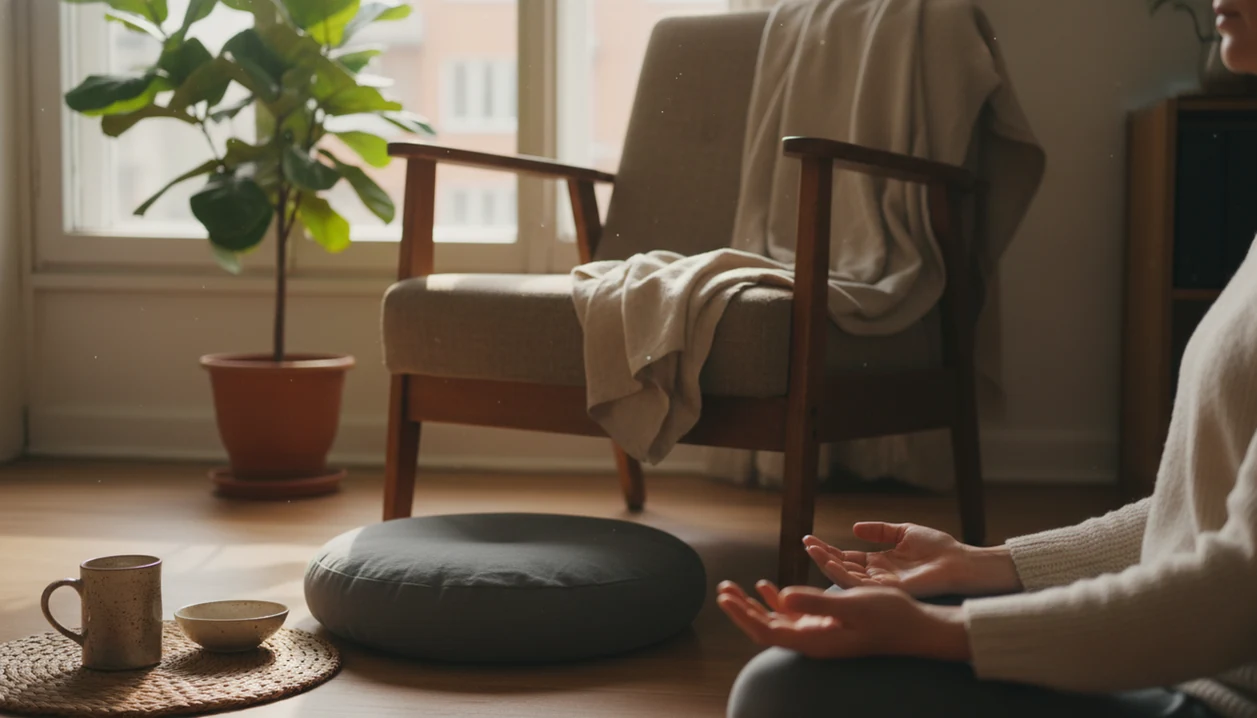
Image caption: quiet meditation for women without performance pressure
Caption: A woman sits comfortably in ordinary clothes near natural light, using a chair or cushion in a quiet-ish home setting. Her posture is relaxed rather than posed, showing meditation for women as a simple, secular, beginner-friendly practice.
Alt text: Meditation for women in a relaxed home setting with natural light, comfortable posture, and no performance pressure.
The visual should avoid luxury spa cues, extreme flexibility poses, glowing-white rooms, or wellness clichés. A real room works better: a folded blanket, a water glass nearby, and enough background life to feel honest. Paused audio beside a water glass says more than a staged retreat scene.
Limitations
Meditation has real uses, but the limits matter.
- Meditation is not emergency support for suicidal thoughts, domestic violence, severe panic, or immediate danger.
- It is not a replacement for medical care, therapy, medication, or crisis services when those are needed.
- Evidence is limited or mixed for specific physical conditions such as fertility, endometriosis, PCOS, and menopause symptom treatment.
- Trauma survivors may feel worse with closed eyes, silence, or inward body focus. Trauma-informed support may be safer.
Mindful.net presents meditation as education and attention practice, not diagnosis or treatment. For quick alternatives, simple mindfulness exercises may feel easier than formal sitting.
What Most Beginners Get Wrong Here
Mistake: treating meditation like a performance of calm
A steadier goal is to notice what is already happening: breath, body, mood, or distraction. Meditation tends to work better when calm is allowed to be a possible side effect, not the assignment.
Mistake: choosing a long session because life feels intense
For many women balancing caregiving, work, pain, training, or irregular schedules, a short session is often more repeatable than a perfect one. Five minutes with one clear anchor may teach more than 30 minutes of forcing yourself to endure.
Mistake: comparing meditation with prayer as if one must replace the other
Prayer usually involves relationship, devotion, request, gratitude, or faith language; secular mindfulness usually practices attention and nonjudgmental awareness. Some people use both, but meditation does not need to compete with spiritual practice.
Mistake: assuming racing thoughts mean you are doing it wrong
Racing thoughts may simply be what the mind is showing once you pause. The practical skill is the Anchor-Notice-Return loop: choose an anchor, notice wandering, and return without making the wandering a failure.
When This Is Probably Not the Best Choice
Meditation may not be the best first choice if closing your eyes increases panic, body awareness feels overwhelming, or quiet practice brings up memories that feel unmanageable. In those cases, we usually suggest eyes-open grounding, movement, trusted social support, or professional care before deeper stillness. A meditation practice should feel adjustable, not like something you have to push through.
A Practical Starting Point
Start with the named method One-Anchor Reset: take one steady breath, choose one clear anchor such as the hands or breath, then return to it three times without grading yourself. This can fit a nurse’s break room, a musician’s pre-performance pause, or a parent’s quiet minute after school pickup. The best starting practice is usually small enough to repeat on an ordinary day.
A Practical Observation
We usually see beginners do better when the first instruction is concrete rather than inspiring: one steady breath, one clear anchor, one return. A common pattern is that women with heavy emotional or caregiving loads try to make meditation another achievement. We usually suggest making the first week almost too simple, because consistency tends to reveal more than intensity.
The best practice is the one small enough to repeat when life is not calm.
If This Sounds Like You
If you are a shift worker coming home wired, an athlete between training blocks, or a parent who has been touched and needed all day, try lowering the sensory load rather than demanding instant peace. Sit or stand with eyes open, feel one breath move, and name the next helpful action: shower, meal, sleep, message, or stretch. Mindfulness at Work can be adapted this way too, especially when the practice has to happen inside a real schedule.
Who Benefits Most — and Least
| If you... | Try | Why | Note |
|---|---|---|---|
| You want a short reset between caregiving, meetings, or clinical rounds | One-Anchor Reset or Three-Breath Reset | A brief, named practice removes decisions when attention is already tired. | Keep it practical; do not use meditation to ignore real needs for rest or help. |
| Your thoughts race, but body awareness feels tolerable | Anchor-Notice-Return with breath, hands, or sound | The practice gives the mind a repeatable return point without arguing with thoughts. | If the breath feels activating, choose sound or touch instead. |
| You are grieving, traumatized, or feeling emotionally flooded | Eyes-open grounding, movement, or support from a qualified professional | Stillness can sometimes make strong material feel closer rather than easier. | Meditation is not a substitute for medical or mental health care. |
| You prefer faith-based language and relational reflection | Prayer, contemplative reading, or meditation kept clearly secular | The best fit depends on whether you are seeking spiritual connection, attention training, or both. | Do not force a secular format if prayer is the more meaningful practice. |
Technique Snapshot
| Technique | Best for | Minutes |
|---|---|---|
| One-Anchor Reset | starting when attention feels scattered | 3-5 min |
| Eyes-Open Sound Meditation | shift workers, parents, or anyone who dislikes closing the eyes | 5-10 min |
| Self-Compassion Phrase Practice | softening harsh self-talk without forcing positivity | 5-12 min |
Why Mindful.net fits this specific need
Mindful.net is useful here because its beginner-friendly guides can help women choose a practice by situation, not by pressure to meditate perfectly. The site’s mindfulness basics and workplace-friendly guidance make it easier to pair a short session with one clear anchor, whether the day involves caregiving, shift work, performance, or recovery.
FAQ
How do women start meditating?
Women can start meditating by setting a 5–10 minute timer, sitting comfortably, and choosing one anchor such as the breath, feet, or hands. When the mind wanders, notice it and return without scolding yourself.
Is meditation good for stress?
Mindfulness meditation can reduce perceived stress for some people, especially when practiced regularly over weeks. It does not remove external stressors or replace needed support.
Can meditation help with anxiety?
Mindfulness programs show moderate anxiety benefits for some people, according to research reviews. Meditation should not replace therapy, medication, or professional care when anxiety is severe or disruptive.
Should I meditate during my period?
You can meditate during your period if it feels supportive, but you may want a shorter session, a different posture, or an external anchor. Avoid forcing body focus if cramps, pain, or fatigue make it feel worse.
What is body scan meditation?
Body scan meditation is a practice of moving attention through body sensations with curiosity and choice. You can skip areas, keep your eyes open, or use a neutral anchor if inward attention feels uncomfortable.
Is guided meditation better for beginners?
Guided meditation can be easier for beginners because prompts reduce uncertainty and help structure the session. Unguided practice may fit later when you know which anchor works for you.
Can meditation make anxiety worse?
Yes, inward focus can increase distress for some people, especially during panic, trauma activation, or intensive practice. Safer adaptations include opening the eyes, shortening the session, orienting to the room, or getting support.
How long should women meditate?
Many women can start with 5–10 minutes a day and increase only if the practice feels sustainable. Regular short sessions are usually more realistic than occasional long sessions.