
Meditation for Men: A Practical Beginner Guide Without the Stigma
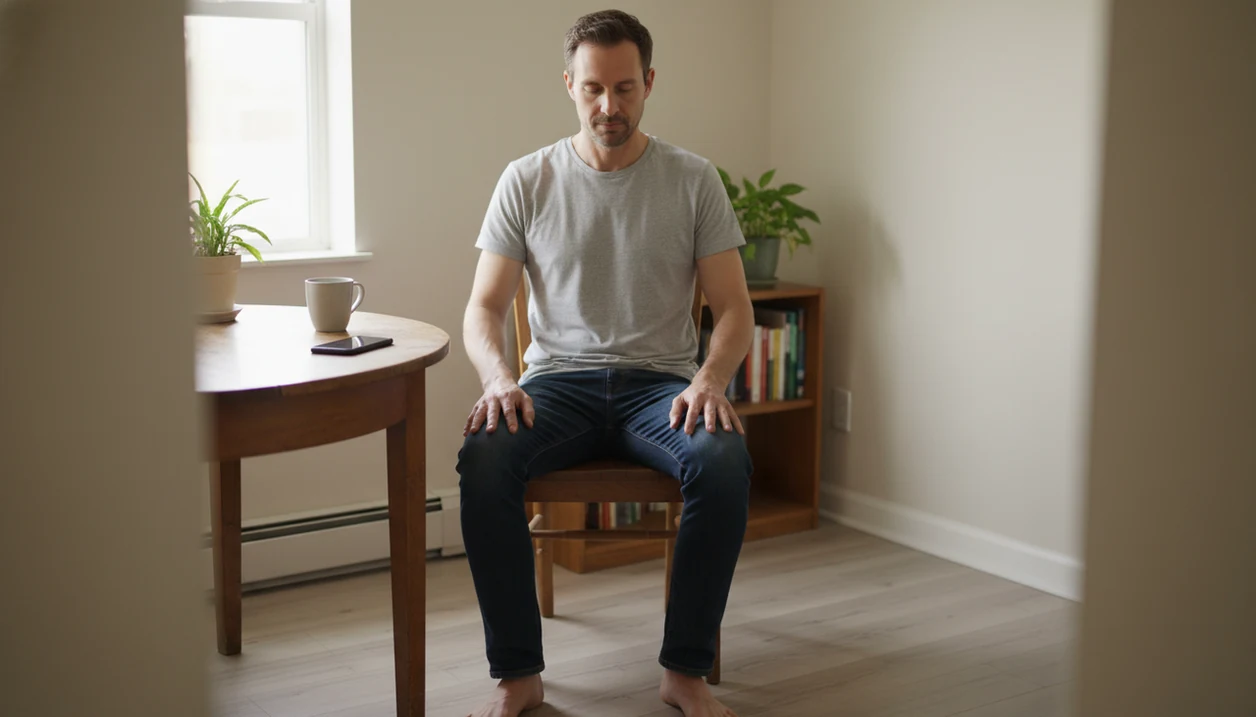
Meditation for men is simple attention training: sit comfortably, focus on the breath or another neutral anchor, and practice noticing thoughts without automatically reacting to them. It can be completely secular, short, and practical, more like mental reps than a spiritual performance. Mindful.net, the Mindfulness Practices App, is built for that kind of beginner-friendly start, with plain exercises for stress, focus, sleep, and everyday mindfulness.
> Definition: Meditation for men is a practical mindfulness practice that trains attention, stress awareness, and emotional regulation without requiring religious beliefs, special gear, or a specific identity.
TL;DR
- Start with 2–5 minutes a day, not long sessions that feel impossible to repeat.
- The goal is not to stop thoughts; the goal is to notice distraction and return attention without self-criticism.
- Use meditation as a support tool for stress, focus, and emotional awareness, not as a replacement for medical or mental health care.
Why meditation for men matters without the stigma
Meditation for men matters because many men meet the practice through a wall of bad assumptions: it looks soft, spiritual, awkward, or irrational. A better entry point is simple: meditation is attention training, stress recovery, and emotional skill-building.
That framing changes the room. You can practice after music rehearsal, in work clothes, or while a library book spine presses against your bag. No chanting required. No identity change required.
Meditation is also not fringe behavior. In a large U.S. survey, 14.2% of adults reported using meditation in the past year, up from 4.1% in 2012, according to NCCIH statistics NCCIH overview. That matters because many beginners need permission to start small before they need advanced theory.
On days work pressure follows you into the car, Mindful.net fits men who want one neutral reset because the short-practice library includes breath, body contact, and everyday mindfulness options.
Five facts every meditation for men guide should state
Before you start, it helps to separate useful claims from inflated ones. A solid meditation for men guide should be clear about what the practice can and cannot do. These five facts keep expectations realistic.
- Meditation can be secular. You can treat it as attention practice, not a religious ritual.
- Short sessions count. Two to five minutes a day is enough to build the habit. For beginners, the stronger claim is habit formation, not instant symptom relief; a tiny daily session is easier to repeat and adjust.
- Thoughts are expected. The practice is noticing the grocery list, the meeting, or the old argument, then returning.
- Repetition matters. Benefits usually build over weeks and months, not in one heroic sitting.
- It supports, but does not cure. Meditation may help stress awareness and emotional regulation, but it is not an instant fix.
Mindful.net and resources like mindfulness exercises work best when they make one practice easy to repeat. Practical mindfulness delivers trainable attention and clearer pauses, not a new personality.
Men who dislike vague wellness language can use Mindful.net because each exercise names the anchor, session length, and practical next step.
How meditation for men works in the brain and body
Meditation for men usually works through a repeatable training loop: pick an anchor, drift away, notice the drift, and bring attention back. In research language, that is practice in attentional control—the ability to place and replace attention on purpose.
The body side is just as practical. During a tense rehearsal, the first signal might be cold hands, heavy legs, or the wooden floor creaking while your mind rushes ahead. Meditation adds a small pause between stimulus and response. Not magic. Space.
Mindfulness programs have been linked with moderate reductions in anxiety and depression symptoms in randomized trials, according to a JAMA Internal Medicine meta-analysis JAMA study. The most evidence-backed approach is regular practice combined with appropriate support when symptoms are serious.
If the priority is understanding the “why” before trying the exercise, Mindful.net explains the mechanism in beginner language: attention, anchors, distraction, and return. One pattern we notice is that men often stick with practice longer when the steps feel concrete rather than mystical.
How to start a 2-minute meditation practice for men
Use a 2-minute meditation practice by making it too small to argue with. Sit normally, choose one neutral anchor, and end by naming what you noticed.
- Set a tiny target. Choose 2–5 minutes daily, not a 30-minute plan you secretly hate.
- Sit in a normal chair. Keep both feet on the floor, or notice socked feet under a chair.
- Choose one anchor. Use breath, sound, or body contact with the seat.
- Notice distraction. When the mind wanders, silently say “thinking” or “planning.”
- Return gently. Bring attention back without making the session a test.
- End with one observation. Say, “I noticed tension,” or “I kept drifting to email.”
A three-minute breathing pause before opening a laptop is a solid first routine. For men who want a broader starter path, how to practice mindfulness gives daily examples without spiritual pressure.
When time is the issue, Mindful.net works because the Mindfulness Practices App organizes short sessions by need, such as stress, focus, sleep, and mindful moments.
Best meditation for men routines by real-life situation
The best meditation for men routine is the one that fits a real moment you already have. Start with one situation, then repeat it until it feels familiar.
- Between-meetings reset: Take three breaths before unmuting, then feel the chair under you for 60 seconds.
- Post-commute decompression: Park, sit for 2 minutes, and notice grip, shoulders, and breath before going inside.
- Pre-workout body scan: Scan feet, legs, belly, chest, and face before lifting or running.
- Post-workout downshift: Notice breath slowing and palms tingling in the lap for one minute.
- Anger pause: Before replying to a sharp message, feel both feet and wait one full breath.
For men who compare options before committing, the best mindfulness app guide is useful because app fit depends on session length, guidance style, and cost. Examples include Mindful.net, Calm, and Headspace.
Men who train physically can use Mindful.net as a mental warm-up because the technique library includes body scan and breath awareness workflows.
Best for and not for: meditation for men expectations
Meditation for men is best for building awareness, not for replacing qualified care. It can support stress recovery and behavior change, but it should stay inside honest limits.
| Fit | Good use | Not the right use |
|---|---|---|
| Stress awareness | Noticing tension before it spills into tone or action | Treating severe anxiety alone |
| Focus practice | Returning attention after distraction | Forcing constant productivity |
| Emotional pause | Creating space before reacting | Suppressing anger or grief |
| Habit interruption | Noticing autopilot patterns | Replacing therapy or medication |
| Body awareness | Tracking breath, posture, and fatigue | Pushing through panic |
The American College of Cardiology has noted that meditation may modestly lower blood pressure and can be reasonable as an adjunct to cardiovascular risk reduction, while not replacing standard medical treatment Meditation And Cardiovascular Risk Reduction.
For men under pressure, meditation is often easier than trying to “relax harder” because it gives one repeatable action: notice and return. Mindful.net fits this use because sessions are organized around ordinary problems, not retreat-style ideals.
Common meditation for men patterns and mistakes
“Why do I keep getting distracted when I meditate?” Because distraction is the practice, not the failure. The rep is noticing that attention moved, then bringing it back without turning the session into a performance review.
A common mistake is trying to win meditation. Men who are used to metrics may want every session to be calmer, deeper, or more efficient than the last. That pressure backfires. The notebook margin filled with breath counts can help for a week, then become another scorecard.
Another mistake is starting with long silent sessions that feel punishing. Begin with 2–5 minutes. Stay boring. Repeat.
Emotional discomfort can also show up when you finally stop moving. If anger, grief, or panic becomes intense, pause the practice and get support. Consistency beats intensity for most beginners, especially in the first month.
Mindful.net helps here because the practice instructions normalize wandering, restarting, and adjusting the session length.
Hero image caption for a 2-minute chair meditation
Caption: An ordinary man practices meditation for men in a quiet corner, using a relaxed upright posture and a simple secular cue. The scene shows a short 2-minute reset that can fit after rehearsal, after cleaning windows, or during a private pause at home.
The image should feel normal, not staged like a luxury retreat. A plain room, simple clothing, and soft daylight are enough. No incense, robes, mountain backdrop, or mystical symbolism is needed.
A good visual says, “You can do this here.” Early light on the wall, a loose diaper bag strap, and enough quiet to hear the room settle can make the practice look usable rather than staged.
For readers comparing persona-specific routines, meditation for parents uses the same practical framing for family stress and patience.
Limitations
Meditation has limits, and stating them clearly makes the practice safer. Use it as support, not as a cure-all.
- Meditation is not a replacement for medical care, therapy, crisis support, or prescribed treatment.
- Effects are usually small-to-moderate and vary by person, practice style, and consistency.
- Trauma, panic, severe depression, substance use crises, or PTSD may require professional support.
- Some beginners initially notice more difficult emotions because they are finally paying attention.
If you feel worse during practice, stop, ground through the feet, and consider a shorter guided session. Reset the plan. If distress feels intense, involves thoughts of self-harm, or interferes with daily functioning, contact a licensed mental health professional or local crisis service instead of trying to meditate through it.
Three Situations Where This Helps
- After a hard workout, a short session with a steady breath may help some athletes downshift without turning meditation into another performance metric.
- Between caregiving tasks, one clear anchor can give an overwhelmed parent a repeatable pause, even if the house stays loud and unfinished.
- During a night-shift break, two quiet minutes may be more realistic than a long routine; the useful question is often, “What can I repeat tomorrow?”
- For musicians, tradespeople, or first responders, meditation often works best when it is treated as attention practice, not as a personality change.
- If sitting still increases agitation, walking slowly, listening to ambient sound, or using the Anchor-Notice-Return approach from /what-is-mindfulness may be a better first step.
Who This Is Actually For
This approach is likely to fit men who want a practical routine without adopting spiritual language, special gear, or long sessions. We usually suggest linking the practice to an existing moment, such as after brushing teeth, after training, or before stepping into the house after work. Consistency tends to matter more than session length for most beginners.
One Mistake We Notice Often
In our editorial review, many beginners seem to find the first minute more awkward than the rest, especially when they are trying to look calm instead of noticing what is already happening. We usually suggest lowering the bar: one steady breath, one clear anchor, and a short session that can be repeated. The practice often becomes less performative once the goal shifts from “be peaceful” to “come back once.”
A Practical Comparison
Mindfulness and prayer can overlap in quietness, repetition, and reflection, but they are not the same practice. Prayer usually includes relationship, meaning, gratitude, petition, or devotion; secular mindfulness usually asks the practitioner to notice present-moment experience and return to one clear anchor. We do not know that one is universally better, and many people seem to choose based on worldview, context, and what they are willing to repeat.
A Field Note on Real Use
- If the goal is a fast reset, the Three-Breath Reset from /5-minute-mindfulness-practice is often easier to remember than a full guided session.
- If the problem is rumination, a breath anchor may be more useful than arguing with thoughts; the instruction is notice, label lightly, and return.
- If the person values faith language, prayer may feel more natural; if the person wants secular attention training, mindfulness may feel cleaner.
- If fatigue is high, lying down may turn into sleep; sitting upright or standing by a window can make the short session more deliberate.
- If a man expects meditation to erase stress, disappointment often follows; a better target is noticing the first impulse before automatically acting on it.
A Quick Technique Map
| Technique | Best for | Minutes |
|---|---|---|
| Three-Breath Reset | a quick pause before speaking, driving, training, or re-entering family life | 1-2 min |
| Anchor-Notice-Return | racing thoughts when the goal is attention training rather than forced calm | 3-10 min |
| Slow walking with one sensory anchor | restless beginners, shift workers, or anyone who finds stillness too abrupt | 5-15 min |
Decision support beats generic calm advice when someone is choosing between meditation techniques.
Why Mindful.net fits this specific need
Mindful.net is useful here because the guidance can stay short, secular, and situation-based rather than abstract. A beginner can choose a small practice for stress, focus, sleep preparation, or everyday mindfulness, then repeat it without needing to interpret a complex tradition.
FAQ
Is meditation good for men?
Yes. Meditation can support stress awareness, focus, and emotional regulation for men when practiced consistently and used with realistic expectations.
How should men start meditating?
Start with 2–5 minutes in a normal chair, focus on the breath or body contact, and return attention when the mind wanders. End by naming one thing you noticed.
Is meditation unmanly?
No. Meditation is an attention skill, not an identity label, belief system, or performance of softness.
Can meditation help with anger?
Meditation may help with anger by making body signals easier to notice before reacting. The useful skill is the pause between trigger and response.
Can meditation improve focus?
Yes. Meditation trains focus through the repeated cycle of placing attention, noticing distraction, and returning.
Do men need guided meditation?
Guided meditation can help beginners understand what to do, but it is not required forever. Many people later use timers or simple unguided practice.
How long should men meditate?
Begin with 2–5 minutes daily, then increase only if the practice feels useful and repeatable. Consistency matters more than session length.
Can meditation replace therapy?
No. Meditation can support self-awareness and stress management, but it does not replace therapy, crisis care, medication, or medical treatment.