
Gratitude Meditation: A Five-Minute Practice Without Forced Positivity


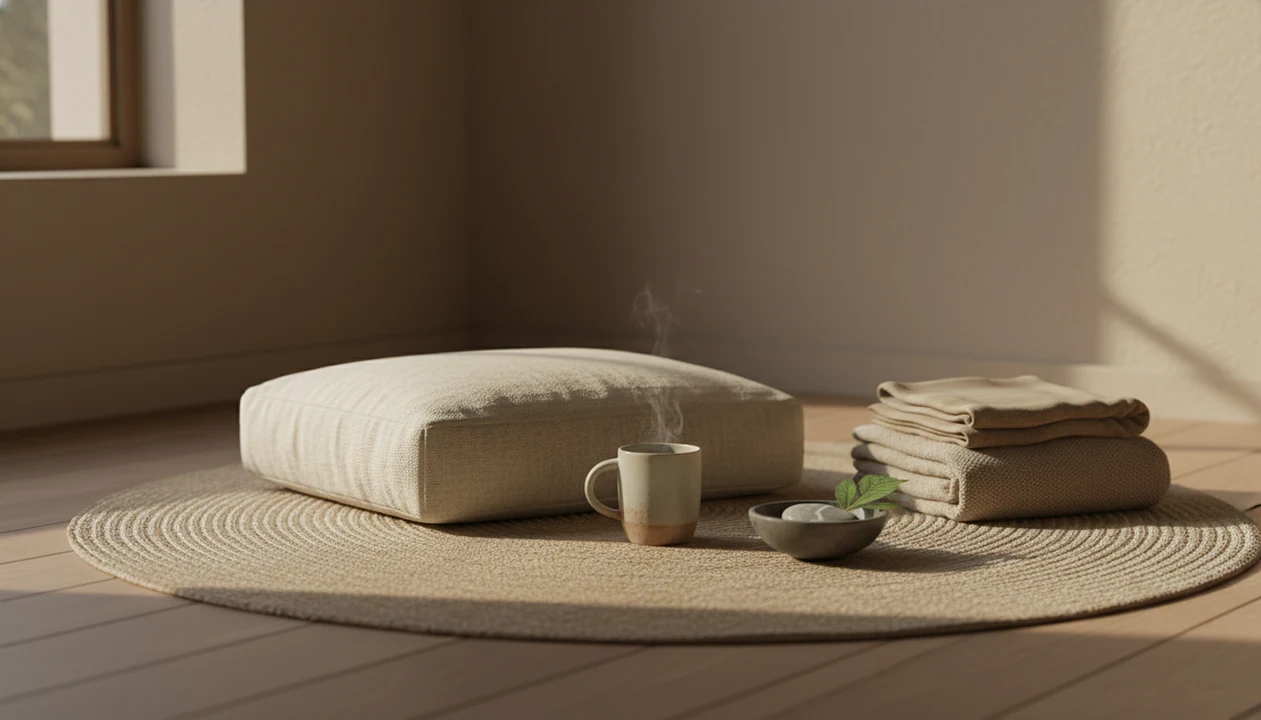
Gratitude meditation is a secular mindfulness practice that directs attention toward real things you appreciate without requiring a happy mood. You use the breath, body sensations, appreciation phrases, or a short script to notice support, care, comfort, or beauty that is genuinely present. The aim is honest appreciation, not telling yourself that you should feel grateful. Stress, sadness, anger, and grief can remain part of the experience.
A five-minute session can be simple: settle, notice your breathing, name one thing you appreciate, observe your response, and close gently. A warm cup or a helpful message is enough to begin. Research on gratitude practices suggests modest well-being benefits with repetition, but these practices are not a substitute for professional mental health care.
The essentials
- Use gratitude meditation to practice noticing what is supportive or meaningful, not to deny stress, grief, anger, or difficulty.
- A simple session can take 5 minutes: settle, breathe, name one real thing you appreciate, feel it in the body, and close gently.
- Research on gratitude practices suggests modest well-being benefits over weeks, but it is not a substitute for professional mental health care.
What gratitude meditation means in mindfulness practice
Gratitude meditation is attention training that uses real appreciation as the object of practice. Instead of repeating “I should be grateful,” you choose something specific and notice how the mind and body respond.
The object can be a person, a place, a small moment, a body sensation, or ordinary support. It might be the blanket over crossed legs, a working lamp, a friend who texted back, or the fact that your lungs are breathing without instructions.
Hard feelings can stay in the room.
Sadness, irritation, numbness, or grief do not mean the practice has failed. The aim is to notice your experience more steadily, not to make yourself into a happier person. If you want a broader starting point, our guide to gratitude for beginners explains the same idea outside formal meditation.
How gratitude meditation works as attention training
Gratitude meditation works through a simple attention loop: choose one honest object of appreciation, notice when the mind wanders, then return gently. That loop is the training.
The useful skill is attentional flexibility. In plain language, that means you practice moving attention instead of being dragged only by threat scanning, self-criticism, or rumination. You are not pretending problems are gone. You are adding another place the mind can rest.
Breath and body sensations keep the practice embodied. You might feel the warm exhale on the upper lip, the weight of the seat under you, or socked feet under a chair. When the mind jumps to a grocery list, notice it and return.
Mixed emotions are allowed. Numbness, resistance, sadness, or “I don’t know if I mean this” can all be included without scolding yourself.
Before you start a gratitude meditation
Before you start, make the practice feel safe enough, small enough, and easy to leave. Gratitude meditation works better when you are not trying to prove anything to yourself.
- Choose: Pick a place that is quiet enough for your nervous system. It does not need to be silent, but interruption should not feel threatening or expose you in a way that makes your body brace.
- Select: Use one modest gratitude object, such as a warm cup, clean socks, a working light, or one kind message. Skip major life themes at first if they feel complicated, loaded, or unbelievable.
- Keep: Leave your eyes open if closing them feels unsafe. You can rest your gaze on the floor, a wall, a plant, or your hands.
- Set: Use a short timer, often three to five minutes for beginners. Ending while the practice still feels manageable builds trust.
- Decide: Give yourself permission to stop if shame, panic, numbness, or emotional flooding increases. Opening your eyes, standing up, naming the room, or choosing another grounding practice is still skillful practice.
What to expect from a short gratitude practice
- Gratitude meditation trains attention rather than commanding emotion. The practice is to notice, return, and stay honest, not to manufacture a cheerful mood.
- Sessions can be short. Many beginners do better with 5 to 10 minutes than with a long session they quietly dread. When shorter sessions feel comfortable, a fifteen minute meditation routine offers another option without making longer practice a requirement.
- Guided gratitude meditation scripts usually combine breath, body, and concrete prompts. A useful prompt names something real, such as a person, a meal, a safe room, or a moment of relief.
- Research benefits are generally modest and repetition-based. A 2017 meta-analysis of 64 gratitude interventions found small to moderate improvements in well-being and decreases in depressive symptoms. Source: Dickens, 2017, a meta-analysis of gratitude interventions: 01973533.2017.1323638
- Honest gratitude can coexist with pain, stress, grief, and action. For people under strain, meditation for gratitude is often safer when it includes both appreciation and permission to name what hurts.
One practical next step is to pair sitting practice with mindful gratitude during ordinary parts of the day.
How to use a guided gratitude meditation
A guided gratitude meditation works best when it stays small, specific, and choice-based. Use this sequence with a recording, a written prompt, or a phone timer set for 5 minutes.
- Set: Choose a time and posture you can actually keep, such as sitting on a kitchen chair before your laptop opens. A five minute morning meditation can help you establish a simple sitting practice before the demands of your day.
- Anchor: Feel the breath or body for three slow cycles, using the feet, seat, belly, or hands as a steady point. If you need a brief reset, breathing space meditation offers a structured pause for noticing your present experience.
- Name: Choose one real person, moment, sensation, or support that feels believable today.
- Notice: Observe body sensations and emotions without forcing warmth, relief, or thankfulness to appear.
- Close: Take one breath, feel the room around you, and return to the day with one simple next action.
A 5-minute gratitude meditation script
Does a gratitude meditation script need to make you feel grateful right away? No. A good script gives attention somewhere honest to rest, then lets your actual emotions be present.
Short script for reading silently
Sit in a posture that feels steady enough. Let the shoulders drop a little. Notice one breath entering and one breath leaving. (Pause.)
Feel the body touching the chair, floor, or cushion. Let the face soften if it wants to. The tongue may soften away from the palate. (Pause.)
Now choose one easy object of appreciation. Not the biggest thing in your life. Just something real: a glass of clean water, a quiet corner, a helpful message, or one breath that arrived on its own. (Pause.)
Silently say, “I can let this be enough for this moment.” Notice whether anything changes in the chest, belly, face, or hands. If you feel nothing, that is also something to notice. If sadness or resistance appears, let the breath be your anchor again. (Pause.)
Take one fuller breath. Hear the room. Feel the light. Let your eyes open when you are ready.
Best gratitude meditation prompts for daily life
Good prompts make gratitude specific enough to feel real. Avoid slogans. Use ordinary cues that already happen in your day.
- The one-breath email pause: Before opening email, take one breath and name one thing helping you work, such as a chair, a teammate, or a quiet minute. For a structured pause before responding, try STOP practice to notice your experience and choose your next action.
- The senses-based commute prompt: While walking or commuting, notice one sound, color, texture, or patch of weather you do not need to own.
- The person-without-contact prompt: Bring to mind someone who made today easier, even if you do not message them.
- The body-support prompt: Thank one body function for support, such as feet on tile, eyes reading, or lungs moving air.
- The evening “what helped” prompt: Before sleep, name one thing that helped today, however small.
If sitting practice feels too formal, a daily gratitude routine can make the habit more natural.
Common mistakes in gratitude meditation
Treating gratitude meditation as a test of happiness can turn a brief attention practice into pressure to feel better. The practice is steadier when you notice honestly, choose a simple object, and stop before it becomes a strain.
- Start: Choose something concrete and low-stakes, such as warm socks, a clean fork, or one helpful sentence. Big themes like family, health, forgiveness, or “my whole life” can be too abstract or emotionally tangled at first.
- Notice: Let the actual response be there. Warmth may come, but so may flatness, boredom, grief, irritation, or nothing in particular. Numbness is not failure; it is another experience to observe.
- Avoid: Do not use gratitude to excuse harm, silence unmet needs, or talk yourself out of a boundary. You can appreciate one good thing and still name what is unsafe, unfair, or unfinished.
- Shorten: Practice for less time than your ambition wants. Three honest minutes repeated often usually builds more trust than a long session you dread. On busy days, two minute mindfulness exercises can offer a manageable alternative to a longer sitting session.
- Return: If the mind gets performative, come back to the breath, the chair, or the room. Simple is not lesser practice.
Gratitude meditation benefits and evidence
Research on gratitude usually studies broad gratitude interventions, not only meditation. Common study formats include gratitude journaling, gratitude letters, brief online exercises, and weekly reflection practices.
Results are encouraging but not dramatic. For example, Emmons and McCullough’s 2003 experiments found that participants assigned to count blessings reported higher optimism and fewer physical symptoms than participants assigned to list hassles: 0022 3514.84.2.377
Another trial in outpatient psychotherapy found that people who wrote gratitude letters reported better mental health at 4 and 12 weeks than comparison groups. Source: Wong et al., Psychotherapy Research: 10503307.2016.1169332 These findings do not prove that every meditation session will help every person.
Gradual is normal.
For most beginners, gratitude meditation usually works best when practiced repeatedly over weeks, while gratitude journaling may fit people who process better through writing. If writing appeals to you, try these gratitude journal prompts.
What small research benefits mean for your practice
The comparison group matters when interpreting a benefit. A 2023 meta-analysis of 25 randomized trials, involving 6,745 participants, found a small improvement in psychological well-being compared with neutral controls. That result supports gratitude as a potentially useful practice, not as a reliable way to produce a large change in mood.
Broader evidence points in the same modest direction. A 2025 cross-cultural meta-analysis covering 24,804 participants from 28 countries found a small overall well-being benefit. These findings concern gratitude interventions broadly, rather than this particular five-minute meditation script. They do not establish that every person will benefit or that gratitude should replace treatment, practical help, or action on a difficult situation.
Best uses and safety boundaries for gratitude meditation
Gratitude meditation is best used as a gentle attention practice, not as pressure to accept harm. It can support reflection, but it should not silence real needs.
| Best for | Not for |
|---|---|
| Beginners who want a simple secular practice | Bypassing grief or telling yourself loss “should” feel okay |
| Short daily practice, often 3 to 10 minutes | Replacing therapy, medication, crisis care, or trauma support |
| Evening reflection and winding down | Tolerating harmful situations or unsafe relationships |
| Attention training with breath and body anchors | Forcing forgiveness before you are ready |
| Balancing stress with cues of support | Denying injustice, discrimination, or workplace harm |
People with trauma histories may need choice-based or support-guided practices. Some days, breath meditation, grounding, compassion practice, or professional support will be a better fit. If gratitude feels loaded, our guide to gratitude when sad may be more useful than a standard script.
How can I remember a brief gratitude pause?
Before opening email or settling down for the evening, a reminder can help you pause and notice one concrete source of support. The free mindfulness bell gives that pause a simple cue; you supply the appreciation prompt. For a structured session, the Mindful.net app includes short guided meditations and a timer. When appreciation feels pressured or distressing, ordinary grounding or professional support may be more appropriate.
Gratitude Meditation Limits
- If you risk harming yourself or others, pause gratitude meditation and seek immediate local crisis support or emergency care.
- Gratitude meditation cannot replace professional treatment for major depression, PTSD, anxiety disorders, substance use concerns, or crisis care.
- Pressure to feel grateful after trauma, abuse, loss, discrimination, or injustice can feel invalidating.
- Gratitude meditation cannot fix poverty, unsafe workplaces, harmful relationships, or lack of health care.
Gratitude meditation questions
How do I do a five-minute gratitude meditation?
Sit in a steady, comfortable position and notice a few breaths or the contact of your feet with the floor. Choose one real source of appreciation, such as a helpful message or a warm drink. Notice your response without changing it. Return gently when distracted, then close by noticing your surroundings.
What should I focus on during gratitude meditation?
Choose something specific and believable today: clean socks, a working light, a meal, or someone who helped with a task. You do not need to choose the most important person or event in your life. Keep complicated themes such as family, health, or forgiveness out of the practice if they feel strained.
What if I feel nothing during gratitude meditation?
You do not have to feel warmth or thankfulness for the practice to count. Notice flatness, boredom, or numbness as part of your present experience. Return to the chosen object or to the feeling of your feet on the floor. Shorten or stop the session if continuing feels like pressure.
Can I practice gratitude meditation when I am grieving?
Grief does not need to disappear before you practice, but gratitude should never be a demand. You might acknowledge both: this is painful, and one small source of support is present. Skip the exercise if it feels invalidating. Grounding, support from another person, or professional care may be more appropriate.
Is gratitude meditation the same as gratitude journaling?
Both direct attention toward sources of appreciation, but the activity differs. Meditation involves staying with an object of appreciation and noticing thoughts, sensations, and emotions. Journaling records appreciation in writing. Much gratitude research examines writing or reflection exercises, so its findings cannot automatically be treated as evidence for a particular meditation script.
How long should a beginner practice gratitude meditation?
Start with about five minutes, or a shorter pause if that feels manageable. Settle, choose one object of appreciation, and notice your response. There is no need to extend a session that becomes a strain. Research suggests modest benefits from repeated gratitude practices, not a guaranteed benefit from any particular session length.
Does gratitude meditation help anxiety or depression?
A 2023 review of gratitude interventions reported reductions in anxiety and depression symptoms, alongside improvements in mental health. Those interventions included more than meditation alone. Gratitude practice may be a supportive wellness activity, but it is not a substitute for assessment, therapy, medication, or crisis care when those are needed.
Does gratitude meditation require religious beliefs?
No. This practice uses secular attention training: choose a real source of appreciation, notice your experience, and return when distracted. You do not need prayer, spiritual beliefs, or special phrases. Ordinary support, such as a chair, a meal, or a kind message, can be the focus of a session.