
Mindful Thanksgiving: Small Practices for Food, Family, and Gratitude


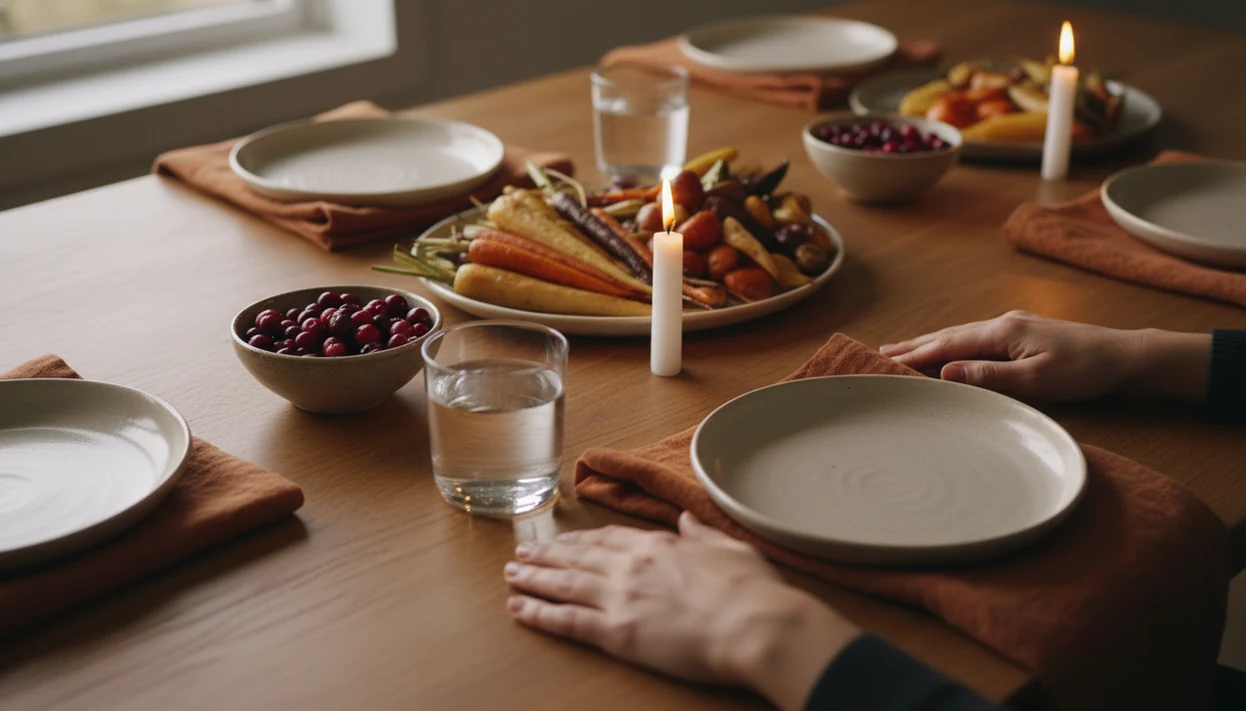
Mindful Thanksgiving means bringing present-moment awareness, gratitude, and self-compassion to the holiday’s planning, eating, conversation, and cleanup. It is a secular practice, not a requirement to feel thankful or make the day perfect. The simplest approach is to pause often enough to notice your food, the people around you, and your own limits, then choose one or two small practices you can repeat.
Start with one breath before cooking, eating, speaking, or checking your phone. Savor something pleasant without insisting that difficult feelings disappear. Gratitude can be a private acknowledgment or a sincere thank-you, rather than a performance at the table. Mindful eating means paying attention to taste and body sensations, not restricting food or judging what you ate.
The essentials
- Start with one breath before cooking, eating, speaking, or checking your phone.
- Use gratitude as an invitation, not a forced performance.
- Mindful eating is about savoring and body awareness, not restriction or guilt.
Notice the holiday without trying to perfect it
Mindful Thanksgiving is a secular way to bring present-moment awareness into the ordinary parts of the holiday. It does not have to be religious, ceremonial, or formal.
In everyday terms, it means noticing the planning, the food, the people, the emotions, and the gratitude without letting the whole day run on autopilot. You might feel cold fingertips around a serving spoon before answering a tense question. You might take one quiet breath while the refrigerator hums instead of trying to fix every mood at the table.
The holiday is socially loaded, too. In a Pew Research Center survey, 96% of U.S. adults reported celebrating Thanksgiving What Do Americans Think About Thanksgiving, which helps explain why expectations can feel high. A mindful approach does not erase those expectations. It gives you a practical way to meet the day with more steadiness.
Small counts.
If you want a broader starting point, our guide to gratitude for beginners covers the basics without assuming a formal practice.
Five expectations to set before Thanksgiving
Before you start, these five facts can help set expectations for a mindful Thanksgiving. Think of them as coaching notes for a real holiday, not a perfect script.
- Mindful Thanksgiving can be secular. It works as attention practice, not a belief system, and beginners can start with one breath.
- Short pauses change the pace. Slower eating, real listening, and a quiet reset before speaking can reduce the rushed feeling of the day.
- Gratitude has research support. In a 10-week randomized trial, people who kept weekly gratitude journals reported 25% more optimism than a control group PubMed research.
- Mindfulness includes hard feelings. Stress, grief, loneliness, and irritation can be noticed without pretending they are cheerful.
- One holiday practice is not a cure. A calmer meal can help, but it cannot fix chronic stress, unsafe dynamics, or long family history.
For many people, the practical next step is a tiny written practice, such as one line from a list of gratitude journal prompts.
Catch automatic reactions before you respond
Mindful Thanksgiving works by training attention regulation, savoring, and self-compassion during moments that often trigger automatic reactions. In plain language, you notice what is happening before you respond.
Attention regulation is the skill of catching the mind before it snaps, defends, scrolls, or rushes. Savoring means deliberately absorbing a pleasant moment, such as warm food, a familiar laugh, or a quiet minute when the room settles after dessert plates are cleared. Self-compassion helps you recover when you overeat, say something awkward, or need a break. For a broader daily check, consider the three components of happiness alongside the pleasant moments you notice.
Holiday stress is common. The American Psychological Association has reported that 38% of people experience increased stress during the holidays APA research, and many describe the season as “too much” or “somewhat” stressful. A JAMA Internal Medicine meta-analysis found mindfulness programs had moderate effects on anxiety and depression symptoms PubMed research, but that does not make one holiday pause a treatment. Clinicians typically recommend mindfulness as a supportive skill, not a replacement for care when symptoms are serious.
Five small practices to repeat during the day
Use this five-step mindful Thanksgiving guide as a loose sequence, not a rulebook.
- Set one realistic intention for the day, such as “I will eat slowly” or “I will take one break before I react.”
- Pause before the first busy task by taking three breaths before cooking, driving, hosting, or opening messages.
- Savor three bites during the meal by noticing temperature, texture, flavor, and the body’s response.
- Listen fully to one person without planning your rebuttal, advice, joke, or escape. If holiday conversation leaves you wanting more connection, these practical tips for making friends can help beyond the gathering.
- Reset gently after stress, conflict, or overeating by naming what happened and choosing the next kind action.
Five quiet minutes can be enough. Try a simple Chair Check at the edge of the dining room: feel your weight, notice your breath, and let your next action be one notch slower. Not an hour. Not a performance.
Mindfulness practices and meditation techniques for beginners and daily life offer repeatable attention cues, not guaranteed calm or a friction-free family gathering.
Attention cues for cooking, eating, and cleanup
Mindful Thanksgiving tips work best when they fit the real pressure points of the day: cooking, eating, talking, and cleaning. Choose one cue from each area, or just one for the whole holiday.
Mindful cooking cues
Notice sound, smell, texture, and pace while you cook. The scrape of a spoon, steam rising from a pan, or the weight of a serving dish can become grounding cues. If the kitchen feels crowded, lower your shoulders and take one slower breath before the next task.
Mindful eating cues
Slow down enough to taste the first few bites. Breathe between servings, check fullness with curiosity, and skip the guilt script. Mindful eating is body awareness, not dieting language.
For conversation, ask one real question and listen to the full answer. For cleanup, let dishes, packing leftovers, and wiping the table become simple grounding activities. Savoring research links the ability to notice and absorb positive experiences with better well-being PubMed research, which supports small practices like soaking in one pleasant moment. After noticing one pleasant moment, try three mindful steps to boost happiness as a simple practice beyond the holiday.
For a more regular structure after the holiday, try a daily gratitude routine.
When a pause helps and when safety comes first
Mindful Thanksgiving is useful when the gathering is basically safe and you want more steadiness, gratitude, or presence. It is not the right tool for every situation.
| Best for | Not for |
|---|---|
| Holiday stress that feels rushed or scattered | Unsafe gatherings where leaving or getting help matters more |
| Rushed meals where you want to slow down and savor | Active abuse, coercion, or threats |
| Gratitude practice that feels sincere and optional | Untreated eating disorder triggers or food monitoring |
| Awkward but safe gatherings with manageable tension | Forced positivity that silences grief or anger |
| Beginner mindfulness in ordinary family routines | Replacing professional mental health, medical, or crisis support |
Boundaries can be mindful. Opting out can be mindful, too.
For safe but tense settings, the most useful practice is often a pause before speech because it creates a small gap between the trigger and the response. When a pause is not enough, mindful conflict resolution offers a structured way to approach disagreements with care.
Make space for grief, tension, and loneliness
What if Thanksgiving does not feel grateful? Mindfulness is not pretending to be thankful when grief, political tension, loneliness, sensory overload, or disappointment is present.
Try a three-part practice. First, name the feeling in plain language: “sad,” “tight,” “left out,” or “angry.” Second, feel one body sensation, such as chest movement beneath a shirt or pressure in the jaw. Third, choose the next kind action. That might mean drinking water, stepping outside, texting a friend, or changing seats.
Group gratitude circles should be optional. Consent matters, especially when someone is grieving or exhausted. A private note can be enough, and gratitude when sad may need to look quieter than holiday tradition expects.
Leaving the room, skipping a topic, shortening a visit, or ending the visit can also be mindful. Sometimes the kindest next action is distance.
Thank one person for something specific
A private message or letter offers an alternative to a public gratitude circle. Choose someone whose contribution you genuinely appreciate. Describe what they did, why it mattered, and what you would like them to know. For Thanksgiving, that might mean thanking someone for preparing a dish, making space for you, or staying in touch during a difficult year. Keep the message specific rather than trying to summarize everything you appreciate.
This approach has research behind it, though not specifically for Thanksgiving. In a randomized trial of 293 psychotherapy clients, people assigned gratitude-letter writing alongside psychotherapy reported better mental health four and 12 weeks after the intervention than the comparison groups. That does not establish that one holiday message will improve mental health. It does support treating gratitude as recognition of another person’s contribution, not just a list of good circumstances.
Choose a short practice before or after the gathering
You do not need an app to have a mindful Thanksgiving, but optional support can help before or after the holiday. A short guided practice can be easier than inventing one while guests arrive or the house gets loud.
Around Thanksgiving, simple options might include breathing practice, a body scan, gratitude reflection, or mindful walking. You could use a short session the night before, after cleanup, or during a quiet break away from the table. If you take your break outdoors, learning how trees support happiness can encourage a little more time in nature.
The Mindfulness Practices App framing is simple: practice attention in ordinary life, then return to the day you are actually living.
Before guests arrive: make room for a quiet pause
Thanksgiving preparation can leave little space between finishing a task and starting the next. A short guided meditation in the Mindful.net app can provide a pause before guests arrive or after cleanup. For an unguided break, the free mindfulness bell can mark a quiet moment. Neither is necessary: one breath beside the kitchen counter may be enough. When a gathering is unsafe, leaving or getting help matters more than completing a practice.
Thanksgiving Mindfulness Limits
- Mindful Thanksgiving cannot replace professional help for serious mental health concerns, trauma, eating disorders, or crisis situations.
- A few mindful moments cannot fix longstanding family conflict, addiction, abuse, coercion, or unsafe dynamics.
- Forced gratitude can feel invalidating during grief, loneliness, illness, estrangement, or financial stress.
- Benefits are stronger with consistent practice, and how to practice gratitude can start with private reflection without pressure.
Mindful Thanksgiving questions
What does a mindful Thanksgiving look like?
It looks like ordinary holiday activities with a little more attention: noticing the food while cooking, pausing before answering, listening to someone, and recognizing when you need a break. It is secular and does not require a formal meditation session. Choose one repeatable practice rather than trying to stay mindful all day.
How can I practice mindful eating at Thanksgiving without restricting food?
Notice the temperature, texture, and flavor of the first few bites. Pause between servings to check how your body feels, without turning that check into a rule about what you may eat. Mindful eating is not a diet or a reason for guilt. If food monitoring triggers eating disorder symptoms, prioritize appropriate professional support.
What is a simple Thanksgiving gratitude practice?
Name one concrete thing you appreciate and why it matters. You might write it privately or thank the person who contributed to it. A specific acknowledgment, such as appreciation for someone’s help with cooking, is enough. Skip the exercise if it feels forced, and let other people decline without asking them to explain.
Can mindfulness help with family arguments at Thanksgiving?
A pause can help you notice tension before replying. Take one breath, feel your feet on the floor, and decide whether to speak, change the subject, or step away. This is most useful when the gathering is basically safe. Mindfulness cannot resolve longstanding conflict or make abuse, coercion, or threats acceptable.
How do I have a mindful Thanksgiving when I am grieving?
You do not need to replace grief with gratitude. Name what you feel, notice one body sensation, and choose a manageable next action, such as drinking water, stepping outside, or contacting someone supportive. You can appreciate a small moment and still feel loss. Public gratitude activities should remain optional.
How can I practice Thanksgiving mindfulness if I am alone?
Bring attention to one ordinary activity, such as preparing food, eating, or taking a walk. Notice a few sensory details without demanding that the day feel special. If loneliness is present, acknowledge it and consider texting a friend. A gratitude note is another option, but it should not replace the connection or support you need.
Does Thanksgiving mindfulness require meditation?
No. One breath before a task, three attentive bites, or listening without planning your reply can be a mindfulness practice. A short guided meditation is optional support before or after the gathering. The aim is to return attention to what is happening, not to complete a session or maintain a calm mood.
How do I avoid forcing gratitude at the Thanksgiving table?
Make participation optional and allow people to pass without explanation. Offer private writing or a one-to-one thank-you instead of requiring everyone to speak. Avoid correcting someone who expresses sadness, anger, or disappointment. Gratitude can coexist with those feelings, and nobody needs to produce a positive statement to belong at the table.