
Gratitude in Parenting Without Forcing Positivity


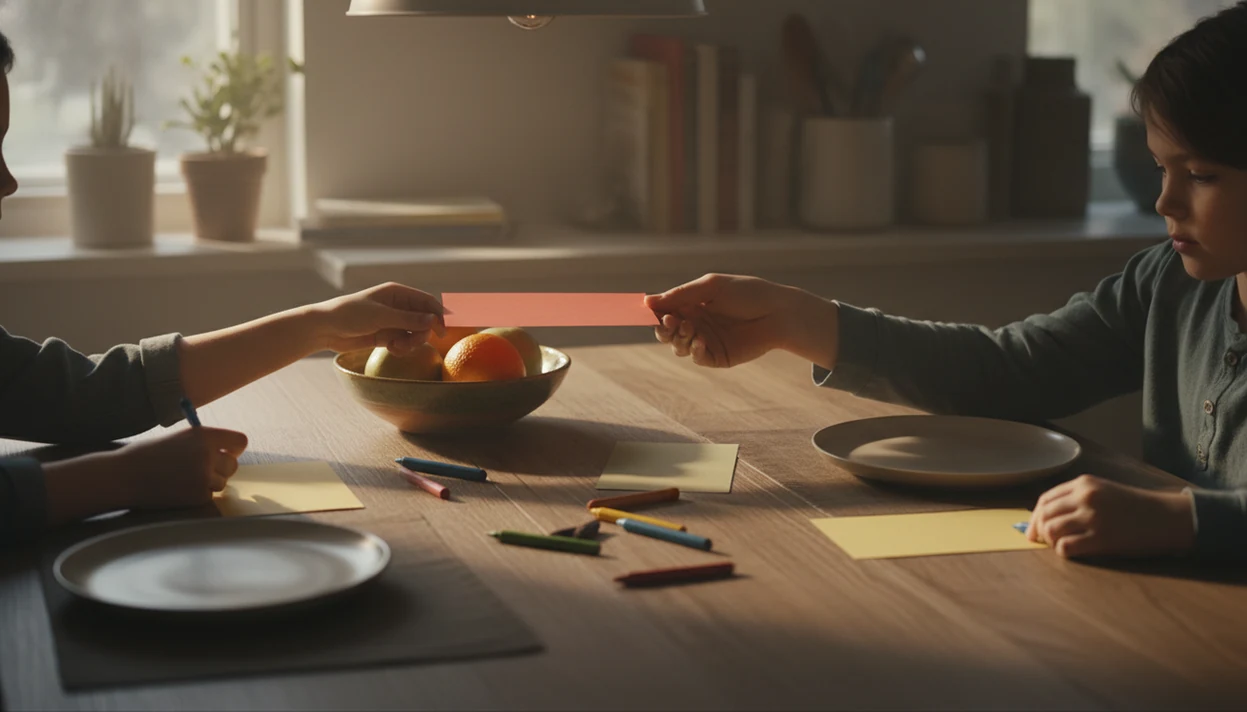
Gratitude in parenting means noticing, naming, and modeling appreciation in family life without pretending hard moments are easy. It helps parents and children notice care, understand the effort behind it, feel appreciation, and choose how to express it. A specific thank-you, such as “Thanks for saving your sister a seat,” gives children a clearer example than a lecture about being grateful.
Keep the practice small and leave room for frustration. A child can appreciate someone’s help and still feel disappointed, angry, or tired. Mindfulness offers a pause to notice ordinary kindness before it passes unnoticed. The aim is not to produce a cheerful answer at dinner or bedtime, but to make appreciation part of family conversation without turning it into a demand.
The essentials
- Modeling gratitude usually teaches children more than lecturing them to say thank you.
- Short, specific gratitude practices can support connection, but forced positivity can backfire.
- Mindfulness helps families slow down enough to notice small moments of care, effort, and support.
What research suggests about children’s gratitude
- Gratitude is learnable. Children are not simply “grateful” or “ungrateful.” Like turn-taking or naming feelings, gratitude can grow through repeated family practice.
- Modeling matters more than speeches. A parent saying, “Thanks for waiting while I finished that call,” often teaches more than “You should be grateful.” The kitchen chair moment counts.
- Conversation helps. A 2022 longitudinal study of 101 parent-child pairs found that more frequent, higher-quality gratitude conversations predicted growth in children’s gratitude over six months (source: 17439760.2021.2016900).
- Gratitude links with well-being, but modestly. In a study of 221 early adolescents, more grateful teens reported 13 to 17 percent higher life satisfaction and fewer negative emotions than less grateful peers (source: J.Jsp.2008.03.005).
- Mindful gratitude is secular attention practice. It means pausing long enough to notice care, effort, and support. It does not erase stress, conflict, trauma, money pressure, or unfairness.
For many families, gratitude works best when it is treated as noticing practice, not a personality test.
How Gratitude in Parenting Works in Children
Gratitude in children develops through a simple sequence: noticing → thinking → feeling → doing. At each step, offer a prompt or example, and leave room for the child not to feel thankful right away.
First, a child notices help or kindness: a sibling saved a seat, a teacher stayed late, a parent washed the uniform. Next, the child thinks about effort and intention. Someone chose to help. Then appreciation may arise, sometimes quietly. Finally, the child does something, such as saying thanks, drawing a picture, or helping back.
The process is not instant.
Mindful attention helps because children often miss small care when they are tired, rushed, or focused on the next thing. A parent might pause at the door handle before entering and say, “Let’s notice one person who helped today.” The 2022 parent-child conversation study supports this pattern: regular, better-quality gratitude talk predicted growth over time.
Start with one specific thank-you at home
Use gratitude in parenting as a light family rhythm, not another task to perform. One simple way to try it is to attach gratitude to something already happening, like bedtime, a car ride, or clearing plates.
- Pause for one breath before asking. Feet on carpet or tile can be the cue. Learning to manage your own emotions can make it easier to respond steadily when parenting feels overwhelming.
- Name something specific you noticed: “You waited while your brother chose.”
- Ask an age-fit question: “Who helped today?” works for preschoolers; “What effort went unseen?” fits older kids.
- Connect the moment to kindness, effort, fairness, or support.
- Express thanks in a simple way, such as words, a note, a drawing, or a returned favor.
- Repeat lightly, and stop before it feels like a chore.
Once-weekly gratitude listing may be enough for some families. In one adult study, weekly gratitude listing helped more than doing it three times a week, suggesting that a lighter rhythm may work better than daily pressure for some families (source: 0022 3514.89.1.111). If you want a broader foundation, our guide to how to practice gratitude keeps the steps simple.
Gratitude prompts for preschoolers, older children, and teens
Gratitude practices work better when they match a child’s development. A teen and a preschooler should not be asked to show appreciation in the same way.
| Child age | What works well | Try this |
|---|---|---|
| 3 to 5 | Concrete examples and short phrases | “Grandma brought soup. That was kind.” |
| 6 to 8 | Drawings, thank-you notes, naming helpers | Make a quick helper picture after school. |
| 9 to 12 | Effort, fairness, and reciprocity | Ask, “What did someone do that took effort?” |
| Teens | Private reflection, service, or low-pressure talk | Invite a note, walk, playlist, or quiet act of help. |
For younger kids, keep language visible and plain. For older kids, avoid forced sharing at dinner if it turns into eye-rolling. Private reflection can still count.
For teens, gratitude usually works best when it respects autonomy, while younger children often need concrete prompts and modeled language.
Mindful Gratitude Practices for Family Routines
Brief routines make gratitude feel natural. Mindful gratitude practices and meditation techniques for beginners and daily life deliver teachable pauses and clearer noticing, not a guaranteed calm household.
Dinner Table One Thanks. Each person names one specific thanks, then moves on. No speeches, no correction.
Bedtime Rose. Ask, “What was one good part of today?” If the day was rough, allow “nothing” and try again another night.
Thank-You Detective. Invite children to spot hidden helpers, like the bus driver, custodian, neighbor, or sibling who shared space.
Gratitude Walk. On a short walk, name three things that supported the day. A shady tree counts.
Unsent Letter. Older children can write a thank-you note they do not have to send. A randomized trial of gratitude writing in young adults found mental-health improvements at 4 and 12 weeks, but that does not mean every child needs letter-writing (source: PMC research article).
Tools like Mindful.net teach mindfulness practices and meditation techniques for beginners and everyday life, which can support low-pressure family practice. Related ideas are covered in mindful gratitude.
Gratitude in Parenting Mistakes That Backfire
Gratitude backfires when it becomes pressure, shame, or avoidance. A child who hears “be grateful” every time they are upset may learn to hide disappointment instead of understand it.
Do not force children to feel grateful on demand. Saying “thank you” can be a useful social habit, but manners are not the same as genuine gratitude development. The deeper skill includes noticing effort, understanding intention, and choosing an authentic response.
Avoid using gratitude to silence grief, anger, unfairness, or real family conflict. “At least you have a home” is rarely helpful when a child feels embarrassed, excluded, or scared.
Too much ritual can also drain the practice. If everyone groans at the nightly gratitude round, reduce the dose. Boundaries, rest, repair, and support are still needed. For hard days, gratitude when sad may be a better fit than cheerful prompts.
Pair appreciation with a clear limit
Appreciating a child’s intention does not mean excusing harmful behavior. Name the intention, state the rule, and ask for a proportionate repair: “You wanted your sister to join in. Hitting is not safe. Check whether she is hurt, help rebuild the tower, and ask with words next time.” This gives the child a concrete alternative without calling them bad or selfish. A focus on children’s strengths and limits helps parents encourage abilities while keeping boundaries clear and consistent.
Keep thanks separate from accountability: repairing harm is still necessary even when someone meant well. A meta-analysis of Group Triple P parent training found reductions in child behavior problems and lax or inconsistent parenting. That research concerns a structured parenting program, not gratitude alone, but it supports pairing positive involvement with clear expectations and follow-through.
What family gratitude can and cannot help with
Gratitude in parenting is useful for some family goals, but it is not a fix-all. Culture also matters; some families express thanks verbally, while others show appreciation through food, duty, quiet help, or respect.
| Best for | Not ideal for |
|---|---|
| Building connection through small moments | Replacing therapy or crisis support |
| Helping children notice effort and care | Fixing severe behavior issues instantly |
| Softening perfectionism in parents or kids | Bypassing trauma, grief, or fear |
| Creating reflective family routines | Hiding conflict behind “positive thinking” |
| Encouraging reciprocity and kindness | Forcing one cultural style of thanks |
A practical next step is to choose one routine and test it for two weeks. Keep what lowers pressure and increases connection. Drop what turns into performance. A parenting reward chart can support clearer routines without making genuine feelings of gratitude something children must earn rewards for.
Gratitude usually works best when it sits beside honest emotion, while forced positivity fits no child well.
Pause before asking for thanks
When a child’s complaint makes you want to say “Be grateful,” pause before replying. The free breathing timer can give that pause a simple structure; the Mindful.net app also offers short guided meditations and breathing exercises for parents. Neither can make a child feel thankful. A conversation about what went wrong, a clear limit, or practical help is better when the child needs understanding rather than a gratitude prompt.
Limits of Parenting Gratitude
- Pause gratitude and seek professional support for self harm, unsafe homes, or persistent depression, anxiety, panic, or trauma symptoms.
- In the U.S., call or text 988 for urgent mental health crisis support, rather than relying on gratitude.
- Avoid pushing gratitude, which can shame children; use gratitude journal prompts weekly instead of daily.
- Studies are often short term and self reported, with stronger evidence for adults and older children than very young children.
Gratitude in parenting questions
How do I teach my child gratitude without forcing it?
Start by showing appreciation yourself and naming the specific effort you noticed. Ask a simple question such as “Who helped you today?” rather than demanding a grateful response. Let the child answer briefly or pass. Appreciation can be expressed through words, a drawing, or an act of help.
At what age can children start practicing gratitude?
For children aged 3 to 5, use concrete examples: “Grandma brought soup. That was kind.” School-age children can draw a thank-you picture or talk about someone’s effort. Teens may prefer private reflection or quiet acts of help. Match the prompt to the child rather than expecting an adult explanation.
Should I make my child say thank you?
Saying thank you can be taught as a social habit, but the words do not prove that a child feels grateful. Model polite thanks and help the child notice what someone did for them. Avoid treating an awkward or reluctant response as evidence that the child is selfish.
What should I do when my child says there is nothing to be grateful for?
Accept the answer instead of arguing for a brighter view. You can ask what made the day hard, or simply leave the gratitude prompt for another time. A bedtime routine should allow “nothing” as an answer. Appreciation is not a requirement for receiving comfort or being heard.
Can gratitude help a child who seems entitled?
Gratitude practice can help children notice effort, care, and reciprocity, but it is not an instant fix for demanding behavior. Avoid labeling a child “ungrateful.” Name the specific behavior, keep expectations clear, and invite an appropriate response, such as thanking a helper or contributing to a shared task.
How often should families practice gratitude?
Try one brief prompt during an existing routine, such as dinner, bedtime, or a car ride. Each person can name one specific thanks and move on. Keep it flexible rather than enforcing a streak. On difficult days, listening to what happened may be more useful than asking for appreciation.
Can gratitude become toxic positivity in parenting?
Yes, when it is used to silence disappointment, anger, grief, or conflict. “At least you have a home” does not address why a child is upset. Make room for the hard feeling first. Gratitude can sit alongside distress, but it should never replace safety, practical support, or needed mental health care.