
How Gratitude Changes the Brain: Evidence, Limits, and Practice


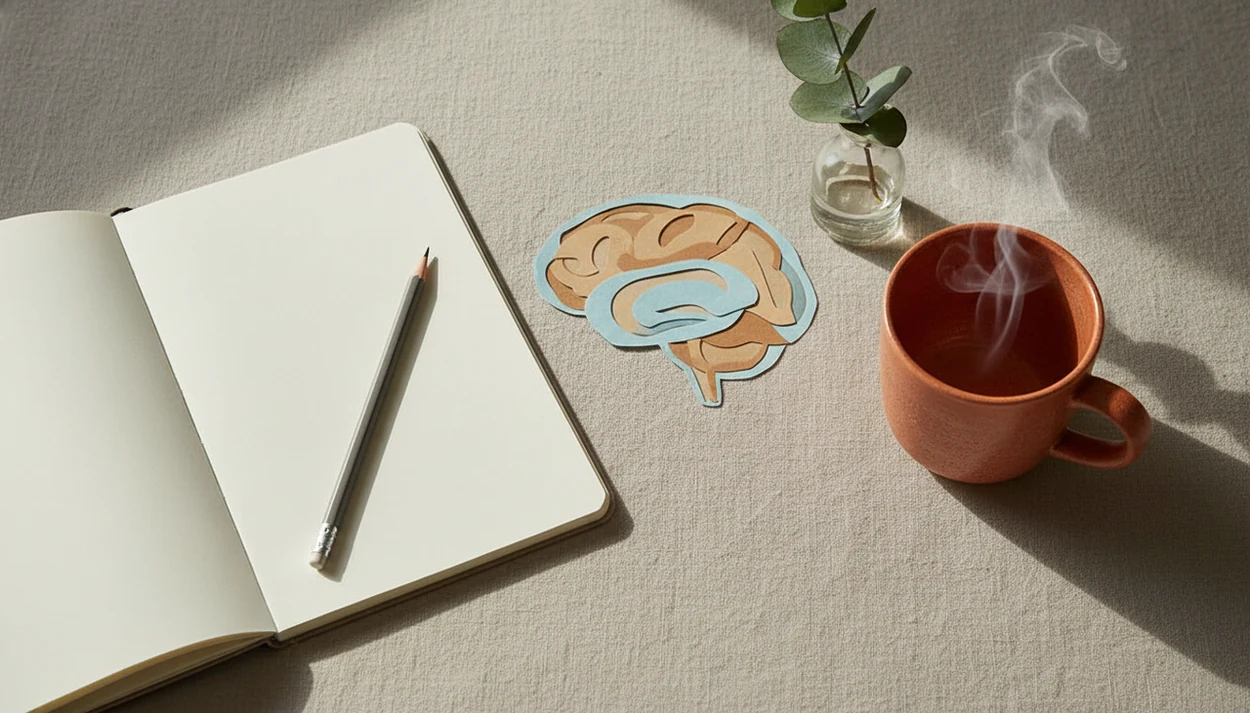
Gratitude may change the brain by repeatedly directing attention toward what is supportive, meaningful, or good, practicing patterns involved in emotion regulation, reward processing, and less rumination. Gratitude means noticing and acknowledging something beneficial without denying what is difficult. It is an attention practice, not an instruction to feel happy.
The evidence is promising but modest. Research links gratitude practice with better mental health reports and greater medial prefrontal cortex activity during gratitude experiences, but these findings do not establish an instant brain rewrite. The practical approach is to notice one true, helpful detail and return to that habit over time. Stress, grief, anger, and anxiety can remain present alongside appreciation.
Definition: Gratitude is the practice of noticing and acknowledging something beneficial, meaningful, or supportive without denying what is difficult.
What matters most
- Gratitude appears to work mainly through attention, appraisal, emotion regulation, and reward pathways rather than a simple “dopamine hack.”
- Research links gratitude practice with better mental health reports, reduced rumination, and greater medial prefrontal cortex activity during gratitude experiences.
- The safest way to practice gratitude is gently and consistently, while allowing stress, grief, anger, or anxiety to exist too.
Gratitude gives attention another place to return
How gratitude changes the brain is by giving your attention a repeatable route away from rumination and toward what is still supportive, useful, or meaningful. In brain terms, that may involve attention networks, appraisal, emotion regulation, reward processing, and reduced repetitive negative thinking.
The ordinary version is simpler. You notice the mind has gone to the grocery list, the unpaid bill, or the tense text message. Then you name one true thing that helped today. Not a huge thing. Maybe a bus driver waited, or your feet felt steady on tile.
Repeated practice matters more than one perfect journal entry. Gratitude is not an instant rewiring tool, and it should not be used to deny pain. It is a small attention practice that can become more familiar with use. If pain is part of your experience, mindfulness for pain management offers supportive approaches without requiring you to deny discomfort.
Small counts.
Repeated attention and the role of neuroplasticity
Neuroplasticity is the brain’s capacity to strengthen patterns it uses often, including patterns of attention, interpretation, and emotional response. Gratitude uses that capacity by repeatedly asking the mind to notice supportive facts the threat system may overlook. To connect neuroplasticity with practical attention skills, explore ways to rewire your brain with mindfulness through gentle, repeated practice.
The threat system is good at scanning for risk. That is useful when something is unsafe, but exhausting when it becomes the only channel playing. Gratitude adds another channel. It does not turn off grief, anger, anxiety, or stress. It simply practices noticing what else is present.
One simple way to try it is to pause before opening a laptop and name one thing that made the morning slightly easier. For beginners, two minutes is more realistic than a dramatic transformation plan. If you want the wider foundation, our guide to how to practice gratitude starts with the same low-pressure idea.
For beginners, daily mindfulness and meditation practice can build repeatable attention skills without guaranteeing a cure or requiring a positive mood. Research on meditation effects on the brain offers broader context for how repeated attention practice may affect neural patterns.
Five findings on gratitude, rumination, and brain activity
- Gratitude is linked with attention shifts away from rumination, resentment, envy, and other toxic emotional loops, according to UC Berkeley’s Greater Good Science Center. Source: UC Berkeley Greater Good Science Center, Greater Good overviewgratitudechangesyouandyourbrain.
- Gratitude can involve the prefrontal cortex, especially medial prefrontal cortex activity, a region tied to appraisal, emotion regulation, decision-making, and social meaning.
- In that same study, gratitude letter writers showed greater medial prefrontal cortex activation while experiencing gratitude in a scanner, observed 3 months after letter-writing began.
- A 2017 systematic review found small to moderate improvements in well-being outcomes across gratitude intervention studies. Source: Dickens, 2017 systematic review and meta-analysis, 17439760.2017.1326510
These findings are useful, but they are not a promise that every person will feel better on a schedule. The strongest takeaway is practical: gratitude may train attention and emotional appraisal when practiced repeatedly. For people who like prompts, gratitude journal prompts can make that repetition easier.
How large are the benefits of gratitude practice?
A 2025 preregistered meta-analysis of gratitude interventions combined 145 papers covering 24,804 participants across 28 countries. It found a small average improvement in wellbeing, with an effect size of Hedges’ g = 0.19. This gives a useful scale for expectations: gratitude can help, but the average benefit is modest, not a dramatic transformation.
A 2023 review of 64 randomized clinical trials also found better mental health and fewer anxiety and depression symptoms among participants receiving gratitude interventions. Those outcomes matter, but improved wellbeing is not the same as proof of a particular neural change. Neither finding means that gratitude alone can overcome unsafe conditions, excessive workload, or a lack of access to care. For a related perspective, evidence on mindfulness and depression explores possible brain changes without presenting practice as a cure.
A two-minute gratitude practice without forced positivity
Use gratitude as a short attention practice, not a performance. Two to five minutes is enough for most beginners, especially on days when the cushion slides on hardwood and sitting still already feels like work.
- Choose a time you can repeat, such as before bed, after lunch, or before checking messages.
- Notice one real supportive fact from today, even if the day was rough.
- Name it plainly, such as “my coworker answered quickly” or “the room was warm.”
- Feel where appreciation lands in the body for one breath, without forcing emotion.
- Write or Reflect for one sentence, or keep it silent if journaling feels like homework.
- Repeat for several weeks, adjusting the practice when it feels stale or strained.
Tools like Mindful.net can support gentle beginner mindfulness with short prompts and guided attention practice. It should not be treated as treatment for depression, anxiety, trauma, or chronic stress.
Choosing between gratitude letters, lists, and silent reflection
Different gratitude practices fit different nervous systems and schedules. Silent reflection may work better than journaling for some people, especially when writing starts to feel like another task.
| Practice | Best for | How to do it | Caution |
|---|---|---|---|
| Gratitude letters | Lingering resentment or relationship appreciation | Write a letter naming what someone gave, taught, or made easier | Do not send it if contact is unsafe or unwanted |
| Three good things | Low mood or end-of-day rumination | List three specific helpful moments from the day | Avoid turning it into a perfection audit |
| Mental noting | Busy schedules | Silently label “help,” “kindness,” or “support” when noticed | Easy to forget without a cue |
| Gratitude meditation | Stress and body awareness | Sit for 3 to 5 minutes and return to one appreciated fact | Stop if it feels emotionally forced |
| Appreciation text | Social connection | Send one specific thank-you message | Keep it genuine, not obligatory |
For busy readers, mental noting usually works better than long journaling because it fits into ordinary transitions. A daily gratitude routine can help if you prefer structure.
Who may benefit from gratitude practice, and who needs more support
This how gratitude changes the brain guide is best for people who want a beginner-friendly, secular way to understand gratitude as attention practice. It is also useful for people who ruminate, feel mentally cluttered, or want a low-pressure daily habit.
Best for
- Beginners: Start with one sentence or one breath, not a long routine.
- Secular mindfulness learners: Gratitude can be practiced without religious framing.
- People who ruminate: The practice gives attention somewhere specific to return.
- Busy people: A kitchen chair, bus seat, or office stairwell is enough.
Not ideal for
- Emergency mental health needs: Seek immediate support if you may harm yourself or someone else.
- Cure-seeking: Gratitude does not cure depression, anxiety, trauma, or chronic stress.
- Problem-bypassing: Appreciation should not be used to excuse harm or avoid action.
Gratitude can coexist with anxiety, grief, anger, and stress. It does not require them to leave first.
When distress needs more than gratitude practice
Seek professional help when distress is persistent, escalating, unsafe, or bigger than a short gratitude practice can hold. If you might hurt yourself or someone else, treat that as urgent and contact emergency support now.
Gratitude can be a useful companion to care, but it is not a replacement for therapy, medication, safety planning, crisis support, or protection from harm. Persistent depression, panic attacks, trauma symptoms, chronic stress that is affecting sleep or work, and relationships that feel threatening or controlling are all signals to reach beyond self-guided practice. You do not have to prove that things are “bad enough” before asking.
- Call local emergency services immediately if there is imminent risk of self-harm, suicide, violence, or harm to another person.
- Contact a crisis line or trusted local urgent mental health service if you feel unsafe, overwhelmed, or unable to stay alone safely.
- Reach out to a licensed clinician, doctor, therapist, or counselor for ongoing depression, panic, trauma symptoms, or stress that is not easing.
- Tell one trusted person what is happening if you can, especially if a relationship or home situation is unsafe.
- Use gratitude only as a supportive practice alongside care, not as proof that you should manage everything by yourself.
Gratitude is not an overnight brain rewrite
The biggest myth is that gratitude rewires the brain overnight. A more accurate model is gradual habit-building through attention, appraisal, and emotional regulation. If changes happen, they come from repetition and context. Small, repeatable practices may support wellbeing, and habits for a happier brain offer a practical perspective without promising overnight changes.
Another myth says gratitude means suppressing negative emotions. It does not. You can feel angry and still notice that a friend checked in. You can feel grief and still appreciate the quiet of a room. Both can be true.
A third myth is that gratitude works the same for everyone. It may land gently for one person and feel false for another, especially during severe stress or unsafe conditions.
Finally, gratitude does not replace therapy, medication, sleep, exercise, housing support, or close relationships. Clinicians typically recommend mental health care based on a person’s symptoms, risks, and needs, with practices like mindfulness or gratitude used only as supportive tools when appropriate.
A gratitude reflection image without medical claims
Use an image that shows a person pausing with a journal, or sitting quietly near soft morning light. The visual should suggest attention training and reflection, not a dramatic medical claim.
Suggested caption: A short gratitude pause can train attention toward supportive moments; this is a practical way to understand how gratitude changes the brain over time.
Suggested alt text: Person sitting quietly with a notebook near morning light, practicing a brief gratitude reflection.
Avoid brain-scan imagery for this article. It can imply clinical proof that a single exercise changes the brain in a visible, guaranteed way. A quieter image is more honest. A pen resting beside an open page says enough.
At the end of the day: make room for a gratitude pause
An end-of-day gratitude pause can be brief: notice one helpful moment, acknowledge any difficult feelings, and let both be present. The free online meditation timer can mark a short period for reflection without requiring a written list. Mindful.net also offers short guided meditations in its app. When distress is persistent or safety is at risk, professional support is more appropriate than extending a self-guided practice.
Gratitude Brain Research Limits
- Self-reported well-being and brain-imaging findings are imperfect signals, not proof of the same neural change for everyone.
- Gratitude may feel forced or invalidating when used to avoid pain, anger, or real problems.
- For stress or sadness, gratitude when sad may offer a gentler starting point.
- Consider professional care for depression, anxiety, trauma, chronic stress, or grief, since gratitude alone cannot cure them.
Gratitude and brain change questions
Does gratitude really rewire the brain?
“Rewire” is shorthand for learning through repeated practice, not a literal reset. Gratitude repeatedly directs attention toward helpful or meaningful details. Research suggests benefits for wellbeing and differences in brain activity, but it does not prove that every person develops the same lasting neural changes.
Which parts of the brain are involved in gratitude?
Research described in this guide points to the prefrontal cortex, especially the medial prefrontal cortex, which is involved in appraisal, emotion regulation, and social meaning. Gratitude also relates to reward processing. Activity in a brain region does not, by itself, prove that a practice changes its structure.
Can gratitude help stop rumination?
Gratitude may give attention somewhere specific to return when thoughts keep circling. Try naming one concrete thing that helped today rather than arguing with every negative thought. It may support a shift in attention, but persistent rumination that disrupts sleep or daily life may need professional support.
How long does gratitude practice take to work?
There is no reliable deadline for noticing a benefit. Studies use different exercises and schedules, and average effects are modest. Start with a brief practice you can repeat rather than expecting a change after one session. Lack of improvement is not evidence that you are doing gratitude incorrectly.
Does gratitude increase dopamine?
The evidence described here does not establish that a brief gratitude exercise reliably raises dopamine. Reward processing is part of the discussion, but calling gratitude a dopamine hack goes beyond these findings. A more accurate aim is to practice noticing support and meaning, not to chase a chemical response.
Is gratitude journaling better than thinking about gratitude?
Journaling is one option, not a requirement. Silent reflection or a single spoken sentence can also serve as an attention practice. Research on gratitude lists shows inconsistent wellbeing effects, so a longer list is not automatically better. Choose a format you can repeat without turning it into another obligation.
Can I practice gratitude when I feel anxious or depressed?
Yes, appreciation and difficult emotions can coexist. You might acknowledge anxiety and then notice that someone offered practical help. Do not use gratitude to dismiss symptoms or pressure yourself into feeling better. It can accompany care, but it does not replace therapy, medication, or urgent support when needed.
What should I do if gratitude feels forced?
Make the task smaller and more factual: name one useful action, comfortable detail, or source of support without demanding a warm feeling. If even that feels false, pause the exercise. You do not need to reinterpret harm as a gift or contact someone whose presence is unsafe or unwanted.